
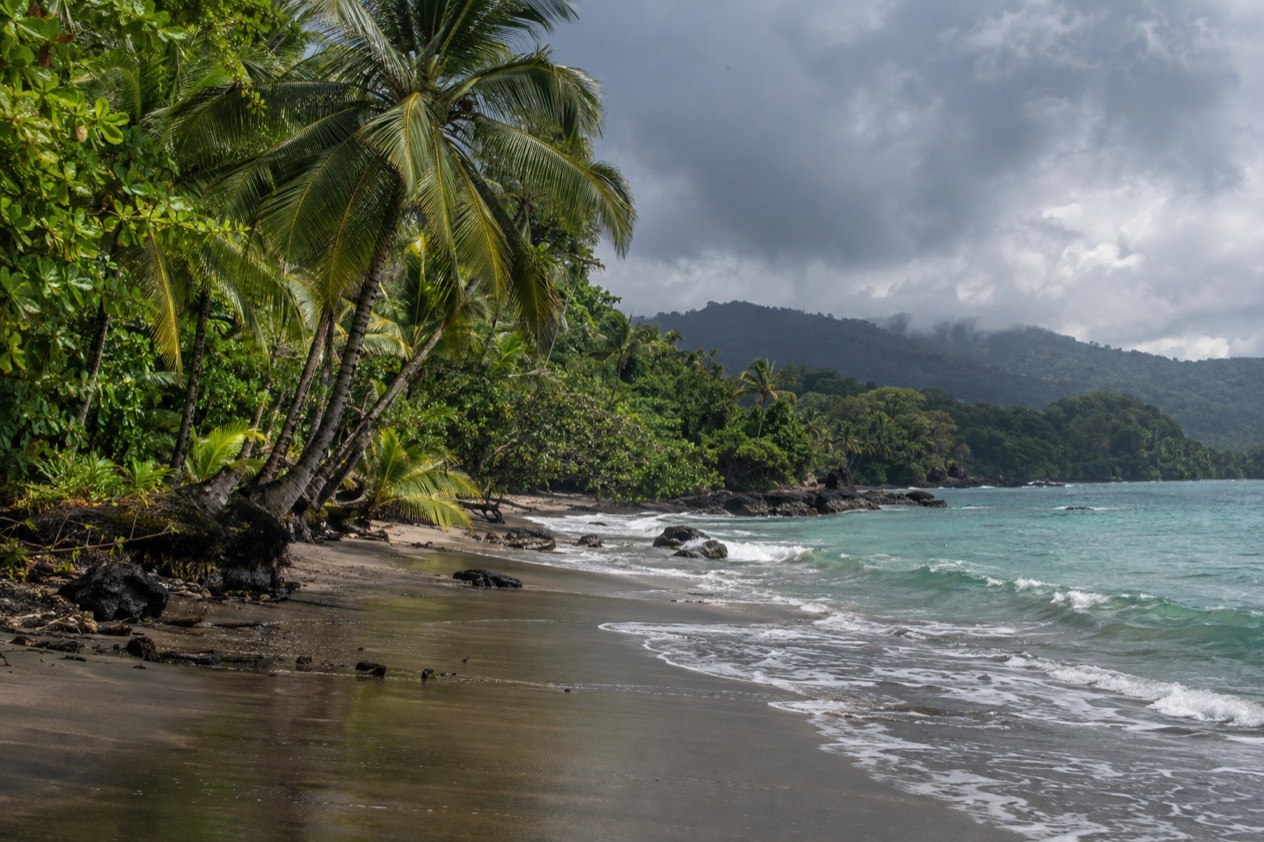
In August, the sound of beach cruiser bikes creaking along the road to Playa Cocles and the scent of coconut rice bubbling in open-air kitchens are what rouse Puerto Viejo. Clouds sit low over the jungle behind town, the sea is bathwater-warm, and reggae drifts from a bar before noon. The southern Caribbean coast runs on its own calendar, and this is a green, unhurried month for beaches, wildlife walks and long lunches.
What is the weather like in Puerto Viejo de Talamanca in August?
The weather in August is wet, humid and hot, and most days bring rain, but that rain usually arrives in bursts, with long periods of sun and clouds in between.
| Month | Average high (°F) | Average low (°F) | Rain days | Sea (°F) |
|---|---|---|---|---|
| July | 81.0 | 72.1 | 27.8 | 85.4 |
| August | 81.6 | 72.4 | 26.6 | 85.7 |
| September | 82.0 | 72.4 | 24.9 | 87.1 |
The day’s finest hours tend to come before noon. The air is soft and sticky, the light is bright over the water, and this is when the beaches feel emptiest and the birds are loudest along the jungle edge. Plan the long outdoor things early, then see how the sky behaves after lunch.
Rain on this coast does not follow the Pacific side’s habit of afternoon downpours. Any hour of the day may bring it, whether a brief shower, a constant mist, or a hard downpour that hammers on metal roofs and transforms dirt roads into muck. Only a couple of days in the month bring an inch or more, so most wet days are a matter of umbrellas and patience rather than washouts.
You can wear shorts and a light shirt in the evening because it stays warm, and a sweater is unnecessary. Bring quick-drying clothes, since nothing dries fully in this humidity, and expect a sticky night even with the fan on. Daylight lasts a little over twelve hours, so dinner is usually eaten after dark.
Can you swim in Puerto Viejo de Talamanca in August?
The water is so warm that you can linger in it for as long as you want, and wading in won’t make you gasp.
Conditions on this coast change from day to day. Some mornings the water off Playa Cocles and Punta Uva is gentle, and on others the waves are big and the beach is steep.
Rip currents cause several drownings of U.S. tourists in Costa Rica each year, and most beaches have neither lifeguards nor warnings about unsafe conditions. Ask at your hotel about the day’s conditions, stay close to shore, and do not swim alone.
At Punta Uva, the same rip-current caution applies. Surfers head to the break near town known as Salsa Brava, which is for experienced riders.
Snorkelers go when the water is clear, usually on calmer mornings, and rainy days can cloud the water near river mouths. Pack a rash guard, plus water shoes for rocky stretches and a dry bag to protect your phone.
What to do in Puerto Viejo de Talamanca in August
August here is about beaches between showers, jungle walks and the town’s Afro-Caribbean table. The big national date is August 2, when hundreds of thousands of Costa Ricans walk on pilgrimage to the Basilica of Our Lady of the Angels in Cartago.
It is far from the coast, but you may see the day echoed in churches and in conversations around town. August 15 is Mother’s Day, a national holiday.
The mood in the streets is easygoing. Bicycles are the way to get around, with locals and visitors rolling along the coast road at an easy pace.
Stalls and small restaurants serve rondón, a coconut-milk stew of fish and root vegetables, along with rice and beans cooked in coconut milk, savory meat patties, pan bon and ginger-spiced sweets. Rain pushes people into open-air restaurants with big roofs, and that is where the evenings happen.
Playa Cocles, Playa Chiquita and Punta Uva by bike
The classic outing is to cycle the coast road east of town, passing Playa Cocles, Playa Chiquita and Punta Uva. The ride is flat and shaded in stretches, with jungle on one side and sea on the other, and every few minutes there is a path down to sand. The ride links Puerto Viejo with Playa Cocles, Playa Chiquita and Punta Uva.
Go early, when the light is clear and the road is quieter, and keep an eye on the sky. If a shower comes, wait it out under a restaurant roof, because the road gets slick. Surfers and cafés give Playa Cocles its social buzz, whereas Punta Uva comes across as wilder, where palms tilt above a curving bay. Pack a poncho and put valuables in a dry bag.
Wildlife and jungle walks
Puerto Viejo’s best-known wildlife outings include Cahuita National Park, the Gandoca-Manzanillo refuge and the Jaguar Rescue Center. You may hear howler monkeys at dawn and spot sloths, toucans, poison dart frogs and leafcutter ant columns on a slow walk. Guided walks are the way most visitors actually see animals, since guides know where to look and what to listen for.
Trails are muddy in August, so wear shoes that can handle it and expect to be damp whatever you do. Mornings are best for activity, and a rainy day does not stop the wildlife, though it can make it harder to see. Bring bug repellent and a light rain jacket.
Town, culture and rainy-day plans
In the center of Puerto Viejo, the Afro-Caribbean heritage shows up in music, food and language. Small shops sell crafts, chocolate and hot sauces, and many cafés play reggae and calypso. Cooking classes and chocolate tastings are good options when it rains, and a long lunch of rondón fills a gray afternoon nicely.
Evenings are for live music and dinner at open-air spots, with fans turning and rain sometimes tapping on the roof. Walk back with a flashlight if the road is dark, and stay aware of your belongings, since petty crime is common throughout Costa Rica.
A two-day itinerary for Puerto Viejo de Talamanca in August
Day 1 starts at dawn, with fruit and coffee in town, then a ride by bike east on the coast road before the morning light fades. Pause at Playa Cocles for an initial dip when the sea seems tempting, then head on to Playa Chiquita and Punta Uva. Have a long lunch at a beachside restaurant, ideally with rice and beans in coconut milk or a fish dish.
If clouds build in the afternoon, shelter under a roof and wait, because showers can pass quickly. Cycle back to town before dusk, as the light fades after twelve hours of day. Spend the evening at an open-air restaurant, then wander to a bar with live music.
Day 2 is for the forest. Join a guided walk early, when animals are most active, and plan to get muddy. After the walk, rinse off and have lunch in town, perhaps something with plantains and fresh juice.
In the afternoon, browse the shops and craft stalls, try local chocolate and settle in for a slow coffee. If the weather turns heavy, a cooking class or a chocolate tasting makes a good rain card. End with a relaxed dinner, and keep the last stretch easy.
Is Puerto Viejo de Talamanca busy in August?
It is moderately lively but rarely packed, since the rainy look of the month keeps some travelers away while others come for the green season.
Costa Rican families travel around Mother’s Day on August 15, so the days around it can feel busier, with fuller restaurants and more local visitors on the beaches. U.S. school breaks are usually ending by this point, so the town often settles into a calmer rhythm after the first week or two. Rooms are generally easier to find than in the dry winter season, though the best small places still fill up.
Book early for the holiday weekend, and later for quieter weeks. Rental bikes are easy to find, while a rental car is rarely needed for town and the nearby beaches.
What to pack for Puerto Viejo de Talamanca in August
Pack clothes that are light and dry fast, and be set for rain, since the air holds plenty of moisture and downpours may arrive at any time.
- Bring a thin rain shell or poncho, as rain can show up whenever.
- Quick-drying shorts and shirts, because nothing dries fast in the humidity.
- Sturdy sandals or water shoes for muddy paths and rocky shores.
- For bike rides, keep phone and documents dry in a waterproof bag.
- Pack sunscreen and a hat too, because the sun burns through the clouds.
- Insect repellent for forest walks and evenings.
Good to know before you go
The U.S. State Department rates Costa Rica Level 2, ‘Exercise increased caution,’ due to crime; it says petty crime is common throughout Costa Rica and that violent crime also affects tourists, including armed robbery, homicide and sexual assault.
August falls inside the Atlantic hurricane season, which covers the Caribbean Sea and runs from June 1 to November 30, with most activity between mid-August and mid-October. Keep your plans flexible and watch the forecast before you go. U.S. travelers need a valid passport and proof of onward travel, and should check the length of stay authorized at entry.
Puerto Viejo de Talamanca in August vs July and September
Moving a month earlier to July brings a similar picture, with slightly more rain and a touch cooler air. The sea is a shade less warm, and the town can feel a little busier with vacation travelers still arriving. The jungle is at its lushest, and the mood is relaxed.
September goes a bit further on warmth, with the warmest sea of the three and somewhat fewer rainy days. It also sits at the peak of the Atlantic hurricane season, and the town tends to be quieter, with plenty of room on the beaches. Some small businesses slow down, so check ahead for the places you most want to visit.
If you want the liveliest feel and a better chance of company, July suits you. If you prefer solitude and a warmer sea, September works, as long as you are comfortable with a flexible plan. August sits in between, with the Mother’s Day weekend as its one busier moment.
Is August a good time to visit Puerto Viejo de Talamanca?
Sure, this one is for people who enjoy balmy seas, lush woods and a laid back rhythm, and who are fine with toting a rain jacket.
It suits people who want to cycle between beaches, sit through a shower over a plate of rondón and spend mornings looking for monkeys and sloths. For people who count on dry weather and a set schedule of outdoor activities, it works less well.
As soon as you arrive, hop on a bicycle, ride to the nearest stretch of sand, and get a feel for both the road and the sea. Then sort out a guided walk for an early morning. August here is soft, wet and warm, with rain tapping on tin roofs and reggae spilling from open doors at dusk.
Sources
- Open-Meteo / ECMWF ERA5, normals 1991-2020 computed for the grid cell at 9.6558N 82.7541W, checked October 8, 2026
- Open-Meteo Marine API, average 2015-2024, checked October 8, 2026
- sunrise-sunset.org, sunrise and sunset calculated for the 15th of the month, checked October 8, 2026
- U.S. Department of State, Costa Rica Travel Information, Safety and security (https://travel.state.gov/content/travel/en/international-travel/International-Travel-Country-Information-Pages/CostaRica.html), checked October 8, 2026
- NOAA National Hurricane Center, Climatology (https://www.nhc.noaa.gov/climo/), checked October 8, 2026
- U.S. Department of State, Costa Rica Travel Advisory, issued April 1, 2026 (https://travel.state.gov/content/travel/en/traveladvisories/traveladvisories/costa-rica-travel-advisory.html), read via the State Department open data API on October 8, 2026
To plan your stay
- Things to Do in Puerto Viejo de Talamanca: Beaches, Cahuita Day Trips, Caribbean Food and Reggae Nights
- Where to Stay in Puerto Viejo de Talamanca: Town Center, Playa Cocles, Punta Uva and Cahuita
- Best Time to Visit Puerto Viejo de Talamanca: Weather, Sea and Seasons
- Puerto Viejo de Talamanca in July: Weather, Caribbean Swimming and What to Do