
In Puerto Viejo, a January morning brings bicycles down the coast road to Playa Cocles, surfboards and beach bags perched on the handlebars, while the scent of coconut rice and beans floats from open kitchens. Reggae from a bar speaker mixes with bird calls in the almond trees. The town is warm, green and lively, and the month suits travelers who want Caribbean beaches, rainforest walks and Afro-Caribbean cooking in the middle of the northern winter.
What is the weather like in Puerto Viejo de Talamanca in January?
January in Puerto Viejo is warm and humid, with showers that can turn up on any day but usually leave long stretches of sun in between. The rain is lighter and less constant than in December, and the month slides toward the drier weeks of February.
| Month | Average high (°F) | Average low (°F) | Rain days | Sea (°F) |
|---|---|---|---|---|
| December | 79.3 | 71.2 | 18.5 | 83.4 |
| January | 79.2 | 70.5 | 13.8 | 83.1 |
| February | 79.9 | 70.4 | 11.1 | 82.7 |
Mornings are the best hours here. The air is soft, the light is clear and the beaches are nearly empty, so this is when to swim, bike and walk the jungle trails. By early afternoon the heat builds under a damp sky, and that is when clouds tend to gather and a shower may sweep in from the sea.
When rain comes on this coast, it can be a brief downpour that clears in under an hour or a gray, drizzly spell that lingers into the evening. A few days in the month bring heavy rain, enough to turn dirt roads to mud and the sea a murky brown. Evenings stay warm enough for shorts and sandals, with a light layer useful only for the breeze and the mosquitoes.
Pack for sun and rain at the same time: the sun is strong even through thin cloud, and a shower is never far off. Clothes dry slowly in the humidity, so quick-drying fabrics make life easier.
Can you swim in Puerto Viejo de Talamanca in January?
Yes, the sea is warm enough for a long swim at any hour, and you will not need more than a rash guard for sun protection. The water feels like a tepid bath, though that comfort says nothing about how rough it is on a given day.
Waves on this stretch of the Caribbean coast vary from day to day, and January swells can bring surf to beaches like Playa Cocles that look gentle in photos. Each year, rip currents across the country prove extremely hazardous and lead to multiple drownings among U.S. tourists here. Since lifeguards and caution signs are absent at the majority of beaches, check with your hotel about current conditions, and swim only where others are present, never by yourself.
Just off town, Salsa Brava, a wave that breaks over a shallow reef, is meant only for surfers with experience. Beginners do better on the gentler sandy breaks farther along the coast, ideally with a local instructor. Snorkelers usually find the best visibility on calmer mornings, when the water has not been churned by recent rain. Bring a mask and sunscreen, and keep your valuables out of sight on the sand.
What to do in Puerto Viejo de Talamanca in January
January starts with a holiday. New Year’s Day is a national holiday, and Costa Rican families are on their long school break from December into early February, so the first weeks feel festive. Beach bars are loud into the night, the sidewalks fill with people on bicycles, and the town has a holiday-weekend energy that fades gradually as the month goes on.
Puerto Viejo, a laid-back town known for its Afro-Caribbean culture, reggae, bicycles and beaches, lies on the southern Caribbean coast. The cooking is the part many visitors remember longest.
Look for rice and beans simmered in coconut milk, rondón (a slow stew of fish or meat, root vegetables and coconut), fried plantains, grilled fish with a spicy sauce, and sweet patties and coconut bread sold from small stands. Fresh juices and a cup of local coffee or cocoa are good accompaniments in the morning.
The streets run on a slow rhythm. People talk on porches, shops open when their owners arrive, and rental bikes with baskets are the usual transport. Evenings bring live music and open-air dinners, with a mix of Costa Rican families, backpackers and long-stay surfers in the same few blocks.
Surfers watch the reef break off the town from the shore, and even those who never paddle out come to see it. The most useful way to spend a rainy afternoon is under a roof with a plate of food, a book or a cacao workshop, then step outside when the clouds thin.
Beaches by bike: Cocles, Chiquita and Punta Uva
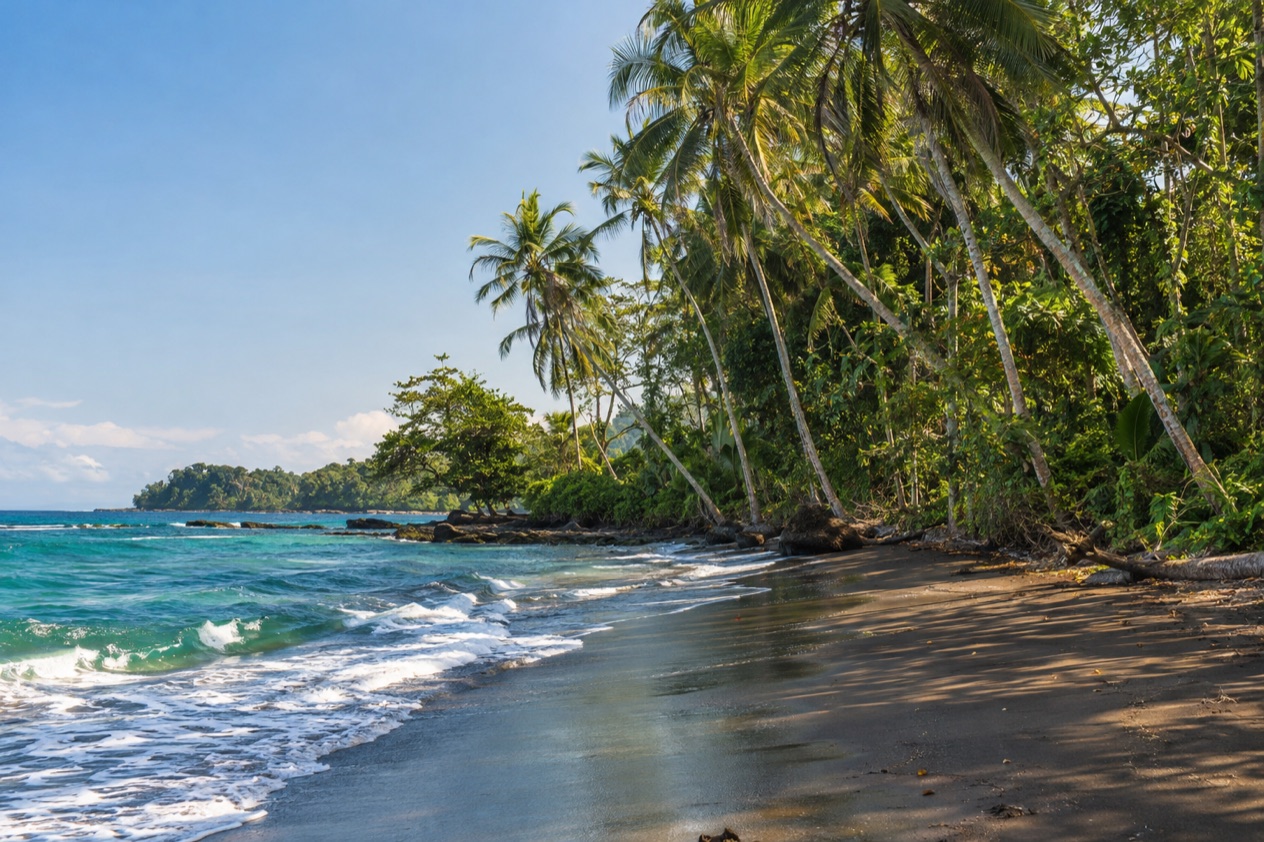
The coast road south of town links a string of beaches, and a bicycle is the way most people see them. Playa Cocles is the social one, with surfers, lounge chairs and beach bars. Farther on, the sand grows quieter and the forest closer, until Punta Uva, where palms lean over a pale curve of beach and the jungle comes down almost to the tide line.
Ride in the morning, when the air is cooler and the road has less traffic, and plan to be off the road by the time afternoon clouds build. Stop to swim only where conditions look manageable, and remember that most beaches do not have lifeguards or warnings about unsafe conditions. This outing suits most travelers, but heavy rain makes the road slick, so wait for a dry window.
Cahuita and the rainforest coast
Cahuita, a small town up the coast, is the usual day trip from Puerto Viejo. Its national park follows the shoreline through coastal forest, where trails often turn up howler monkeys, raccoons, crabs and colorful birds, and sometimes a sloth hanging in the canopy. Cahuita National Park offers a coastal-forest walk along the shoreline.
Go early, when animals are most active and the humidity is lower. Footwear that can handle mud, insect repellent and a rain jacket are more useful here than anything fancy.
Cacao, Bribri culture and wildlife
The hills behind the coast are cacao country, and small farms offer tours that follow the bean from pod to chocolate, usually ending with a tasting. Some tours also introduce the traditions of the Bribri, the Indigenous people of the Talamanca region, who have grown and used cacao for generations. These visits are a pleasant way to spend a gray or showery day, since much of the experience is under cover.
Wildlife is part of nearly every outing. Sloths, toucans, poison dart frogs and monkeys are chances, never promises, and guided walks are how most visitors find them. The Jaguar Rescue Center near town focuses on rescued wildlife, while Gandoca-Manzanillo Wildlife Refuge brings together forest, beaches and mangroves farther down the coast.
A two-day itinerary for Puerto Viejo de Talamanca in January
Day 1 belongs to the beaches closest to town. Rent a bicycle at breakfast and ride to Playa Cocles while the morning air is cool and the sand is still empty. Check with the hotel or a surf school on how the day looks, obey any flags that are posted, always swim with a buddy, and afterward take a seat at a beach shack for fish with rice and beans. With about eleven and a half hours of daylight, the evening comes early, so plan the big outing before the afternoon heat.
Spend the afternoon in town, walking the craft stalls, browsing small shops and stopping for a cold juice or a coconut cookie. The black-sand beach by town is a good place to watch the light change as the day ends. Dinner can be Caribbean-style at a small family restaurant or something from a food stand, followed by live music at a bar along the main street.
Day 2 heads out of town. Take an early local bus or a drive up the coast to Cahuita and walk the park trails in the cooler morning hours. Have lunch in Cahuita at a small restaurant serving fish and coconut dishes, then return to Puerto Viejo for a late-afternoon visit to Punta Uva, where the beach is quieter and the forest backs onto the sand.
If rain closes in on either day, switch to a cacao farm tour, a chocolate tasting or a long lunch at a covered restaurant. Cafés and craft shops in town are good for waiting out a downpour, and showers often pass in under an hour.
Is Puerto Viejo de Talamanca busy in January?
Yes, January is a lively month here, especially in its first weeks, when Costa Rican schools are on their long summer break and families head for the coast. The break runs into early February, so beaches and restaurants stay well used throughout the month, though the busiest days are around New Year’s Day.
Visitors from the United States and Europe also arrive to escape winter, which keeps the town buzzing in the evenings. The sand itself is rarely crowded, particularly if you go in the morning or head south toward the quieter beaches.
Book rooms early for the holiday weeks around New Year’s Day, and expect to reserve ahead for popular dinner spots on weekends. Later in the month you can plan with a little more flexibility, though weekends still draw Costa Rican visitors.
Rental cars are a matter of habit more than a rule: the sooner you reserve around a holiday week, the more choice you have.
What to pack for Puerto Viejo de Talamanca in January
Light, quick-drying clothing is the core of the bag, with a few items chosen for the rain and the trails.
- A light rain jacket or poncho, because showers come quickly and often.
- Sturdy sandals and closed shoes with grip for muddy trails.
- Insect repellent for forest walks and evenings by the water.
- Sunscreen and a hat, since the sun is strong even through cloud.
- A dry bag or waterproof pouch for phones and documents on bikes and boats.
- A swimsuit and a rash guard for long days in the water.
Good to know before you go
The U.S. State Department rates Costa Rica Level 2, ‘Exercise increased caution,’ due to crime; it says petty crime is common throughout Costa Rica and that violent crime also affects tourists, including armed robbery, homicide and sexual assault.
January 1 is a national holiday, so some shops and services may keep shorter hours that day, and the days around it are the busiest for buses and rooms. The Caribbean coast has its own rain calendar, so a gray day here does not mean the whole country is wet.
Bikes, taxis and local buses are the easiest ways to get around, and the coast road can be slick after heavy rain. Reserve rooms for the holiday weeks first, then tours and dinners.
Puerto Viejo de Talamanca in January vs December and February
Moving the trip four weeks earlier means December, which is noticeably rainier, with more gray days and a muddier coast. The sea is a touch warmer and the holiday atmosphere is at its height, with Christmas and New Year’s crowds filling rooms and restaurants. Travelers who want festive energy and do not mind the rain should choose December.
Moving four weeks later brings February, which is drier and brighter, with fewer showers and more open sky. The school break ends in early February, so beaches and rooms ease, and dinners are easier to arrange. The sea is still warm, and trails and boat trips are generally more pleasant, though there are still passing showers.
January sits in the middle. It is livelier than February and drier than December, a good compromise for people who want some buzz in the evenings and fewer rain-soaked days. Beach-and-hike travelers who dislike crowds should lean toward February, while those who want the holiday mood should stay in the earlier weeks of January.
Is January a good time to visit Puerto Viejo de Talamanca?
Yes, January is a good time for travelers who want warm water, green forest and a lively town, and who can handle the odd shower. It suits beach lovers, families on school break, surfers who know the reef and anyone who enjoys Caribbean food and music after dark.
It is a weaker fit for travelers who need guaranteed sun for every day or who prefer an empty town. Rainy spells can interrupt boat trips and trails, and the first weeks bring crowds and busy restaurants. People who want a quieter coast would do better in a later month.
On arrival, rent a bike, ride to the nearest beach in the morning and find out from your lodging how the sea looks that day. Then settle into the town’s rhythm with a plate of coconut rice and a cold juice. What makes January special here is the mix of holiday spirit and soft green light, when bicycles, reggae and warm rain give the coast its most social face.
Sources
- Open-Meteo / ECMWF ERA5, normals 1991-2020 computed for the grid cell at 9.6558N 82.7541W, checked October 8, 2026
- Open-Meteo Marine API, average 2015-2024, checked October 8, 2026
- sunrise-sunset.org, sunrise and sunset calculated for the 15th of the month, checked October 8, 2026
- U.S. Department of State, Costa Rica Travel Information, Safety and security (https://travel.state.gov/content/travel/en/international-travel/International-Travel-Country-Information-Pages/CostaRica.html), checked October 8, 2026
- U.S. Department of State, Costa Rica Travel Advisory, issued April 1, 2026 (https://travel.state.gov/content/travel/en/traveladvisories/traveladvisories/costa-rica-travel-advisory.html), read via the State Department open data API on October 8, 2026
- U.S. Department of State, Costa Rica Travel Information, Entry and exit requirements (https://travel.state.gov/content/travel/en/international-travel/International-Travel-Country-Information-Pages/CostaRica.html), checked October 8, 2026
To plan your stay
- Things to Do in Puerto Viejo de Talamanca: Beaches, Cahuita Day Trips, Caribbean Food and Reggae Nights
- Where to Stay in Puerto Viejo de Talamanca: Town Center, Playa Cocles, Punta Uva and Cahuita
- Best Time to Visit Puerto Viejo de Talamanca: Weather, Sea and Seasons
- Puerto Viejo de Talamanca in February: Weather, Caribbean Beaches and What to Do