
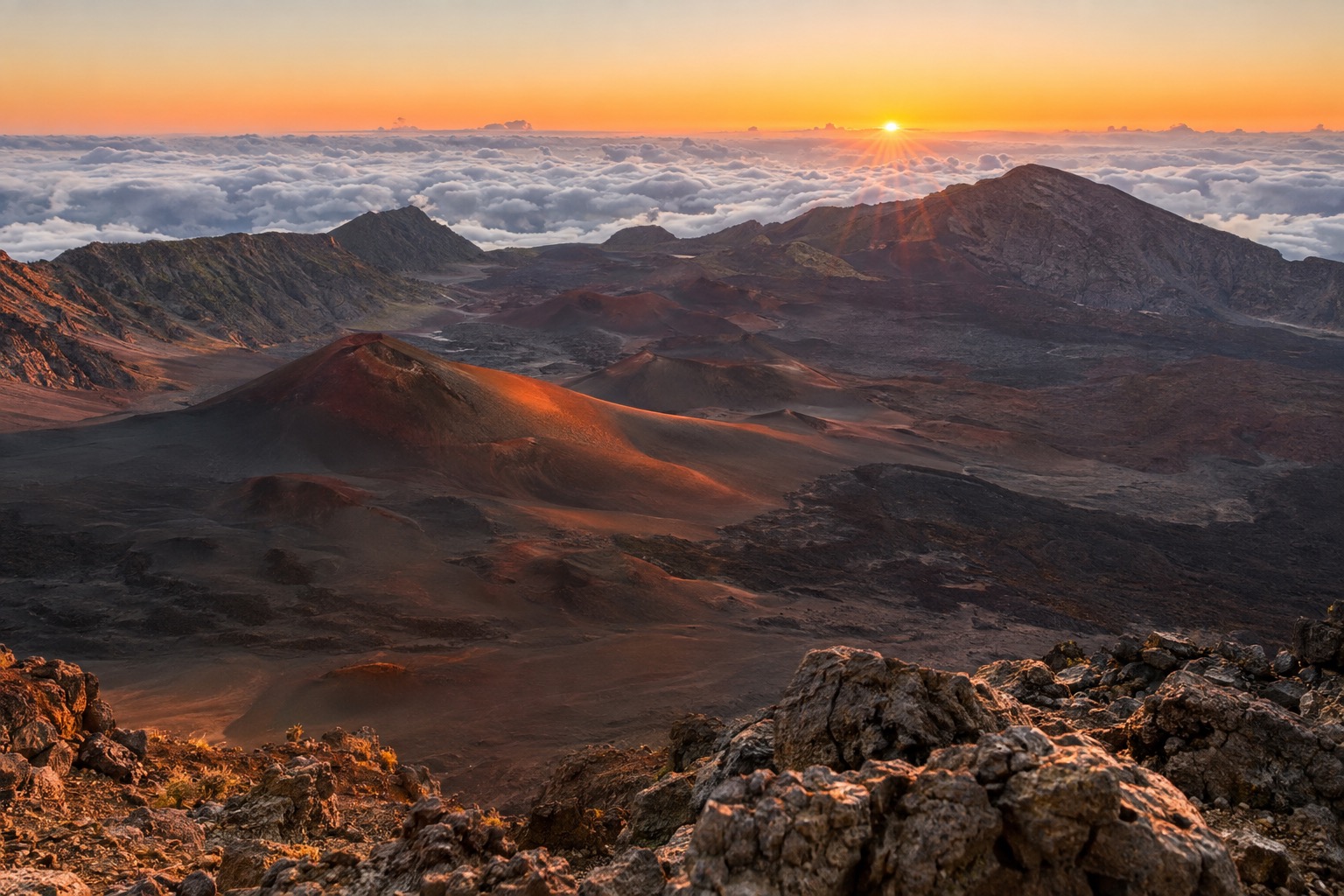
Before dawn in January, a line of headlights climbs the switchbacks of Haleakala while the sky over the crater turns from black to indigo to a thin band of orange. People stand wrapped in blankets at the summit rail, breath showing, waiting for the sun to rise out of a sea of clouds. This is the cool, quiet heart of Maui in its wetter season, a month for sunrises, crater hikes and long views above the clouds.
What is the weather like in Haleakala in January?
January at the park is cool and changeable: pleasant in the sun, cold in the shade and in the wind, and colder still at the summit. The table gives the readings at the Ranger Station, and the summit sits well below those numbers.
| Month | Average high (°F) | Average low (°F) | Rain (in) | Rain days | Daylight on the 15th |
|---|---|---|---|---|---|
| December | 61.1 | 45.1 | 5.28 | 6.6 | 10 hours 55 minutes |
| January | 61.0 | 43.9 | 5.14 | 5.9 | 11 hours 3 minutes |
| February | 59.7 | 42.7 | 4.08 | 5.4 | 11 hours 31 minutes |
The Ranger Station sits at about 7,000 feet, and the summit is 3,000 feet higher, so the sunrise crowd stands in real cold. Think of a winter morning on the mainland, with a wind that makes it feel sharper. By midday the sun on the crater floor can be warm enough to hike in a fleece, and then a cloud drifts in and the temperature falls within minutes.
Rain comes as passing showers and gray, misty spells, more often than not in the afternoon when clouds pile up against the slopes. The wetter side of the mountain is the windward flank toward Hana, where the forest stays soaked, while the crater itself is often clear early and clouded later. Rain days are a handful, and a full week of gray is uncommon.
Evenings are cold, and the stars are the reward: with the sky this dark and the air this thin, the Milky Way is easy to find on a clear night. Daylight lasts a little over eleven hours, so plan the big outdoor hours between mid-morning and mid-afternoon. Dress in layers, with a windproof shell and a hat, and keep the warmest clothes within reach in the car.
What to do in Haleakala in January
The great ritual of the month is the summit sunrise, and January suits it well. The air is crisp, the clouds often lie below the rim, and the light spreads across a crater that looks like another planet.
Hawaiians consider the mountain sacred, and the quiet that settles over the crowd at first light feels fitting. Winter also brings humpback whales to Maui, so a clear day can mean spouts and tails out in the channel when you drive back down toward the coast.
Sunrise at the summit
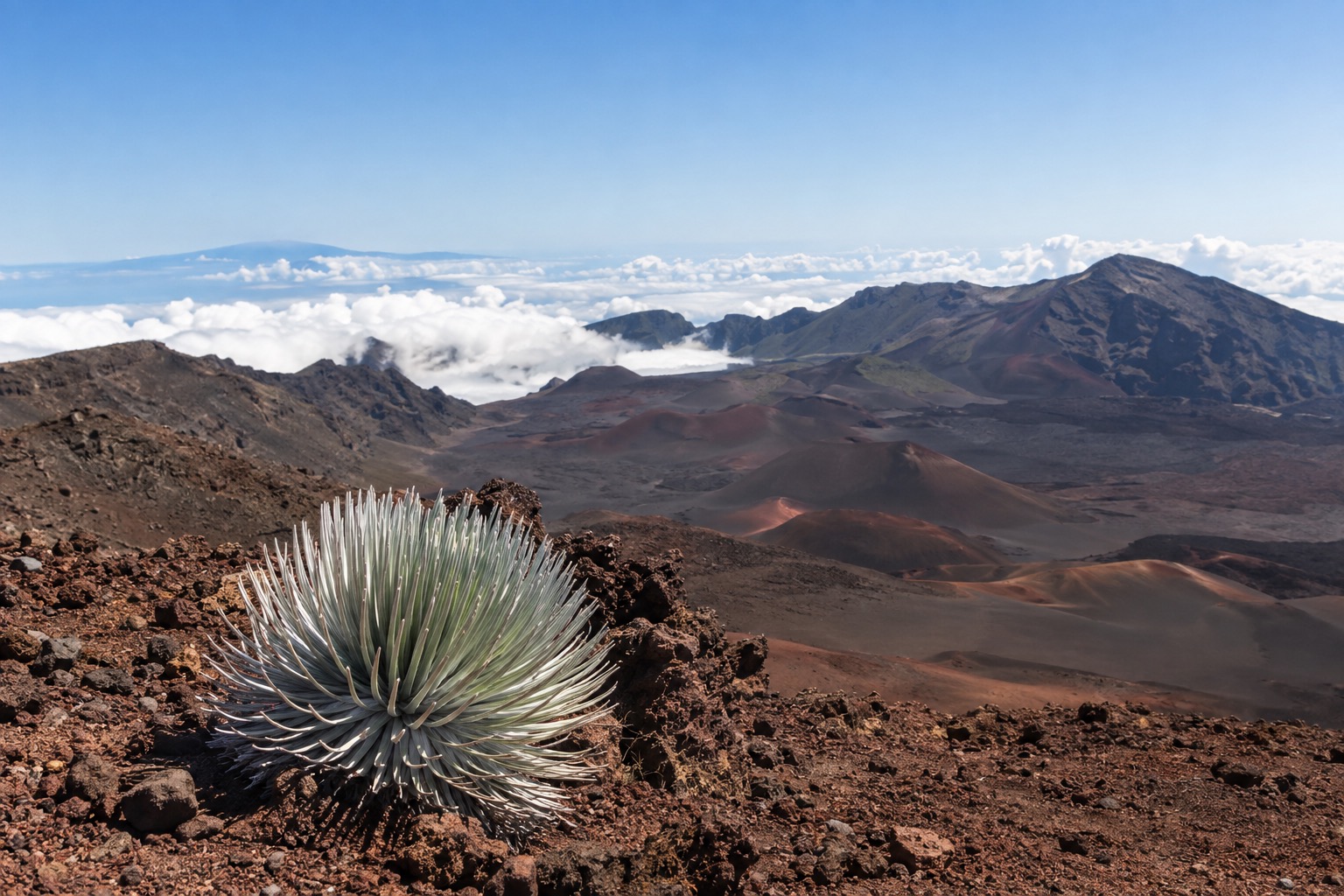
You drive up from the lower slopes in the dark, climbing through ranchland and then through a landscape of red and black volcanic cinders. The last stretch has little traffic noise, only wind and the occasional silhouette of a native silversword plant by the road. Most people head for the main summit viewing area, while others stop at the visitor center lower down, where the view is also fine and there is a little more shelter.
The colors start well before the sun appears, so settle in early and stay after the sun is up, when the crater walls turn red, gold and brown. Clouds can fill the view some mornings, and then the show is a floor of white with islands of rock poking through.
Bring everything warm you own, because standing still in the wind is far colder than the thermometer suggests. A thermos of something hot is a good companion.
Walking into the crater
The Sliding Sands trail drops from the summit into the crater floor, with views of cinder cones in shades of rust, purple and gray. January is a good month for it because the temperatures suit exertion, and you do not bake in the sun as you would at lower elevations. The trail is downhill first, which means the return is uphill and slow at this altitude, so turn around sooner than you think you should.
If you want something gentler, short paths near the visitor centers give wide views with only a few minutes of walking. Go in the middle of the day when the light is steady and the wind is often less fierce. The thin air tires visitors from sea level quickly, so move slowly, drink water and rest when your head feels light.
Stargazing after dark
The park is a favorite for night skies because the summit rises above much of the island’s light and moisture. On a clear January night the stars feel close, and winter constellations such as Orion are high and bright. It is cold enough for a heavy jacket, gloves and a hat, and the mountain road is dark, so drive slowly on the way down.
Clouds and showers decide the evening, so keep an eye on the sky around sunset and be ready to try another night. Even a short stop at a pullout, with the engine off and eyes adjusted to the dark, can reward you with more stars than most people have seen in years.
Lower down, the Kipahulu side of the park near Hana has waterfalls, pools and bamboo forest, and in the wetter months the streams run full. Up on the slopes, upcountry towns offer a warm lunch after a cold morning: plate lunches, soup, fresh bread and hot coffee at a country café.
Protein-heavy local comfort food is exactly what the weather asks for, and a bowl of saimin or a plate of kalua pork tastes better at this altitude. Do not touch the silversword or walk off the trail, since the cinder landscape is fragile and slow to heal.
Other winter pleasures are close by. Whale watching boats leave from the west and south coasts, and from a sunny beach in Kihei or Wailea you can often spot spouts from the sand. Days on the beach and mornings on the mountain make a good pairing, since the coast stays warm while the summit is wintry.
A two-day itinerary for Haleakala in January
Day 1 starts in the dark with the drive up for sunrise, dressed in every layer you have. Stay at the summit as the light changes, then walk a short path or two while the air is still crisp. By mid-morning, head down to a café in the upcountry towns for a hot breakfast and a rest from the altitude.
Spend the afternoon on the cinder slopes at the visitor center area or along the crater rim, when the sun is at its warmest and the wind softer. Return to the coast for a late dinner, and if the sky is clear, make a stop for stars before bed. If the weather turns, a long lunch in an upcountry town and a browse through small shops fill the day well.
Day 2 is for the other side of the mountain: head toward Hana and the Kipahulu district in the morning, where the wetter forest and waterfalls look their best in the winter months. Walk to a pool or a viewpoint, take your time on the winding road and stop at a fruit stand or a banana bread stall on the way.
Have lunch in a roadside spot, then wander the coast in the afternoon before heading back while some daylight remains, since the day is a little over eleven hours long. Showers are likely on this side, so keep a rain jacket handy. If it pours, shift the plan to a museum, a farm stand or a covered market, and finish with dinner on the dry side of the island.
Is Haleakala busy in January?
January is moderately busy, with the holiday crowds thinning after the first week and the mountain settling into a steadier pace. Early in the month, visitors from the mainland still fill rooms and rental cars, and the sunrise lot can be full well before dawn. By the middle and end of the month the island relaxes, restaurant tables are easier to find and the park feels calmer outside sunrise.
Sunrise is the pressure point all year, so it shapes your plan more than the calendar does. Midday on the crater trails is quiet, and the late afternoon is quieter still. Those who prefer solitude should walk away from the summit crowd and into the crater itself, where silence is easy to find.
Book rooms and rental cars early if you are traveling in the first week or around the long holiday weekend near the end of the month. For the quieter middle weeks, a little more flexibility works, though booking ahead still makes sense for a popular island. Sunrise at the summit requires a reservation in advance, so look into that as soon as your dates are set.
What to pack for Haleakala in January
Pack for two climates: warm beaches on the coast and a near-winter mountain above. Layers matter more than any single heavy item.
- A warm jacket and a windproof shell, for the summit wind before dawn.
- A hat and gloves, since hands and ears go numb while you wait for sunrise.
- Sturdy closed shoes with grip, for cinder trails and loose gravel.
- A light rain jacket, for passing showers on the Hana side.
- Sunscreen and sunglasses, because the sun is strong at altitude even when it is cold.
- A refillable water bottle, for hiking in thin air.
Good to know before you go
January falls outside the Central Pacific hurricane season, which runs from June 1 to November 30, but winter weather on the mountain can still change fast with cloud, wind and cold. Fill the gas tank before heading up, since there is no fuel on the mountain, and allow extra time for the winding road in the dark. Keep the first morning free of other commitments so a cloudy sunrise can be tried again the next day.
Haleakala in January vs December and February
Moving the trip to December brings the holiday rush, with fuller rooms, busier roads and festive lights in the towns, and the weather is just as cool and a touch wetter. Whales are in the channel in both months, but December has more crowds around the summit at sunrise.
February is slightly colder and a little drier, and the crowds settle further, though school breaks and the long weekend bring a brief rise. Whale season is at its height, and the mountain is often clearer on cold mornings, which is good for stars and views.
Those who want the lights and the festive mood should choose December. Travelers who prefer easier logistics and fewer people will find January a fine middle path, and February suits those who like crisp mornings and whale watching with calmer streets.
Is January a good time to visit Haleakala?
Yes, January is a good time for travelers who love cool air, big skies and quiet trails, and who are happy to pair mountain mornings with beach afternoons. It suits hikers, photographers, stargazers and anyone who wants the volcano at its crispest.
It is less ideal for those who want warm weather at the summit or a guaranteed clear sky, since clouds and showers can hide the view on any given day. If you dislike cold mornings, consider another season.
On arrival, secure your sunrise plan first and keep a flexible second morning in case of cloud. Then enjoy the contrast that defines this month: a frozen dawn above the clouds, a warm lunch in the upcountry, and a beach sunset with whales out in the channel.
Sources
- NOAA NCEI, monthly normals 1991-2020, station USC00511004, checked September 8, 2026
- sunrise-sunset.org, sunrise and sunset calculated for the 15th of the month, checked September 8, 2026
- NOAA NCEI, normals 1991-2020, station USC00511004, via PLAN-HAWAII.md §1
- NWS Honolulu / Central Pacific Hurricane Center, « 2026 Central Pacific Hurricane Season Outlook », weather.gov/hfo/hurricaneOutlook2026, checked September 24, 2026
To plan your stay
- Haleakala Sunrise: Summit Reservations, Cold Dawn Conditions and the Drive Up
- Best Time to Visit Haleakala: Weather by Month, Sunrise Seasons, Crowds and Events
- Haleakala in February: Summit Sunrise, Cool Weather and Whale Season
- Haleakala in December: Cold Summit Sunrises, Winter Weather and What to Do