
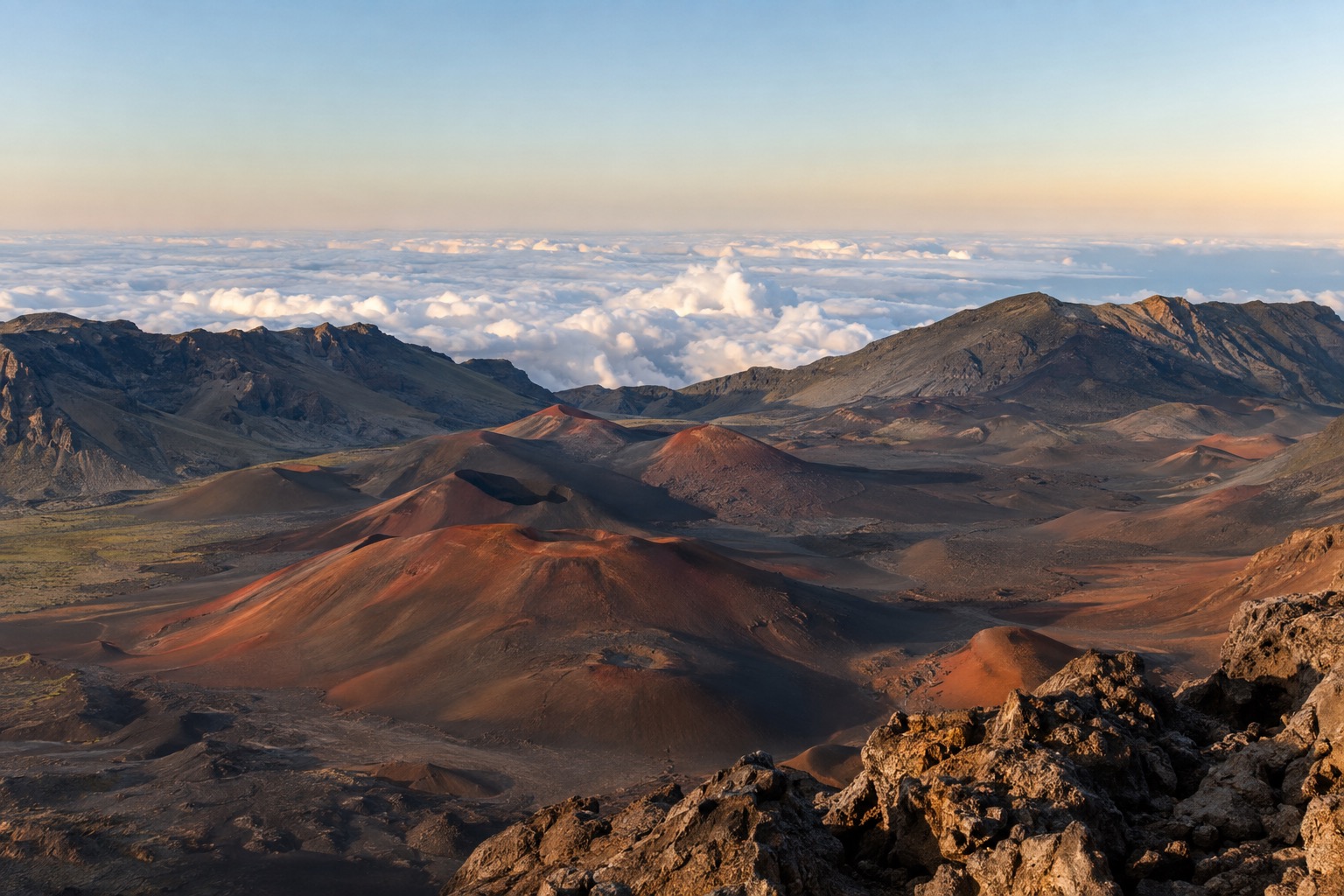
Before dawn in February, the parking area at the top of Haleakala is full of people in borrowed blankets and wool hats, all facing east and waiting for the cloud floor to turn orange. The air is thin and sharp, and when the sun finally clears the horizon a hush falls over the crater. Down on the coast the humpback whales are in the channel, so a winter trip here pairs a cold summit morning with warm days at sea level.
What is the weather like in Haleakala in February?
February in the park is cool and fairly damp, with crisp mornings, mild afternoons in the sun and showers that come in on the trade winds.
| Month | Average high (°F) | Average low (°F) | Rain days |
|---|---|---|---|
| January | 61.0 | 43.9 | 5.9 |
| February | 59.7 | 42.7 | 5.4 |
| March | 59.7 | 43.1 | 7.6 |
These numbers belong to the Ranger Station level of the mountain, at about 7,000 feet, and the summit sits 3,000 feet higher, so it is colder still. Sunrise visitors stand in the dark at temperatures that feel like deep winter, and the wind makes it worse. Once the sun is up the air warms quickly, and by midmorning a light jacket may be enough on the trails.
Rain falls mostly as passing showers, and a day with a real downpour is rare. Clouds often fill the crater by late morning and can drift up from the windward side, so the clearest views tend to come early. Frost is not common, though a freezing night can happen once in a while. Daylight lasts a bit over eleven hours in mid-month, which leaves a comfortable window for hiking.
Dress in layers: a warm hat, gloves and a windproof coat for the summit, then lighter clothes for the trail. Lower on the island, in Kihei and Wailea, the weather is a different story, drier and much warmer, which is why many visitors treat the volcano as a half day and the beach as the rest.
What to do in Haleakala in February
February is a winter month on Maui, and the biggest seasonal draw is not on the mountain at all. The waters off the west and south coasts are full of humpback whales, and spouts, tail slaps and the occasional breach may be visible from a lookout or a boat. The drive down from the crater in the afternoon makes a natural bridge between the cold summit and a warm coastline where you can scan the sea.
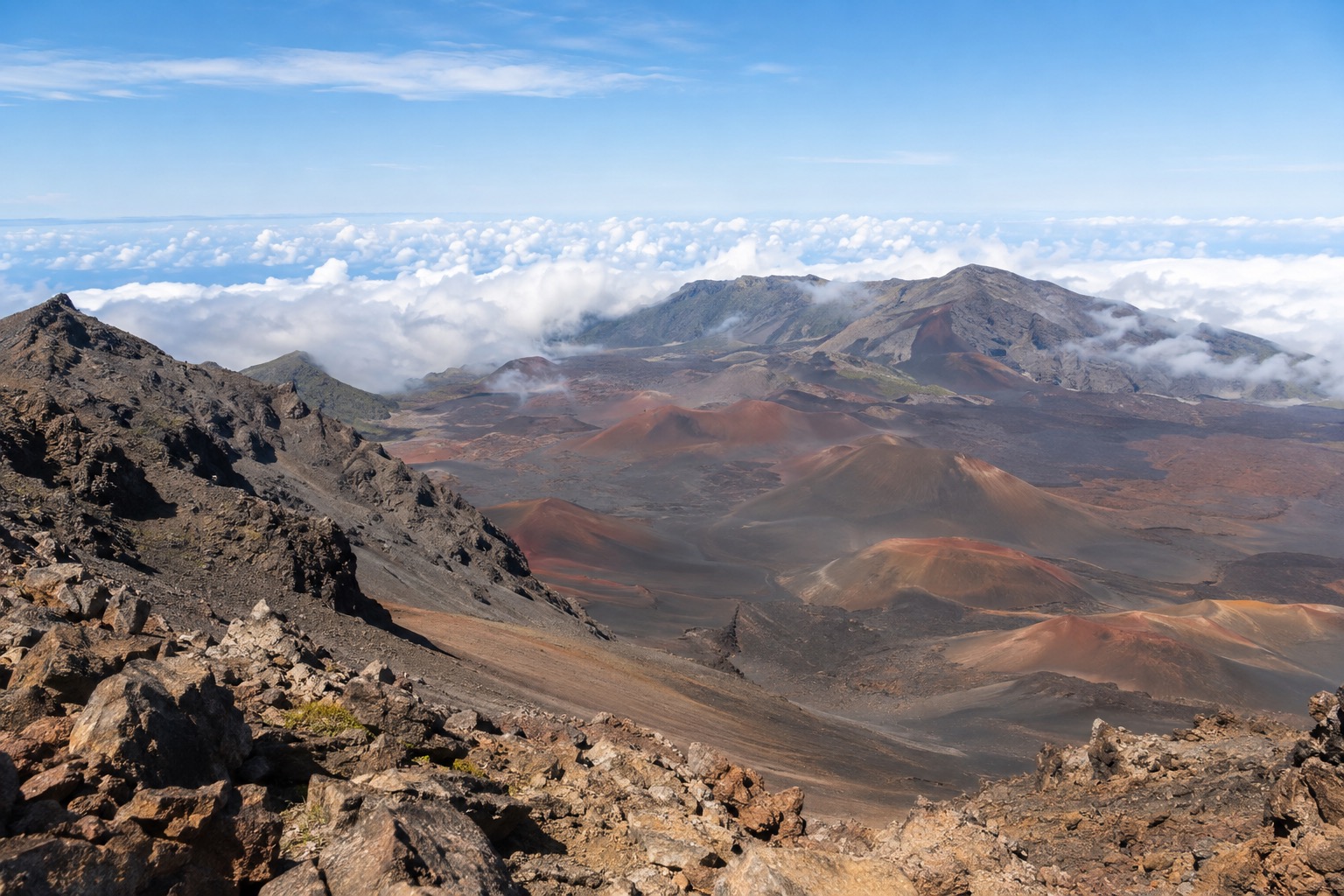
The crater itself is the day’s anchor. Its floor is a landscape of red and gray cinder cones, and the cold clear air often gives long views when the cloud layer sits below you. Rare silversword plants grow on the slopes, and the nene, Hawaii’s state bird, sometimes appears near the trails. Keep to the paths and never step on the plants.
The summit at sunrise
Sunrise is the signature experience, and February’s cold, clear mornings can make it a good one, though clouds sometimes block the show. People arrive in the dark and wait in the cold, and the sky goes from deep blue to pink and gold before the sun appears. Bring everything warm you own, because the wait is long and the wind is steady.
A sunrise visit needs a reservation, so book it before you arrive. After the sun is up, most people leave, and the lookouts become quiet, which is a good moment to walk the short paths near the visitor center and watch the colors change on the crater walls.
Walking into the crater
The trails drop from the rim into a surreal cinder landscape, and even a short walk gives a sense of scale. Cool temperatures are a gift here, since the sun is strong at altitude but the air stays comfortable. Go early, bring water and remember the climb back up is the hard part at this elevation.
Stay on the marked trail, which protects fragile plants and nesting birds. If clouds roll in, the colors go flat and the walk feels moody and quiet, a different experience but still a striking one. Walkers with a few hours to spare often pair the trail with a stop at the lower overlooks.
Stargazing after dark
Winter nights are long, and the dry, high air makes this one of the best places in the islands to look at stars. Visitors who stay after sunset often see the Milky Way arch over the crater when the sky is clear. It is very cold after dark, so wear every layer you brought.
Clouds can come and go, so treat it as a chance rather than a promise. Even on a partly cloudy night, the quiet of the mountain is memorable. Drive down slowly, because the road is dark and winding and wildlife can be near it.
After the mountain, the usual comfort is a plate lunch, a bowl of poke or a shave ice at a roadside stand in upcountry towns, where the air is mild and the fields are green. Coffee, fresh bread and local produce are easy to find on the way down.
A two-day itinerary for Haleakala in February
Day 1 starts well before dawn with the drive to the summit for sunrise, with your reservation in hand and every warm layer on. Stay until the light fills the crater, then walk a short trail near the visitor center while the air is still clear. By late morning clouds often build, so head downhill.
Stop in an upcountry town for a late breakfast or early lunch at a café or bakery, then spend the afternoon on the coast. With whales in the channel this month, a boat trip or a lookout on the south shore fits the day, and a swim is a pleasant finish if the beach conditions look right. Dinner at a casual spot near the water ends the day.
Day 2 is slower. Sleep in, then return to the park in the morning for a longer crater walk, since the cool weather suits hiking. Pack water and snacks, and turn around early enough to leave energy for the climb back out.
For the afternoon, wander the green slopes of the upcountry, where gardens, farm stands and small galleries are good for a rainy hour. If the weather turns wet, a museum or a long lunch indoors is an easy plan. Stay for sunset if the sky is clear, then finish with the stars before heading down in the dark.
Is Haleakala busy in February?
February is moderately busy, with the winter crowds still on Maui and sunrise slots filling quickly.
Mainland visitors escaping the cold keep the island lively, and the Presidents Day weekend tends to bring extra families. The summit is the busiest at dawn, then thins out by midmorning. Trails in the crater stay quiet most of the day, and the lower lookouts rarely feel crowded.
Rooms and rental cars are easiest to find when you book early, especially around holiday weekends. Restaurant tables in the resort areas fill up in the evening, so reserve ahead for popular spots. Quieter weeks in the middle and end of the month are more relaxed, and later booking is usually fine then.
The one reservation that matters most is the summit sunrise, which needs a permit that is booked ahead. Make it as soon as your dates are set, since the slots are limited and are the first thing to go.
What to pack for Haleakala in February
Pack for two climates: a freezing summit and a warm coast.
- A warm hat and gloves, because the wait for sunrise is long and windy.
- A windproof insulated jacket for the crater rim.
- Sturdy closed shoes for cinder trails.
- A light rain shell for passing showers.
- Mineral sunscreen, since the sun is strong at altitude.
- Swimwear and a light layer for the warm coast afterward.
Good to know before you go
February is outside the official hurricane season, which runs from June 1 to November 30. The main planning step is the sunrise reservation, and a rental car makes the whole trip easier because the summit road is long and winding. Leave extra time for the drive in the dark, and fill the tank beforehand.
Haleakala in February vs January and March
Moving earlier to January brings slightly warmer, wetter days and the peak of the winter crowds, especially around the New Year weeks. Whales are in the channel and the summit is clear on good mornings, but rooms are in demand.
Moving later to March brings more rain days at the crater and a gradual end to whale season as the animals begin heading north. Crowds ease a little, though spring break families start to arrive, so the summit can feel just as busy.
Choose February if you want cold, crisp mornings with whales still near the coast and a middle ground on crowds. Shift to January for the holiday mood, or to March if you want a few more weeks of spring warmth below the mountain.
Is February a good time to visit Haleakala?
Yes, February suits travelers who like cool air, big views and whale watching, and who don’t mind a very early start.
It is a good month for hikers, photographers and anyone who wants the summit sunrise with a chance of clear sky. Families with small children, or anyone who dislikes cold wind before dawn, may prefer to see the crater at midday instead, when it is warmer.
On arrival, secure your sunrise reservation first, then plan the rest around it. Keep one flexible afternoon for rain, and save the beach for the warm side of the island. What makes February special here is the contrast: a frozen crater at dawn, then a warm shore with humpbacks offshore by afternoon.
Sources
- NOAA NCEI, monthly normals 1991-2020, station USC00511004, checked September 8, 2026
- sunrise-sunset.org, sunrise and sunset calculated for the 15th of the month, checked September 8, 2026
- NOAA NCEI, normals 1991-2020, station USC00511004, via PLAN-HAWAII.md §1
- NWS Honolulu / Central Pacific Hurricane Center, « 2026 Central Pacific Hurricane Season Outlook », weather.gov/hfo/hurricaneOutlook2026, checked September 24, 2026