
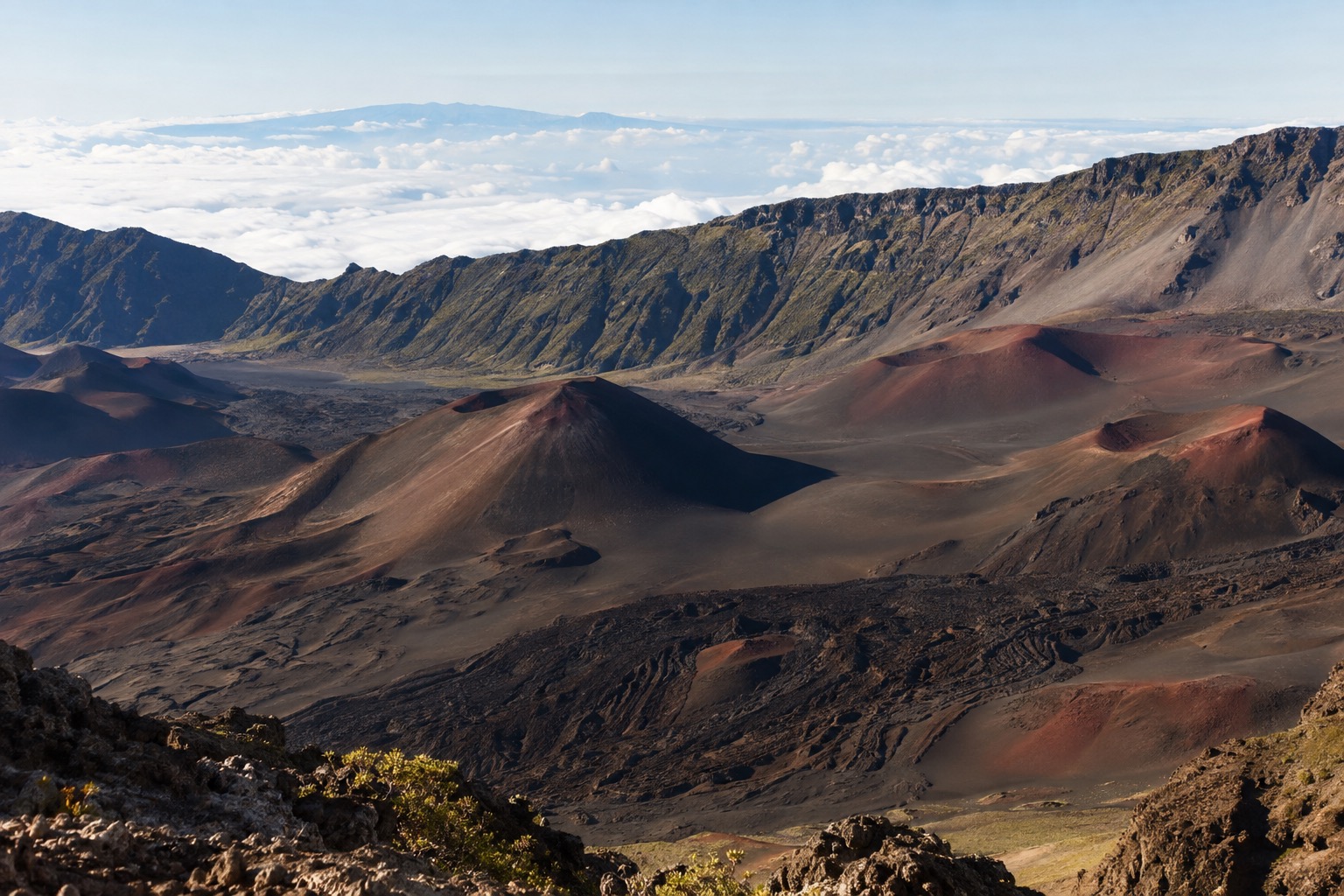
In December, well before daybreak, folks in winter coats and blankets they have borrowed gather in the summit parking lot of Haleakala, their breath misting as they wait for a slender orange line to show above a sea of clouds. Down in the crater the cinder cones turn from black to rust to red as the sun climbs. It is a cold, quiet and often spectacular month on the volcano, well suited to travelers who want sunrises, hiking and stargazing more than beach hours.
What is the weather like in Haleakala in December?
December on the volcano is cool and changeable, with chilly days at the park’s lower elevations and genuinely cold air toward the top. Rain comes in passing spells rather than all-day gray.
| Month | Average high (°F) | Average low (°F) | Rain days |
|---|---|---|---|
| November | 63.1 | 47.0 | 6.9 |
| December | 61.1 | 45.1 | 6.6 |
| January | 61.0 | 43.9 | 5.9 |
At around 7,000 feet it already feels biting, and up at the summit, another 3,000 feet higher, the cold digs in even deeper. Before sunrise, expect the kind of cold that makes hands ache, with wind that makes it feel sharper. By midday in the sun the crater can feel pleasant, though clouds often roll in and the temperature drops quickly when they do.
Rain falls in short showers, and the clouds that drift up the slopes can hide the view entirely for an hour or a whole morning. Winter is the wetter half of the Hawaiian year, and the mountain catches moisture more than the dry leeward beaches far below. A day can go from clear to foggy and back again, so the sunrise is a chance rather than a promise.
Daylight lasts about ten hours and fifty-five minutes in mid-December, so afternoons end early and the evenings are long, cold and very dark. That darkness is a gift for stargazing when the sky is clear. Wear layers you can add and remove, and keep a warm hat and gloves within reach.
What to do in Haleakala in December
The great ritual of the volcano is the summit sunrise, and in December it has a particular feel: the cold is serious, the crowd bundled up, and the sun rises late enough that you are not up quite as impossibly early as in summer. The sea of clouds below can turn pink and gold, and when the sky cooperates, the whole crater glows. When clouds close in, the morning becomes a quiet, misty walk instead.
To see the sunrise from the top, a reservation is required, so lock it in before the rest of your day starts to form around that plan. Many visitors drive up in the dark, which means winding roads, wind and sometimes fog, so allow plenty of time and go slowly. If the clouds sit on the summit, the lower lookouts sometimes sit above them and give the better view.
Hiking into the crater
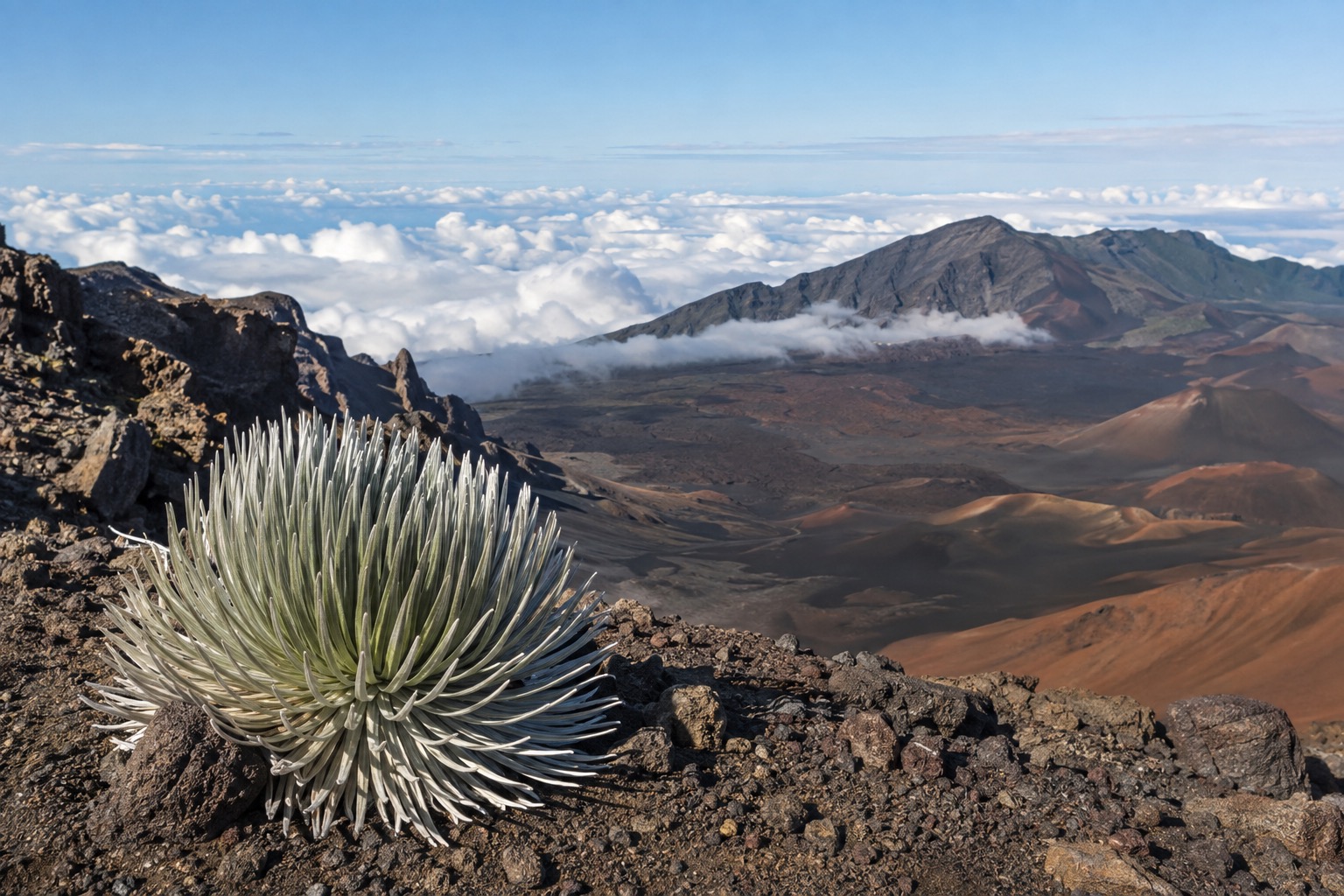
The trails that drop into the volcano’s crater show a landscape that looks more like another planet than Hawaii: red and black cinders, silver-leaved silverswords, and long views across a bowl of lava and ash. The Sliding Sands trail is the classic way in, starting at the summit area and descending through colors that change with every bend.
In December the cool air actually helps, since the hike has no heat to fight, though the climb back out is hard at that altitude and the thin air slows everyone down. Start before the day warms up, bring extra water beyond what feels necessary, and head back while you still have energy. A short walk near the rim gives much of the reward for a fraction of the effort, and suits families or anyone not acclimated.
Stargazing after dark
With long nights and thin air above much of the cloud cover, the volcano is one of the great places in the islands to watch the stars. On a clear December evening the Milky Way can stretch across the sky, and planets and constellations stand out sharply. It is also very cold, so dress for winter, with a hat, gloves and a warm coat.
Even if you only stay a short while, the quiet and the darkness are the point. Park in the designated areas, keep lights low so others’ eyes can adjust, and bring a thermos of something hot. Cloudy nights are common in the wetter season, so treat it as a bonus when the sky opens.
Humpback whales from the coast
Winter is humpback whale season in Hawaii, and while the volcano itself sits far above the sea, the slopes and the drive down give views over the water where whales sometimes surface. Many visitors pair a mountain morning with an afternoon down at the coast, watching for spouts and breaching from shore or on a boat.
Sightings are a chance, never a certainty, but December is a good month to hope for them. Binoculars help, and a calm, clear stretch of coast in the afternoon is the best bet. Winter surf can be big on some shores, so watch the beach signs and lifeguards rather than assuming the water is gentle.
Back on the mountain, the park’s visitor centers are good places to warm up, learn about the silversword and the nene, Hawaii’s state bird, and watch for the weather to shift. A hot drink after a cold sunrise tastes better than it has any right to.
A two-day itinerary for Haleakala in December
Day 1 begins in the dark, with a drive up to the summit for the sunrise you reserved. Wear all the layers you have, get there early, and linger once the sun has risen to see the crater shift in the light. Then walk the rim trails and visit the summit-area overlooks while the air is still crisp.
By late morning, head down for a hearty breakfast or early lunch in an upcountry town, where cafés and bakeries serve hot coffee and plate lunches. Spend the afternoon at a lower viewpoint or a short nature walk, resting after the early start. In the evening, eat somewhere warm and turn in early.
Day 2 is for the crater itself. Start after a slower breakfast and drive back up for a hike on the Sliding Sands trail, going only as far as your energy and the thin air allow. The light is good mid-morning and the cold has eased a little.
In the afternoon, drop to the coast for a whale-watching walk or a drive along the shore, and stay for sunset. If rain or fog moves in on the mountain, switch to a visitor center, a farm stand or a café stop, and save the stars for a clearer night.
Is Haleakala busy in December?
Yes, particularly around the winter holidays, when families and travelers from the mainland fill the islands. The summit sunrise is the busiest moment, with a steady line of cars climbing in the dark and a full parking area at first light.
The park itself spreads people out, so the trails and lower overlooks can feel calm even when the summit is crowded. Midday and late afternoon are quieter than dawn. Rooms and rental cars in the island’s resort areas tend to fill early for the holiday weeks, so book those well ahead. Weeks outside the holidays are easier, and restaurant tables are simpler to find then.
The sunrise reservation is the one to secure first, since it controls the shape of your whole first morning. As soon as you have it, plan everything else for the trip around that, and keep an afternoon open in case clouds or fatigue shift your plans.
What to pack for Haleakala in December
Pack for a cold mountain and a warm coast in the same trip, with layers that come off easily.
- Bring a cozy jacket and a hat, since it gets genuinely chilly at the top before sunrise.
- Gloves and a scarf, since the wind makes hands and ears suffer.
- Bring closed shoes with good support, since the trails are made of cinder and the ground is not level.
- Pack a thin rain jacket for fog and scattered showers.
- Water and snacks for hiking in thin air.
- A headlamp or flashlight for the starry sky and the drive in darkness.
Good to know before you go
December falls just after the Central Pacific hurricane season, which runs from June 1 to November 30, so storms are not the usual worry, though winter weather can still bring heavy rain and fog to the slopes. Holiday weeks fill the roads and the summit, so start early and drive carefully on the winding mountain road, especially in the dark. Reserve the sunrise first, and leave room in your plans for the weather to change.
Haleakala in December vs November and January
Moving a month earlier brings slightly warmer air on the mountain and a calmer stretch before the holiday rush. The sea has not yet fully entered its big winter mood, and whale sightings are just beginning to build. Rooms and cars are easier to find before the holiday weeks arrive.
Moving a month later keeps the cold and the clear-sky chances, with a touch fewer rainy days and the whales often in full swing. Once the winter holidays are over, the crowds ease and the island settles into a quieter rhythm, though the summit stays just as chilly.
Travelers who want the festive energy and the holiday atmosphere should choose December. Those who prefer fewer people and a calmer pace may like the weeks on either side better, while stargazers and sunrise seekers will find all three months similar on the mountain.
Is December a good time to visit Haleakala?
Yes, for travelers who love dramatic mountain light, cold clear nights and a landscape that feels far from the beach. It suits hikers, photographers and stargazers best, and anyone happy to bundle up for a sunrise.
For people who want all-day warmth or a sure thing on views, it works less well, because clouds and rain may roll in. As soon as you arrive, secure your sunrise permit first, then pick a clear afternoon for the crater walk and keep the night for stargazing. What makes December special here is the contrast: a cold, silent summit at dawn, whales offshore in the afternoon, and a long night sky overhead, all within a single day on one island.
Sources
- NOAA NCEI, monthly normals 1991-2020, station USC00511004, checked September 8, 2026
- sunrise-sunset.org, sunrise and sunset calculated for the 15th of the month, checked September 8, 2026
- NOAA NCEI, normals 1991-2020, station USC00511004, via PLAN-HAWAII.md §1
- NWS Honolulu / Central Pacific Hurricane Center, « 2026 Central Pacific Hurricane Season Outlook », weather.gov/hfo/hurricaneOutlook2026, checked September 24, 2026