
On a February morning in Hana, the rain has usually just passed, the pastures along the coast glisten, and roosters call from yards full of ginger and plumeria. Banana leaves drip, a stand by the road sells warm banana bread, and the light comes through the clouds in long soft bands over the sea. February here is green, quiet and unhurried, a good month for waterfalls, slow drives and a few days in the small town at the end of the road.
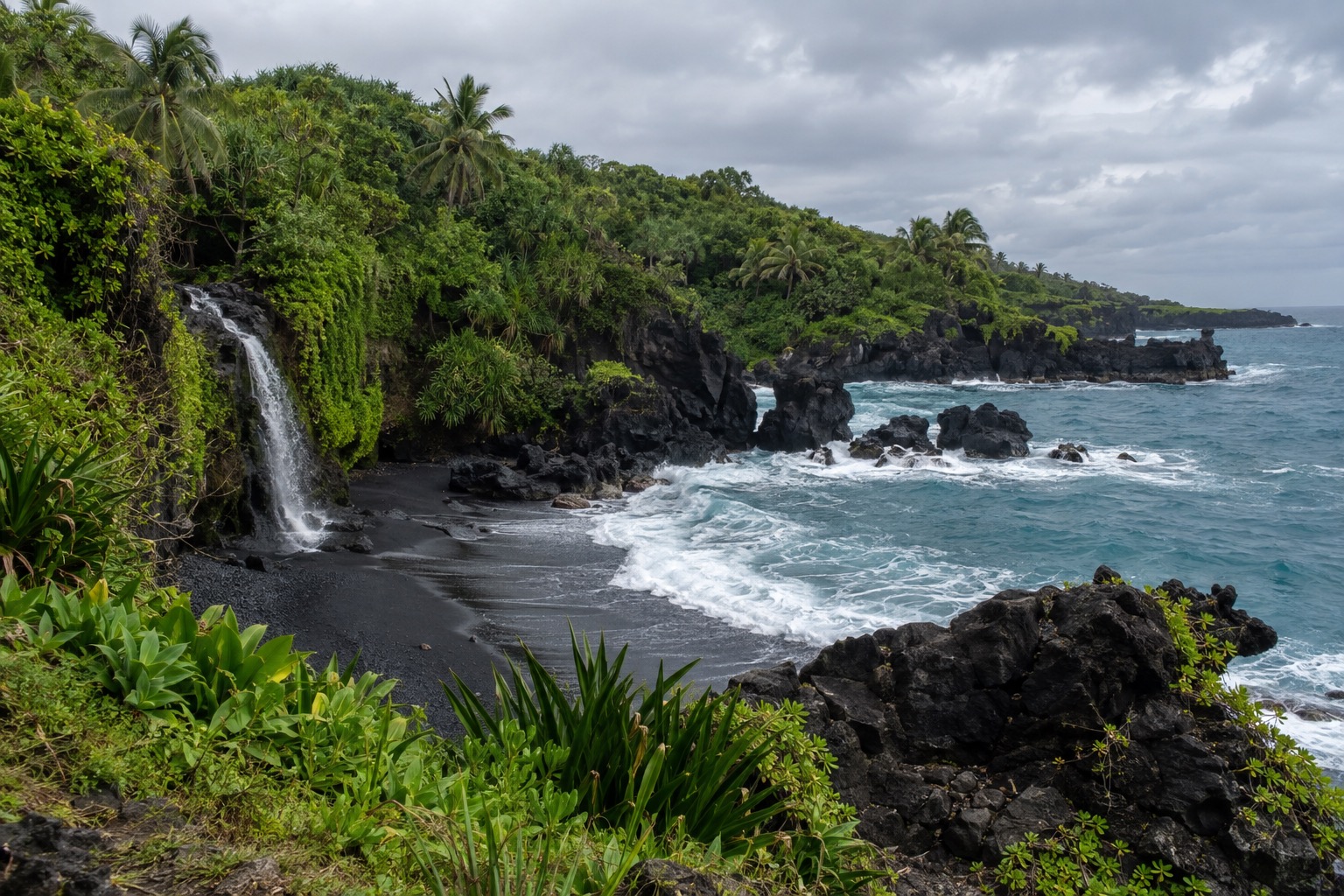
What is the weather like in Hana in February?
February in Hana is warm and soft, with comfortable days, mild nights and showers that pass through at any hour. The east side of Maui faces the trade winds, so clouds and rain arrive here first, which keeps everything lush.
| Month | Average high (°F) | Average low (°F) | Rain days | Sea (°F) |
|---|---|---|---|---|
| January | 77.8 | 64.8 | 5.64 in of rain | 77.5 |
| February | 77.3 | 65.0 | 5.45 in of rain | 76.4 |
| March | 77.5 | 65.7 | 8.46 in of rain | 75.8 |
Mornings are often the clearest part of the day, fresh enough that a light layer feels good over a coffee on a lanai. Afternoons are mild, and a shower can arrive from the mountain in minutes, soak the road and move on, leaving a rainbow behind. Rain falls mostly on the slopes and the windward coast, so the town and the waterfall stops get the most, while the dry leeward side of the island is a different climate altogether.
Evenings cool off gently, enough for a light sweater or a thin rain jacket, though never cold. The light is the real pleasure of the month: low, golden and filtered, with days of about eleven and a half hours, so the sun is down by early evening and the stars are bright over a town with few streetlights. Wear shoes that can get wet, because trails and roadside pullouts turn muddy quickly.
Can you swim in Hana in February?
You can count on water in the mid-70s, based on marine data, so swimming feels comfortable and a light rash guard is enough for nearly everyone.
The question is more about waves and rocks than temperature. Winter swells wrap around the north and east shores of Maui, and Hana Bay and the black and red sand beaches nearby can have surf, shore break and currents that change quickly.
Hana Bay, with its pier and its protected feel on gentle days, is where locals launch canoes and children paddle at the edge, but conditions vary day to day. Look at the beach signs, follow the lifeguard where one is posted, and stay out when the water looks rough or brown after heavy rain.
Snorkeling here is a calm-day activity, best in the clear water of the morning, and surfers and bodyboarders who know the coast find their own spots. Nervous swimmers and families with small children may prefer a quick wade, and a mask and fins are worth carrying in the car. Do not touch the reef or the sea turtles that sometimes rest near the shore.
What to do in Hana in February
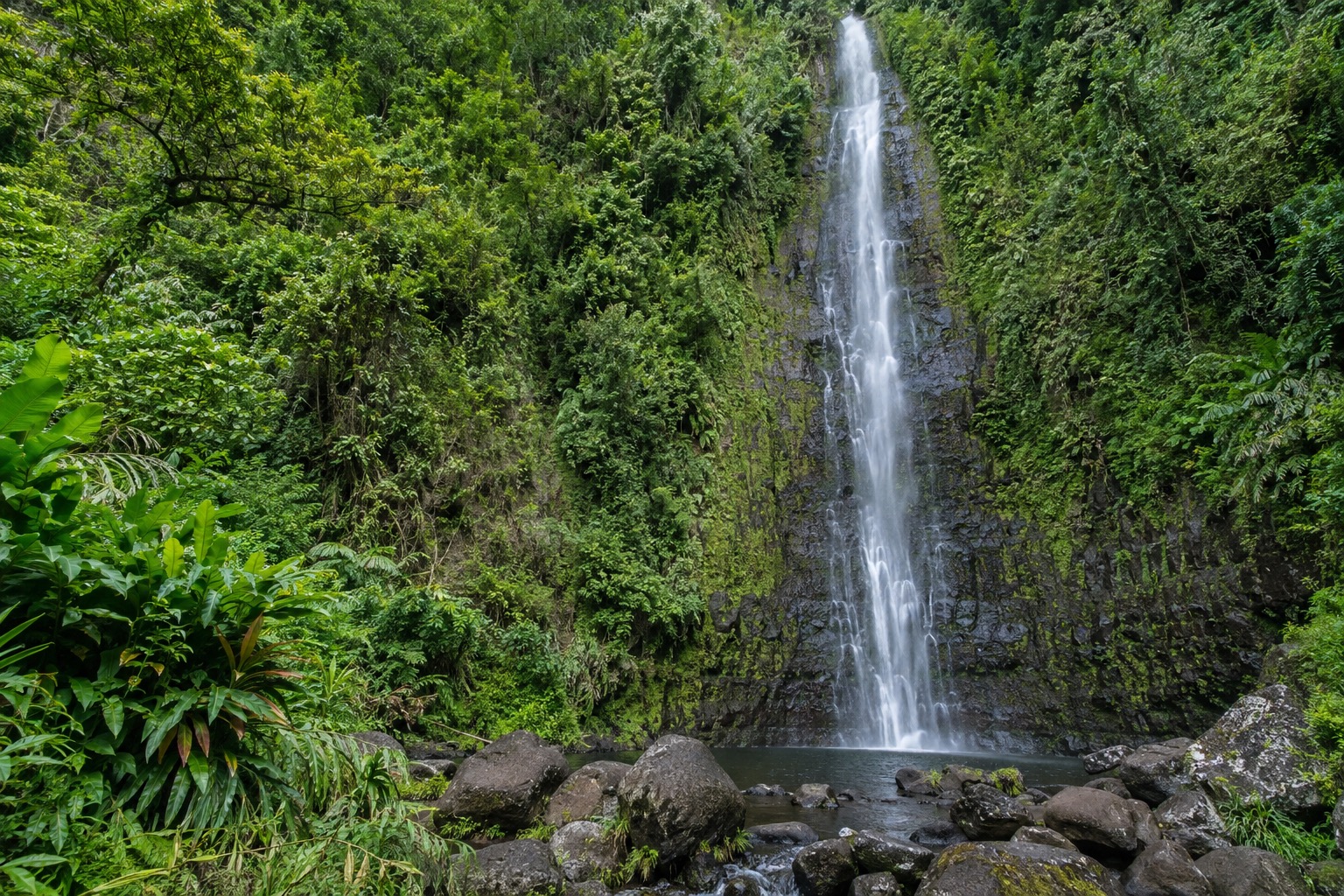
February in Hana is about slow green things. Waterfalls run full, taro patches shine, and the long winding Hana Highway is most dramatic, with one-lane bridges and ocean views around each curve.
There is no big festival to plan around here, but the season brings humpback whales to Maui waters, so on a clear day you may see spouts and breaches from the road or from a bluff above the sea. It is a chance, never a promise, and calm mornings help.
The mood in town is quiet. Hana is small, with a general store, a few food trucks and stands, a historic cultural center and a handful of lodgings, so evenings revolve around dinner and porch time rather than nightlife. Fruit stands along the road sell bananas, papayas and coconut candy, and a plate lunch of rice, macaroni salad and kalua pork or fish is the classic way to refuel.
The road to Hana and its waterfalls
The drive itself is the outing. From the Paia side the road curls through bamboo, rainforest and fern-hung cliffs, with stops at waterfalls, fruit stands, a roadside arboretum and lookouts over the surf. February rain keeps the falls strong, and the misty air can be as pretty as the sunshine. Start early so that the narrow stretches are less crowded, and let faster drivers pass at the pullouts.
Take it slowly, since a stretch of a few miles can take a long time with the bridges and the photo stops. The best moments are often unplanned: a small cascade beside the road, a stand with fresh coconut, a sudden view of the open Pacific. The road suits patient drivers and passengers who do not get queasy on curves, and the bamboo grove sections are especially atmospheric after rain.
Hana town, the bay and the coast
In town, walk down to Hana Bay in the morning, when fishermen and paddlers are out and the cliff of Kauiki Head sits at the end of the beach. The black sand and red sand beaches nearby are striking places to look at the sea, and the coast trail past the cultural center gives wide views. Always take care on wet rocks, because winter surf can climb higher than it looks.
Beyond the town, the road continues toward the pools and the far side of the island, with coastal pullouts where you can sit and watch the waves. Keep off sacred sites and stone structures, stay behind any marked boundaries, and take your trash with you. Hana is a living community, so local courtesy goes a long way, from a wave at passing cars to patience in the one-lane stretches.
Rainy-day pleasures
When the showers settle in, Hana has gentle indoor options. The small cultural center and museum tells the story of the district, a bakery or café is a good place to wait out a downpour, and a long lunch of fresh fish suits a gray afternoon. Waterfalls look their best then, so a rain jacket and a short roadside stop can be as rewarding as a sunny day.
Many travelers also use a wet afternoon for reading on a porch, soaking in a hot tub if their lodging has one, or planning the next morning. Because the trade winds push the clouds along, a wet spell usually breaks within hours, and the late light after a shower is some of the best of the day.
A two-day itinerary for Hana in February
Day 1 is for the drive and the town. Leave the north shore early in the morning, with a thermos and a light jacket, and stop for the waterfalls and a bamboo-lined stretch while the road is quiet. Reach Hana near midday, pick up a late meal at a plate lunch counter or a food truck, then get settled in your room and wander down to the bay while the afternoon light goes soft.
As the sun drops, with sunset in the early evening, sit on the pier or a bluff and watch the sea turn pink. Dinner is simple, at a local restaurant or a meal from the general store, and the dark, starry night is part of the experience. If rain comes, the cultural center and a café are the fallback.
Day 2 starts with the sunrise over the water, which comes a little after the hour when the roosters begin, followed by a slow breakfast of banana bread and coffee. Spend the morning at the black and red sand beaches or on the coastal path, with a swim only if the waves and the signs agree. Midday is a good time for a fruit stand and a picnic on a quiet pullout.
In the afternoon, drive the pools and farmland on the far side, stopping at lookouts, then start back while the light is still good, since the narrow road is better in daylight. If the weather turns, choose a long lunch and a museum visit, and leave the second drive for the next dry window.
Is Hana busy in February?
Hana is moderately busy in February, with steady day-trippers on the road but a quiet feeling in town once the afternoon ends.
The month falls after the winter holidays, so the long school breaks have mostly passed, though a long weekend can bring more mainland visitors. Most travelers come as a day trip from the resort areas, so the road is busiest from mid-morning to mid-afternoon, and the town feels calmer early and late. Rooms in Hana are few, so they can be hard to find on short notice, and a booking made early is the habit that works best.
Rental cars on Maui are in demand when flights are full, and restaurant tables in town are limited, so planning a dinner and a lodging ahead is sensible. For anywhere with state park reservations on the east side, check the official park page before the trip, since access rules can change. The quietest hours are the early mornings and evenings, when you may have a beach or a bridge nearly to yourself.
What to pack for Hana in February
Pack for warm days, wet moments and muddy trails, and keep the bag light for a small lodging.
- A light rain jacket, because showers arrive quickly on the windward side.
- Quick-dry clothes, so a soaking does not ruin the day.
- Shoes with grip for muddy trails and wet rocks.
- A swimsuit and rash guard for the warm sea.
- Mineral sunscreen and a hat, since the sun comes out between clouds.
- Insect repellent for the rainforest and the evenings.
- A small flashlight for the dark nights.
Good to know before you go
February falls outside the official hurricane season, which runs from June 1 to November 30. The bigger practical matters are the narrow road, the limited gas and food in Hana, and the winter surf on exposed shores. Fill the tank before the drive, bring snacks, and do not count on late-night dining. Cell service can drop in places, so download a map first.
Hana in February vs January and March
Moving earlier to January brings a similar, slightly warmer sea and a bit more rain, with the holiday crowds of the first days of the year still fading. It is a good choice if you want the sea a little softer and do not mind a wetter road.
Moving later to March means a cooler sea and noticeably more rain, so waterfalls are at their strongest but the road is muddier. Whale season is still on in the early part, and spring break travelers begin to fill the island, so rooms and cars can tighten.
February sits in the middle, with the most settled rain of the three and a pleasant balance of quiet and green. Choose January for the warmest water, March for the fullest waterfalls, and February if you want a calm, lush trip in between.
Is February a good time to visit Hana?
Yes, February is a good time for travelers who like green landscapes, slow drives and a quiet small town, and who accept a shower or two as part of the scenery.
It suits couples, photographers, waterfall lovers and anyone who wants to watch humpback whales from a bluff. It is a weaker fit for those who want a guaranteed beach day, long swims in calm water or lively evenings, and those travelers may prefer the dry leeward coast of the island. On arrival, start with a walk to the bay and a plate lunch, then let the weather decide the rest. What stays with visitors from a February in Hana is the sound of water everywhere, from the falls to the surf to the rain on a tin roof, and the way the clouds break into gold over the sea in the late afternoon.
Sources
- NOAA NCEI, monthly normals 1991-2020, station USC00511125, checked September 8, 2026
- Open-Meteo Marine API, average 2015-2024, checked September 8, 2026
- sunrise-sunset.org, sunrise and sunset calculated for the 15th of the month, checked September 8, 2026
- NOAA NCEI, normals 1991-2020, stations USC00511125 (Hana AP) and USC00515842 (Makena), via PLAN-HAWAII.md §1
- NWS Honolulu / Central Pacific Hurricane Center, « 2026 Central Pacific Hurricane Season Outlook », weather.gov/hfo/hurricaneOutlook2026, checked September 24, 2026