
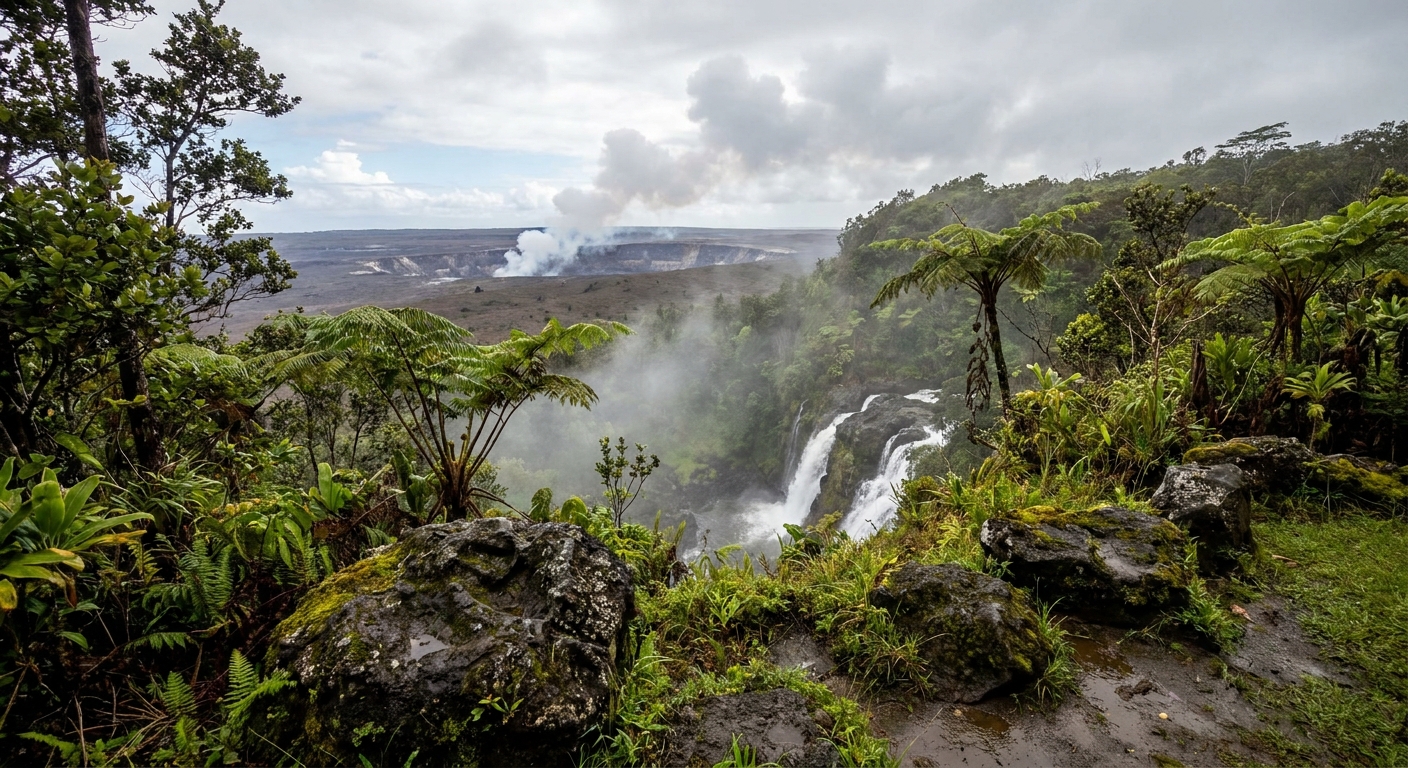
At the edge of Kilauea on a July morning, vapor rises from the soil next to the roadway, a hint of sulfur and damp ohia hangs in the breeze, and a chilly mist creeps over the crater floor until the sun drives it off. The park sits high on the Big Island’s slope, so summer here feels more like a crisp spring day than a beach vacation. July is a good month for walking craters, lava tubes and rainforest, with long daylight to fit it all in.
What is the weather like in Hawaii Volcanoes National Park in July?
At the crater rim, July brings cool, damp, shifting weather, gentle enough that a light jacket works by day while a real layer is needed at night, and showers pass through instead of lingering for days.
| Month | Average high (°F) | Average low (°F) | Rain days |
|---|---|---|---|
| June | 71.3 | 54.3 | 14.2 |
| July | 72.7 | 55.6 | 13.6 |
| August | 73.7 | 56.0 | 12.2 |
Mornings are often the clearest part of the day. The sky can be open and bright at the rim, with the summit of Mauna Loa visible on some days, and this is the best window for the overlooks and the steam vents.
Clouds tend to build over the slope by midday and the showers arrive in the afternoon, usually brief, sometimes steady for an hour or two. Rain here comes from the trade winds pushing moisture up the mountain, which is why the park is so green on its wetter side.
Because the park headquarters sits near four thousand feet, you will not feel the heat of Kona or Waikiki. Afternoons are comfortable for hiking in a long-sleeved layer, and evenings turn chilly enough for a fleece, especially once you are standing still watching the sky. A rain shell is more useful than an umbrella, since the wind often comes with the showers.
Daylight is generous in July, a little over thirteen hours in mid-month, so you can start early and still have light for a late walk. The glow from the crater, when it is active, stands out best after dark, and clear evenings can bring a sky full of stars once the clouds lift.
What to do in Hawaii Volcanoes National Park in July
July is a walking month in the park. The cool air suits the longer trails, the mornings are often bright, and the summer family crowds mean the main overlooks are lively by late morning. The rhythm that works is simple: be outside early, tuck into a lava tube or museum when the clouds settle, and return to the rim at dusk.
There is no big festival that defines the park in July, but the season has its own mood. Families are traveling, rangers lead talks and walks through the summer, and the Hawaiian cultural presence is felt in the chants and stories shared at the visitor center and the nearby Volcano village. If you want to hear hula and crafts, the village galleries and community events are the place to ask once you arrive.
Kilauea crater rim and the steam vents
The Crater Rim Drive area is the park’s heart, and the overlooks near the visitor center give the widest view across the summit caldera. Walk the short trail past the steam vents, where warm vapor curls out of cracks in the ground and the air smells of minerals. The sulfur banks are a quick stop that surprises most first-timers with their yellow and orange crust.
Go in the morning, when the air is clearest and the parking is easier. In July the rim can be breezy and cool even when the sun is out, so bring a layer. This stretch suits almost everyone, including those who prefer short, level walks, and it pairs well with the museum for a rain break.
Thurston Lava Tube and the fern forest
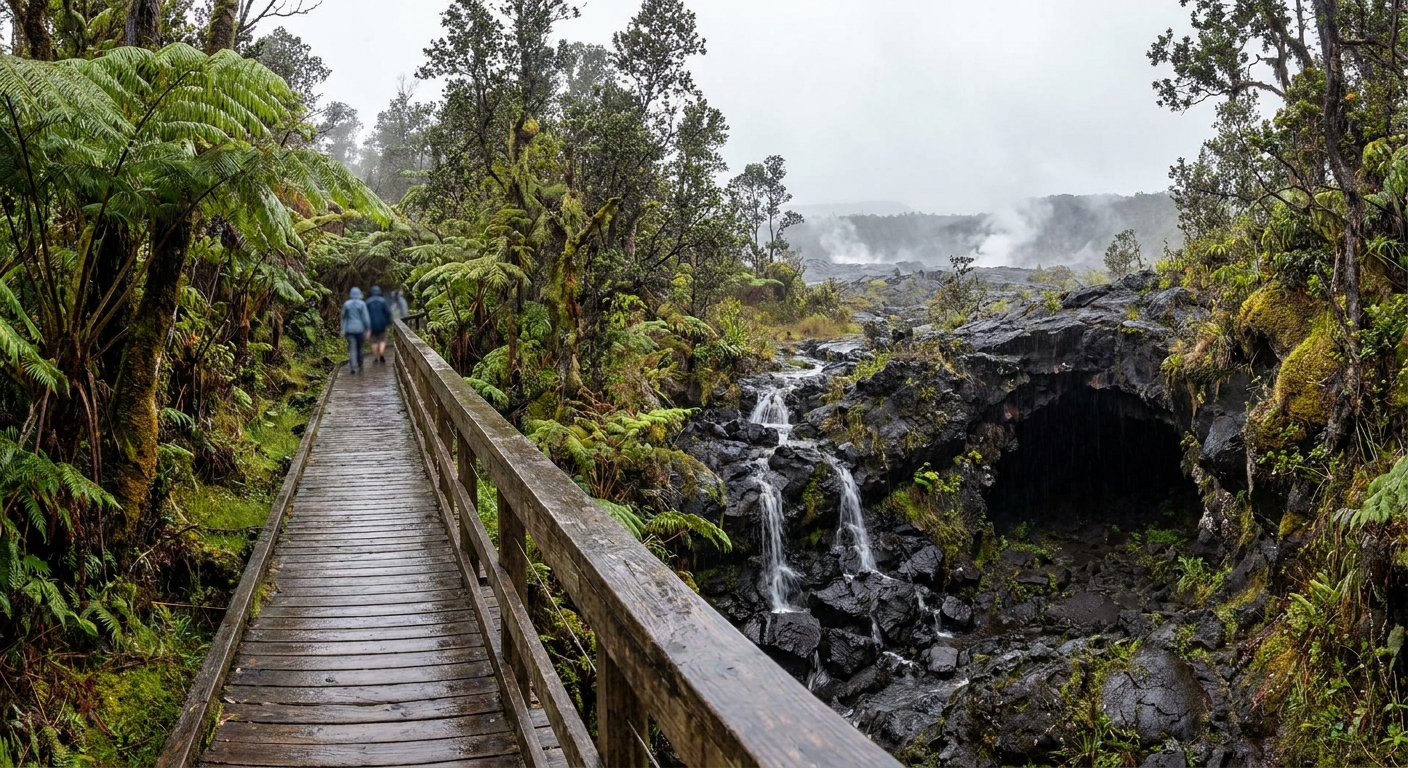
A short loop takes you through a rainforest of giant tree ferns and ohia before you step down into a cave formed by flowing lava. Inside, the tunnel is cool and dripping, and the walls still hold the shape of the molten flow that carved them. Light fixtures guide you through, though a small flashlight helps in the darker, unlit stretch beyond.
This is a good stop for the middle of the day, since the cave is sheltered and the forest path stays pleasant in light rain. Birds often sing in the trees at the entrance, and the lush green is at its deepest in this wetter high country. Families will find it a fine fit, and so will anyone in search of a relaxed excursion.
Chain of Craters Road and the coast
From the chilly heights, the road drops past ancient lava flows on its way down to the ocean, and the shift in weather is dramatic. The land turns open and black, with views of the coast and the cliffs where the ocean meets the lava. Stops along the way include pullouts over ancient flows and short walks to petroglyphs, where carvings in the rock hint at the long human history here.
The lower end is hotter and more exposed, with little shade, so go earlier or later in the day and bring water and sun protection. At the end of the road, the sea arch and the cliffs are windswept and the surf is powerful, so keep well back from the edge and respect posted signs. It is a half-day outing that rewards a slow pace.
Volcano village, food and a warm drink
Just outside the park entrance, the small village of Volcano offers cafés, a bakery, galleries and a couple of restaurants tucked under tall trees. The cool damp air makes a hot coffee or a bowl of soup especially welcome here, and local Big Island coffee is easy to find. Many visitors stop for a casual lunch or a dinner after the evening crater view.
It is a good place to slow down when the afternoon rain rolls in. Browse the art galleries, look for local crafts and ask about the day’s conditions at the park. Evenings can be quiet, so plan your meal around the daylight rather than waiting late. Backcountry hikes and the crater floor trails are also an option for stronger walkers, but conditions in the park change, so ask a ranger at the visitor center about which trails and roads are open on the day.
A two-day itinerary for Hawaii Volcanoes National Park in July
Day 1 is for the summit. Start early at the rim while the air is clear, walking the overlooks and the steam vents before the clouds build. By late morning, step into the visitor center and the museum to learn how the crater formed, then take the fern forest loop and lava tube around midday when the shelter helps. Lunch is easy in Volcano village, at a café or a casual restaurant.
When afternoon showers are likeliest, stick to inside spots or brief walks under cover, and check out the village galleries. Return to the rim before dusk. Sunset comes in the early evening, and the sky over the caldera changes color as the light fades. If the crater is glowing, the view after dark is the highlight, and a warm layer makes the wait comfortable.
Day 2 is for the coast and the lower slopes. In the morning, take Chain of Craters Road before the lower elevations get hot, with stops at the lava fields and the petroglyph walk. At the end of the road, look out over the cliffs and the sea, then turn back as the sun climbs. Pack lunch or eat a picnic, since there is little food along the way.
Return uphill in the afternoon for a slower stretch, with a hot drink in the village and a last look at the rim if the weather clears. If rain settles in, the museum, the galleries and a long café stop make a comfortable fallback, and the clouds often lift again by evening.
Is Hawaii Volcanoes National Park busy in July?
Yes, July is one of the busier months, since it falls in the summer family season and the overlooks and parking areas fill by late morning.
Families on school break make up much of the crowd, along with travelers combining the park with a Big Island trip. The busiest stretch is the middle of the day at the main rim overlooks and the lava tube. Early mornings and later afternoons feel calmer, and the lower coast road tends to spread people out. Evening, when the light fades, can bring a second wave of visitors hoping to see the crater glow.
For rooms in Volcano village and nearby, which are limited in number, book early, especially for the weeks around the July 4 holiday. Rental cars on the island are in demand in summer, so reserve them as soon as your flights are set. Restaurants in the village are small, so a table at dinner may take planning, and a casual lunch is easier to fit in.
The park itself is open for the summer, and no special July reservation appears in the details we have for the main sights. Ask at the visitor center about any trail or road changes when you arrive.
What to pack for Hawaii Volcanoes National Park in July
Think layers rather than beachwear, since the park is cool and damp even in summer.
- A light rain jacket, because afternoon showers pass through often.
- Pack a warm layer or fleece for chilly mornings and evenings along the rim.
- Sturdy closed shoes for rough lava rock and wet trails.
- A small flashlight for the unlit part of the lava tube.
- Sun protection and water for the open, exposed coast road.
- Swimsuit for the beaches elsewhere on the island, if you are combining trips.
Good to know before you go
July falls inside the Central Pacific hurricane season, which runs from June 1 to November 30. The park’s weather is usually shaped by trade winds and showers, but it is worth following forecasts if you are traveling across the island.
Getting around is by car, and the drive between the village, the rim and the coast is part of the day, so plan fuel and food before heading down the long road. Staying on the island means state and county taxes get added to what you pay for the room.
| Fee | Amount | Who pays |
|---|---|---|
| State Transient Accommodations Tax | 11.00% | Guests on lodging |
| County of Hawaii Transient Accommodations Tax | 3 percent | Guests on lodging |
Hawaii Volcanoes National Park in July vs June and August
If you shift your visit to June, you get air that is a bit cooler and a little more rain, along with a quieter mood ahead of the summer family crowds. The mornings are still clear, and the overlooks are a little easier in the first weeks of the month. The park looks and feels much the same, so the change is subtle.
August is a shade warmer and a little drier, with fewer rainy days, which makes the afternoon walks more reliable. Families are still traveling, but as school calendars start up toward the end of the month, the crowds begin to ease and rooms can be easier to find later on.
For the greatest odds of an afternoon without rain, August is your best bet. If you prefer to be ahead of the busiest weeks, early June is a good choice. July suits those tied to school vacations who are happy to start early each day and plan around the clouds.
Is July a good time to visit Hawaii Volcanoes National Park?
July suits walkers, families, and anyone who loves cool air, green rainforest, and open craters just fine, while those chasing beach heat or skies guaranteed to be clear will find it less ideal.
People who like to be outside early will love it, since bright mornings and long daylight make for generous days. Travelers who dislike crowds or damp afternoons may prefer another month, or should aim for the first and last hours of each day. When you get there, check in at the visitor center to find out what is open, then make for the rim while the sky stays clear, and keep the lava tube and the village for when clouds roll in.
What makes July here memorable is the contrast: a morning of mist and steam at the crater, a midday under tree ferns in a cave carved by lava, and an evening in a cool village with a hot cup of Big Island coffee.
Sources
- NOAA NCEI, monthly normals 1991-2020, station USC00511303, checked September 8, 2026
- sunrise-sunset.org, sunrise and sunset calculated for the 15th of the month, checked September 8, 2026
- Hawaii Department of Taxation, Tax Announcement No. 2025-03 (Transient Accommodations Tax Law Changes from 2025 Legislative Session), files.hawaii.gov/tax/news/announce/ann25-03.pdf, checked September 24, 2026
- County of Hawaii, Department of Finance, Transient Accommodations Tax (TAT) page, hawaiicounty.gov/departments/finance/transient-accommodations-tax-tat (live returned HTTP 403 on request, read via Internet Archive Wayback Machine snapshot dated August 14, 2026, same official content), checked September 25, 2026
- Hawaii Department of Taxation, County Surcharge on General Excise and Use Tax page, tax.hawaii.gov/geninfo/countysurcharge/, checked September 25, 2026
- NWS Honolulu / Central Pacific Hurricane Center, « 2026 Central Pacific Hurricane Season Outlook », weather.gov/hfo/hurricaneOutlook2026, checked September 24, 2026
To plan your stay
- Things to Do in Hawaii Volcanoes National Park: Kilauea Iki, Lava Tube, Petroglyphs and Day Trips
- Best Time to Visit Hawaii Volcanoes National Park: Weather, Crowds, Rain and Seasonal Events
- Hawaii Volcanoes National Park in June: Weather, Crater Walks and a Two-Day Plan
- Hawaii Volcanoes National Park in August: Weather at the Crater Rim, Things to Do and a Two-Day Plan