
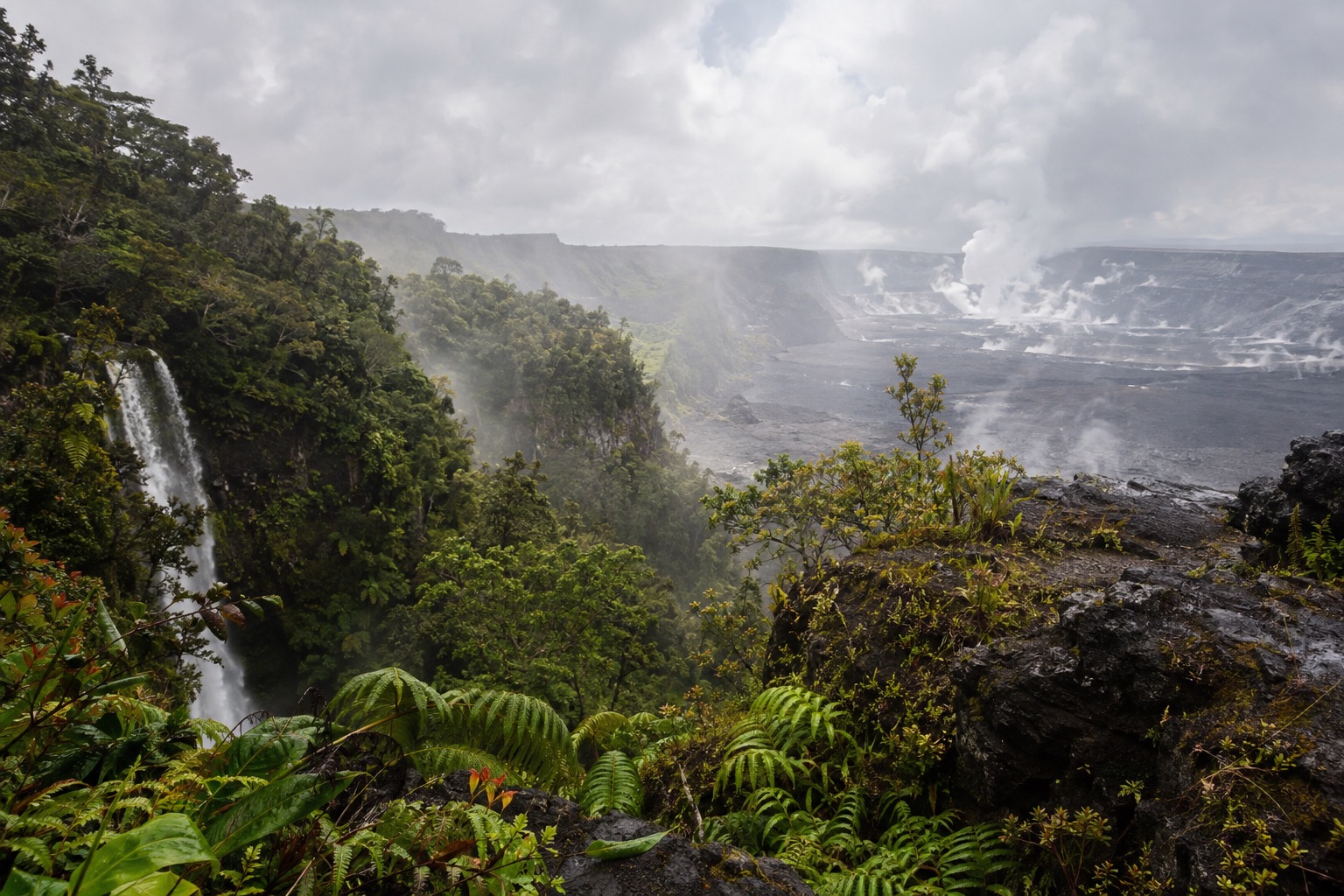
Beside the trail at Kilauea’s rim on an August morning, a slender sheet of steam rises from the earth, while the air carries a hint of sulfur and damp ohia leaves. The mist lifts, then thickens again, and ferns glisten along the path. August is a settled, mild month at this high elevation, with long days for walking craters, lava tubes and the coastal road down to the sea.
What is the weather like in Hawaii Volcanoes National Park in August?
Come August, this spot turns cool, damp and unpredictable, with gentle afternoons, cold nights and rain that drifts in and out along the crater rim, perched high on the volcano’s flank.
| Month | Average high (°F) | Average low (°F) | Rain days |
|---|---|---|---|
| July | 72.7 | 55.6 | 13.6 |
| August | 73.7 | 56.0 | 12.2 |
| September | 73.2 | 55.4 | 12.2 |
The clearest hours usually come in the morning, when Halemaumau crater and the steam vents catch a gentle light, but clouds can move in without warning. In the afternoon, brief rain showers often arrive, and at times a constant gray mist lingers along the rim for one or two hours. They are usually short, and a break in the cloud often follows, so most days mix sun, mist and rain.
This is a wet corner of the island on the windward side, so a rain jacket belongs in the daypack even on a bright morning. Evenings cool off quickly, and after dark you will want a fleece or a sweater, especially if you linger for the night sky.
Down at the coast the park feels warmer and more open, and the shoreline of the Chain of Craters Road is far drier than the rim. Daylight lasts nearly thirteen hours in mid-August, enough to see the summit area and still reach the sea cliffs before dusk.
What to do in Hawaii Volcanoes National Park in August
August has no big festival of its own inside the park, so the month belongs to the landscape: steaming ground, rainforest, black lava fields and the long descent to the ocean. Cool, partly cloudy days suit walking better than a hot summer on the coast, and the rainforest looks its greenest when the mist is moving.
The park sits on the Big Island, and the volcano’s activity changes from week to week. Rangers at the visitor center can tell you what is open and where the best viewpoints are that day, and the National Park Service posts current conditions. Night viewing of any glow, when it occurs, is a chance, never a promise.
Kilauea summit and the crater rim
The rim road circles the summit caldera, with pullouts looking across the wide crater floor toward Halemaumau. Steam vents, sulfur banks and overlooks make an easy morning of short stops. The Steam Vents and the Kilauea Visitor Center sit close together near the park entrance, which makes it simple to start there and get oriented.
The best moments are early, before cloud builds, and again around dusk when any glow on the crater floor can stand out against the darkening sky. It suits nearly everyone, including families and anyone who prefers short walks to long hikes. Bring a layer, because the wind at the rim can feel cool even on a sunny day.
Thurston Lava Tube and the rainforest
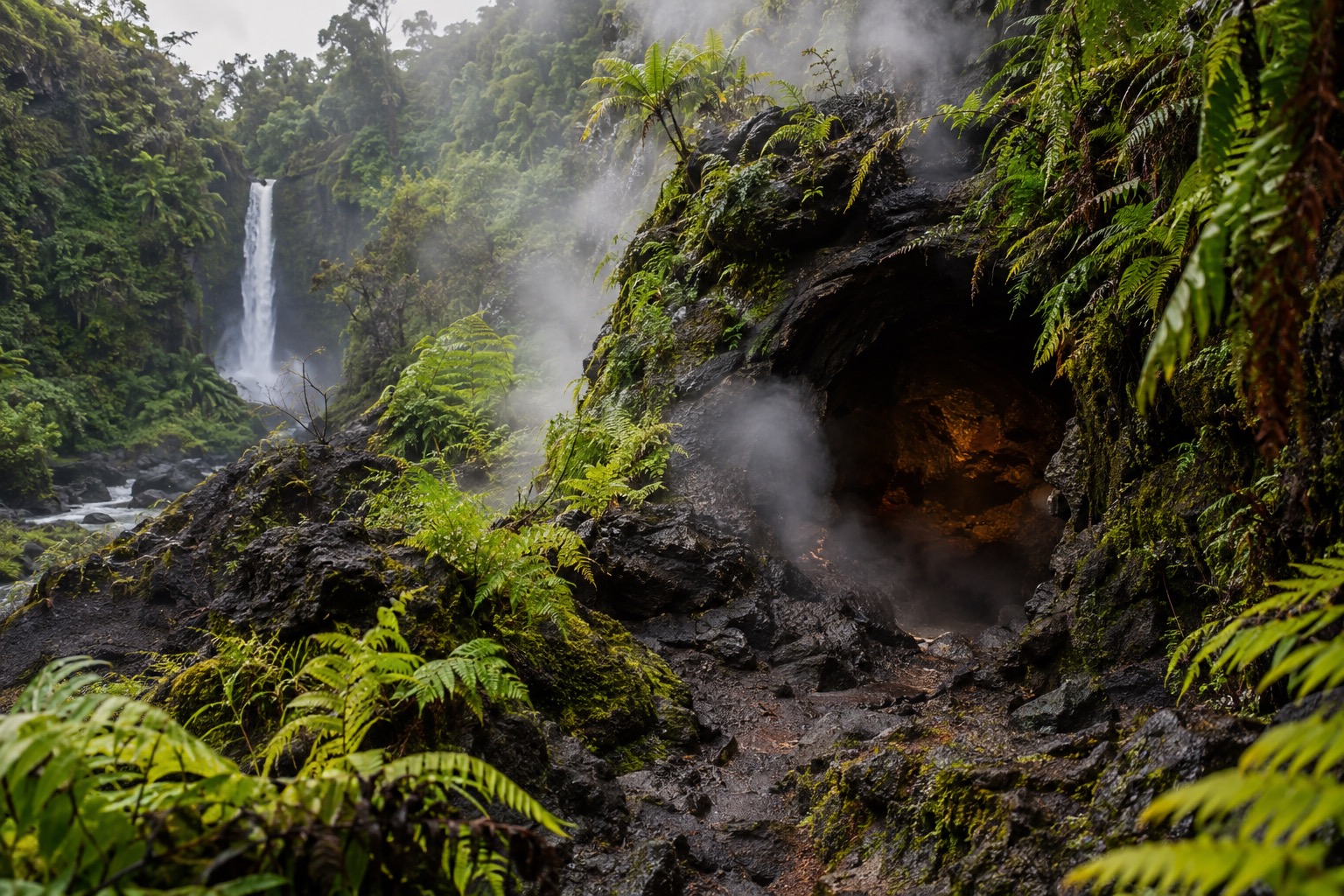
A brief trail descends past tree ferns and dense woods to a tunnel formed by flowing lava. Inside, the walls are dark and dripping, and the walk through the tube is cool and quiet. Birdsong often fills the ferny forest around the entrance, and the green here is lush in the damp air.
It is a good pick for a drizzly afternoon, since the forest feels at home in the rain and the tube itself is sheltered. Families with children like it, and so do photographers who want deep green. Go early or late if you prefer to have the tunnel to yourself.
Chain of Craters Road to the coast
The road winds from the cool summit down across old lava flows to the sea. Along the way are pullouts at pit craters, wide views of the dark fields, and finally the sea arch and cliffs where the road meets the Pacific. The temperature climbs as you descend, so a light shirt is enough by the coast.
Allow a half day, with stops at lookouts and short trails, and bring water because the lower lava country is exposed with little shade. Petroglyphs and the ocean cliffs make a fine end point. The surf here is usually strong and the shoreline rugged, so this is a place to watch the waves from the overlooks and not to swim.
Food is simple in and around the park. The village of Volcano, just outside the entrance, has a few cafés, a bakery and small restaurants, and local stands sell fruit and baked goods. Dishes such as warm soup or a plate lunch suit the cool, damp air better than anything iced.
When the clouds close in, drive into the village for coffee, browse the small galleries and craft shops, or spend an hour at the visitor center learning how the islands formed. The mood in August is unhurried, with a quiet trail on most mornings.
A two-day itinerary for Hawaii Volcanoes National Park in August
Morning on Day 1 starts at the Kilauea Visitor Center, the time when the rim usually shows itself at its clearest. Walk the short paths past the steam vents and sulfur banks, then follow the crater rim road to its overlooks. By midday, take lunch in Volcano village, at a café or small restaurant, while the clouds shift.
In the afternoon, step into the rainforest and walk through Thurston Lava Tube, which stays pleasant when a shower passes. Head back to the rim around dusk to see the light die above the crater, as the day stretches on for nearly thirteen hours. If the sky is clear, any glow is a chance, so bring a flashlight and a warm layer.
Day 2 is for the coast. Head out at first light on Chain of Craters Road, stopping at the overlooks above the lava fields and pit craters, then reach the sea cliffs before the light grows harsh. Carry water and sun protection, since the lower road has almost no shade, and eat a packed lunch on the way back up.
For a rain card, turn to the visitor center exhibits, the forest tube, or the village galleries and cafés. Showers usually pass, so a loose plan with a few indoor options works best at this elevation.
Is Hawaii Volcanoes National Park busy in August?
August is moderately busy, with family travelers filling the park in the last weeks of summer vacation before schools reopen.
The overlooks near the summit and the visitor center see the most visitors, especially in the middle of the day when tour groups arrive. Early mornings and late afternoons are calmer, and the longer trails and the coastal end of the road stay quieter than the rim. The village of Volcano is small, so lunch spots can fill around noon.
Rooms near the park are limited, and the hotels and vacation rentals in Volcano village are among the first to go, so booking early is a good habit for any summer week. Summer on the island means rental cars go fast, so it pays to book yours early. Restaurant tables around the park are easier to find outside of the lunch rush.
August usually does not require a park-specific reservation, so check the National Park Service page for current entry and area notices before you leave. Visits tend to be easier to plan when you build in slack for weather and time.
What to pack for Hawaii Volcanoes National Park in August
Pack for cool, damp mornings at the crater rim and warm, dry shoreline in the same day.
- A light rain jacket, because showers can arrive at the rim on any afternoon.
- A fleece or sweater, since evenings at this elevation turn cool.
- Sturdy closed shoes with grip for rough lava and wet trails.
- Long pants for the chilly, damp rim.
Good to know before you go
August falls inside the Central Pacific hurricane season, which runs from June 1 to November 30. Book your room first, since lodging near the park is limited, and plan to drive between the summit and the coast, as there is no easy way around without a car. Hawaii’s lodging taxes apply to your stay.
| Fee | Amount | Who pays |
|---|---|---|
| State Transient Accommodations Tax | 11.00% | Guests on lodging stays |
| County of Hawaii Transient Accommodations Tax | 3% | Guests on lodging stays in the County of Hawaii |
Hawaii Volcanoes National Park in August vs July and September
Moving earlier to July brings slightly cooler days and a bit more rain, with summer family traffic at its height. The park looks much the same, with similar mist and green forest, but you may find a crowd at the rim in the busiest weeks.
Moving later to September keeps the same mild temperatures and similar rain, with school back in session for many families. Rooms and rental cars often get easier to find, and the overlooks tend to feel calmer on weekday mornings. The season for hurricanes continues through autumn either way.
If you want the lightest crowds, lean toward September. If your vacation is fixed by school dates, August works well, and early starts will give you the quiet hours at the rim.
Is August a good time to visit Hawaii Volcanoes National Park?
Yes, August is a good time for travelers who enjoy cool air, misty forest and a landscape that changes by the hour.
Families on summer break, walkers who like mild temperatures and anyone curious about volcanoes will find the month easy to enjoy. Visitors who want guaranteed sun or a long beach day should pair the park with the island’s dry coast, since the rim is often damp and cool.
On arrival, start at the Kilauea Visitor Center to ask what is open and where the best views are that day. What is special in August is the mix: warm shoreline at the end of the road, chilly mist on the rim, and long evening light settling over a crater that still breathes steam.
Sources
- NOAA NCEI, monthly normals 1991-2020, station USC00511303, checked September 8, 2026
- sunrise-sunset.org, sunrise and sunset calculated for the 15th of the month, checked September 8, 2026
- Hawaii Department of Taxation, Tax Announcement No. 2025-03 (Transient Accommodations Tax Law Changes from 2025 Legislative Session), files.hawaii.gov/tax/news/announce/ann25-03.pdf, checked September 24, 2026
- County of Hawaii, Department of Finance, Transient Accommodations Tax (TAT) page, hawaiicounty.gov/departments/finance/transient-accommodations-tax-tat (live returned HTTP 403 on request, read via Internet Archive Wayback Machine snapshot dated August 14, 2026, same official content), checked September 25, 2026
- Hawaii Department of Taxation, County Surcharge on General Excise and Use Tax page, tax.hawaii.gov/geninfo/countysurcharge/, checked September 25, 2026
- NWS Honolulu / Central Pacific Hurricane Center, « 2026 Central Pacific Hurricane Season Outlook », weather.gov/hfo/hurricaneOutlook2026, checked September 24, 2026
To plan your stay
- Things to Do in Hawaii Volcanoes National Park: Kilauea Iki, Lava Tube, Petroglyphs and Day Trips
- Best Time to Visit Hawaii Volcanoes National Park: Weather, Crowds, Rain and Seasonal Events
- Hawaii Volcanoes National Park in July: Weather, Crater Walks and a Two-Day Plan
- Hawaii Volcanoes National Park in September: Weather, Crater Walks and Two Days Around Kilauea