
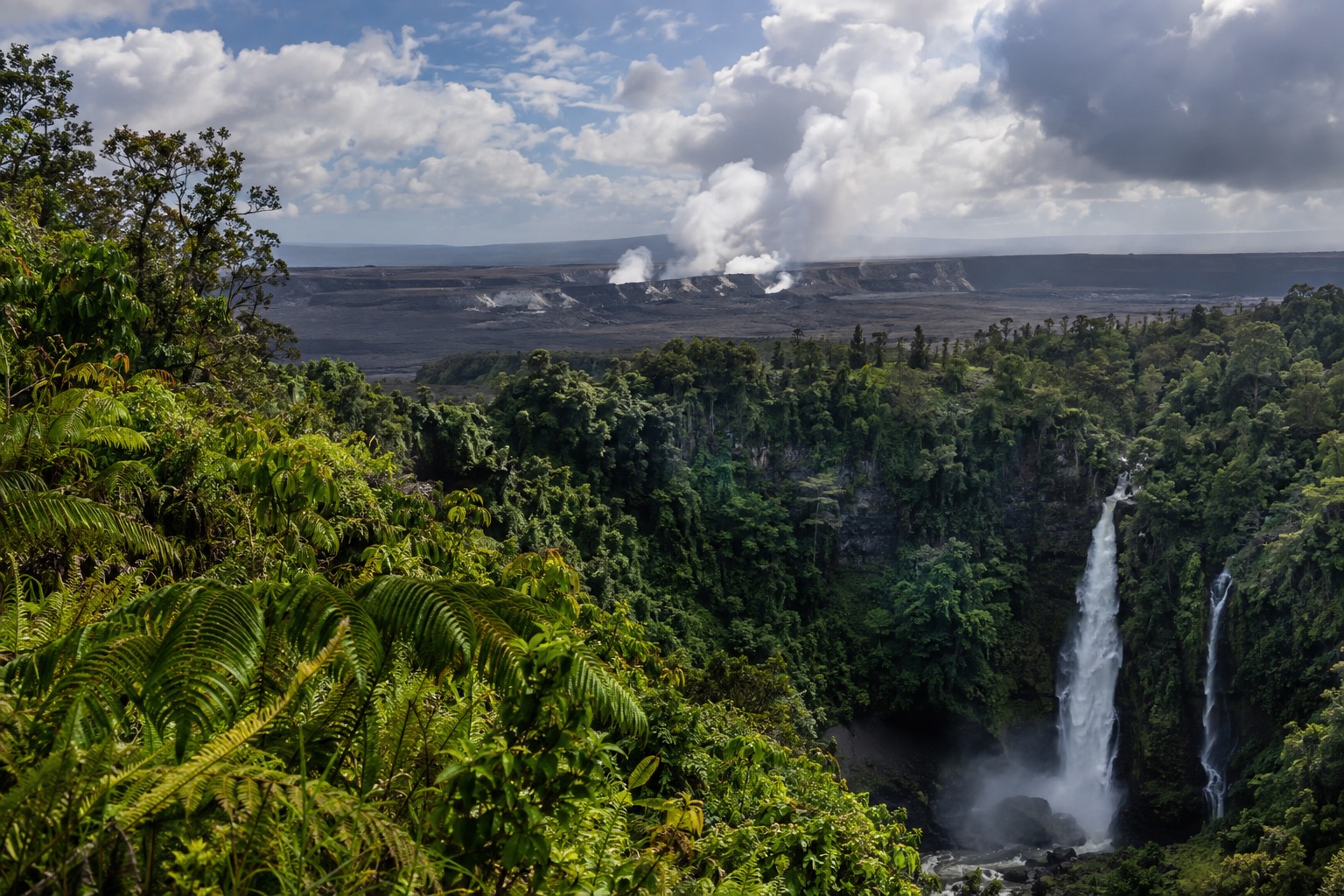
Along the path at Kilauea’s edge on a June morning, faint steam curls up from cracks in the ground, and the air carries damp ohia touched with sulfur. Clouds slide over the caldera and open again, and the light is soft and silver before the day warms. June here means cool mountain air, long daylight for walking, and a landscape of craters, rainforest and black lava that is worth a full day or two.
What is the weather like in Hawaii Volcanoes National Park in June?
| Month | Average high (°F) | Average low (°F) | Rain days |
|---|---|---|---|
| May | 70.5 | 53.0 | 13.3 |
| June | 71.3 | 54.3 | 14.2 |
| July | 72.7 | 55.6 | 13.6 |
June is mild and cool at the crater rim, with mornings that call for a sweater and showers that come on most days. The park headquarters sit high on the flank of the volcano, so the temperature feels nothing like the beach resorts down the coast. Afternoons are comfortable for walking, and evenings turn properly cool.
Rain here is usually a passing thing. A shower rolls in off the trade winds, soaks the rainforest for twenty minutes, and moves on, so a day is rarely lost. A full inch of rain in one day is rare. The wettest ground is on the windward, forested side near Thurston Lava Tube and the rim, while the lower, drier stretches of the Chain of Craters Road feel more open and sunny.
Dress in layers and carry a light rain jacket every time you leave the car. Mornings often start clearest, and clouds tend to thicken after midday, so the early hours are best for views across the caldera.
Days are long, with daylight lasting past dinner, which gives room for an unhurried afternoon and an evening at the rim. At night the sky can be clear enough for stars, and it can also be completely socked in.
What to do in Hawaii Volcanoes National Park in June
June has no single festival in the park itself, but the month sits close to Kamehameha Day on June 11, a state holiday marked across the Big Island with parades, flower leis draped on statues and hula. In Volcano Village and Hilo you may catch local events around it, and craft stalls and farmers markets are a pleasant way to spend a gray morning. The main draw in the park is the land itself, which changes with the weather by the hour.
Start at the visitor center near the rim, where rangers can tell you which trails and viewpoints are open. Park notices change, so the park website and the visitor center are the places to check before you plan the day. From there, the Crater Rim Drive area gives you the big view of Kilauea caldera, with steam vents and overlooks that look best in the early light.
Kilauea caldera and the steam vents
The caldera is the park’s centerpiece, a vast, flat-floored crater that smokes in places and shifts color as clouds pass. Stroll the rim path past Steam Vents and the Sulphur Banks, where yellow crystals coat the stone and soft sounds rise from the earth. It is a short, easy stretch that suits almost everyone, including families with older children who like strange smells and warm ground.
Go early, when the air is still and visibility is best. If the clouds sink in, wait a half hour at an overlook, because the view often opens up again.
Keep to the trails that are marked, because the terrain around the vents may give way, and pack something warm for the breeze along the rim. After dark, the rim is a good place to look for the glow of the crater when activity allows, though it is a chance, never a promise.
Chain of Craters Road down to the coast
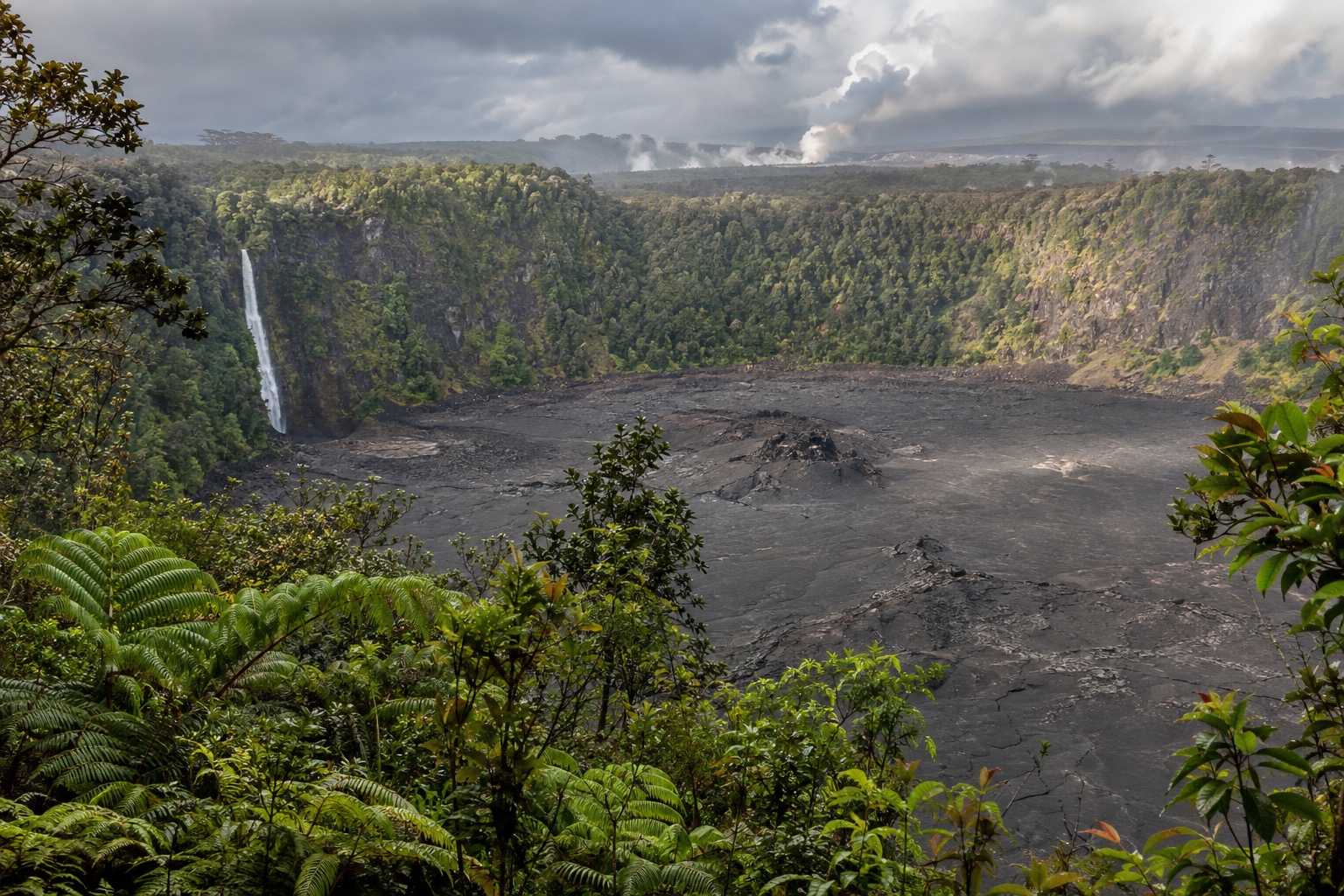
From the chilly peak down to the ocean, this road cuts across ancient lava and ever-changing views. You pass pit craters, fields of black rock from different eruptions, and open views of the Pacific that feel a long way from the rainforest above. The temperature rises as you descend, and the vegetation thins to grass and shrubs.
At the bottom, the sea arch and cliffs make a dramatic stop, with waves breaking against dark rock. The surf here is often strong and the cliffs are no place to swim, so enjoy it from the viewpoints and obey the signs. Pack water and sunblock, since shade is scarce along the coast. The drive suits a late-afternoon outing, when the light turns golden on the lava.
Rainforest, lava tubes and the Volcano Village table
Thurston Lava Tube is a short walk through ferny, dripping rainforest to a tunnel left behind by flowing lava. It is a lovely place on a drizzly day, since the canopy and the cave make rain part of the atmosphere. Birdsong in the ohia trees is common in the morning, and the trail is easy for most walkers.
Nearby Volcano Village has small cafes, a few restaurants, galleries and lodging tucked among tree ferns. Coffee grown on the Big Island is a natural order here, and a warm bowl of soup or a plate lunch is welcome after a cool, wet walk. It is a good place to linger when the clouds close in.
| Site | Open |
|---|---|
| Hawaii Volcanoes National Park | Open daily |
A two-day itinerary for Hawaii Volcanoes National Park in June
Day 1. Start your day at the visitor center just after sunrise, when the caldera shows itself most clearly and the rim lies still. Stroll to the Sulphur Banks and the steam vents, and afterward trace the rim for vistas before the air warms. Around midday, drop into Volcano Village for a casual lunch at a cafe or a plate-lunch spot, which also gives the clouds time to move.
In the afternoon, walk through Thurston Lava Tube, a good choice if showers arrive, since the forest is lovely wet. Return toward the rim near dusk and watch the light fade over the crater. Daylight lasts well into the evening in June, so you are not rushed, and a clear night may reward you with a glow or stars.
Day 2. In the morning, make the drive along Chain of Craters Road, pausing at the lava fields and pit craters on your way down to the sea. Reach the coastal viewpoints before the day gets hot, then turn around for a picnic or snack with a view of the dark cliffs. Take it slowly, because the road is the experience.
Return uphill in the afternoon and spend the rest of the day at a gallery or a cafe in Volcano Village, or at the visitor center exhibits. If the weather turns hard, the museum displays, the village shops and a long warm meal make a fine rain card. Finish with an early dinner and a last look from the rim if the sky clears.
Is Hawaii Volcanoes National Park busy in June?
June is moderately busy, with the school break bringing families to the Big Island, but the park is large enough that it rarely feels packed outside the main overlooks. At the rim viewpoints, late morning and early afternoon draw the biggest crowds, while early morning and the hours near dusk stay the calmest.
Rooms in Volcano Village are limited and small, so book them early, especially for weekends and the weeks when schools let out. Rental cars on the Big Island are a necessity for most visitors, and they are easier to secure when reserved well ahead. Restaurants in the village are few, so a dinner reservation, or a plan for an early meal, helps on busy evenings.
Kamehameha Day on June 11 can make for a lively long weekend in nearby towns and a busier road from Hilo. Weekdays in the park are calmer. Check the park website for any reservation or permit that applies to a trail or a special area before you go.
What to pack for Hawaii Volcanoes National Park in June
The park is cool and damp at the summit and warmer at the coast, so pack for both and for showers.
- A light rain jacket, since showers pass through most days.
- A fleece or sweater for cool mornings and evenings at the rim.
- Sturdy closed shoes with grip for rough, sometimes wet lava and trails.
- A hat and sunscreen for the open, sunnier coastal stretch.
- A refillable water bottle, as there is little shade or water down the road.
- A small flashlight for the lava tube and for the rim after dark.
Good to know before you go
The Central Pacific hurricane season runs from June 1 to November 30, so June opens it. Hawaii is rarely hit, but keep an eye on forecasts. Park conditions can change with volcanic activity, so check the park notices on arrival. Staying near the park comes with a tax, and the rates feel low.
| Fee | Amount | Who pays |
|---|---|---|
| State Transient Accommodations Tax | 11.00% | Guests on lodging |
| County of Hawaii Transient Accommodations Tax | 3% | Guests on lodging |
Hawaii Volcanoes National Park in June vs May and July
Moving to May brings slightly cooler air and a touch more rain, plus fewer school-break families. The park is calmer, and rooms in the village are easier to find. July warms the rim a little and keeps the showers coming, while the crowds are heavier in the middle of summer vacation.
The differences are small in the mountains, since the climate at the rim changes slowly through these months. The choice is mostly about people and prices rather than the volcano itself.
Choose May if you want quieter trails and easier lodging. Stay with June if you want long days and the Kamehameha Day atmosphere. Pick July if you want the warmest weather and do not mind the busier season.
Is June a good time to visit Hawaii Volcanoes National Park?
Yes, June is a good time for walkers, families and anyone who likes cool air, forest and open lava. The days are long, the rain is short, and the park works well in any weather if you plan around the clouds.
It suits less well anyone who wants a beach vacation or guaranteed clear views, since the summit is often cloudy and damp. Once you get there, check the visitor center before anything else to learn which trails and overlooks are open, and save your brightest hours for the caldera rim. What is special about June here is the mix of long light and cool, drifting cloud, when steam rises from the ground and the rainforest glistens, and the crater looks different every hour.
Sources
- NOAA NCEI, monthly normals 1991-2020, station USC00511303, checked September 8, 2026
- sunrise-sunset.org, sunrise and sunset calculated for the 15th of the month, checked September 8, 2026
- Hawaii Department of Taxation, Tax Announcement No. 2025-03 (Transient Accommodations Tax Law Changes from 2025 Legislative Session), files.hawaii.gov/tax/news/announce/ann25-03.pdf, checked September 24, 2026
- County of Hawaii, Department of Finance, Transient Accommodations Tax (TAT) page, hawaiicounty.gov/departments/finance/transient-accommodations-tax-tat (live returned HTTP 403 on request, read via Internet Archive Wayback Machine snapshot dated August 14, 2026, same official content), checked September 25, 2026
- Hawaii Department of Taxation, County Surcharge on General Excise and Use Tax page, tax.hawaii.gov/geninfo/countysurcharge/, checked September 25, 2026
- NWS Honolulu / Central Pacific Hurricane Center, « 2026 Central Pacific Hurricane Season Outlook », weather.gov/hfo/hurricaneOutlook2026, checked September 24, 2026
To plan your stay
- Things to Do in Hawaii Volcanoes National Park: Kilauea Iki, Lava Tube, Petroglyphs and Day Trips
- Best Time to Visit Hawaii Volcanoes National Park: Weather, Crowds, Rain and Seasonal Events
- Hawaii Volcanoes National Park in May: Weather, Crater Walks and a Two-Day Plan
- Hawaii Volcanoes National Park in July: Weather, Crater Walks and a Two-Day Plan