
Early morning on Alii Drive, fishing boats rock in the harbor, a honu surfaces near the seawall, and the smell of fresh-roasted coffee drifts out of a shop door. By afternoon the lava fields glow black under a hard blue sky and the sun settles into the Pacific in streaks of orange. Kona is the sunny, dry west coast of the Big Island, made for people who want warm water, coffee country and a slow, easy rhythm.
Where is Kona and what is it like?
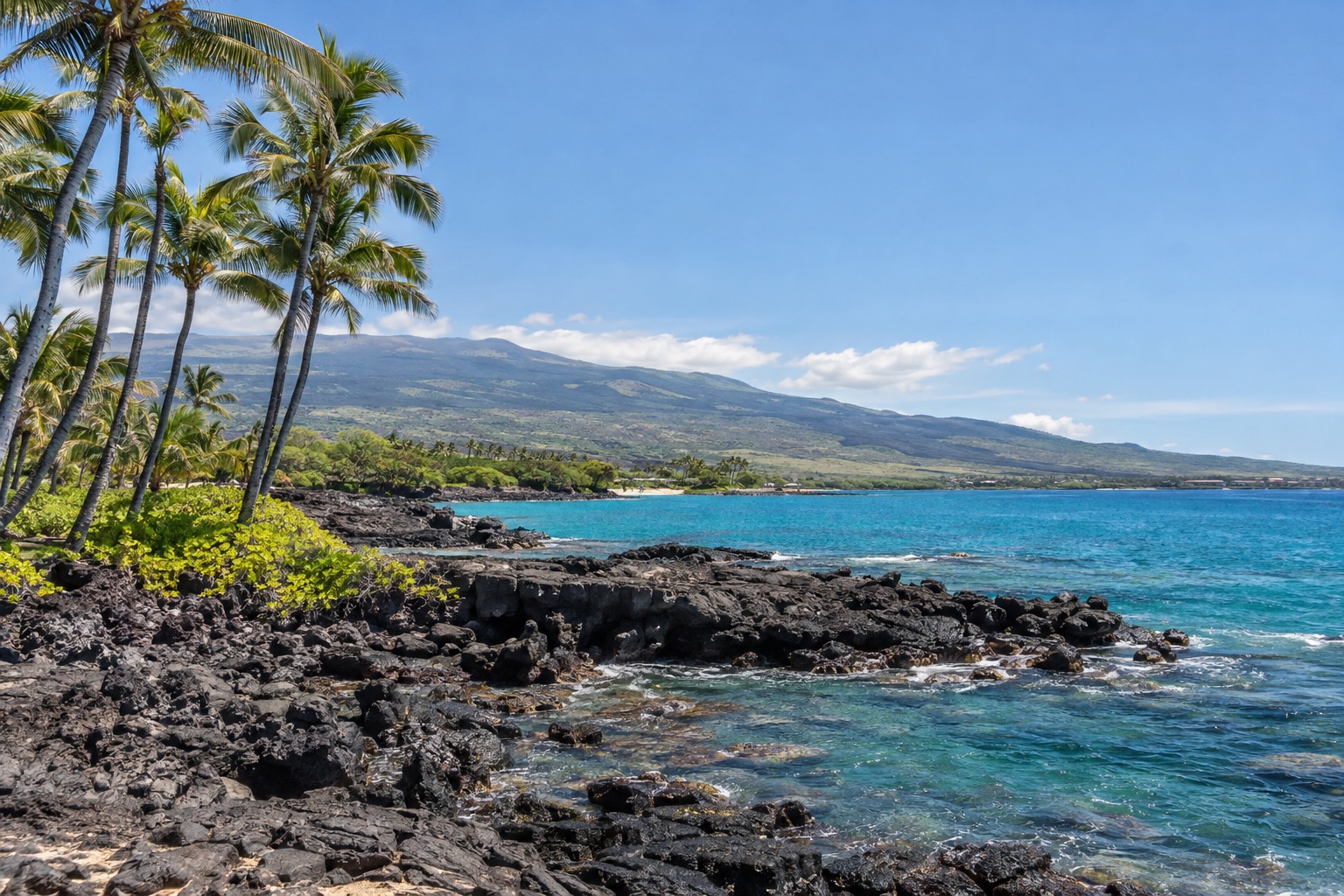
Kona is the leeward west coast of the Big Island, centered on the town of Kailua-Kona and stretching along the shore toward the resorts of the Kohala coast to the north and the green slopes of South Kona to the south. It is a sunny, dry stretch of coast where black lava meets bright water, with the slopes of Hualalai rising behind town.
The pace is unhurried. Kailua-Kona itself is a small waterfront town of open-air restaurants, shaved ice stands and shops along the seawall, with a historic Hawaiian royal compound at its edge. Mornings start early, with swimmers, paddlers and outrigger crews on the bay, and evenings are for sunset dinners facing the water.
Travelers who love sun, snorkeling and a casual atmosphere tend to fall for it. If you want white-sand resort polish on every block, or lush rainforest and waterfalls, the rainy east side around Hilo is a better match. Kona is lava, light and coffee.
What is there to do in Kona?
Snorkeling and the sea
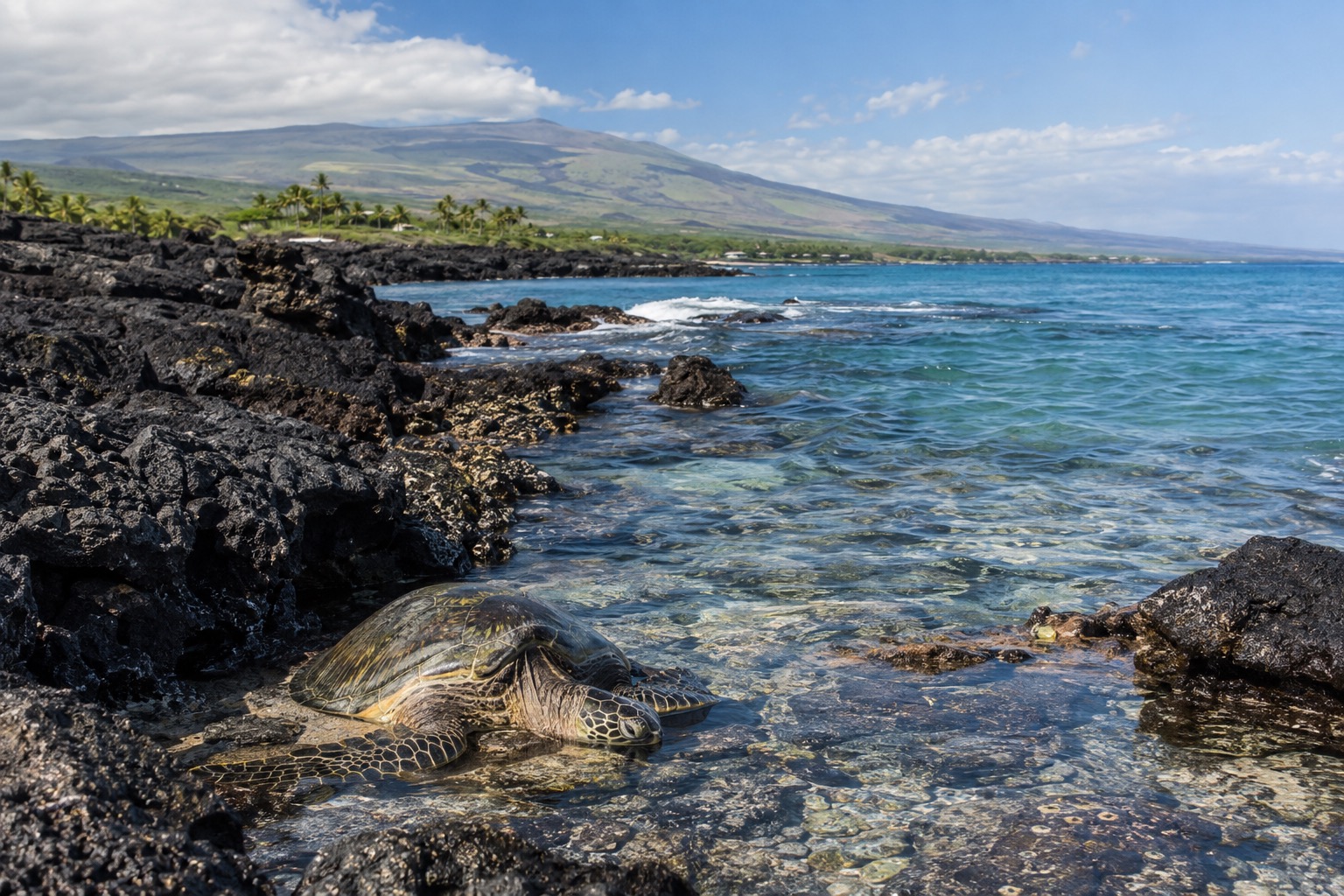
The water is the main draw. Snorkelers drift over coral gardens, and boat trips head out at night to watch manta rays feed under floodlights. Sea turtles, the green honu, rest on shores and cruise the shallows all along the coast. They are protected, and the federal fisheries agency recommends staying at least 10 feet away, on land and in the water.
Surf and currents change with the season and the beach, so read the posted warnings and check the day’s surf and currents before you swim, and swim near a lifeguard only where one is on duty. Mornings are usually the gentlest time on the water.
Kealakekua Bay and the places of old Hawaii
Kealakekua Bay is where Captain Cook arrived in 1779, the first extensive contact between Hawaiians and Westerners. Today it is a state historical park with clear water, a white monument across the bay and dolphins that sometimes pass through. Every vessel on the water, kayaks and paddle boards included, needs a State Parks permit, and permitted vessels may not land at the Kaawaloa flat or launch from the Napoopoo wharf.
Nearby, Puuhonua o Honaunau National Historical Park preserves a former place of refuge, with carved wooden figures, thatched structures and a lava shoreline. Kaloko-Honokohau National Historical Park, closer to town, adds fishponds, ancient trails and turtles on the shore. Treat the stones and walls of these sites as sacred and leave them as you found them.
| Site | Admission |
|---|---|
| Puuhonua o Honaunau National Historical Park | $20.00 per private vehicle, $15.00 per motorcycle, $10.00 per person on foot or bicycle (children under 16 free) |
Kona coffee country
The cool, cloud-touched slopes above the coast are home to small family coffee farms, many with tasting rooms and roasting demonstrations. You stroll among the trees, smell the beans and sip a cup within sight of the ocean. Mornings are the pleasant time, before clouds settle in on the slopes.
A label reading Kona currently only requires a modest share of Kona beans in a blend. From July 1, 2027, a blend using the name must contain at least fifty-one percent coffee from that region. Look for bags marked 100 percent Kona if you want the real thing.
Volcanoes and Maunakea
Hawaii Volcanoes National Park is a long day trip from Kona, a 2 to 2.5 hour drive on Highway 11 or 2.5 to 3 hours the northern way through Waimea and Hilo. The crater rim is cool and often rainy, so bring layers. Maunakea rises to 13,796 feet, and its summit is far colder than the beach. What sets Kona apart from its neighbors is this mix: dry weather and warm water at the door, and mountains, volcano and rainforest reachable as outings.
How many days do you need in Kona?
A long weekend covers the essentials, and a week lets Kona unfold properly. In a short stay you can swim and snorkel, walk the seawall at sunset, visit a coffee farm and spend a morning at Puuhonua o Honaunau.
With more days, add a kayak or boat trip to Kealakekua Bay, a night with the manta rays and a beach day on the Kohala coast. Hapuna Beach charges non-resident visitors $5.00 per person plus $10 per vehicle for parking. A full day is worth giving to Hawaii Volcanoes National Park, and another to Maunakea if the weather cooperates.
Where to stay in Kona
Kailua-Kona town suits travelers who like to walk to restaurants, the pier and the water, with condos and small hotels along Alii Drive. It is the easiest base for boat tours and an evening stroll.
The resorts of the Kohala coast to the north offer broad beaches and quiet, a good match for families and couples who want a self-contained stay. South Kona, up in the coffee country, has farm stays and bed-and-breakfasts for those who want green hills and silence. Hotel stays carry the state and county accommodations taxes, which together add up to a noticeable extra on the bill.
How do you get to Kona and get around?
Most visitors fly into Ellison Onizuka Kona International Airport at Keahole, a small hub that handled about 2 million boarding passengers in 2024. Hilo International Airport, on the wet east side, is the alternative for those who want to start there.
Distances are long and sights are spread out, so a rental car is how most people get around. From Kailua-Kona, Hawaii Volcanoes National Park lies 95 miles southeast on Highway 11. Within town you can walk the seawall and Alii Drive, but the beaches, coffee farms and historic parks are easier by car.
When is the best time to visit Kona?
Kona is a year-round destination because rain is rare on this coast, only one or two days a month. The sunniest and hottest stretch runs from June through October, with afternoon highs in the mid-80s, and September and August are the warmest. For many travelers the sweet spot is April, May and November, when it is warm but a touch less sticky.
Winter, from December to March, is milder, with highs in the low 80s, and brings humpback whales offshore and big surf on north and west shores. Water on south and west-facing beaches is often calmer then. October brings the Ironman World Championship to town, and the winter holidays and summer family weeks fill hotels and rental cars.
The Central Pacific hurricane season runs from June 1 to November 30. Hawaii is rarely hit, but the dates are worth knowing when you book.
Good to know before you go
Sun is strong on this dry coast, so carry water and reef-safe sunscreen, and keep your distance from turtles and other wildlife. Leave valuables out of sight in parked cars at trailheads and beaches, as you would anywhere. Hawaii is part of the U.S., so there is no passport or visa to think about.
| Fee | Amount | Who pays |
|---|---|---|
| State accommodations tax | 11.00% | Guests on lodging bills |
| County of Hawaii accommodations tax | 3% | Guests on lodging bills |
| Hapuna Beach State Recreation Area entry | $5.00 per person plus $10 per vehicle for parking | Visitors who are not Hawaii residents |
Sources
- Hawaii Department of Taxation, Tax Announcement No. 2025-03 (Transient Accommodations Tax Law Changes from 2025 Legislative Session), files.hawaii.gov/tax/news/announce/ann25-03.pdf, checked September 24, 2026
- County of Hawaii, Department of Finance, Transient Accommodations Tax (TAT) page, hawaiicounty.gov/departments/finance/transient-accommodations-tax-tat (live returned HTTP 403 on request, read via Internet Archive Wayback Machine snapshot dated August 14, 2026, same official content), checked September 25, 2026
- Hawaii Department of Taxation, County Surcharge on General Excise and Use Tax page, tax.hawaii.gov/geninfo/countysurcharge/, checked September 25, 2026
- Federal Aviation Administration, CY2024 Commercial Service Enplanements (xlsx), faa.gov/airports/planning_capacity/passenger_allcargo_stats/passenger/arp-cy2024-commercial-service-enplanements.xlsx, checked September 24, 2026
- National Park Service, "Fees & Passes", nps.gov/puho/planyourvisit/fees.htm, read September 25, 2026
- National Park Service, "Fees & Passes", nps.gov/kaho/planyourvisit/fees.htm, read September 25, 2026
- Hawaiʻi Department of Land and Natural Resources, Division of State Parks, "Kealakekua Bay State Historical Park", dlnr.hawaii.gov/dsp/parks/hawaii/kealakekua-bay-state-historical-park/, read September 25, 2026
- Hawaiʻi State Legislature, Session Laws of Hawaiʻi 2024, Act 198 (H.B. No. 2298), Section 1, data.capitol.hawaii.gov/sessions/sessionlaws/Years/SLH2024/SLH2024_Act198.pdf, read September 25, 2026
- Hawaiʻi State Legislature, Session Laws of Hawaiʻi 2024, Act 198 (H.B. No. 2298), Section 1-2, data.capitol.hawaii.gov/sessions/sessionlaws/Years/SLH2024/SLH2024_Act198.pdf, read September 25, 2026
- NOAA Fisheries, "Green Turtle", fisheries.noaa.gov/species/green-turtle, read September 25, 2026
- NOAA Fisheries, "Viewing Marine Wildlife in Hawaiʻi", fisheries.noaa.gov/pacific-islands/marine-life-viewing-guidelines/viewing-marine-wildlife-hawaii, read September 25, 2026
- Hawaiʻi Department of Land and Natural Resources, Division of State Parks, "Hāpuna Beach State Recreation Area", dlnr.hawaii.gov/dsp/parks/hawaii/hapuna-beach-state-recreation-area/, read September 25, 2026
- University of Hawaiʻi at Hilo, Center for Maunakea Stewardship, "Important Things to Know", hilo.hawaii.edu/maunakea/visitor-information/important-things-to-know, read September 25, 2026
- NPS, Directions, https://www.nps.gov/havo/planyourvisit/directions.htm, checked September 25, 2026
- NOAA NCEI, monthly normals 1991-2020, station USW00021510
- NOAA NCEI, monthly normals 1991-2020, station USW00021504
- NOAA NCEI, monthly normals 1991-2020, station USC00511303
- NWS Honolulu / Central Pacific Hurricane Center, « 2026 Central Pacific Hurricane Season Outlook », weather.gov/hfo/hurricaneOutlook2026, checked September 24, 2026
All our pages
When to go
- Best Time to Visit Kona: Weather by Month, Swimming, Crowds and Events
- Kona in January: Weather, Ocean Conditions, Whale Season and a Two-Day Plan
- Kona in February: Weather, Whale Watching, Swimming and What to Do
- Kona in March: Weather, Ocean Conditions and What to Do
- Kona in April: Weather, Sunny Beaches, Manta Rays and Easter Week Hula
- Kona in May: Weather, Sea Conditions, Coffee Country and a Two-Day Plan
- Kona in June: Weather, Ocean Swimming and What to Do on the Kohala-Kona Coast
- Kona in July: Weather, Ocean Swimming and What to Do
- Kona in August: Weather, Ocean Swimming and What to Do
- Kona in September: Weather, Ocean Swims and What to Do
- Kona in October: Weather, Ocean Swims, Ironman Week and Things to Do
- Kona in November: Weather, Ocean Swims, Ironman Afterglow and a Two-Day Plan
- Kona in December: Weather, Winter Swimming and What to Do