
In August, Kona wakes early. Before the sun climbs past the slopes of Hualalai, fishing boats ease out of the harbor, and the lava-rock shoreline is already warm by the time the first coffee gets poured along Alii Drive.
The days are bright and dry on this leeward coast, the ocean is most inviting, and the evenings stretch out over the water. It is a month for snorkeling, slow mornings on the Kona side of the Big Island, and a taste of the island’s coffee country.
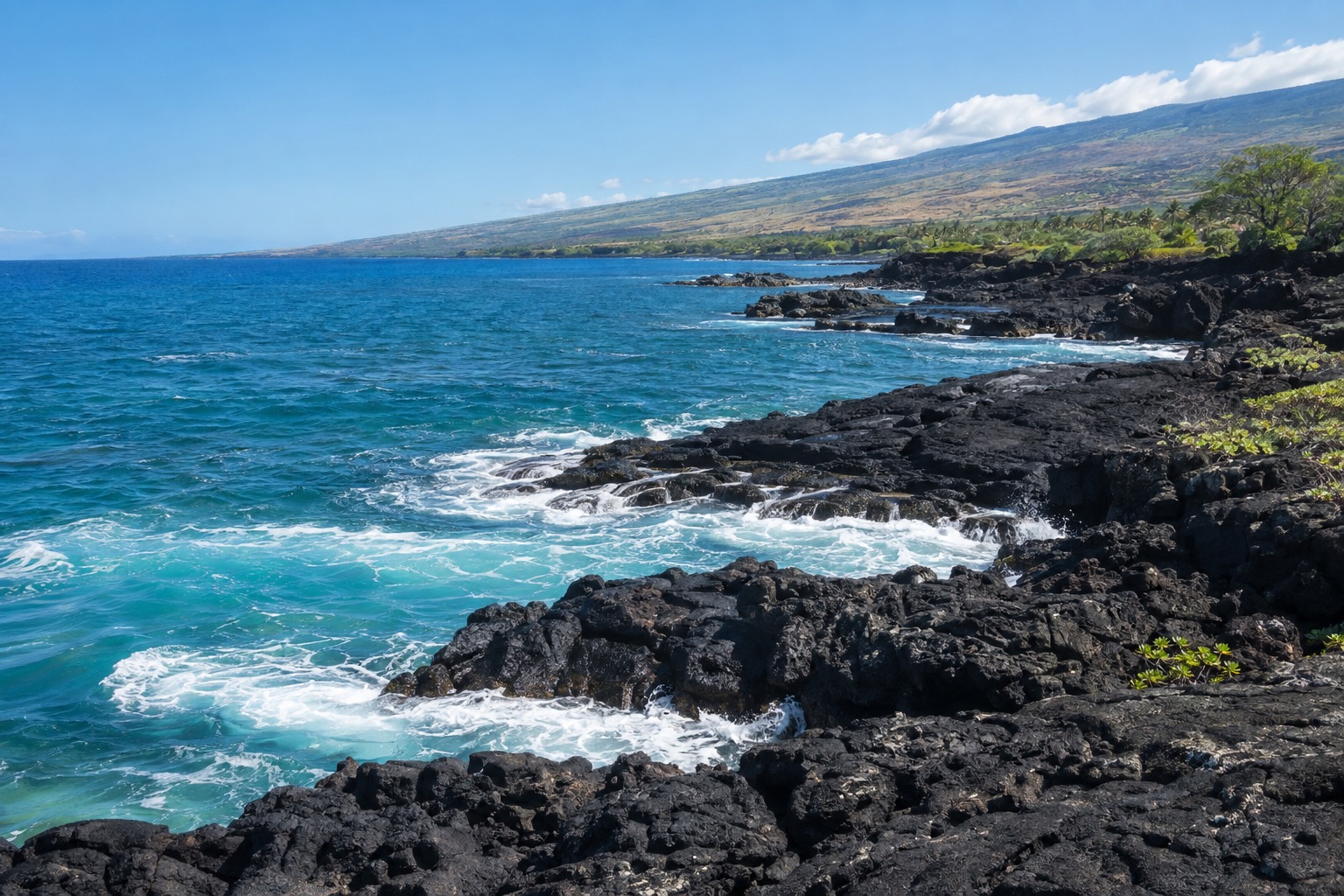
What is the weather like in Kona in August?
August in Kona is hot, sunny and very dry, with warm nights and almost no rain on the coast.
| Month | Average high (°F) | Average low (°F) | Rain days | Sea (°F) |
|---|---|---|---|---|
| July | 86.1 | 74.9 | 1.3 | 80.9 |
| August | 87.3 | 75.7 | 1.4 | 81.5 |
| September | 86.9 | 75.1 | 1.4 | 81.7 |
Mornings are the best hours for anything active. The sun is already strong by nine, and by early afternoon the leeward coast feels properly hot, with the black lava fields soaking up the heat.
A hat, sunglasses and a long break at midday make the day easier. Most of the sunshine on this side comes from the island itself, since Mauna Loa and Hualalai shelter the coast from the trade-wind clouds that soak the other side.
When rain does come, it is a brief shower, and the real wet is elsewhere. On the windward east coast, Hilo remains much wetter, while even in summer the uplands near Hawaii Volcanoes National Park stay cool and frequently damp. Heading up to the crater rim from Kona usually means a jacket and a change of sky. Along the shore, you can eat dinner outside in a T-shirt because the evening air stays that warm.
In mid-August, you get close to thirteen hours of daylight, which leaves room for time on the water in the morning, shade in the afternoon and a drawn-out sunset. The ocean sits in the low 80s, which feels pleasantly warm without a wetsuit.
Can you swim in Kona in August?
You can certainly take a long swim in that warm ocean, and on the Kona coast, August ranks among the simpler months for getting into the water.
On shores that face west, summer brings calmer weather, so in the morning the bays both south and north of town are frequently mild. First-time snorkelers often make Kahaluu Beach Park their top choice, where turtles frequently feed by the rocks.
Further north, the white-sand beaches of the Kohala Coast, such as Hapuna and Kua Bay, draw swimmers and bodyboarders. Kua Bay and other sandy beaches can still throw up shore break when a south swell rolls in, so watch the water before you step in.
Because the water can shift between one beach and the next, and from one hour to the next, pay attention to the flags, signs and lifeguards instead of taking for granted that any spot is calm. Snorkelers should keep a respectful distance from turtles and monk seals, stay off the coral and wear mineral sunscreen.
Bring a rash guard for the long hours in the sun, and water shoes for the rocky entries. Nervous swimmers and families with small children do best at the beaches with lifeguards and a gradual sandy entry.
What to do in Kona in August
The ocean is the main event in August, and the Kona coast is built for it. Dry skies make the days easy to plan, and the pace of town is relaxed and sun-soaked. The island’s roots run deeper than the beaches, though, and the coffee farms in the hills, the old Hawaiian sites on the shore and the evening light over the water fill a week without effort.
Snorkeling and ocean days
Kona has some of the most famous snorkeling and diving on the island, and August is a good time for it. Kealakekua Bay, with its coral gardens and the white monument on the far shore, is reached by boat or kayak, and the water inside the bay is often quiet in the morning. Boat outings leave from Keauhou and Kailua-Kona harbors and often include a stop at a reef or a bay with spinner dolphins.
Sea turtles rest along the shore at Kahaluu and other spots, and you may see them from the beach. Keep your distance, because turtles and monk seals are protected. Fish rise to the surface of the reefs in the warm water, and you may see parrotfish, butterflyfish and the state fish with the long name, the humuhumunukunukuapuaa.
Early morning is the best moment, before the wind picks up and the boats crowd the bay. Families with older children and confident swimmers will love it most, while anyone nervous in open water may prefer a shore-entry beach with a lifeguard.
Coffee country and the upland villages
Above town, the slopes of Hualalai and Mauna Loa hold the farms behind Kona coffee. Heading up past Holualoa, a tiny arts town filled with galleries and historic plantation structures, the route continues to Captain Cook, where farms along the road give tastings and demonstrate the picking, drying, and roasting of the cherries. The air is a few degrees cooler and more humid up here, and clouds often gather in the afternoon.
A morning is plenty. Walk the main street of Holualoa for pottery and paintings, then stop at a farm for a cup brewed from the beans grown across the road. Coffee lovers will love it, and it is a good way to spend the hottest part of the day away from the shore.
Historic sites and the town waterfront
Kailua-Kona itself is a pleasant place to wander. Along the water, Alii Drive passes Hulihee Palace, once a royal retreat, plus Mokuaikaua, the little stone church. The seawall has shaded benches for watching outrigger paddlers and surfers, and the pier is a lively place in the evening.
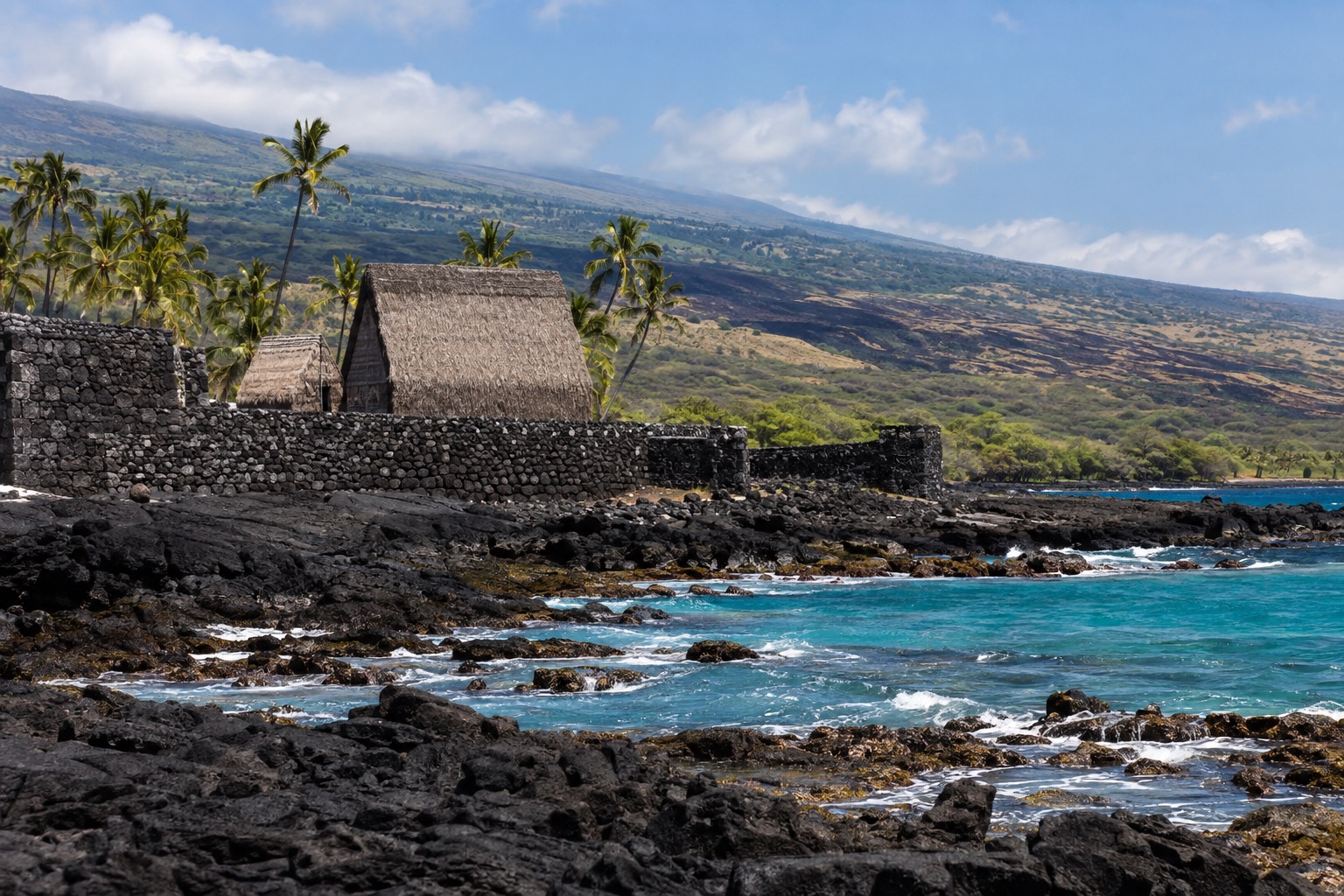
South of town, Puuhonua o Honaunau National Historical Park preserves a royal grounds and place of refuge, with carved wooden figures and fishponds beside the shore. Pu’ukohola and other Hawaiian sites further up the coast tell the same story. Treat the lava-rock walls and platforms with respect and do not climb on them.
Food in Kona leans on the sea and the farms. Look for fresh poke, grilled fish, shave ice on a hot afternoon and plates of local fruit from roadside stands. Evenings bring live music to some of the open-air restaurants along the waterfront.
August also brings a lively sporting energy to the coast, since the Ironman World Championship in October draws athletes who train along the Queen Kaahumanu Highway and swim in the bay in the weeks before. You may see them out early in the morning, which adds to the sense of a town built around the ocean.
A two-day itinerary for Kona in August
Day 1 starts on the water. Join a morning snorkel or kayak outing to Kealakekua Bay while the sea is quiet and the sun is not yet fierce. Return to shore by midday, then eat a plate lunch or fish tacos at a casual spot near the harbor. After that, take the hot hours slowly: a quiet hour in the shade, or a drive up to Holualoa for galleries and a cup of local coffee.
Later in the day, take a stroll along Alii Drive by Hulihee Palace and the historic church, then find a table by the water to watch the sun set. The sun goes down over the Pacific, and the evening stays warm enough to eat outside. If a shower or heavy cloud comes, the galleries and coffee farms upslope make a good indoor card.
Day 2 heads south and north in turn. Spend the morning at Puuhonua o Honaunau, walking the shoreline and the old royal grounds, with a swim or snorkel at a nearby bay afterward. Eat at a roadside stand or small café on the way back, then take the afternoon off the sun with a farm tour or an hour at a shaded beach park.
For the evening, drive up the coast to one of the Kohala beaches for a last swim and sunset, or stay in town for shave ice and a stroll along the seawall. If rain moves in, a museum stop or a long lunch keeps the day easy, and the dry coast usually clears quickly.
Is Kona busy in August?
Kona is moderately busy in August, with summer family vacations filling the beaches, boats and hotels.
School is out across much of the mainland, so families make up a large share of visitors, and weekends bring local residents to the beaches as well. Snorkel boats, popular restaurants and the Kealakekua Bay outings fill up first, and rental cars can be tight in the busiest weeks. Mornings at the best snorkeling spots are the quietest, and the parking lots at the popular beach parks fill by late morning.
If your stay lands during summer vacation’s busiest weeks, reserve rooms and rental cars well in advance. Later in the month, as schools on the mainland restart, the pace eases and last-minute plans become easier. Boat trips and dinners at the most popular waterfront restaurants are worth reserving a few days ahead in any week.
Some of the island’s most popular sites, from Hawaii Volcanoes National Park to the high-elevation observatories, are a long drive away, so the coast itself stays relaxed even on busy days. The quiet pockets are the upland villages and the smaller beaches, especially early in the day.
What to pack for Kona in August
Pack for sun, salt water and the occasional cool upland drive.
- Mineral sunscreen and a rash guard, for the strong sun and long hours in the water
- A wide-brimmed hat and sunglasses, because the leeward coast is bright and dry
- Water shoes, for the rocky entries at many snorkeling spots
- A light jacket, for the cool, damp air at Volcanoes National Park or the upland farms
- A reusable water bottle, since hot days call for steady drinking
- Light, breathable clothes for evenings outdoors
Good to know before you go
August falls inside the Central Pacific hurricane season, which runs from June 1 to November 30. Hawaii is rarely hit, but it is wise to keep an eye on forecasts and keep your plans flexible.
Even though the coast stays dry and driving is a breeze, the easiest way to get to the coffee farms, the southern sites and the beaches up the coast is a rental car. Book early for the holiday weeks, and plan the hottest hours for shade or the water.
| Fee | Amount | Who pays |
|---|---|---|
| State Transient Accommodations Tax | 11.00% | Guests on lodging |
| County of Hawaii Transient Accommodations Tax | 3% | Guests on lodging |
| General Excise Tax pass-on (maximum, with county surcharge) | 4.7120% | Customers of businesses |
Kona in August vs July and September
Moving the trip to July changes little in the weather, since the sea is just a shade cooler and the days are a touch less hot. The crowds are similar, with the summer family season in full swing, so July suits anyone who wants the same sunny coast with a slightly earlier start to the school break.
September is very close in feel, with the sea a hair warmer and the air still hot and dry. The big difference is people. As school resumes on the mainland, the beaches and boats thin out and rooms are easier to find, which suits travelers who prefer a quieter coast. The hurricane season continues through both months.
Families tied to school calendars will stay with July or August, while flexible travelers, couples and snorkelers who like space on the water may prefer September. Anyone chasing the summer buzz on the waterfront will find August the liveliest of the three.
Is August a good time to visit Kona?
August is indeed a great month for visitors to the Big Island who are after sunshine, warm ocean water and a relaxed vacation centered on the outdoors.
Snorkelers, families, coffee lovers and anyone who wants dry, bright weather will love it. Those who dislike heat, or who prefer empty beaches and the lowest crowds, may be happier in another month. People hoping to see the island’s wetter, greener side should plan to leave the coast, since Hilo and the volcano uplands are much rainier.
On arrival, get in the water early. A first-morning snorkel at a lifeguarded beach sets the rhythm of the trip, and then you can plan boat outings, coffee farm visits and a drive to Hawaii Volcanoes National Park around it. Reserve popular tours before you arrive.
What makes August special in Kona is the combination of a warm, glassy sea, long golden evenings and a coast that stays dry while the rest of the island is lush. The day starts with fishing boats at dawn and ends with the sun sinking into the Pacific off Alii Drive.
Sources
- NOAA NCEI, monthly normals 1991-2020, station USW00021510, checked September 8, 2026
- Open-Meteo Marine API, average 2015-2024, checked September 8, 2026
- sunrise-sunset.org, sunrise and sunset calculated for the 15th of the month, checked September 8, 2026
- Hawaii Department of Taxation, Tax Announcement No. 2025-03 (Transient Accommodations Tax Law Changes from 2025 Legislative Session), files.hawaii.gov/tax/news/announce/ann25-03.pdf, checked September 24, 2026
- County of Hawaii, Department of Finance, Transient Accommodations Tax (TAT) page, hawaiicounty.gov/departments/finance/transient-accommodations-tax-tat (live returned HTTP 403 on request, read via Internet Archive Wayback Machine snapshot dated August 14, 2026, same official content), checked September 25, 2026
- Hawaii Department of Taxation, County Surcharge on General Excise and Use Tax page, tax.hawaii.gov/geninfo/countysurcharge/, checked September 25, 2026
- NOAA NCEI, monthly normals 1991-2020, station USW00021504
- NOAA NCEI, monthly normals 1991-2020, station USC00511303
- NWS Honolulu / Central Pacific Hurricane Center, « 2026 Central Pacific Hurricane Season Outlook », weather.gov/hfo/hurricaneOutlook2026, checked September 24, 2026