
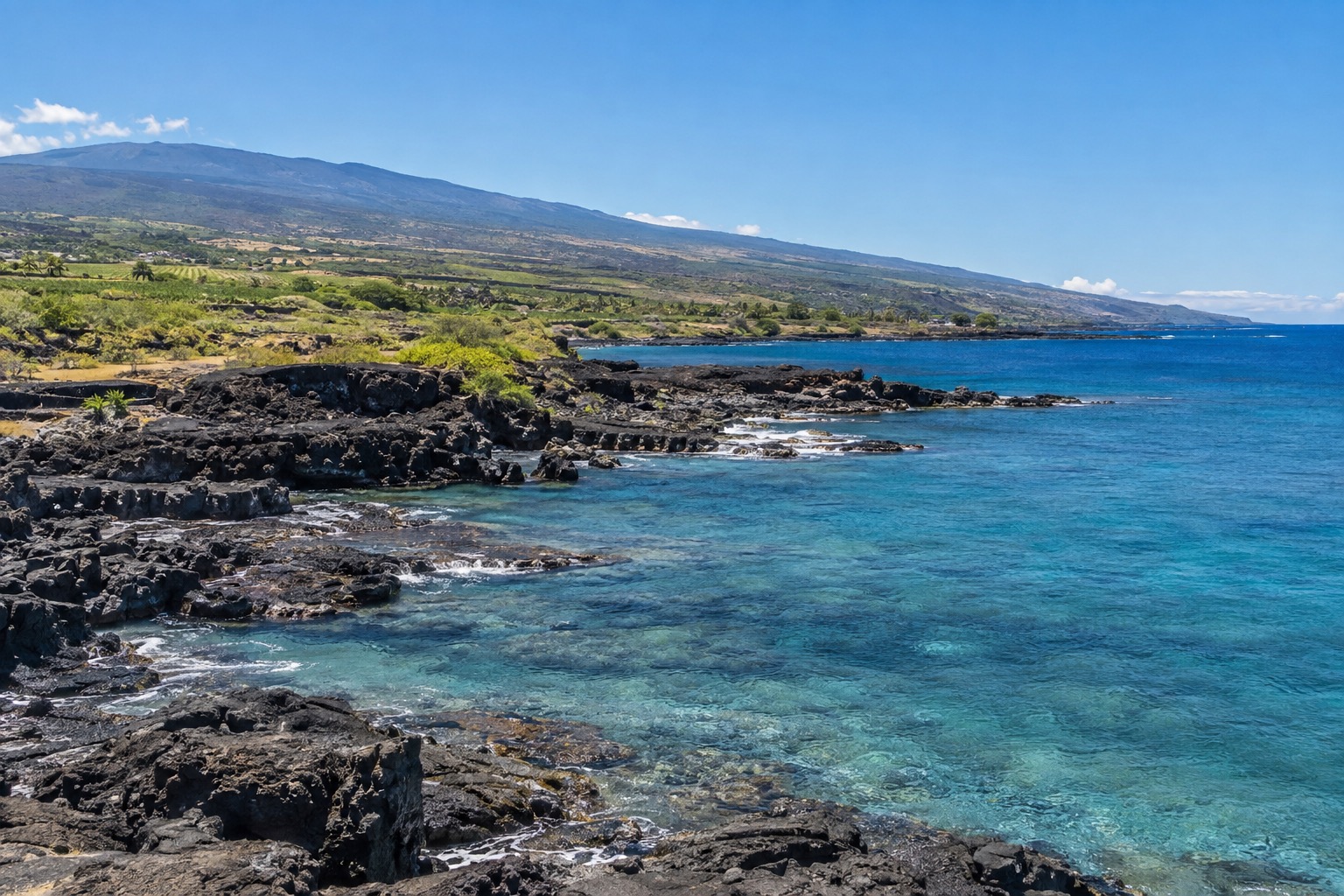
On a Kona morning the lava-black shoreline steams in the sun, outrigger canoes slide out from the pier at Kailua, and the smell of roasting coffee drifts down from the hillside farms. The west side of the Big Island stays sunny and dry nearly all year, while winter brings humpback whales and a crowd of mainland visitors escaping the cold. This is a coast where the real question is less about rain than about who else is on the beach.
When is the best time to visit Kona?
Late April through early June and then September through early November are the best stretches for most travelers, with sunny days, warm water and room to breathe. Kona sits on the dry leeward side of the island, so almost any month works, and the choice comes down to the kind of trip you want.
For the beach and the sea, late summer and early fall are hard to beat. The ocean is at its warmest, mornings are clear, and snorkeling at spots like Kealakekua Bay feels easy. Winter has its own draw too, with humpback whales swimming past offshore and their spouts visible from a lanai, yet bigger surf can build on north and west shores, so check the posted warnings along with the day’s surf and currents before entering the water, and swim only where a lifeguard is on duty.
For sightseeing, the cooler, quieter shoulder months suit the long drives to the volcano and the climb toward Maunakea. Budget travelers and anyone who dislikes a full beach should look at May, early June, September and October, when rooms are easier to find. Families should know that March is loud with spring break, and July is busy with school-vacation travelers, so those weeks bring more crowds and peak-season rates.
Kona weather by month
Kona is warm every month, and the differences are small enough that you can plan around crowds instead of the forecast.
| Month | Average high (°F) | Average low (°F) | Rain (in) | Rain days | Sea (°F) |
|---|---|---|---|---|---|
| January | 81.4 | 68.6 | 1.35 | 1.8 | 78.1 |
| February | 81.5 | 68.4 | 1.17 | 1.5 | 77.9 |
| March | 82.2 | 69.7 | 0.97 | 1.9 | 77.6 |
| April | 83.2 | 71.1 | 0.63 | 1.5 | 78.1 |
| May | 83.9 | 72.7 | 0.64 | 1.8 | 79.5 |
| June | 85.2 | 74.0 | 0.76 | 1.7 | 80.4 |
| July | 86.1 | 74.9 | 0.49 | 1.3 | 80.9 |
| August | 87.3 | 75.7 | 0.54 | 1.4 | 81.5 |
| September | 86.9 | 75.1 | 0.54 | 1.4 | 81.7 |
| October | 86.2 | 74.5 | 0.89 | 1.7 | 81.4 |
| November | 84.4 | 72.4 | 0.83 | 1.1 | 80.7 |
| December | 82.3 | 70.0 | 1.06 | 1.6 | 79.3 |
The year runs from pleasantly warm in winter to properly hot in late summer, with nights that stay mild throughout. Rain is rare on this coast in every season. Winter showers tend to arrive with passing weather systems and clear quickly, while summer days are mostly steady sun. Wet weather is a story for the other side of the island, around Hilo, and for the cool, misty slopes of the volcano.
When is Kona cheapest and least crowded?
The quietest weeks fall in late April through May, and again from September into early November, once school is back in session. Rooms are easier to find then, restaurants rarely need a long wait, and the beaches have a lot of open sand.
The busiest times follow the mainland calendar. Spring break fills the resorts in March, Easter week brings families, summer vacation keeps July and early August lively, and the stretch from Christmas through New Year is the peak of the year, with peak-season rates and well-booked flights. Thanksgiving week is busy too. Between those peaks, the coast feels like a small town with a few good beaches.
Which months should you avoid in Kona?
No month needs to be avoided outright, but a few come with trade-offs. The Central Pacific hurricane season runs from June 1 to November 30, and Hawaii is rarely hit, though it is the time to keep an eye on the forecast when you book flexible plans.
Late summer and early fall are the hottest months, and midday sun on the lava fields can feel intense, so mornings and evenings are for exploring. Winter is the other trade-off: bigger surf on exposed shores, whales offshore, and the busiest crowds around the holidays. For a beach day without any concern about waves, check the warnings that are posted along with that day’s surf and currents before entering the water, swim only where a lifeguard is on duty and stay near them, and choose a sheltered cove.
When can you swim in Kona?
You can swim in Kona in any month, because the water stays warm all year. It is coolest in late winter and spring and warmest from late summer into October, when it feels like a gentle bath for long snorkel sessions.
Conditions change by season and by beach. On west-facing shores, summer tends to deliver gentler water, but winter swells can turn some entry points rough, so check the posted warnings plus that day’s surf and currents before you go in, and only swim near a lifeguard where one is on duty. Around Kealakekua Bay the water is usually clear and calm in the mornings. Whenever you meet a green sea turtle in the water, give it room, since they are protected and should be kept at least 10 feet away.
Festivals and events in Kona through the year
Winter whales and holiday lights
From about December to March, humpback whales cruise the waters off the Kona coast. Their spouts and breaches are visible from shore, and boat trips leave from Honokohau and Keauhou harbors. The first light of morning is usually the best time for calm seas and active whales.
Christmas and New Year bring decorated storefronts along Alii Drive, and the holiday weeks fill the coast with families from the mainland. It is a lively time to be here, but plan ahead, since rooms and cars go early.
Ironman and the coffee season
In October, Kona hosts the Ironman World Championship, and the whole town turns toward the swim at the pier, the long bike ride on the Queen Kaahumanu Highway and the run along Alii Drive. Athletes train on the roads for weeks beforehand, and the mood is festive, though traffic and rooms tighten around race day.
Coffee is the other signature of the district. The harvest usually runs through the fall and into winter, when farms on the hillside open for tastings and you can see cherries drying in the sun. Look for the Kona name on the label, since a new law will tighten how the name can be used on blends.
Kamehameha Day and summer on the coast
June 11 is Kamehameha Day, a state holiday honoring the king who united the islands, and Kona marks it with lei draping and a parade, since Kamehameha was born on this island. Expect flowers, hula and a local crowd in the streets of Kailua.
Through summer, the harbors and beaches fill with families and canoe paddlers, and sunsets over the water draw people to the seawall. It is a relaxed, local kind of season, best enjoyed with an evening walk and shave ice in hand.
Sources
- NOAA NCEI, monthly normals 1991-2020, station USW00021510, checked September 8, 2026
- Open-Meteo Marine API, average 2015-2024, checked September 8, 2026
- sunrise-sunset.org, sunrise and sunset calculated for the 15th of the month, checked September 8, 2026
- Hawaii Department of Taxation, Tax Announcement No. 2025-03 (Transient Accommodations Tax Law Changes from 2025 Legislative Session), files.hawaii.gov/tax/news/announce/ann25-03.pdf, checked September 24, 2026
- County of Hawaii, Department of Finance, Transient Accommodations Tax (TAT) page, hawaiicounty.gov/departments/finance/transient-accommodations-tax-tat (live returned HTTP 403 on request, read via Internet Archive Wayback Machine snapshot dated August 14, 2026, same official content), checked September 25, 2026
- Hawaii Department of Taxation, County Surcharge on General Excise and Use Tax page, tax.hawaii.gov/geninfo/countysurcharge/, checked September 25, 2026
- Federal Aviation Administration, CY2024 Commercial Service Enplanements (xlsx), faa.gov/airports/planning_capacity/passenger_allcargo_stats/passenger/arp-cy2024-commercial-service-enplanements.xlsx, checked September 24, 2026
- National Park Service, "Fees & Passes", nps.gov/puho/planyourvisit/fees.htm, read September 25, 2026
- National Park Service, "Fees & Passes", nps.gov/kaho/planyourvisit/fees.htm, read September 25, 2026
- Hawaiʻi Department of Land and Natural Resources, Division of State Parks, "Kealakekua Bay State Historical Park", dlnr.hawaii.gov/dsp/parks/hawaii/kealakekua-bay-state-historical-park/, read September 25, 2026
- Hawaiʻi State Legislature, Session Laws of Hawaiʻi 2024, Act 198 (H.B. No. 2298), Section 1, data.capitol.hawaii.gov/sessions/sessionlaws/Years/SLH2024/SLH2024_Act198.pdf, read September 25, 2026
- Hawaiʻi State Legislature, Session Laws of Hawaiʻi 2024, Act 198 (H.B. No. 2298), Section 1-2, data.capitol.hawaii.gov/sessions/sessionlaws/Years/SLH2024/SLH2024_Act198.pdf, read September 25, 2026
- NOAA Fisheries, "Green Turtle", fisheries.noaa.gov/species/green-turtle, read September 25, 2026
- NOAA Fisheries, "Viewing Marine Wildlife in Hawaiʻi", fisheries.noaa.gov/pacific-islands/marine-life-viewing-guidelines/viewing-marine-wildlife-hawaii, read September 25, 2026
- Hawaiʻi Department of Land and Natural Resources, Division of State Parks, "Hāpuna Beach State Recreation Area", dlnr.hawaii.gov/dsp/parks/hawaii/hapuna-beach-state-recreation-area/, read September 25, 2026
- University of Hawaiʻi at Hilo, Center for Maunakea Stewardship, "Important Things to Know", hilo.hawaii.edu/maunakea/visitor-information/important-things-to-know, read September 25, 2026
- NPS, Directions, https://www.nps.gov/havo/planyourvisit/directions.htm, checked September 25, 2026
- NOAA NCEI, monthly normals 1991-2020, station USW00021504
- NOAA NCEI, monthly normals 1991-2020, station USC00511303
- NWS Honolulu / Central Pacific Hurricane Center, « 2026 Central Pacific Hurricane Season Outlook », weather.gov/hfo/hurricaneOutlook2026, checked September 24, 2026