
In November, the Kona coast wakes to a soft, pale light over Hualalai and the smell of strong coffee drifting from open-air cafés along Alii Drive. The seawall fills with early walkers, outrigger canoes slip out past the pier, and the lava fields glow gold at the end of the day. The crowds of the big October race week have gone, and what remains is a warm, sunny, unhurried stretch of the Big Island’s dry side, good for swimming, coffee farms and long evenings outside.
What is the weather like in Kona in November?
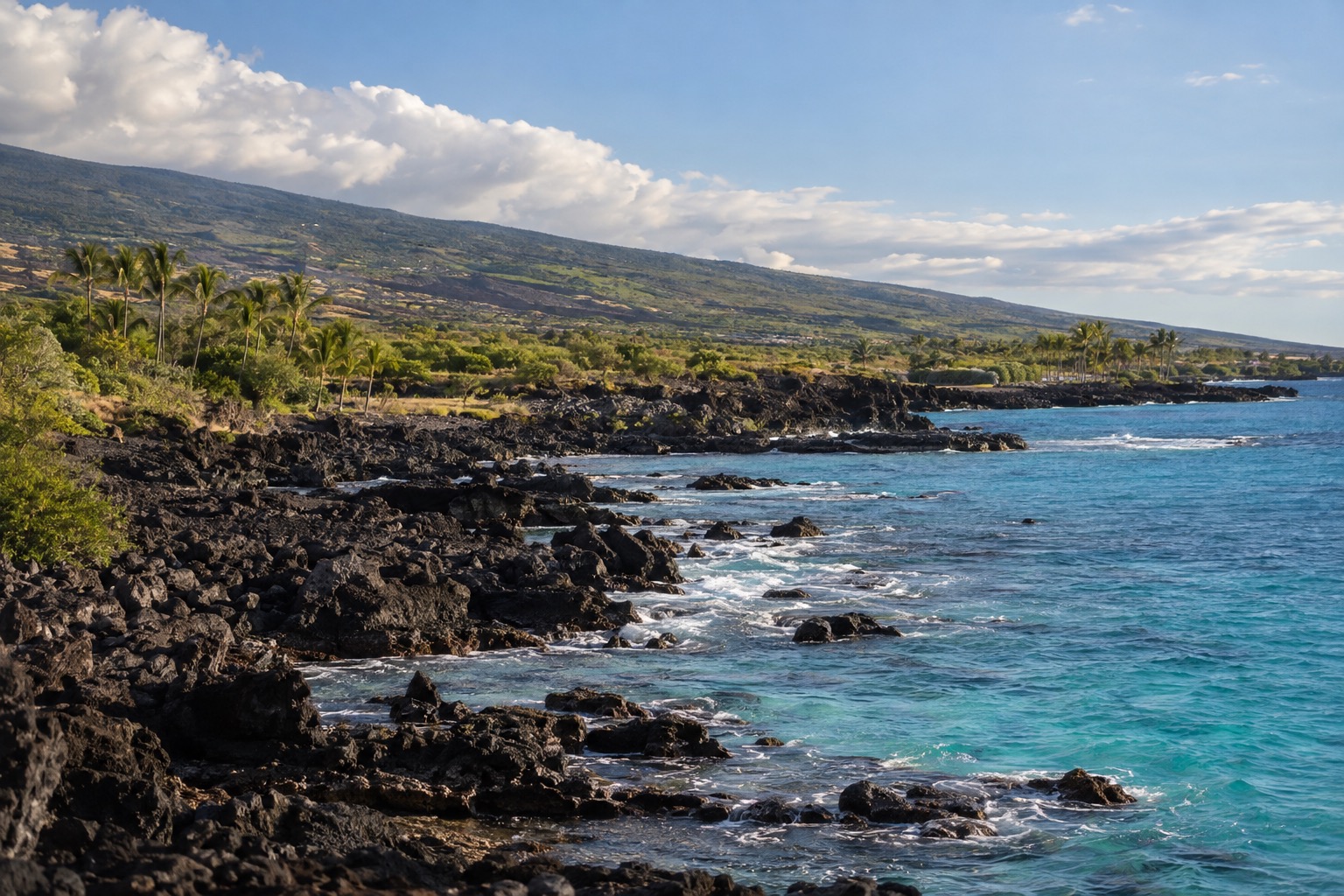
November in Kona brings warmth, sunshine and little rain, when the afternoons carry the softness of summer and the evenings call for only a light layer.
| Month | Average high (°F) | Average low (°F) | Rain days | Sea (°F) |
|---|---|---|---|---|
| October | 86.2 | 74.5 | 1.7 | 81.4 |
| November | 84.4 | 72.4 | 1.1 | 80.7 |
| December | 82.3 | 70.0 | 1.6 | 79.3 |
On the island’s leeward side lies the Kona coast, where the great volcanoes block the steady trade winds and keep out most of the rain. Mornings start clear and soft, afternoons turn hot enough that shade and a cold drink become the point of the day, and the sky often builds a few clouds over the slopes by midafternoon. Most of the island’s showers fall on the other side, around Hilo, which is far wetter and greener.
When rain does come to Kona, it tends to be a brief shower, often up on the coffee slopes rather than at the shore. Plan your beach hours for the morning and early afternoon, and keep the late afternoon for lava rock sunsets. On most nights, dining outdoors in a T-shirt works fine, but bring something light for the breeze that arrives after sunset.
Daylight lasts a little over eleven hours in mid-November, so the sun drops earlier than it does in summer. Higher up, the weather changes quickly: the upper slopes of the volcanoes are far cooler and wetter, so a day that starts on the beach and ends at the crater rim calls for a jacket in the car.
Can you swim in Kona in November?
Come November, the water off Kona stays warm enough to swim in for a long, comfortable stretch, and once most people are in, a quick dip seldom does the trick.
The sea has cooled only a little since October, and for most visitors it feels pleasant without a wetsuit. Big winter swells pound the north shores of other islands, but the leeward coast usually escapes them, which means calm water is common at Kahaluu, at Kailua Bay near the pier, and at the small coves south of town. Often does not mean always: a swell can arrive from the north or west and put waves on beaches that were flat the day before.
Snorkelers like the reef at Kahaluu Beach Park and the clear water south of town, where tropical fish and sometimes sea turtles feed over the lava rock. Turtles are protected, so watch them from a respectful distance and never touch them. Stay off the living reef, since standing on coral damages it.
Families and nervous swimmers do best at beaches with a lifeguard and calmer sand-bottomed entries. Before you step in, read the signs and flags and ask the lifeguard, because currents and surf can change from one day to the next. Bring a rash guard and mineral sunscreen, plus water shoes for the rocky entries.
What to do in Kona in November
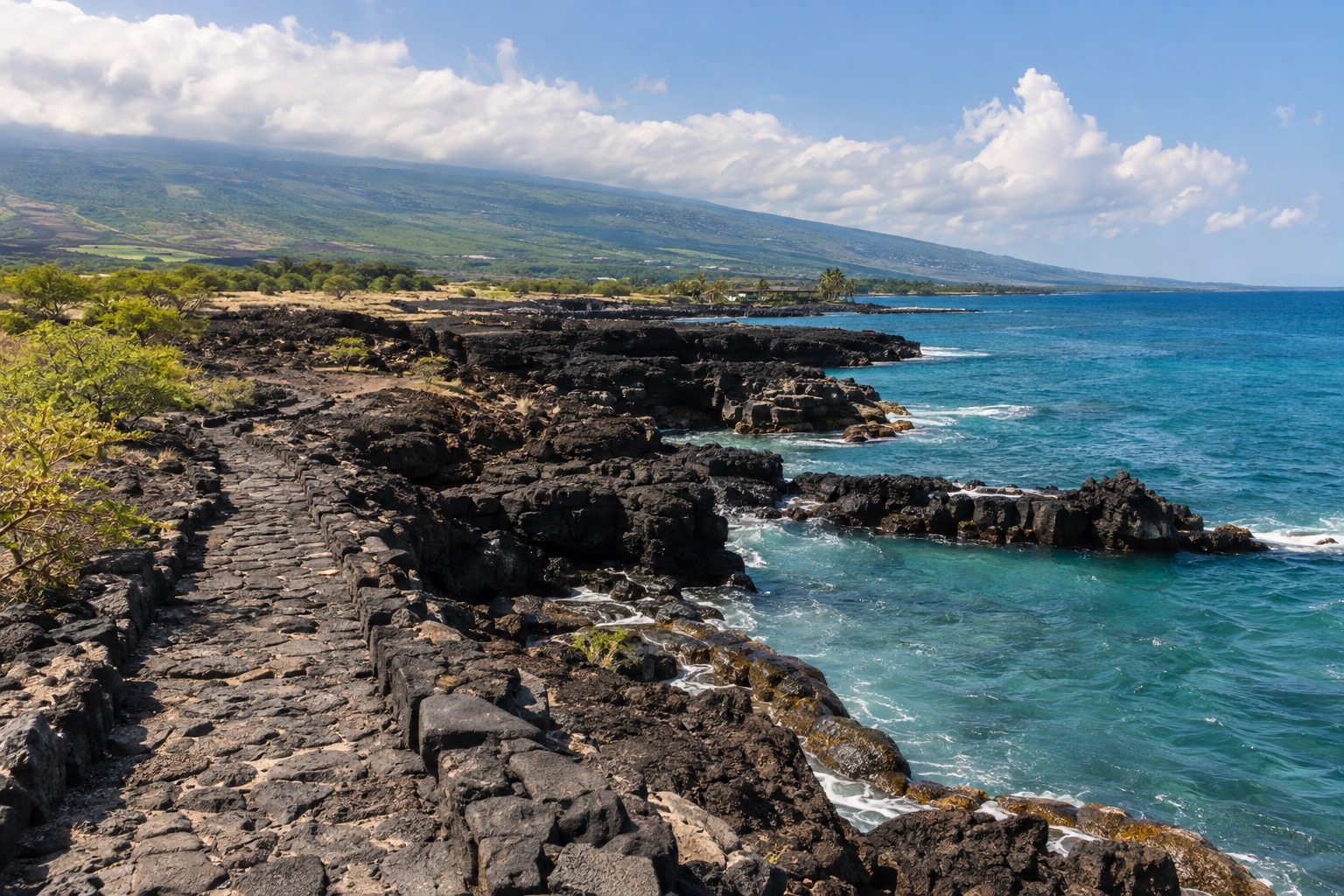
November in Kona is a month of easy rhythms. The Ironman World Championship is over, the banners come down, and the town returns to its own pace: coffee in the morning, snorkeling by midday, and slow dinners over the water. Harvest season for Kona coffee runs through the fall, so the farms on the hillside above town are most interesting, with ripe red cherries on the trees and the smell of roasting in the air.
The coffee belt, stretching along the slopes above the highway, is the thing to do on a morning when the beach is not calling. Small family farms offer tours that walk you from the tree to the cup, and most end with a tasting. Pair it with a stop at a roadside stand for a slice of fruit bread or a plate lunch.
Alii Drive and Kailua Village
Along Alii Drive, the center of town runs as a brief piece of oceanfront, with the pier, the historic Hulihee Palace and Mokuaikaua’s stone church all a simple stroll apart. Mornings are the best time, when the light is soft and the sea is still. Fishing boats unload, canoe paddlers practice, and the shops are just opening.
By late afternoon the seawall becomes the place to be. Locals and visitors sit with shave ice or a cold beer and watch the sun slide into the Pacific. Dinner options run from fresh poke and grilled fish to casual open-air grills, and the line between a quick bite and a long meal blurs easily. It suits couples, families and anyone who likes to wander without a plan.
Snorkeling and boat trips
The Kona coast is known for its clear water and reefs, and November conditions are generally friendly for time on the water. Boat trips head south toward Kealakekua Bay, where steep green cliffs fall into blue water and the monument to Captain Cook stands on the far shore. Dolphins sometimes appear along the way, and the ride itself is a pleasure in the morning calm.
If you prefer to stay on shore, Kahaluu Beach Park is an easy snorkel spot with plenty of fish close in, and it suits beginners and children who like to watch from the shallows. Go early, before the afternoon crowds and the wind pick up, and bring your own mask if you have one.
Volcanoes and the upcountry
Hawaii Volcanoes National Park, on a day trip, offers a world that is cooler and wetter, with steam vents, fern forest and crater views. The park sits high, at around four thousand feet, so the air is much fresher than at the coast, and rain showers are common. Wear layers and bring a rain jacket, even if Kona was in full sun that morning.
It makes a long day, so many travelers split it with a night in the area or pick one half of the park and take it slowly. On the drive back, the sunset over the lava fields is a good reason to be on the road.
Other pleasures: the farmers markets, where tropical fruit, macadamia nuts and local honey fill the stalls, a small-town Saturday scene along the coast, and the stargazing that Mauna Kea and the dark Kona skies reward on clear nights. Humbler but just as good is a sunset on the lava rocks with a cold drink and nowhere to be.
A two-day itinerary for Kona in November
Day 1 begins in Kailua Village, with a walk along the seawall at sunrise while the light is soft and the air is still cool. Have breakfast at a café with a view of the pier, then head to Kahaluu for a morning snorkel before the wind builds and the beach fills. By midday, find shade and a plate lunch, because the afternoon heat is the strongest part of the day.
In the afternoon, visit Hulihee Palace and the old church, then browse the shops along Alii Drive at an easy pace. Finish at the seawall for sunset, which falls early in November, and a dinner of fresh fish. If a shower rolls through, duck into the palace or a gallery and wait it out.
Day 2 heads upcountry, to the coffee farms along the slope. Start early with a farm tour and tasting while the air is cool, and pick up a bag of beans to take home. Lunch in a small upcountry town works well, with a slower pace and a cooler breeze.
Spend the afternoon on a boat trip or a drive south toward Kealakekua Bay, where the cliffs and the water make a fine finish to the day. Return to town for a relaxed dinner and, if the sky is clear, a few minutes of stargazing away from the lights. On a wet day, swap the bay for a museum, a market or a long lunch.
Is Kona busy in November?
Kona is moderately busy in November, with a calm early part of the month and a livelier stretch as Thanksgiving week approaches.
The October race-week crowds are gone, so rooms and rental cars are easier to find in the first weeks, and restaurant tables rarely need much planning. The picture changes around the Thanksgiving holiday, when families from the mainland fill condos, hotels and beaches. For that week, book rooms and cars early, and reserve dinner in advance if you have a favorite spot.
Outside the holiday, the town feels relaxed. Beaches are pleasant rather than packed, snorkel spots have room, and boat trips have seats. On their strongest days, well-liked excursions continue to sell out, so reserving several days in advance is a wise practice.
If your plans include a national park outing or any site that uses timed entry, check the official page before you go, because rules change and are best confirmed at the source. Hotels and condos in the area carry the state and county accommodation taxes, which are listed at the end of the page.
What to pack for Kona in November
Pack for a warm coast and a cool mountain, and keep the bag light.
- A rash guard and a swimsuit, since you will spend hours in the water.
- Since the sun stays powerful even during a cooler month, pack a hat and mineral sunscreen.
- Water shoes, for the rocky entries and lava shore.
- Bring a thin rain shell for the upcountry showers and the volcano.
- A warm layer, for evenings and the high slopes.
- Comfortable walking shoes, for coffee farms and park trails.
Good to know before you go
November is the last month of the Central Pacific hurricane season, which runs from June 1 to November 30. Getting around the Kona side is easiest with a rental car, and the Thanksgiving week is the time to book it and your room first. Lodging carries these taxes:
| Fee | Amount | Who pays |
|---|---|---|
| State Transient Accommodations Tax | 11.00% | Guests, on lodging |
| County of Hawaii Transient Accommodations Tax | 3% | Guests, on lodging |
Kona in November vs October and December
Moving the trip earlier, to October, gives you a slightly warmer sea and a touch more heat, but it also brings the Ironman crowds, with rooms and cars tight around race week. If you want the busy, athletic energy of that event, October is your month. If you prefer a quieter coast, November is easier.
Moving later, to December, brings cooler air and sea, a little more rain, and the festive holiday crowds. The winter surf starts to build on exposed shores, and the humpback whale season begins to open up, which is a draw for boat trips. Rooms get tight toward the end of the month and over Christmas.
Choose November if you want warm water, sunny days and a calm town. Choose October for the race atmosphere, and December for whales and holiday lights.
Is November a good time to visit Kona?
November really is an excellent month for a Kona trip, above all for visitors seeking sunshine, warm ocean water and a slower rhythm minus the biggest crowds.
It suits snorkelers, coffee lovers, couples and families who can travel outside the Thanksgiving rush. Anyone who needs guaranteed wave-free beaches or a packed event calendar might look at another month. On arrival, start with the coast: a swim, a walk along the seawall and a first sunset set the tone for the rest of the stay.
What makes November special here is the quiet after the race. The harvest is on the hillsides, the sea is still warm, and the town goes back to being itself, with the lava glowing at dusk and a cup of fresh Kona coffee in hand.
Sources
- NOAA NCEI, monthly normals 1991-2020, station USW00021510, checked September 8, 2026
- Open-Meteo Marine API, average 2015-2024, checked September 8, 2026
- sunrise-sunset.org, sunrise and sunset calculated for the 15th of the month, checked September 8, 2026
- Hawaii Department of Taxation, Tax Announcement No. 2025-03 (Transient Accommodations Tax Law Changes from 2025 Legislative Session), files.hawaii.gov/tax/news/announce/ann25-03.pdf, checked September 24, 2026
- County of Hawaii, Department of Finance, Transient Accommodations Tax (TAT) page, hawaiicounty.gov/departments/finance/transient-accommodations-tax-tat (live returned HTTP 403 on request, read via Internet Archive Wayback Machine snapshot dated August 14, 2026, same official content), checked September 25, 2026
- Hawaii Department of Taxation, County Surcharge on General Excise and Use Tax page, tax.hawaii.gov/geninfo/countysurcharge/, checked September 25, 2026
- NOAA NCEI, monthly normals 1991-2020, station USW00021504
- NOAA NCEI, monthly normals 1991-2020, station USC00511303
- NWS Honolulu / Central Pacific Hurricane Center, « 2026 Central Pacific Hurricane Season Outlook », weather.gov/hfo/hurricaneOutlook2026, checked September 24, 2026