
FLORIDA · GULF ISLANDS NATIONAL SEASHORE · MAY
You have already picked the seashore: the white quartz sand of Santa Rosa Island, the brick forts at Pensacola Pass, the barrier beaches strung west toward Mississippi. The open question is the date. May sits between April’s cooler water and June’s heavier heat and rain, in the stretch of late spring when a morning fort walk and a midday swim still fit into the same day.
Two sources carry the numbers below. Air normals come from a NOAA weather station, and the sea temperature comes from a marine model. We keep them apart, and we say where each thermometer sits. The park overview lives in our Gulf Islands guide, and the statewide calendar in the best time to visit Florida.
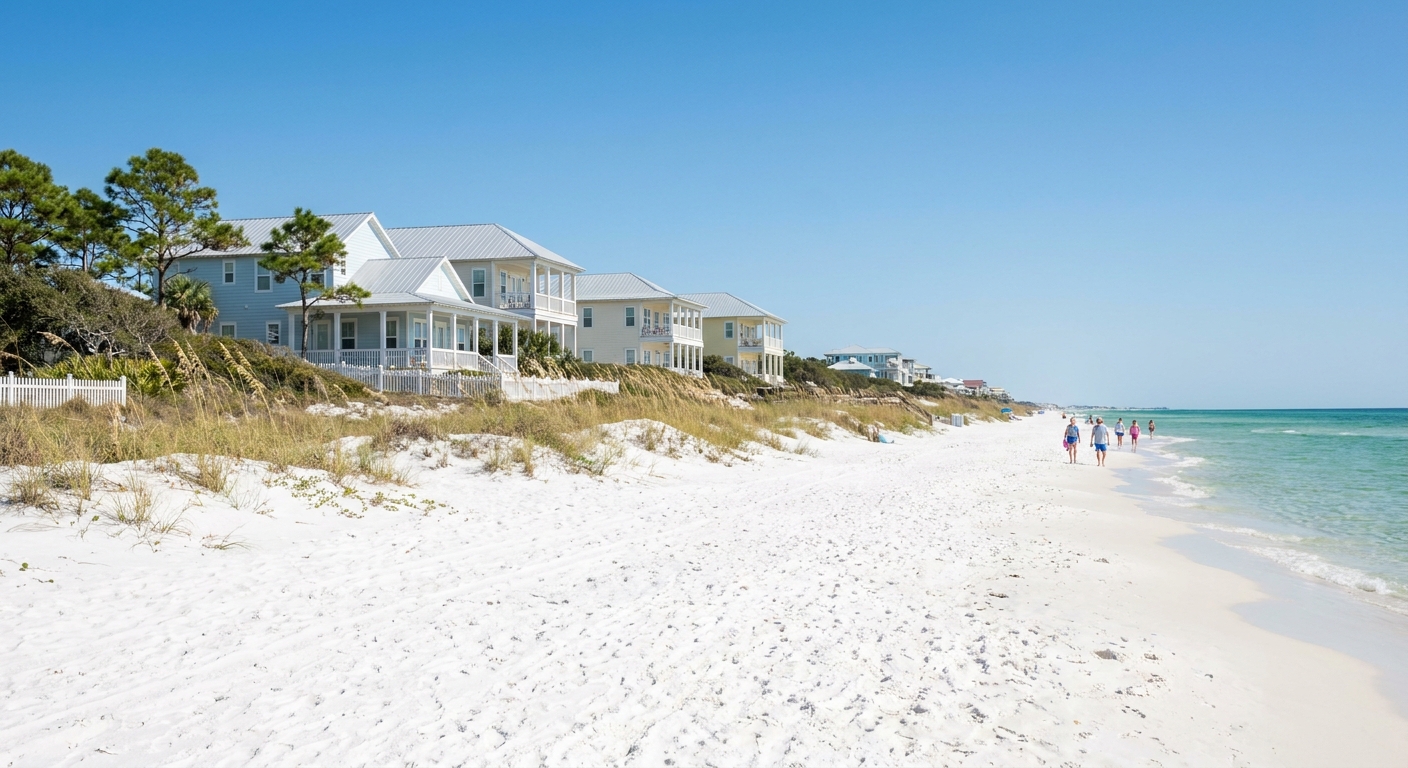
MAY AT A GLANCE · GULF ISLANDS
In May the sea off the seashore averages 78.2°F at its daily peak and measurable rain falls on 3.7 days, so two nights with a midday swim and early fort walks suit the month.
LATE SPRING · BEFORE HURRICANE SEASON · 2 NIGHTS FOR THE FLORIDA UNITS
Go for: a Gulf near 78.2°F, the fewest rain days of the three late-spring months, and daylight from 5:48 a.m. to 7:33 p.m. for forts in the morning and swims at noon.
Think twice before: counting on water above 80°F (June averages 82.9°F) or assuming the eastern-end station speaks for the Mississippi islands.
Air: NOAA NCEI station USW00053853 · Sea: Open-Meteo Marine · Light: sunrise-sunset.org · full sources at the end
On this page
- Gulf Islands weather in MayHighs of 83.5°F, lows of 68.0°F and 3.7 rain days
- Sea temperature in May78.2°F on average, measured at the daily peak
- Crowds and prices in MayWhere May sits before hurricane season, and what we could not verify
- Things to do in MayFort Pickens, Opal Beach, Johnson Beach and Davis Bayou
- A two-day Gulf Islands itinerarySanta Rosa Island on day one, Perdido Key on day two
- May vs April and JuneApril runs 7.3°F cooler, June 5.4°F hotter
- Is May a good time to visit?Who should book May and who should wait for June
Pensacola’s airport puts you within reach of the Florida units, and our Florida flights guide lists the ways in. A car is needed to link the forts and beaches, as getting around Florida explains. Two nights cover the Florida end at a relaxed pace (our estimate), and a third adds the Mississippi side.
Gulf Islands National Seashore weather in May: average highs, lows and rain days
| May normal | Value |
|---|---|
| Average high | 83.5°F (28.6°C) |
| Average low | 68.0°F (20.0°C) |
| Precipitation | 3.22 in |
| Days with 0.10 in or more | 3.7 |
| Days with 1 in or more | 0.8 |
| Daylight, May 15 | 13 h 45 min |
| Sunrise / sunset, May 15 | 5:48 a.m. / 7:33 p.m. CDT |
| Sea surface (daily maxima) | 78.2°F |
NOAA’s National Centers for Environmental Information supply the air figures: on the 1991-2020 normals, May averages a high of 83.5°F (28.6°C), a low of 68.0°F (20.0°C) and 3.22 inches of precipitation. They are readings from station USW00053853, a real thermometer at South Walton in the Panhandle, rather than a grid-cell reanalysis. The seashore runs 160 miles west from that station into Mississippi, so every figure here describes its eastern end. We found no station normal for the Mississippi islands, and we do not assume the two ends match.
Measurable rain, 0.10 inch or more, falls on 3.7 days in an average May, about one day in eight. An inch or more comes down on 0.8 day, so a typical May brings roughly one real downpour and some bring none. On a two-night trip, keep one half-day flexible rather than a whole spare day, and move a lost beach afternoon to the next morning.
Afternoons at 83.5°F and nights at 68.0°F make a 15.5°F swing across the day. Pack a light long-sleeve layer for early fort walks and the sand after sunset, plus a brimmed hat, sunscreen and a refillable bottle for the midday hours. Quick-dry clothes help after an evening swim, when the air sits closer to the low than the high.
On May 15 the sun rises at 5:48 a.m. and sets at 7:33 p.m. Central Daylight Time, converted from sunrise-sunset.org’s UTC figures, for about 13 hours 45 minutes of daylight. Put fort visits and long beach walks in the first hours after sunrise, keep midday for the water, and hold a spot on the sand for the last light before 7:33 p.m.
Gulf Islands National Seashore sea temperature in May: can you swim?
The Open-Meteo Marine API puts the sea surface off Gulf Islands National Seashore at 78.2°F in May, averaged over 2015-2024. That value is a mean of daily maxima, the warmest reading of each day, so it runs a shade warmer than a 24-hour average would. It also comes from a different source and period than the NOAA air normals, and we quote it on its own terms.
Yes, you can swim. Water at 78.2°F against an 83.5°F afternoon sits about 5°F under the air, cool on the first step and comfortable once you are moving. Before 9 a.m. the sea is below its daily peak, so the first dip of the day feels crisper than the average suggests. A rash guard helps children, who tire and chill faster than adults on a long swim.
Our sources carry no wind or wave data for May, so we give no figure for chop or swell. Check the National Weather Service surf-zone forecast and the posted beach flags each morning, and read our Florida safety guide before the first swim.
How busy is Gulf Islands National Seashore in May? Crowds and prices
Our Florida overview places May among the state’s quiet bargains, after March spring break and before hurricane season opens on June 1. We found no occupancy series or monthly room rates for the seashore itself, so we crown no week of May the cheapest of the year.
Booking-lead data eluded us too, so we give no count of weeks ahead. Once your dates are set, book a refundable room and keep an eye on the rate. A free cancellation lets you rebook if the price drops before you travel.
We could not verify the lodging-tax rate for the Florida counties or the Mississippi side, so we give no percentage. The total with taxes appears on the booking screen before you pay, and that total belongs in your budget.
A room on Pensacola Beach puts the Fort Pickens gate a short drive west, while a cheaper bed on the mainland adds a bridge crossing to every beach morning. Spend the extra on location near the unit you plan to see most, since May’s plan hangs on early starts. Budget tiers for the rest of the trip are in what a Florida trip costs.
Things to do in Gulf Islands National Seashore in May
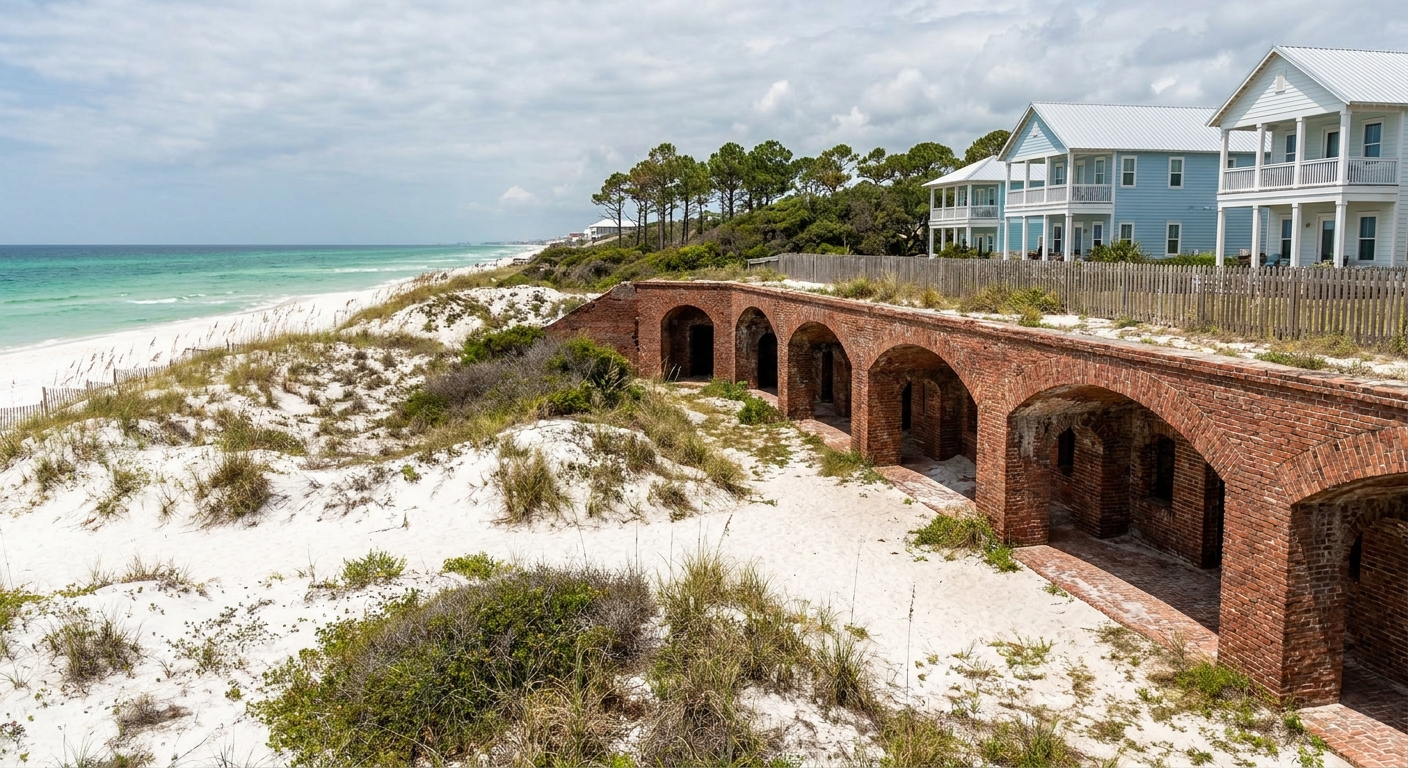
May still lets a swim and a fort walk share one day. The sea has reached 78.2°F on the marine average while the air peaks at 83.5°F, and June pushes that afternoon high to 88.9°F with 6.1 rain days against May’s 3.7. With shade and water, midday on open sand stays pleasant, and the hours before 9 a.m. suit the brick forts.
On Santa Rosa Island, Fort Pickens holds the western tip past Pensacola Beach, with Langdon Beach close by for a swim, and Opal Beach lies farther east toward Navarre. Johnson Beach covers Perdido Key west of Pensacola, Naval Live Oaks keeps trails through live oak forest in Gulf Breeze, and Davis Bayou is the Mississippi unit at Ocean Springs. We could not verify current entrance fees, hours or parking counts, so we quote none. The National Park Service posts them for each unit at nps.gov/guis.
From April to May the sea warms 7.2°F, from 71.0°F to 78.2°F, and the afternoon high climbs 7.3°F, from 76.2°F to 83.5°F. June adds another 4.7°F to the water and 5.4°F to the air. In May the forts are still bearable at mid-morning and the beaches are already warm enough for a long swim, all in the same week.
We found no fee-free date for May in our sources, so we name none. The NPS publishes its fee-free days each year, and an America the Beautiful annual pass covers entrance at national park units. Watching the 7:33 p.m. sunset from the public sand of Pensacola Beach needs no ticket at all.
Gulf Islands National Seashore in May: a two-day itinerary
Day one stays on Santa Rosa Island. Aim for Fort Pickens around 6:30 a.m., under an hour after the 5:48 a.m. sunrise, once you have checked the gate hours with the park, and walk the fort before the air nears its 83.5°F high. By 10 a.m. switch to Langdon Beach for the first swim, then take lunch and shade in Pensacola Beach through the early afternoon. Around 4 p.m. drive east to Opal Beach for a second swim and stay on the sand for the 7:33 p.m. sunset.
Day two heads west to Johnson Beach on Perdido Key for a morning swim, followed by an afternoon trail walk at Naval Live Oaks in Gulf Breeze. With 3.7 rain days and 0.8 day of an inch or more in an average May, a storm is possible but unlikely on any given day. If one builds, leave the water and the beach at the first thunder, check the radar and slide the swim to the other end of the day. A third night opens the drive west to Davis Bayou in Ocean Springs.
Gulf Islands National Seashore in May vs April and June
| Normal | April | May | June |
|---|---|---|---|
| Average high | 76.2°F | 83.5°F | 88.9°F |
| Average low | 60.1°F | 68.0°F | 74.1°F |
| Precipitation | 4.55 in | 3.22 in | 4.70 in |
| Days with 0.10 in or more | 4.0 | 3.7 | 6.1 |
| Sea surface (daily maxima) | 71.0°F | 78.2°F | 82.9°F |
April averages 76.2°F by day and 60.1°F at night, with 4.55 inches over 4.0 rain days and a sea at 71.0°F. In May the numbers read 83.5°F and 68.0°F, 3.22 inches over 3.7 days, and water at 78.2°F. June reaches 88.9°F and 74.1°F, with 4.70 inches over 6.1 days and a sea at 82.9°F. Of the three, May carries the least precipitation and the fewest rain days. Air values are NOAA station normals for 1991-2020, and sea values are Open-Meteo Marine means of daily maxima for 2015-2024.
Going four weeks earlier gains cooler walking at 76.2°F and nights at 60.1°F, but you lose 7.2°F of sea warmth and pick up 1.33 more inches of precipitation. Four weeks later gains 4.7°F of water, up to 82.9°F, and costs 5.4°F of extra afternoon heat, 2.4 more rain days and the June 1 start of hurricane season.
Is May a good time to visit Gulf Islands National Seashore?
Yes for swimmers happy with water near 78.2°F, for walkers who like forts in the cool of the morning, and for couples or families on a two- or three-night trip. It suits less well anyone set on water above 80°F, or anyone who struggles with an 83.5°F afternoon on open sand.
If May does not fit, choose June for the warmest sea of the three at 82.9°F, and accept 6.1 rain days plus the opening of hurricane season. Walkers who care more about cool air than swimming should look at April, with highs of 76.2°F. The rest of the year is laid out in the best time to visit Florida.
Among April, May and June, May alone pairs the fewest rain days, 3.7, with a sea already at 78.2°F.
The last word
Book May if a warm swim matters more to you than the warmest one, and put your bed near the unit you plan to see most. The evening shows why: the average low of 68.0°F sits 10.2°F under the sea’s 78.2°F daily peak, so a wade after sunset can feel warmer than the air around your shoulders.
Sources & data for this guide
- May, April and June air normals, precipitation and rain days · NOAA NCEI monthly normals 1991-2020, station USW00053853 · checked Sep 24, 2026
- Station scope: South Walton, with the seashore running 160 miles west into Mississippi · NOAA NCEI · checked Sep 24, 2026
- Sea surface temperature, mean of daily maxima 2015-2024, for April, May and June · Open-Meteo Marine API · checked Sep 24, 2026
- Daylight, sunrise and sunset on May 15, UTC converted to Central Daylight Time · sunrise-sunset.org · checked Sep 24, 2026
- Hurricane season start and May price signal · our Florida overview
- We could not verify entrance fees, gate hours, parking counts, lodging tax, booking lead times, fee-free dates or wind and wave data. Check nps.gov/guis and operators when you book.
To plan your stay
- Best Time to Visit Gulf Islands National Seashore: Weather, Sea Temperature and the Quiet Months
- Gulf Islands National Seashore in April: Weather, Water Temperature and Crowds
- Gulf Islands National Seashore in June: Weather, Sea Temperature, Crowds and Prices
- Gulf Islands National Seashore in March: Weather, Sea Temperature, Crowds and a Two-Day Itinerary