
In late March, office workers spread blue tarps under the cherry trees of Ueno and Chidorigafuchi and eat bento boxes beneath a ceiling of pink. By November the ginkgo avenues have turned gold, and the streets smell of roasting sweet potatoes.
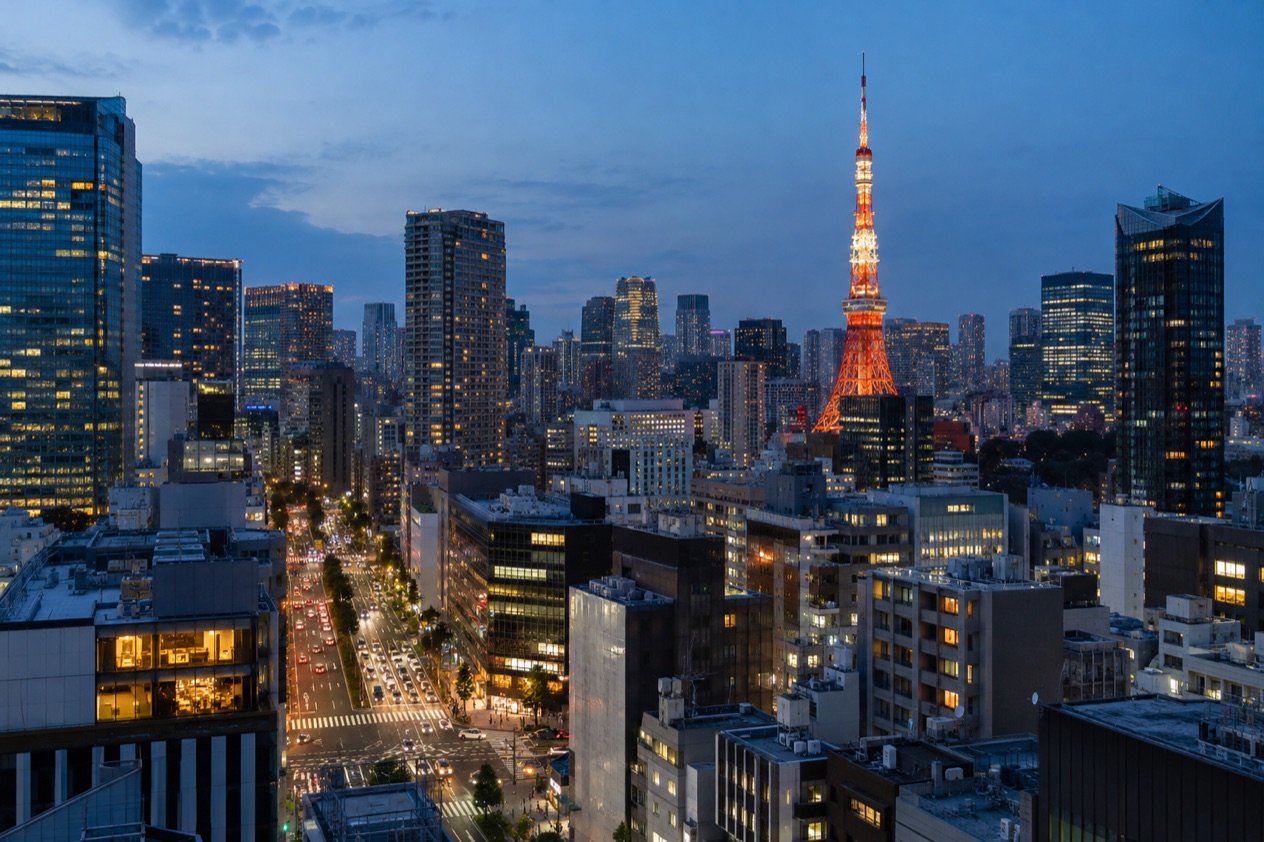
Tokyo, on Tokyo Bay in the Kanto region, runs through four distinct acts: bright cold winters, a blossom spring, a steamy summer and a long, colorful autumn. Each has its own food, its own festivals and its own light over the skyline.
When is the best time to visit Tokyo?
The best months for travelers are late March through April and late October through November, when the air is mild, the parks are in color and the city is pleasant to cross on foot. Spring brings the cherry blossoms and autumn brings the maple and ginkgo leaves, and both seasons fill the calendar with seasonal menus and evening illuminations.
For sightseeing, those two windows suit long days of walking between temples, gardens and neighborhoods. Spring afternoons are comfortable in a light jacket or a simple sweater, and October and November mean moderate temperatures that suit strolling.
If food is the point, every season has a table of its own. Spring means sakura sweets and bamboo shoots, summer means chilled soba and shaved ice, autumn brings chestnuts, persimmons and sweet potatoes, and winter belongs to oden, hot pots and ramen shops with fogged windows.
For nature, the blossoms come first and the leaves come last. Cherry trees open in the final days of March, and the maples and ginkgoes color from mid-November into early December. Winter is the clear-sky season, with sunny days and a better chance of a distant view of Mount Fuji from the city’s high observation decks, though no day can be promised.
Travelers watching the calendar for a calmer pace can look to January and February after the New Year holiday, or to the rainy weeks of June, when the gardens turn green and hydrangeas bloom. Families with children will find the milder months easier on long days between parks, museums and stations than the hot, humid weeks of July and August. In those weeks, the sensible plan leans on air-conditioned museums, department store food halls and evening walks.
Tokyo weather by month
Tokyo runs from cold, bright winter days to hot, humid summer ones, with two mild shoulder seasons in between.
| Month | Average high (°F) | Average low (°F) | Precipitation (in) | Days with 1 mm or more of precipitation | Hours of sunshine | Daylight on the 15th |
|---|---|---|---|---|---|---|
| January | 49.6 | 34.2 | 2.35 | 4.5 | 193 | 9 h 59 min |
| February | 51.6 | 35.8 | 2.22 | 5.2 | 170 | 10 h 52 min |
| March | 57.6 | 41.0 | 4.57 | 9.2 | 175 | 11 h 54 min |
| April | 66.9 | 49.6 | 5.26 | 9.5 | 179 | 13 h 04 min |
| May | 74.5 | 58.3 | 5.50 | 10.1 | 180 | 14 h 01 min |
| June | 79.0 | 65.3 | 6.61 | 11.6 | 124 | 14 h 33 min |
| July | 85.8 | 72.3 | 6.15 | 10.5 | 151 | 14 h 22 min |
| August | 88.3 | 74.3 | 6.09 | 7.9 | 174 | 13 h 33 min |
| September | 81.5 | 68.5 | 8.85 | 11.0 | 127 | 12 h 27 min |
| October | 71.6 | 58.6 | 9.24 | 10.5 | 129 | 11 h 21 min |
| November | 62.1 | 47.8 | 3.79 | 7.4 | 150 | 10 h 19 min |
| December | 53.6 | 38.8 | 2.28 | 5.2 | 174 | 9 h 46 min |
The year has a dry, sunny winter and a wet middle. From December to February the rain falls on only a few days and the sunshine is generous, so the cold is the main thing to dress for.
Winter afternoons hover around the low 50s and nights drop near freezing, which calls for a coat, a scarf and layers that come off in heated trains and shops.
From March the rain returns and stays. June, September and October are the grayest months, with long stretches of cloud and the heaviest rainfall of the year in the autumn pair, so a compact umbrella earns its place in a bag from spring to October. July and August are hot and damp, with highs in the upper 80s in August, and light, breathable clothes matter more than any jacket.
Daylight shapes the plan too. In summer it is light out until around 19:30, which stretches evenings in parks and along the waterfront. In winter the nights draw in around 17:00, so museums and indoor sights fit the afternoon while the illuminations take over the early evening.
What is there to do in Tokyo in each season?
Spring: cherry blossoms and mild days
Spring is hanami season, the habit of gathering under the cherry trees to eat, drink and watch the petals fall. Ueno Park, Chidorigafuchi by the Imperial Palace moat and the banks of the Meguro River are the places Tokyoites head for.
Once the petals fall, April and May turn green. Wisteria hangs over garden trellises, the days lengthen and the city stays comfortable for walking from Asakusa to Ginza. Sakura-flavored sweets, strawberry desserts and seasonal bento fill the shops. Golden Week, the string of holidays at the turn of April and May, is a time when people in Japan travel, so the city can feel livelier than usual.
The rainy season and summer
June is the wet month of the early summer, the tsuyu rainy season, with gray skies, high humidity and the fewest sunny hours of the first half of the year. It is a good time for indoor Tokyo: museums, department store basements, covered shopping arcades, teahouses and long ramen lunches. Hydrangeas bloom in temple gardens, and rain on the stone paths makes the greens look deeper.
July and August bring heat and humidity, and the pace of the day changes. People move from one air-conditioned stop to the next, drink cold barley tea and eat shaved ice, cold noodles and grilled eel. Evenings stay light into the night, and neighborhood festivals, fireworks and summer dances take over the riverbanks and shrine grounds. It is the season to leave the long outdoor walks for another time.
Autumn leaves and winter light
Autumn is a gentle return to walking weather. From mid-November to early December the trees show colors from red to yellow and orange, and the maples at Tokyo’s measuring point usually turn around November 28. Gardens such as Rikugien and Koishikawa Korakuen are laid out for strolling, and ginkgo-lined avenues turn bright gold. Menus move to chestnuts, mushrooms, persimmons and grilled sanma fish.
Winter is clear and cold. Days are bright and often sunny, the air is dry, and the evenings glow with Christmas and winter illuminations in districts such as Marunouchi and Roppongi. This is the season for oden stalls, hot pots and a long soak in a public bath. Snow is rare, and when a dusting falls it usually does not last.
When is Tokyo least crowded?
The calmer stretches fall in the weeks without a national holiday or a blossom or leaf peak, mainly in January after the New Year break, in February and in the rainy weeks of June. In those months no major travel period pulls people into the city, and the cold or the rain does the rest. Sights, restaurants and hotel lobbies tend to have more breathing room than in spring and autumn.
The busier periods follow the Japanese calendar. The New Year holiday, from the last days of December into early January, sends residents to shrines and home to their families, and some shops and restaurants close for a few days.
Golden Week at the turn of April and May and Obon in mid-August are the other great travel periods of the year. The cherry blossoms in late March and early April and the leaf color from mid-November also draw people to the same parks at the same time.
Winter is a good season for indoor sights, and the dry, sunny days leave plenty of room for observation decks, museums and food halls. February sits between the New Year and the blossoms, a stretch without a holiday, with cold days and long evenings of hot food.
The rainy season suits travelers who accept gray skies in exchange for the city on a lighter schedule. Late November and early December, once the color has peaked, bring cool days with the last leaves still on the trees.
Which months should you avoid in Tokyo?
No month is off limits, but July and August are the hardest on the body, and June, September and October are the hardest on the plan, because of heat, humidity and rain.
The hot months are the most tiring. Highs reach the mid-80s in July and the upper 80s in August, nights stay warm, and humidity stays high enough to make a long walk draining. Outdoor sightseeing is better spread across short outings, with museums, shopping and food halls in the middle of the day. Summer also brings the festivals and fireworks, which are a reason to come if you can manage the heat.
The wettest months are September and October, with the heaviest rainfall of the year, and June, with the grayest skies. Japan’s typhoon season overlaps with late summer and autumn, and a passing storm can disrupt a day of plans, so a flexible schedule helps. October still has mild temperatures, which makes it a good month for anyone who can adjust the plan around the rain.
Winter asks for a coat but rarely for more. The blossom and leaf seasons come with a trade-off, since the best dates are short and move from one year to the next, so a trip timed around them is a hope, not a guarantee.
Festivals and events in Tokyo through the year
Winter: New Year and Setsubun
The year opens with hatsumode, the first shrine visit of the new year, when residents head to Meiji Jingu, Senso-ji and neighborhood shrines to pray for the months ahead. Stalls sell grilled snacks and sweet sake, and omamori charms and fortune slips change hands at the gates. On December 31, temple bells ring across the city, an event known as joya no kane.
In early February comes Setsubun, the day before the start of spring in the old calendar. People toss roasted soybeans to drive out bad luck and at some temples and shrines, such as Senso-ji, bean-throwing ceremonies draw crowds. Winter illuminations, which brighten the early evenings in districts like Marunouchi and Roppongi, run through the cold months.
Spring and early summer: blossoms and Sanja Matsuri
Spring is built around the cherry blossoms, with hanami picnics in Ueno Park, Chidorigafuchi and along the Meguro River, and evening yozakura viewing when the trees are lit. The first bloom usually comes in the final week of March and the full bloom soon after, and the city’s shops, cafes and convenience stores switch to pink packaging for the season.
In May, Asakusa hosts Sanja Matsuri, one of the city’s great shrine festivals, with portable shrines carried through the streets by crowds in happi coats, to the sound of drums and chanting. It is a lively, close-up look at neighborhood Shinto life. In the rainy season, temple gardens show off their hydrangeas, a quieter pleasure that suits the gray days.
Summer and autumn: fireworks, Obon and leaf viewing
Summer evenings belong to fireworks and dances. The Sumida River fireworks, usually held in late July, light up the sky over the riverbanks, and people wear yukata, the light cotton robes of summer. In mid-August, Obon is the season for honoring ancestors, with bon odori circle dances held in parks and shrine grounds, and in late August the Koenji Awa Odori fills the streets of that neighborhood with dancers.
Autumn brings momijigari, the custom of going out to see the colored leaves, from mid-November in gardens and along ginkgo avenues. In mid-November, families dress their children in kimono for Shichi-go-san visits to shrines, and the Tori no Ichi fairs, held at shrines such as Otori Shrine in Asakusa in November, sell decorated rakes said to rake in good fortune. The year closes with Christmas lights and the countdown to the next New Year.
Sources
- Japan Meteorological Agency (JMA), Normal values 1991-2020, monthly (https://www.data.jma.go.jp/stats/etrn/view/nml_sfc_ym.php?prec_no=44&block_no=47662), station Tokyo, elevation 25 m, checked October 11, 2026
- Computed from the date and the latitude of the place (sunrise equation, solar elevation -0.833 degrees), October 11, 2026
- Japan National Tourism Organization, Tokyo (https://www.japan.travel/en/destinations/kanto/tokyo/), checked October 11, 2026
- GO TOKYO, the official Tokyo travel guide (https://www.gotokyo.org/en/), checked October 11, 2026
- GO TOKYO, getting around (https://www.gotokyo.org/en/plan/index.html), checked October 11, 2026
- Japan National Tourism Organization, autumn in Japan (https://www.japan.travel/en/guide/autumn-guide/), checked October 11, 2026
- Japan National Tourism Organization, spring in Japan (https://www.japan.travel/en/guide/spring-guide/), checked October 11, 2026
- Japan Meteorological Agency, cherry blossom first-bloom dates 2021-2026 and 1991-2020 normal (https://www.data.jma.go.jp/sakura/data/sakura003_07.html), checked October 11, 2026
- Japan Meteorological Agency, cherry blossom full-bloom dates 2021-2026 and 1991-2020 normal (https://www.data.jma.go.jp/sakura/data/sakura004_07.html), checked October 11, 2026
- Japan Meteorological Agency, maple color-change dates 2025-2026 with difference from the 1991-2020 normal (https://www.data.jma.go.jp/sakura/data/phn_014.html), checked October 11, 2026