
Under the big lantern at the Kaminarimon gate in Asakusa, the smell of grilled rice crackers and sweet bean paste drifts down Nakamise Street while incense smoke curls around the hall of Senso-ji. A few stops away on the train, the Shibuya scramble fills with people crossing in every direction at once.
What are the best things to do in Tokyo?
The best things to do in Tokyo mix old temples and shrines with towers, markets, department-store basements and long evenings in neighborhoods that stay awake. A good first visit samples one of each rather than trying to see everything.
- Walk through the Kaminarimon gate to Senso-ji in Asakusa, the temple dedicated to Kannon, the bodhisattva of compassion.
- Cross Shibuya Crossing, then look down on it from the tall tower of Shibuya Scramble Square.
- Follow the forest path to Meiji Shrine, a Shinto shrine set apart from the streets around Harajuku.
- Go up Tokyo Skytree or Tokyo Tower to see how far the city runs in every direction.
- Eat your way through the outer market in Tsukiji, then watch the auction from the viewing deck at Toyosu Market.
- Browse Ginza for luxury flagships and Harajuku for trendy fashion.
- Spend an evening in Roppongi, Shibuya or the lantern-lit lanes where small bars and izakaya fill up.
- Leave the city for the trails of Mt. Takao or the islands of the Izu chain.
Tokyo sits on Tokyo Bay in the Kanto region of Honshu, and the city keeps its attractions spread across many districts. That is the reason to plan by neighborhood. Pair a temple with a market, or a shrine with a shopping street, and the days begin to make sense.
The sections below follow the same logic. Sights come first, then green space and viewpoints, then the trips that take you out of town. After that come the table, the night and the children.
Sights and landmarks in Tokyo
The landmarks of Tokyo are scattered, and each one anchors a different kind of day. Senso-ji and the old east side feel like a different city from the glass of Shibuya or the department stores of Ginza. Treat them as separate outings and the city opens up.
Senso-ji and Asakusa
Senso-ji is the oldest temple in Tokyo, an ancient Buddhist temple in Asakusa dedicated to Kannon. It draws about 30 million worshippers every year, and that stream of people is part of the experience. You pass under the Kaminarimon gate with its huge red lantern, then walk the shopping lane of Nakamise toward the main hall.
Before the hall, visitors wave incense smoke over themselves from a large burner, rinse their hands at the water basin and toss a coin before praying. Fortune slips (omikuji) are drawn from metal canisters, and a bad one is tied to a rack at the temple. The lane itself sells sweets like ningyo-yaki cakes and senbei crackers, plus fans, chopsticks and souvenirs.
Asakusa belongs to Eastern Tokyo, the part of the city that also includes Ryogoku, Kiyosumi Shirakawa, Fukagawa and the area around Skytree. Ryogoku is the home district of sumo, so you may spot wrestlers in kimono on the street. Pair the temple with a wander through the back lanes, where old shops and small eateries stand.
Meiji Shrine
Meiji Shrine, or Meiji Jingu, is a Shinto shrine in Shibuya dedicated to the deified spirits of Emperor Meiji and Empress Shoken. The approach runs under tall torii gates and along a wide gravel path through woods that muffle the city. The change of mood from the nearby streets is the whole point of going.
At the shrine you bow at the gate, purify your hands, and write wishes on wooden ema plaques that hang in rows. Barrels of sake offered to the shrine line the path, and on some days you may see a wedding procession with the bride in white. Harajuku, with its fashion streets, is a natural pairing for the same outing.
Shibuya Crossing and the towers
Shibuya Crossing has been described as the world’s busiest pedestrian crossing, with as many as 3,000 people crossing during a single green light cycle. You can join the crowd from street level or watch it from above at Shibuya Scramble Square, a building in Shibuya whose underground floor connects directly to Shibuya Station. The sight is quick and loud, and the shops around it keep you busy afterward.
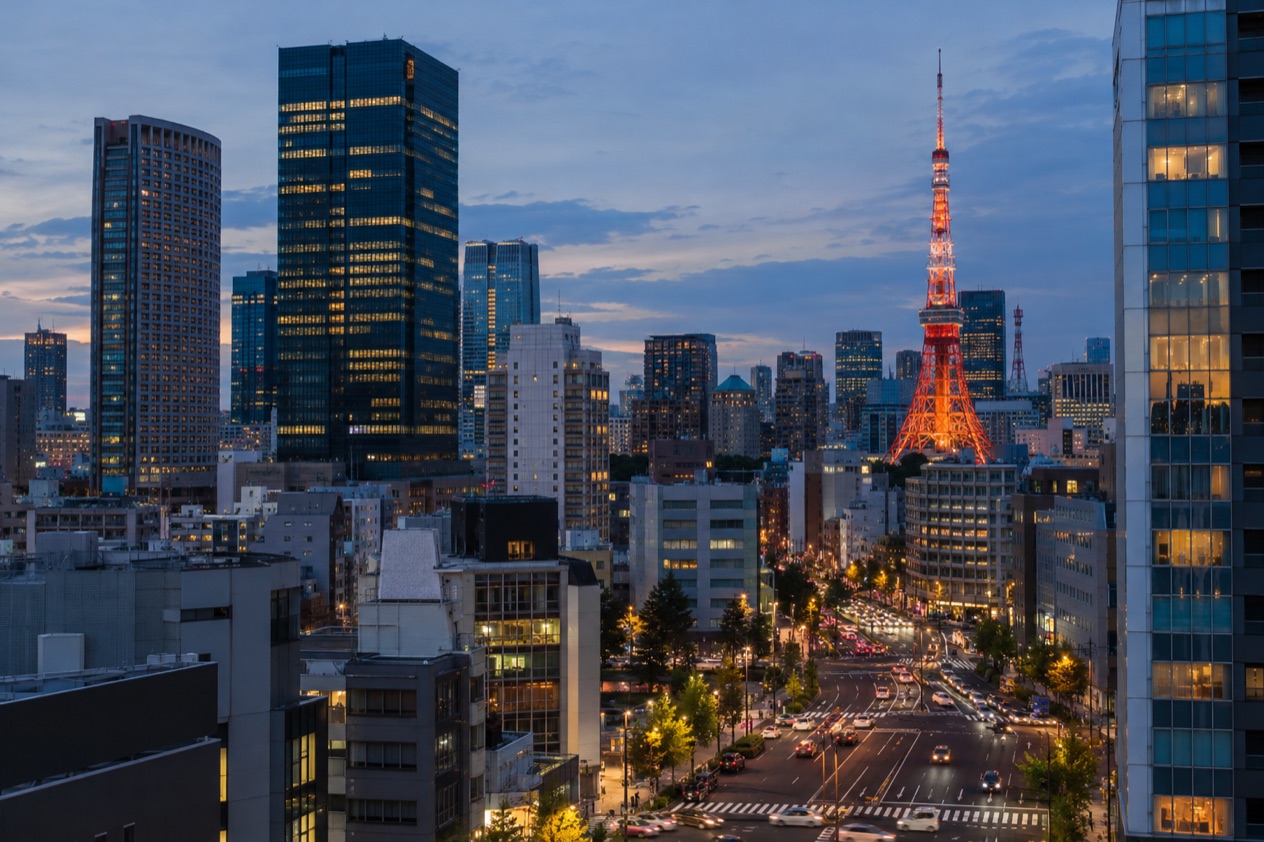
Tokyo Tower stands in the Shiba-koen district of Minato, and Tokyo Skytree rises in Sumida, with its upper observation level called the Tembo Galleria. Both are communications structures that welcome visitors to look out over the city.
| Tower | Height (ft) |
|---|---|
| Tokyo Skytree | 2,080 |
| Tokyo Tower | 1,092 |
Ginza, Nihonbashi and the center
Ginza is an upscale downtown area with high-end restaurants and luxury shops, and its flagship stores are as much a spectacle as the goods inside. Nihonbashi, close by in Central Tokyo, is known for its rich heritage and is Japan’s main financial district. Ginza Station is served by the Hibiya, Marunouchi and Ginza lines of the Tokyo Metro.
Central Tokyo also holds Akihabara, Tokyo Station and Marunouchi, Kanda and Jimbocho, Kagurazaka and Tokyo Dome. Akihabara is the district of electronics, anime and games. Jimbocho is where secondhand bookshops line the streets, and Kagurazaka has cobbled lanes with small restaurants.
Outdoor things to do in Tokyo
Outdoor Tokyo is made of shrine forests, viewpoints and markets that spill onto the sidewalk. You do not need to leave town for a stretch of green, though the hills beyond reward the effort.
Shrine woods and city viewpoints
From there it is a stroll into the busy streets of Harajuku. Between the trees and the fashion lanes you cover a wide range of Tokyo in one afternoon.
For a wider view, the observation levels of Tokyo Skytree and Tokyo Tower look out over the sprawl. Shibuya Scramble Square rises to about 230 meters with 47 floors above ground, and it is the tallest building in the Shibuya area. From its top you see the crossing as a moving pattern, and the neighborhoods spread beyond it.
Markets in the open air
The Tsukiji inner wholesale market closed on October 6, 2018, and its operations moved to the new Toyosu Market. The Tsukiji outer market remains, selling food and other goods along its narrow lanes. You graze on skewers, tamagoyaki (sweet rolled omelet), seafood and tea from stalls and counters as you walk.
Toyosu Market is a wholesale market in the Toyosu area of Koto ward. Tourists can observe the auction market from a second-floor viewing deck, so you watch the work happen from a respectful distance. Toyosu is part of Eastern Tokyo, so it fits easily with a day around Asakusa, Skytree and the old merchant districts.
Walks by neighborhood
Tokyo is best explored on foot one district at a time, with the train as the connector. Pick a neighborhood and let the streets decide the rest. In Asakusa you drift between the temple, the river and the old lanes. In Kagurazaka you follow slopes and stairs between restaurants, and in Ginza the main avenue and its side streets run along for a long time.
Shibuya and Roppongi can be reached from each other in about 10 minutes by train. Roppongi and Akasaka make a good pair for a walk, with modern complexes next to quieter streets and shrines. Roppongi Station is served by the Hibiya Line and Toei Oedo Line, and Nogizaka Station by the Chiyoda Line.
Day trips from Tokyo
Tokyo reaches well beyond its center. The Tama Area to the edge of the city holds mountains and river valleys, and the Izu and Ogasawara Islands belong to Tokyo too, strung out in the Pacific.
Mt. Takao and the Tama Area
The Tama Area includes Mitaka, Musashino, Chofu, Fuchu, Kunitachi, Tachikawa, Tama, Machida, Nishi Tokyo, Hachioji and Mt. Takao and its surroundings. It is the green part of the metropolis, with parks, shrines, university towns and hills. Mt. Takao is the name that comes up for a walk in the woods, and the trails have a temple on the slopes.
Day-trippers walk through cedar forest, stop at tea houses and enjoy a change from the city grid. Autumn color and spring blossoms come at their own times, so look at the season before you go. Pack a lunch or eat on the mountain, and bring comfortable shoes.
Mitaka and the Musashino side
Mitaka is where the Ghibli Museum is found, a draw for fans of the animation studio. Around it, Musashino and Kichijoji give you a calmer, residential feel with a big park, a pond with rowboats and shopping streets full of small cafes and secondhand shops.
Chofu, Fuchu and Tachikawa add temples, shrines and large green spaces to a day outside the center. These areas suit a traveler who has already done the headline sights and wants to see how people live. Choose one town and stay with it rather than racing between several.
Okutama and the islands
Okutama is the far reach of Tokyo Metropolis, a landscape of mountains, valleys and rivers. It is the place for hikers who want to walk among trees and hear water rather than traffic. Time on trails and in small villages gives you the feeling of having left a city of this size, even though you never crossed its border.
The Izu and Ogasawara Islands include Oshima, Toshima, Niijima, Shikinejima, Kozushima, Miyakejima, Mikurajima, Hachijojima, Aogashima, Chichijima and Hahajima. They are part of Tokyo, though they feel remote, with their own volcanic landscapes, hot springs and fishing traditions. The farther islands are a trip rather than a day, so plan on a stay.
Other destinations around the capital
- Yokohama, a port city with a waterfront, a Chinatown and old warehouses turned into shops.
- Kamakura, a seaside town of Zen temples and shrines, with a large bronze Buddha.
- Nikko, a mountain area with ornate shrines and forest walks.
- Hakone, a hot-spring region with views toward Mount Fuji on clear days.
What to eat in Tokyo
Eating in Tokyo is a matter of specializing: one counter does sushi, another only tempura, another only tonkatsu. The city rewards the traveler who walks into a small place with a short menu and a counter of regulars.
Sushi, seafood and the markets
Sushi is the dish people associate with Tokyo, and the city’s own style, edomae, comes from the bay. Slices of fish and shellfish sit on small hand-pressed beds of seasoned rice, and you can eat them at a counter with a chef working a few feet away. Conveyor-belt shops and standing counters serve the same idea in a more casual way.
The Tsukiji outer market is where you eat seafood in the open: grilled scallops, tuna, sea urchin, tamagoyaki on a stick and bowls of rice topped with raw fish (kaisendon). Toyosu Market connects the same food world to the wholesale trade. Combine a market visit with breakfast and a look at the trade itself.
Noodles and comfort food
Ramen is a pillar of the city’s everyday eating, and Tokyo’s style is often a soy-sauce broth with thin noodles, pork and a sheet of nori. Tsukemen, with noodles dipped in a concentrated broth, is another favorite. Soba, the buckwheat noodle, comes cold on a bamboo tray in warm months and hot in broth in colder ones.
Beyond noodles there is tempura, fried lightly and served piece by piece. Tonkatsu is a breaded pork cutlet with shredded cabbage, and monjayaki, a runny griddle batter cooked at the table, belongs to the old east side. Curry rice, katsu sandwiches and onigiri from a convenience store are part of the daily rhythm too.
Izakaya, depachika and sweets
The izakaya is a Japanese pub, a place for shared small plates and drinks. Think yakitori (grilled chicken skewers), edamame, grilled fish, pickles and fried chicken, ordered a few at a time with beer, sake or highballs. Many are tucked under railway lines or up narrow stairs.
Department-store basements, called depachika, are a Tokyo food experience in themselves, with prepared foods, bento boxes, pastries and wagashi (traditional sweets) displayed like jewelry. Ginza’s luxury stores are a natural spot for this. For something sweeter, look for matcha desserts, taiyaki filled with red bean paste, and the sweets of Nakamise Street in Asakusa.
Things to do in Tokyo at night
At night Tokyo turns to its neon, its bars and its views from above. In summer it is light out until around 19:30, while in winter the nights draw in around 17:00, so the evening begins at a different hour depending on when you visit.
Shibuya, Roppongi and the lit-up districts
Shibuya at night is the crossing seen under screens and signs, with people streaming out of the station toward bars and clubs. Shibuya Scramble Square keeps its restaurants on the 12th and 13th floors open into the evening. You can eat with the lights of the neighborhood below.
| Site | Open |
|---|---|
| Shibuya Scramble Square restaurants, 12th and 13th floors | 11:00 to 23:00 |
Roppongi and Akasaka also come alive in the evening, and the two districts host Japan’s largest film festival. Roppongi Station is served by the Hibiya Line and Toei Oedo Line, so getting there after a day in other parts of the city is straightforward. Akasaka holds restaurants of all kinds for a late dinner.
Towers, projection and the skyline
Tokyo Tower and Tokyo Skytree both light up the skyline, and their observation levels offer a view of a city that glows from edge to edge. The Tembo Galleria at Skytree sits high above Sumida. Tokyo Tower rises from the Shiba-koen district of Minato and is a landmark to see from the street too.
At the Tokyo Metropolitan Government Building, projection mapping shows turn the facade into a screen, including OTONABLUE and TTTTOKYO. Pair one of these with a walk and a meal for an evening that is simple to organize. Ginza’s shop windows and wide avenue are good for a stroll after dark.
Izakaya lanes and quieter evenings
The best-loved Tokyo evening may be the simplest: slip into an izakaya for skewers and a drink with colleagues from the neighborhood. The lanes around the stations hold dozens of tiny places, each with a few seats and a handwritten menu. Kagurazaka and Asakusa, with their older streets, offer a gentler version.
For quiet, a late bath, a tea or dessert at a cafe, or a walk by the river in Sumida are possible. Karaoke rooms, rented by the hour with friends, are another Tokyo evening ritual. Arcades and game centers in Akihabara stay lit well into the night.
Things to do in Tokyo with kids
Children in Tokyo find plenty to look at, from towers and trains to animation and animals. The trick is to plan one big outing a day and leave room around it, because distances between districts add up.
Towers, trains and big views
A trip up Tokyo Skytree or Tokyo Tower gives children a view of the whole city and a chance to spot the places they have visited. Shibuya Crossing is fun to watch from above, and kids often like to cross it themselves. Rides on the Tokyo Metro are an adventure of their own, with colorful maps and platform announcements.
Around Skytree, the shopping and entertainment complex at its foot gives you somewhere to go in case of rain. Keep in mind that the big stations are large and busy, so hold hands in the transfer corridors. Plan breaks, since the city asks for a lot of walking.
Animation, animals and green space
Mitaka, in the Tama Area, is home to the Ghibli Museum, which suits families who love the films. Parks in the Tama Area, with ponds and open lawns, give children room to run. The woods around Meiji Shrine are an easy contrast to the shops of Harajuku.
Ueno Zoo and the Sumida Aquarium are the animal outings people often have in mind, and Tokyo Disney Resort sits in the Tokyo area too. Check the details for each before you go, since each is its own trip. Akihabara, with its arcades and character shops, appeals to older children and teenagers.
Food and rhythm of the day
Food is often a hit with children. Conveyor-belt sushi, ramen, tamagoyaki on a stick at Tsukiji’s outer market, taiyaki and soft-serve make easy meals. Department-store basements and convenience stores are handy for snacks and picnics.
At Asakusa, the stalls of Nakamise Street give children something to nibble as they walk toward Senso-ji. Toyosu’s viewing deck lets them watch the auction from above. Keep the days light, with one headline sight, a meal, a rest and a park.
Good to know before you go
Tokyo is nine hours ahead of GMT, with no daylight saving time. The voltage in Japan is 100V, so check your chargers and adapters. Getting around the city means the Tokyo Metro and the train network, and the two airports serving the city are Haneda Airport and Narita Airport, Japan’s largest international airport.
The city keeps its own rhythm of seasons, with a rainy season and typhoon season that vary from one year to the next, so look at the forecast as your dates approach. Travelers base themselves in a district such as Shibuya, Ginza or Asakusa and reach the others by train. Pick the neighborhood that matches the evenings you want.
Sources
- Japan National Tourism Organization, Tokyo (https://www.japan.travel/en/destinations/kanto/tokyo/), checked October 11, 2026
- GO TOKYO, the official Tokyo travel guide (https://www.gotokyo.org/en/), checked October 11, 2026
- GO TOKYO, getting around (https://www.gotokyo.org/en/plan/index.html), checked October 11, 2026
- GO TOKYO, spots (https://www.gotokyo.org/en/spot/index.html), checked October 11, 2026
- Asakusa Kannon Sensoji (https://www.senso-ji.jp/english/), checked October 11, 2026
- Wikipedia, Sensō-ji (https://en.wikipedia.org/wiki/Sens%C5%8D-ji), checked October 11, 2026
- Wikipedia, Meiji Shrine (https://en.wikipedia.org/wiki/Meiji_Shrine), checked October 11, 2026
- Tokyo Skytree, official site (https://www.tokyo-skytree.jp/en/), checked October 11, 2026
- Wikipedia, Tokyo Skytree (https://en.wikipedia.org/wiki/Tokyo_Skytree), checked October 11, 2026
- Wikipedia, Tokyo Tower (https://en.wikipedia.org/wiki/Tokyo_Tower), checked October 11, 2026
- Wikipedia, Shibuya Crossing (https://en.wikipedia.org/wiki/Shibuya_Crossing), checked October 11, 2026
- Shibuya Scramble Square, official site (https://www.shibuya-scramble-square.com/en/), checked October 11, 2026
- Wikipedia, Shibuya Scramble Square (https://en.wikipedia.org/wiki/Shibuya_Scramble_Square), checked October 11, 2026
- Wikipedia, Tsukiji fish market (https://en.wikipedia.org/wiki/Tsukiji_fish_market), checked October 11, 2026
- Wikipedia, Toyosu Market (https://en.wikipedia.org/wiki/Toyosu_Market), checked October 11, 2026
To plan your stay
- Best Time to Visit Tokyo: Cherry Blossoms, Autumn Leaves, Weather by Month and Festivals
- Where to Stay in Tokyo: Shinjuku, Shibuya, Asakusa, Ginza and Roppongi
- Tokyo from the airport: Narita and Haneda, the Skyliner, Local Trains and Taxis
- Know Before You Go to Tokyo: Entry, Money, Getting Around and Local Etiquette