
You step out of the airport into a city that hums rather than shouts: vending machines glowing on side streets, station melodies chiming as trains arrive, and people filing onto platforms in tidy lines.
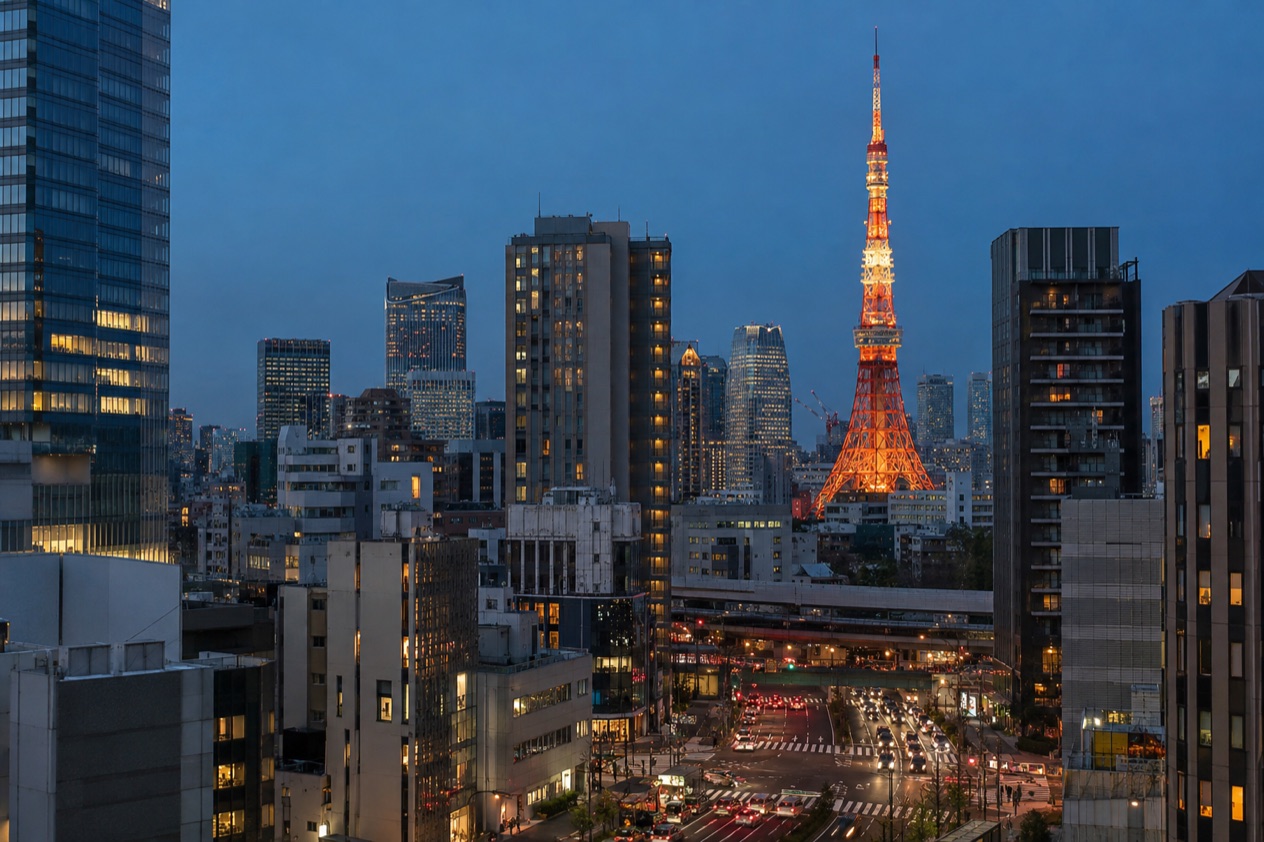
What should you know before visiting Tokyo?
Four things matter most: your passport and entry paperwork, the way you pay, the way you move between districts, and the unwritten habits of daily life. Get those right and the rest of the trip tends to fall into place.
Tokyo sits on Tokyo Bay, in the Kanto region of Honshu, and it is the capital of Japan and the most populous metropolitan area in the world. That scale explains a great deal.
The city is less a single center than a string of neighborhoods, each with its own character: Ginza with its luxury flagships and high-end restaurants, Nihonbashi with its financial towers and long heritage, Harajuku and Shibuya with their fashion streets, Roppongi and Akasaka with their nightlife and film festival. You rarely see them all in one day, and nobody expects you to.
What surprises first-timers is often the small stuff. Slippers appear at the door of some places, and shoes come off. Voices drop on trains. Trash cans are scarce, and people tend to carry their wrappers until they find one. Even the clock behaves differently: in summer it stays light until around 19:30, while winter evenings draw in around 17:00, so a December afternoon of sightseeing ends earlier than you might plan.
Entry, customs and paperwork
According to the U.S. State Department, U.S. citizens visiting Japan for tourism or business can stay visa free for up to 90 days. They need a valid passport and should have proof of a return or onward ticket. The passport must remain valid for the entire time you are staying in the country, so check its expiration date against your plans before you book.
A visa-free stay does not include the right to work. You cannot work on the local economy while you are in Japan under this arrangement, which matters if you are mixing a vacation with a few days of remote or paid activity.
Once you are in Japan, keep your U.S. passport with you. The State Department notes that you must always carry your passport or a Japanese Residence Card, and that you may be questioned or detained if you cannot show proof of identity and status. A phone photo is not the same thing as the document itself.
One more point concerns what you bring in your bag. In Japan, CBD may be illegal depending on the amount of THC it contains, so gummies, oils and vape cartridges that are routine at home deserve a second thought before you pack them.
Tokyo is served by two airports, Haneda Airport (officially Tokyo International Airport) and Narita Airport, Japan’s largest international airport. Which one your flight uses shapes your first hour in the city, so look at it when you compare tickets.
Money, cards and tipping
International credit, debit and prepaid cards are generally accepted throughout Japan, which makes paying in a department store in Ginza or a boutique in Harajuku feel familiar. Shopping is a big part of the Tokyo experience, from the trendy streets of Harajuku and Shibuya to the luxury stores of Ginza, and a card covers most of it.
Some stores do not display the symbols of the cards they accept. When there is no sticker on the door or the register, simply ask the seller whether your card can be used. A friendly question and a gesture toward the card are usually all it takes.
Tipping is not part of the everyday routine in Japan. Service is typically handled with a polite thank you rather than extra money left on the table, and a visitor who tries to press a bill into someone’s hand can cause a little confusion. Appreciation shows in how you behave: a bow of the head, a quiet word of thanks, and leaving your table tidy.
Pack a little room in your routine for the electrical side of money-saving too: the voltage in Japan is 100V and the frequency is 50-60 Hz, so check that your chargers and devices are comfortable with that before you plug them in.
Getting around and staying connected
Tokyo runs on its railways, and the districts you will visit are tied together by metro lines. Ginza Station is served by the Tokyo Metro Hibiya, Marunouchi and Ginza lines. In Roppongi, the Tokyo Metro Hibiya Line and the Toei Oedo Line stop at Roppongi Station, the Chiyoda Line at Nogizaka Station, and the Namboku Line at Roppongi-Itchome Station.
Distances inside the city can be pleasantly short on the map. Roppongi and Akasaka can be reached from Shibuya Station in about 10 minutes by train, which gives a sense of how neatly one neighborhood follows another when you ride the rails rather than the surface streets.
Platforms are where Tokyo’s manners show most clearly. Passengers line up where the doors will open, wait for riders to step off, and then board in turn. Station melodies and announcements guide the flow, and it helps to glance at the line colors and station names on the signs as you go.
Time zones are simple to manage on arrival. Tokyo is nine hours ahead of GMT and does not use daylight saving time, so the offset to the clocks at home shifts only when your own region changes its clocks.
Health, water and the weather
Tokyo’s weather changes character through the year, and the air figures give a good sense of it. January is cold and bright, with highs near 50°F, lows just above freezing, and an occasional dusting of snow. Spring arrives mild and a little wetter, and by April highs reach the high 60s.
Summer turns humid. In July the highs reach the mid-80s, nights stay warm, and the air feels heavy, so cool drinks, light clothes and a pause in an air-conditioned museum or café become part of the day. October brings pleasantly mild temperatures, though it is one of the wetter months and rain often shows up on a good share of the days.
| Month | Avg high (°F) | Avg low (°F) | Precipitation (in) | Days with rain (1 mm+) | Sunshine (hours) |
|---|---|---|---|---|---|
| January | 49.6 | 34.2 | 2.35 | 4.5 | 193 |
| April | 66.9 | 49.6 | 5.26 | 9.5 | 179 |
| July | 85.8 | 72.3 | 6.15 | 10.5 | 151 |
| October | 71.6 | 58.6 | 9.24 | 10.5 | 129 |
Pharmacies, medicine and tap water are not part of what we can say with certainty here, so build your own health routine before departure and bring what you normally need. Dress in layers in the cooler months and in breathable fabrics when the humidity climbs.
Local customs and etiquette
In Japan, it is customary to remove your shoes at the entrance when entering a building, put on indoor slippers, and place your shoes in a shoe box or to the side. Inside a Japanese home or ryokan, slippers come off again on tatami mats, and a separate pair of toilet slippers is often provided for the bathroom. It is a small ritual, and it takes only a day to feel natural.
On trains and in stations, the city is quieter than its size suggests. People tend to keep phone calls short or skip them, speak softly, and keep bags close so others can pass. Waiting in line is part of the rhythm, whether for a train door, a ramen counter or a shop opening.
Greeting is gentle. A slight bow with a word of thanks goes a long way in a shop, a restaurant or a hotel lobby, and handing over money or a card with both hands is a courteous touch. Eating and drinking while walking is less common than at home, so people stop beside a vending machine to finish a drink before moving on.
Because public trash cans are scarce, it is common to carry your own rubbish in a small bag until you find a bin at a station, a convenience store or your hotel. It keeps the streets of Ginza and Shibuya as tidy as they look.
Good to know before you go
The U.S. State Department rates Japan Level 1: Exercise Normal Precautions.
Keep your passport in a safe, reachable spot while you are out and about, since you are expected to be able to show it. Once the first day’s jet lag fades, Tokyo settles into an easy cadence: line up, slip off your shoes where asked, tap in and out of the stations, and let the city carry you from one neighborhood to the next.
Sources
- Japan National Tourism Organization, Tokyo (https://www.japan.travel/en/destinations/kanto/tokyo/), checked October 11, 2026
- GO TOKYO, the official Tokyo travel guide (https://www.gotokyo.org/en/), checked October 11, 2026
- GO TOKYO, getting around (https://www.gotokyo.org/en/plan/index.html), checked October 11, 2026
- U.S. Department of State, Japan travel information, local laws and special circumstances (https://travel.state.gov/content/travel/en/international-travel/International-Travel-Country-Information-Pages/Japan.html), checked October 11, 2026
- Japan National Tourism Organization, manners, etiquette, shoes, bowing, chopsticks, public behavior (https://www.japan.travel/en/guide/understanding-and-mastering-japanese-manners-and-etiquette/), checked October 11, 2026
- Japan National Tourism Organization, credit cards and cash, where cards are accepted (https://www.japan.travel/en/plan/credit-cards/), checked October 11, 2026
- U.S. Department of State, Japan travel advisory (https://travel.state.gov/content/travel/en/international-travel/International-Travel-Country-Information-Pages/Japan.html), checked October 11, 2026
- U.S. Department of State, Japan travel information, entry and exit requirements (https://travel.state.gov/content/travel/en/international-travel/International-Travel-Country-Information-Pages/Japan.html), checked October 11, 2026
- Japan Meteorological Agency (JMA), Normal values 1991-2020, monthly (https://www.data.jma.go.jp/stats/etrn/view/nml_sfc_ym.php?prec_no=44&block_no=47662), station Tokyo, elevation 25 m, checked October 11, 2026