
On the first days of January, Tokyo slows to a murmur. Families in their best clothes shuffle toward shrine gates, a rope of worshippers tosses coins into offering boxes, and cold air carries the smell of grilled rice cakes and sweet sake.
After the rush of December, the city feels like it is holding its breath. January in Tokyo means New Year traditions, crisp blue winter days and museums, markets and hot meals at a leisurely pace.
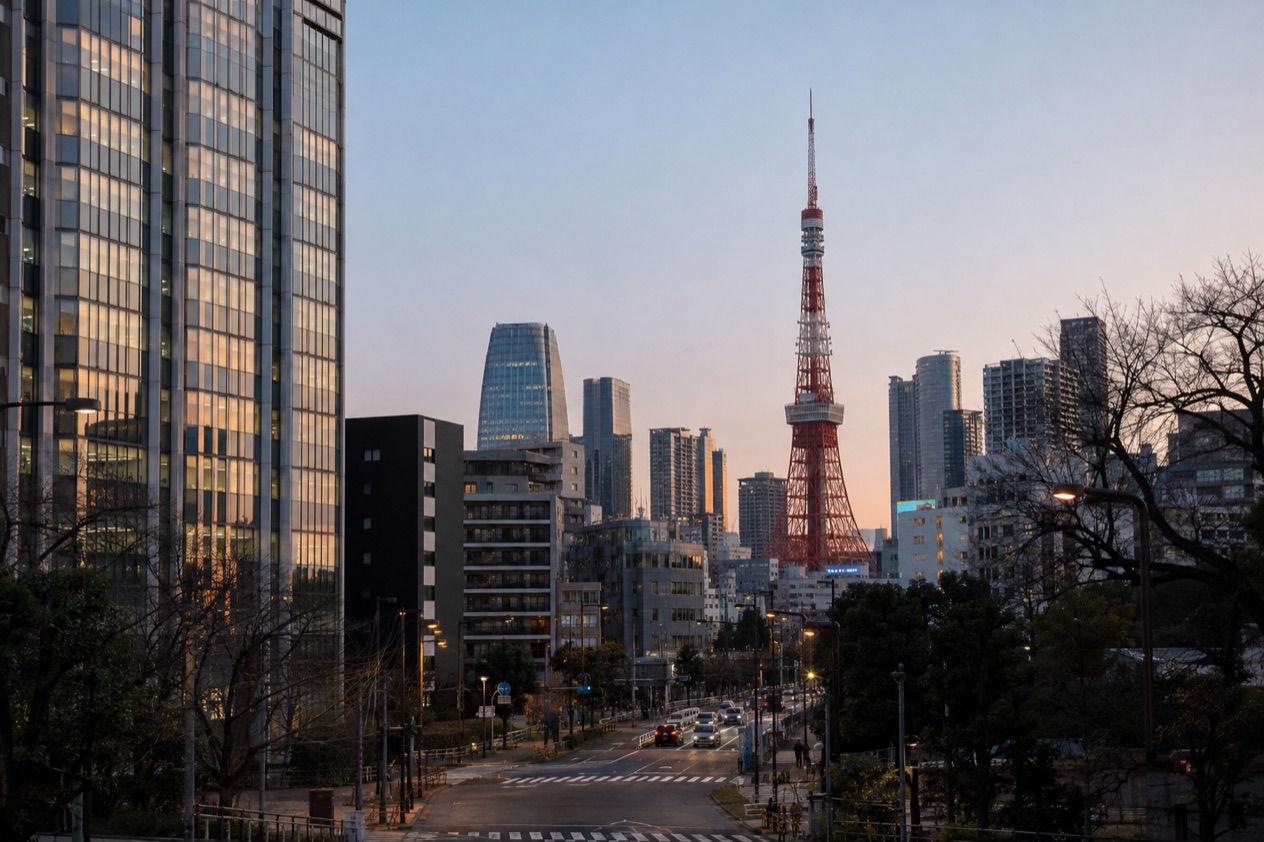
What is the weather like in Tokyo in January?
January in Tokyo is cold but bright, with chilly mornings, mild-ish afternoons and a lot of dry, sunny days.
| Month | Average high (°F) | Average low (°F) | Precipitation (in) | Days with 1 mm or more of precipitation | Hours of sunshine | Daylight on the 15th |
|---|---|---|---|---|---|---|
| December | 53.6 | 38.8 | 2.28 | 5.2 | 174 | 9 h 46 min |
| January | 49.6 | 34.2 | 2.35 | 4.5 | 193 | 9 h 59 min |
| February | 51.6 | 35.8 | 2.22 | 5.2 | 170 | 10 h 52 min |
Afternoons are cool enough for a proper coat but pleasant for walking when the sun is out, and January has more sunshine than the months on either side of it. Mornings start near freezing, so the first stroll to a shrine or a coffee counter calls for a scarf and gloves. Rain falls on only a handful of days, usually as a gray, cold spell rather than a long wet season.
Most major cities rarely see snow, as winter guidance for Japan puts it, so a snowy Tokyo morning is a treat rather than a plan. Humidity sits around the middle of the range, which means the air feels dry on the skin and lips.
The light is short. Nights draw in around 17:00, so the best of the daylight goes to outdoor sights in the middle of the day, while lit-up streets, hot ramen and warm interiors take over after dark. Layers work better than one heavy piece, since trains, department stores and restaurants are well heated.
What to do in Tokyo in January
The month belongs to New Year. The official Japanese New Year falls on January 1, and the first days are the quietest and most ceremonial of the year.
Many restaurants and attractions close during the New Year holidays, so the first days of the month suit shrines, strolling and home-style food rather than a packed sightseeing list. Once the holidays end, shops and sights return to their regular rhythm, and the city is easy to enjoy with a coat and an appetite.
In urban areas of Japan, shops are generally open from 10:00 a.m. to 8:00 p.m. every day, which leaves long winter evenings for browsing department stores, bookshops and electronics districts once the holiday closures are behind you.
Hatsumode: the first shrine visit of the year
Hatsumode is the first visit to a shrine or temple in the new year. People go late at night on New Year’s Eve, and others visit on January 1, 2 or 3. Meiji-jingu Shrine in Shibuya, dedicated to the deified spirits of Emperor Meiji and Empress Shoken, is one of the top spots for it, and so is Sensoji Temple.
What you see is a slow river of people moving through the torii gates and up the approach, stopping to toss a coin, bow, clap and make a wish. Stalls sell warm snacks, and visitors draw an omikuji, a paper fortune, then tie it to a rack.
Wear warm layers, because you will be standing outdoors in the cold while the line shuffles forward. Sensoji is Tokyo’s oldest temple, in Asakusa, and the shops of its approach add to the festive mood.
The Imperial Palace on January 2
The Shinnen Ippan Sanga event is held annually on January 2 at the Imperial Palace. The Emperor, Empress and other members of the Imperial Family make several scheduled appearances, greeting the public who gather for the New Year.
It is a rare chance to see the palace grounds filled with people holding small flags in the winter air. If you go, dress warmly and expect to be outdoors for a while. Pair it with a walk around Tokyo Station and Marunouchi, part of Central Tokyo, where the red-brick station and the glass towers frame the cold blue sky.
Osechi, plum blossoms and winter food
The food of New Year is osechi, a selection of dishes eaten during the celebration, usually packed in tiered lacquered boxes. Each item has a meaning tied to luck and long life, and restaurants and department stores often feature them in early January.
Later in the month, the cold calls for steaming bowls of ramen, oden stews, nabe hotpots and sweet red bean treats. Plum trees, Prunus mume, typically flower from January until late February in East Asia, so a few early blossoms may brighten a garden walk, though cherry blossoms are still months away.
Roppongi, Akasaka and the views
Roppongi and Akasaka are districts in Tokyo that can be reached from Shibuya Station by train in about 10 minutes. Roppongi Station is served by the Tokyo Metro Hibiya Line and Toei Oedo Line, Nogizaka Station by the Chiyoda Line, and Roppongi-Itchome Station by the Namboku Line.
With nights falling early, an evening here lets you see the city lights come on. Tokyo Skytree in Sumida stands 634 meters tall and looks striking against a clear winter sky. Winter’s early darkness means the lit city can be seen from late afternoon.
If you want snow, the city itself seldom provides it, but the mountains and northern regions of Japan are covered by heavy snow in winter. The ski season generally opens in December and lasts until April, with peak season in January and February in Hokkaido and the high mountains of Nagano.
A two-day itinerary for Tokyo in January
Day 1 starts early at Meiji-jingu in Shibuya, when the cold air is sharp and the approach is most atmospheric for a first walk under the torii. Spend the morning there, then head to Roppongi and Akasaka for lunch in a small restaurant that serves hot noodles or a set meal. In the afternoon, wander the shops, which are generally open from 10:00 a.m. to 8:00 p.m.
By the time darkness arrives around 17:00, you can be in a warm spot with a view or in a lit-up street. Dinner can be an izakaya, a casual pub with small plates, where grilled skewers and hot sake suit the cold. If rain or sleet arrives, trade the shrine for indoor browsing in the department stores and underground passages.
Day 2 heads to Asakusa and Sensoji, Tokyo’s oldest temple, for the incense smoke and the busy approach. Take your time with snacks from the stalls, then continue to Tokyo Skytree in Sumida for a look at the city from above. Lunch can be tempura or soba in the old neighborhood.
In the afternoon, head to the Imperial Palace area and Tokyo Station in Marunouchi for a winter walk among the red brick and the gardens. Finish with an early dinner, perhaps a hotpot, and an evening stroll among the lights. If the weather turns, a museum or a covered shopping arcade keeps the day going.
Is Tokyo busy in January?
The first days of January are busy at the big shrines and temples, because hatsumode draws crowds on the first three days. Meiji-jingu and Sensoji are among the top spots, so expect a slow-moving crowd at the gates and along the approach.
At the same time, the New Year holidays close many restaurants and attractions, and the city center can feel unusually still away from the shrines. After the holidays pass, shops return to their usual hours and normal life resumes.
There is no cherry blossom or autumn leaf season in January, so the city lacks the big seasonal draws of spring and fall. The mood is quieter in practice, with a winter rhythm of indoor visits, hot food and cold, clear afternoons. If you plan a trip around specific attractions, check that they are open, since closures around the holiday are common.
What to pack for Tokyo in January
Pack for cold mornings and heated interiors, with layers you can add and remove through the day.
- A warm winter coat, for the cold mornings and the long wait at a shrine
- Gloves, a scarf and a hat, for standing outdoors during hatsumode
- Sweaters or thermal layers, since stores and trains are heated
- Comfortable walking shoes, because Tokyo days are spent on your feet
- A compact umbrella, for the occasional rainy or sleety day
- Lip balm and moisturizer, for the dry winter air
Good to know before you go
January falls outside the typhoon and rainy seasons, but the New Year holidays shape the early days. Many restaurants and attractions close, so the first days of the month suit shrine visits and strolling rather than a full sightseeing list.
When a national holiday falls on a Sunday, the next working day becomes a public holiday, which can extend closures. Shops in rural areas often close earlier, sometimes as early as 6:00 p.m., which matters if you head out of the city.
Tokyo in January vs December and February
Going four weeks earlier puts you in December, a little milder, with longer wait for the New Year festivities and slightly shorter daylight. Evenings fall early, and the city feels busy before the holidays. You miss hatsumode and the Imperial Palace greeting, which belong to the first days of January.
Going four weeks later puts you in February, with a bit more daylight and a few more days of snow or sleet on average. The plum blossoms are still flowering through late February, so a garden walk may be rewarded. The New Year closures are over, so restaurants and attractions are back to regular hours.
If you want the New Year traditions, stay with early January. If you prefer longer days and fewer holiday closures, shift to February. For the brightest, driest stretch of the three, January offers the most sunshine.
Is January a good time to visit Tokyo?
Yes, January is a good time for travelers who enjoy traditions, cold clear days and indoor comforts. It suits anyone who wants to see hatsumode, watch the city begin the year and eat warming food. It is less suited to visitors who want long daylight, spring blossoms or every attraction open during the first days of the month.
On arrival, plan the shrine visit first, since the hatsumode crowds are tied to January 1, 2 and 3. Then build the rest of the days around what is open, using the afternoons for outdoor walks and the evenings for hot meals. What is special about January in Tokyo is the sight of a huge city pausing to bow, clap and wish for the year ahead, then stepping into a bright, cold morning with the smell of grilled mochi in the air.
Sources
- Japan Meteorological Agency (JMA), Normal values 1991-2020, monthly (https://www.data.jma.go.jp/stats/etrn/view/nml_sfc_ym.php?prec_no=44&block_no=47662), station Tokyo, elevation 25 m, checked October 11, 2026
- Computed from the date and the latitude of the place (sunrise equation, solar elevation -0.833 degrees), October 11, 2026
- Japan National Tourism Organization, shop and attraction hours, national holidays (https://www.japan.travel/en/plan/business-hours-and-holidays/), checked October 11, 2026
- Wikipedia, Japanese New Year (https://en.wikipedia.org/wiki/Japanese_New_Year), checked October 11, 2026
- Wikipedia, Public holidays in Japan (https://en.wikipedia.org/wiki/Public_holidays_in_Japan), checked October 11, 2026
- Japan National Tourism Organization, winter in Japan (https://www.japan.travel/en/guide/winter-guide/), checked October 11, 2026
- Japan National Tourism Organization, skiing and snowboarding in Japan: regions, resorts, seasons (https://www.japan.travel/en/sports/snow/), checked October 11, 2026
- Wikipedia, Climate of Japan (https://en.wikipedia.org/wiki/Climate_of_Japan), checked October 11, 2026
- Japan National Tourism Organization, weather and seasons in Japan (https://www.japan.travel/en/plan/weather/), checked October 11, 2026
- Japan National Tourism Organization, skiing guide (https://www.japan.travel/en/guide/skiing/), checked October 11, 2026
- Wikipedia, List of ski areas and resorts in Japan (https://en.wikipedia.org/wiki/List_of_ski_areas_and_resorts_in_Japan), checked October 11, 2026
- Japan National Tourism Organization, flowers by season: cherry blossom, plum, wisteria, hydrangea, where and when (https://www.japan.travel/en/see-and-do/flowers/), checked October 11, 2026
- Wikipedia, Prunus mume (https://en.wikipedia.org/wiki/Prunus_mume), checked October 11, 2026
- GO TOKYO, best things to do and see in Tokyo in January (https://www.gotokyo.org/en/story/guide/january/index.html), checked October 11, 2026
- Japan National Tourism Organization, Tokyo (https://www.japan.travel/en/destinations/kanto/tokyo/roppongi-and-akasaka-area/), checked October 11, 2026
- GO TOKYO, the official Tokyo travel guide (https://www.gotokyo.org/en/), checked October 11, 2026
- GO TOKYO, getting around (https://www.gotokyo.org/en/plan/index.html), checked October 11, 2026
- GO TOKYO, spots (https://www.gotokyo.org/en/spot/index.html), checked October 11, 2026
- GO TOKYO, Tokyo in autumn (https://www.gotokyo.org/en/story/guide/autumn/index.html), checked October 11, 2026
- Asakusa Kannon Sensoji (https://www.senso-ji.jp/english/), checked October 11, 2026
- Wikipedia, Sensō-ji (https://en.wikipedia.org/wiki/Sens%C5%8D-ji), checked October 11, 2026
- Wikipedia, Meiji Shrine (https://en.wikipedia.org/wiki/Meiji_Shrine), checked October 11, 2026
- Tokyo Skytree, official site (https://www.tokyo-skytree.jp/en/), checked October 11, 2026
- Wikipedia, Tokyo Skytree (https://en.wikipedia.org/wiki/Tokyo_Skytree), checked October 11, 2026