
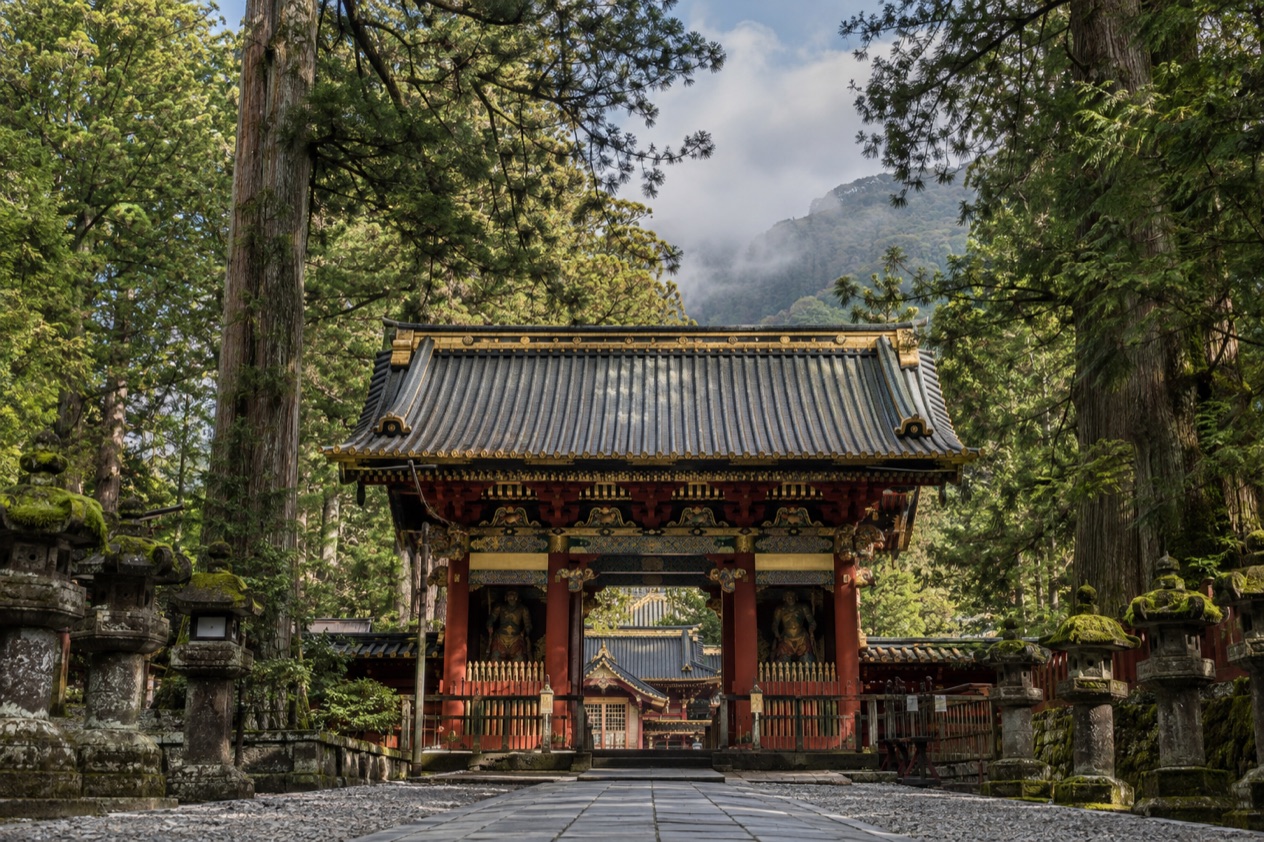
In September, the cedar avenues of Nikko hold a damp, resinous smell, and mist slides down the hillsides above the shrine roofs. The summer sultriness loosens its grip, and the lake country above the town starts to feel like early autumn. It is a month for walking among carved gates and moss-covered stone lanterns, for standing at a waterfall in the spray, and for coming back to a warm bath at night.
What is the weather like in Nikko in September?
September in the Nikko mountains is mild by day, cool by night and often wet.
| Month | Average high (°F) | Average low (°F) | Precipitation (in) | Days with 1 mm or more of precipitation | Hours of sunshine | Daylight on the 15th |
|---|---|---|---|---|---|---|
| August | 73.2 | 60.1 | 13.09 | 15.3 | 128 | 13 h 37 min |
| September | 66.0 | 53.4 | 16.10 | 14.4 | 105 | 12 h 28 min |
| October | 56.7 | 42.3 | 9.48 | 11.1 | 123 | 11 h 19 min |
At Oku-Nikko, September is the wettest of the three months, and rain falls on about every other day. Expect gray stretches, drizzle that hangs in the trees and heavier spells, with fewer hours of sun than in August. Humidity stays high, so the air feels damp even when it is not raining.
Afternoons by the lake are comfortable for walking in a light sweater, while the evenings turn properly cool, cooler than August by a clear margin. A rain jacket matters more than an umbrella on forest paths and at the waterfall, where wind and spray blow in sideways. Layers let you adjust between a mild midday and a chilly night.
The days are getting shorter, with daylight already past the halfway mark between summer and winter. Light comes later in the morning and fades earlier in the evening, which shapes how much you can fit into a day among the shrines and around the lake.
What to do in Nikko in September
September in Nikko is about the shrines and the lake country in soft, misty weather, without the full colors of autumn. The leaves in the mountains begin their change later than the month itself. The trees above are still green, and the mood is of a place settling into a quieter season. Walks, temples, waterfalls and hot baths fill the days well, and the rain card is easy to play indoors.
Toshogu and the shrine precinct
Nikko Toshogu is a Shinto shrine set among tall cedars, and it is the reason most people come to Nikko at all. You walk up through gates and past carved buildings, with detail on nearly every beam and eave. In the damp air of September the woods around it look deep green, and the wood and lacquer take on a darker, richer tone.
Taiyuin, a mausoleum close by, shares the same wooded hillside and invites a slower pace, with its own gates and halls. Pairing the two makes a good morning or afternoon on foot. Because rain is likely, keep a jacket in your bag and use covered halls as shelter between showers.
| Site | Open |
|---|---|
| Toshogu Shrine | 8:00 to 16:30 (April to October) |
| Taiyuin | 8:00 to 16:30 (April to October) |
Lake Chuzenji and Kegon Falls
Lake Chuzenji lies in Nikko National Park, high above the town, and Kegon Falls drops from its edge. This is the cooler, mistier part of the Nikko area, where September feels most like autumn arriving. The lake sits among forested slopes, and cloud often settles low over the water, giving the view a soft, quiet quality.
The falls are best after rain, when they are fuller and louder, which suits a wet September. Wear a waterproof layer, because the spray and the wind add to what falls from the sky. A walk along the lakeshore fills the rest of the visit, with the cool air making the exercise pleasant.
Food and baths after the rain
Cool, damp evenings call for warm food: bowls of noodles, grilled fish, simmered vegetables and hot tea. Many visitors in the mountains end the day with a soak in an onsen, a hot spring bath, which feels especially good after a day in the rain. Rooms with a bath, whether in a ryokan or a hotel, turn a wet afternoon into a pleasure.
Early autumn brings seasonal dishes built on mushrooms, chestnuts and sweet potatoes in many parts of Japan, and they fit the cooler mountain air. Sweets made with chestnut, and a pot of green tea, make a good pause between sights.
Beyond the main sights, the forest paths and quiet corners of the park reward a patient walker. Moss, ferns and wet stone lanterns look their best in this weather, and the sound of water runs through the whole area.
A two-day itinerary for Nikko in September
Day 1 belongs to the shrines. Start in the morning at Toshogu, walking up through the cedars while the day is still fresh, then cross to Taiyuin close by. The shrine grounds are open until the late afternoon, so the hours of the day are well used, and the evenings arrive early in September.
Take lunch in town at a noodle shop or a small restaurant serving local specialties, then spend the afternoon among the temples and the quiet side paths. If the rain sets in, the covered halls and a long tea break keep the day comfortable. In the evening, settle into a bath and a warm dinner.
Day 2 goes up to the lake country. Head to Lake Chuzenji in the morning, see Kegon Falls with a rain jacket on, and walk along the shore as the mist lifts or thickens. Have lunch near the lake, where cafes and small restaurants serve simple, warm meals.
In the afternoon, take the lakeside at a slow pace, then come back down toward the town before the light fades, since daylight is under twelve and a half hours in mid-September. If the weather turns wet, a café by the water with a view of the gray lake is its own reward.
Is Nikko busy in September?
September is the calm before the autumn color season, so the pace in Nikko is steadier than in the weeks of red and gold leaves. The big wave of leaf viewers comes later, once the maples change, and the month itself is a time of green and mist.
The colors of the Kanto region generally arrive from late November, which means September falls well before that rush. Nikko stays a popular destination from Tokyo, with the train taking about two hours from Asakusa or Shinjuku, so it draws day trippers as well as overnight guests.
What you will notice most is the weather. Rain, mist and cool air shape the mood more than crowds do, and the shrines and the lake feel unhurried. Buses between Oze and Nikko still run in mid-autumn, so the mountain routes remain open this month.
What to pack for Nikko in September
Pack for a mild, wet mountain month with cool nights and a lot of walking on damp stone and forest paths.
- A waterproof jacket, because rain falls on about every other day and the spray at the falls adds to it.
- A warm layer or light sweater for the cool evenings and the lake.
- Shoes with a good grip for wet stone steps and forest paths.
- A small umbrella or pack cover for showers between the shrines.
- Socks you can change, since shoes come off at many temple and ryokan entrances.
Good to know before you go
September falls within the wet part of the year in the mountains, and typhoon season also touches Japan in this period, so weather can shift plans for a day. The Japan Meteorological Agency runs an Emergency Warning System, launched on August 30, 2013, to alert people to catastrophes linked to natural phenomena of extraordinary magnitude.
Toshogu and Taiyuin keep their longer April to October hours in September, closing in the late afternoon. Plan the shrine visits for the daytime, and keep the lake for a day with a little more light in hand.
Nikko in September vs August and October
Moving the trip earlier to August brings warmer air, more sun and longer days, with the lake country at its mildest. It is also sultrier and wetter in feel, with humidity and rain on most days. If you want warmth at the lake and the longest light, August gives it.
Moving later to October brings cooler, drier air and clearer stretches, with far less rain than in September. Nights get properly cold in the mountains, and a little snow or sleet can appear on a rare day. Days are shorter again, and the leaves in the high country begin to turn toward the colors of autumn. Choose August for warmth and long days, October for crisp air and the start of the color season, and September for the in-between, with soft mist, green forest and the first cool evenings.
Is September a good time to visit Nikko?
Yes, September suits travelers who like moody, misty scenery and cool evenings more than blue skies. It rewards people who enjoy walking in light rain, soaking in hot baths and seeing carved shrines among wet cedars.
It is a weaker fit for anyone who needs clear weather for every hour, or who is coming for the full red and gold of autumn leaves, which arrive well after this month. If your plans depend on dry days, a later month will serve better.
On arrival, begin with the shrine precinct while the day is young, and save the lake for the stretch of the trip when the forecast looks kindest. September in Nikko is green, damp and quiet, with the sound of water in the cedars and steam rising from a hot bath at night.
Sources
- Japan Meteorological Agency (JMA), Normal values 1991-2020, monthly (https://www.data.jma.go.jp/stats/etrn/view/nml_sfc_ym.php?prec_no=41&block_no=47690), station Okunikko, elevation 1292 m, checked October 11, 2026
- Computed from the date and the latitude of the place (sunrise equation, solar elevation -0.833 degrees), October 11, 2026
- Japan Meteorological Agency, Emergency Warnings (https://www.jma.go.jp/jma/en/Emergency_Warning/ew_index.html), checked October 11, 2026
- Japan National Tourism Organization, safety information (https://www.japan.travel/en/japan-safe-travel-information/), checked October 11, 2026
- Japan National Tourism Organization, weather and seasons in Japan (https://www.japan.travel/en/plan/weather/), checked October 11, 2026
- Japan National Tourism Organization, summer in Japan (https://www.japan.travel/en/guide/summer-guide/), checked October 11, 2026
- Wikipedia, Climate of Japan (https://en.wikipedia.org/wiki/Climate_of_Japan), checked October 11, 2026
- Japan Meteorological Agency, maple color-change dates 2025-2026 with difference from the 1991-2020 normal (https://www.data.jma.go.jp/sakura/data/phn_014.html), checked October 11, 2026
- Japan Meteorological Agency, kaede2020.pdf (https://www.data.jma.go.jp/sakura/data/kaede2020.pdf), checked October 11, 2026
- Japan National Tourism Organization, autumn in Japan (https://www.japan.travel/en/guide/autumn-guide/), checked October 11, 2026
- Japan National Tourism Organization, spring in Japan (https://www.japan.travel/en/guide/spring-guide/), checked October 11, 2026
- Wikipedia, Nikkō, Tochigi (https://en.wikipedia.org/wiki/Nikk%C5%8D,_Tochigi), checked October 11, 2026
- Wikivoyage, Nikko (https://en.wikivoyage.org/wiki/Nikko), checked October 11, 2026
- Japan National Tourism Organization, Nikko (https://www.japan.travel/en/destinations/kanto/tochigi/nikko-area/), checked October 11, 2026
- Wikipedia, Nikkō Tōshō-gū (https://en.wikipedia.org/wiki/Nikk%C5%8D_T%C5%8Dsh%C5%8D-g%C5%AB), checked October 11, 2026
- Wikipedia, Kegon Falls (https://en.wikipedia.org/wiki/Kegon_Falls), checked October 11, 2026
- Wikipedia, Lake Chūzenji (https://en.wikipedia.org/wiki/Lake_Ch%C5%ABzenji), checked October 11, 2026
To plan your stay
- Things to Do in Nikko: Toshogu Shrine, Lake Chuzenji, Kegon Falls and Kinugawa Onsen
- Where to Stay in Nikko: Station Side, Shrine Precinct, Ryokan Stays and Heritage Stays
- Nikko from Tokyo: Tobu Railway Trains, Limited Express Names and a Day in Nikko
- Know Before You Go to Nikko: Entry, Getting There, Weather and Etiquette