
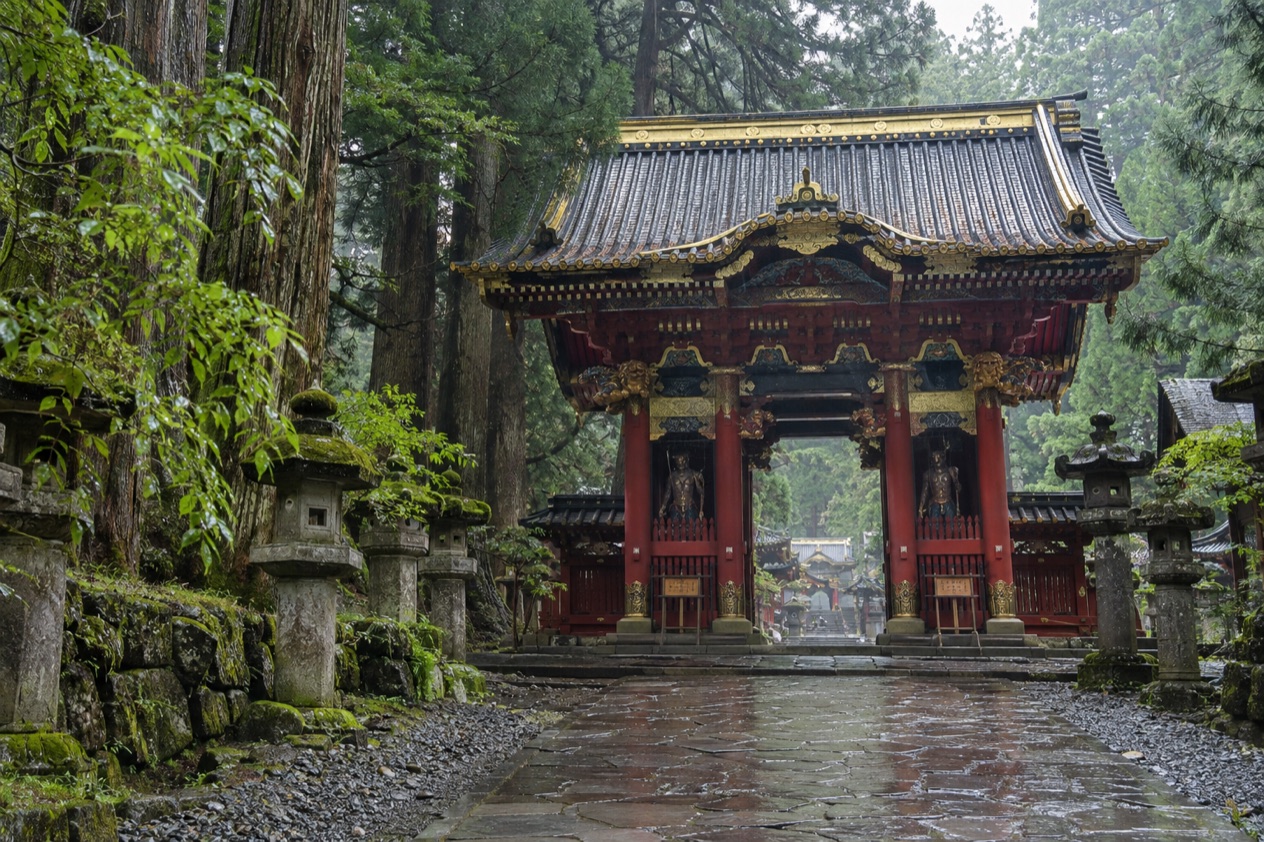
In June, Nikko’s cedar-lined paths drip after every shower, moss turns an almost electric green on the old stone lanterns, and hydrangeas open their blue and violet heads along the temple walls. Rain taps on the tiled roofs of the shrines while steam rises from the forest. It is a month of umbrellas, soft light and slow wandering among the shrines, the woods and the lake country of Tochigi Prefecture.
What is the weather like in Nikko in June?
June in Nikko is mild, damp and often gray, a step warmer than May and clearly wetter, with rain on about every other day. At Oku-Nikko, near Lake Chuzenji, the figures for the three months run like this.
| Month | Average high (°F) | Average low (°F) | Precipitation (in) | Days with 1 mm or more of precipitation | Hours of sunshine | Daylight on the 15th |
|---|---|---|---|---|---|---|
| May | 59.5 | 41.9 | 6.97 | 11.3 | 174 | 14 h 06 min |
| June | 64.4 | 50.7 | 9.01 | 14.3 | 108 | 14 h 39 min |
| July | 71.8 | 58.8 | 11.04 | 16.4 | 110 | 14 h 27 min |
What this means on the ground is comfortable walking weather with a damp edge. Afternoons feel cool rather than hot, and nights still call for a sweater, so a light fleece or a rain jacket with a layer underneath works better than a single heavy coat. Humidity sits high all month, which keeps the air heavy and makes wet shoes slow to dry.
Sunshine drops sharply from May, so expect plenty of overcast skies with the sun breaking through now and then. Rain gear is part of the plan, not a backup: a compact umbrella or a hooded jacket earns its place every day. Because the days are long, light lingers well into the evening, which leaves room for a late stroll after a wet afternoon.
The cloud also changes how the forest looks. Colors read deeper under a gray sky, stone and cedar bark darken, and waterfalls run fuller after rain. It is a month that rewards photographers who like mood over blue-sky postcards.
What to do in Nikko in June
The season here belongs to hydrangeas and wet greenery. Hydrangea species are native to Japan, and across the country the flowers open during the rainy weeks, so the temple grounds, garden corners and roadsides of Nikko take on shades of blue, pink and violet. Rain suits the flowers, and it suits the moss, the cedars and the waterfalls too.
A small taste of the season is ama-cha, the sweet tea made from the leaves of Hydrangea serrata, which develop a sweet taste thanks to a compound called phyllodulcin. It is an herbal tea with a gentle sweetness, a quiet reminder that the flower of the month is also a plant with a use in the Japanese tea tradition.
Toshogu, Taiyuin and the shrine and temple grounds
Toshogu Shrine is the great set piece of Nikko, a compound of lacquered gates, carved beams and gold leaf set among tall cedars. In June the wood and stone are dark with rain and the gold glows against the green. Beside it stands Taiyuin, a mausoleum with its own gates and halls, built in the same layered style of color and carving.
Walking between the buildings means going up stone steps and through gates, often with an umbrella in hand. Under a gray sky the ornate carvings look richer than in flat sunlight, and the moss on the lanterns is at its deepest. Both sites keep the same opening hours from April to October.
| Site | Open |
|---|---|
| Toshogu Shrine | 08:00-16:30 (April to October) |
| Taiyuin | 08:00-16:30 (April to October) |
Lake Chuzenji and the Oku-Nikko highlands
Beyond the shrines, the land climbs to Lake Chuzenji and the Oku-Nikko area, where the forest closes in and the air turns noticeably cooler. This is where the weather figures of the page come from, and where the mist hangs low over the water on a rainy day. The lake, the woods and the waterfalls around it give June its most atmospheric hours.
A day here is about wandering, not ticking off sights: following the shoreline, pausing at a waterfall after the rain has swollen it, stepping into a café while a shower passes. The highlands run cooler than the town, so the extra layer from the packing list earns its keep. Buses run from Oze to Nikko between mid-spring and mid-autumn, which puts June inside the season for travelers linking the two.
Yuba, soba and the tables of Nikko
It turns up in many forms: rolled around fillings, simmered in broth, served cold as a silky sheet with soy sauce. On a damp June day, a warm bowl of yuba or a set meal of soba noodles fits the mood of the town.
Tea houses and small restaurants near the shrine approaches are natural places to dry off between sights, and a cup of green tea or the sweet hydrangea tea suits the weather. Meals in a ryokan, the traditional inn, often feature seasonal mountain vegetables, and the evening bath in an onsen, a hot spring, is a habit that feels especially right after a day in the rain.
Between the sights, the mood in the streets is unhurried. Shop awnings drip, umbrellas bob along the pavements, and there is no need to push for a packed schedule. A long lunch, a museum stop or a soak in a hot spring fits a rainy June day as well as any trail does.
A two-day itinerary for Nikko in June
Day 1 belongs to the shrines and temples. Start with Toshogu in the morning, when the gates are open and the cedar paths are dark and dripping, then walk on to Taiyuin for a second compound with its own gates and carvings. The sites open at eight, so the day can start right away. Keep the umbrella handy, since the stone steps are slick when it rains.
Take lunch in town with a set meal of yuba or soba, the specialties of Nikko. In the afternoon, wander through the temple and garden grounds nearby, where hydrangeas may be in bloom along the paths. With a long June day, light lasts into the evening, so a stroll after dinner is possible, and a ryokan bath rounds off the night.
Day 2 heads up to the lake country around Lake Chuzenji and Oku-Nikko. Spend the morning along the water and at the waterfalls, which run full in a wet month, and take a lunch break in a lakeside café while the mist moves. The afternoon is for woodland walking if the sky allows, with a warm layer in the bag.
If the rain settles in, shift indoors: linger in a tea house over hot green tea, spend the afternoon in the covered halls of the shrine compounds, or head to a hot spring for a long bath. Rainy days are part of June here, so a flexible plan beats a fixed one.
Is Nikko busy in June?
June in Nikko is a month of hydrangeas and wet weather, which gives the days a slower, softer pace than the cherry blossom or autumn leaf seasons that draw people elsewhere in Japan. The rain and the clouds are the main thing that shapes how visitors move through town.
With rain on about every other day and far fewer hours of sun than in May, visitors tend to fit their plans around the weather, ducking into tea houses, halls and hot springs between showers. The shrines keep their usual hours through the season, and Tobu-Nikko Station is about two hours from Asakusa and Shinjuku in Tokyo.
What June offers, then, is a Nikko of mood and color, with deep greens and flowers, rather than one of big blossom crowds. Plan for flexibility: pick a few anchors, such as the shrine compounds and the lake, and let the weather decide the order.
What to pack for Nikko in June
Nikko in June means damp air, mild days and cooler hours up at the lake, so the bag is about staying dry and layered rather than hot.
- A rain jacket with a hood, because rain falls on about every other day.
- A compact umbrella for the stone steps and shrine paths.
- Shoes with a good grip that can handle wet stone and mud.
- A light fleece or sweater for the cooler highlands around the lake.
- A spare pair of socks, since humidity keeps things damp.
- A small waterproof bag for a camera or phone.
Good to know before you go
June is a wet, humid month in Nikko, and the air stays heavy at about 87 percent humidity, so clothes and shoes dry slowly. Honshu summers are humid and sultry, and June leads into that season.
Toshogu and Taiyuin keep their April to October hours, which cover the whole month. Tobu-Nikko Station is about two hours from Asakusa and Shinjuku, so a day trip from Tokyo is within reach, though staying overnight gives more time for the lake country.
Nikko in June vs May and July
Moving four weeks earlier brings you to May, with clearly more sunshine, fewer rainy days and cooler nights. Skies are brighter and the lake highlands are chillier, with a little snow or sleet still possible on about one day of the month. You trade the hydrangea mood for a drier, crisper feel.
Moving four weeks later brings July, warmer and wetter still, with the highest figures of the three months. The air is more sultry, rain falls more often, and sunshine is about the same as in June. Mount Fuji’s climbing season also opens in early July, which matters for those planning to combine regions.
Choose May for brighter weather and cooler air, June for hydrangeas and a moody, green Nikko, and July if you want warmer days and do not mind a muggier, rainier trip. Travelers who dislike rain should shift earlier. Those who love misty forests and flowers should stay with June.
Is June a good time to visit Nikko?
Yes, for travelers who enjoy mild, damp weather, deep green forests and the mood of hydrangea season, and who are happy to plan around showers. It is a good month for photographers, tea lovers and anyone who likes a soak in a hot spring after a rainy walk.
Those who need dependable sunshine or want clear lake views should look at another month, since June brings far fewer hours of sun than May. On arrival, start with Toshogu and Taiyuin, which are open from morning, and keep the lake country for the day when the sky looks kindest. What stays with you from June in Nikko is the look of the place after rain: gold leaf glowing against dark cedar, moss on the stone lanterns, and hydrangeas lining the paths in blue and violet.
Sources
- Japan Meteorological Agency (JMA), Normal values 1991-2020, monthly (https://www.data.jma.go.jp/stats/etrn/view/nml_sfc_ym.php?prec_no=41&block_no=47690), station Okunikko, elevation 1292 m, checked October 11, 2026
- Computed from the date and the latitude of the place (sunrise equation, solar elevation -0.833 degrees), October 11, 2026
- Japan National Tourism Organization, weather and seasons in Japan (https://www.japan.travel/en/plan/weather/), checked October 11, 2026
- Wikipedia, Climate of Japan (https://en.wikipedia.org/wiki/Climate_of_Japan), checked October 11, 2026
- Japan National Tourism Organization, flowers by season: cherry blossom, plum, wisteria, hydrangea, where and when (https://www.japan.travel/en/see-and-do/flowers/), checked October 11, 2026
- Wikipedia, Hydrangea (https://en.wikipedia.org/wiki/Hydrangea), checked October 11, 2026
- Japan National Tourism Organization, summer in Japan (https://www.japan.travel/en/guide/summer-guide/), checked October 11, 2026
- Wikipedia, Nikkō, Tochigi (https://en.wikipedia.org/wiki/Nikk%C5%8D,_Tochigi), checked October 11, 2026
- Wikivoyage, Nikko (https://en.wikivoyage.org/wiki/Nikko), checked October 11, 2026
- Japan National Tourism Organization, Nikko (https://www.japan.travel/en/destinations/kanto/tochigi/nikko-area/), checked October 11, 2026
To plan your stay
- Things to Do in Nikko: Toshogu Shrine, Lake Chuzenji, Kegon Falls and Kinugawa Onsen
- Where to Stay in Nikko: Station Side, Shrine Precinct, Ryokan Stays and Heritage Stays
- Nikko from Tokyo: Tobu Railway Trains, Limited Express Names and a Day in Nikko
- Know Before You Go to Nikko: Entry, Getting There, Weather and Etiquette