
In July the cedar avenues around the Nikko shrines drip with moss and mist, and the sound of water follows you everywhere, from roadside streams to the long drop of Kegon Falls. Summer sits heavy on the plains of Honshu, but up here the air has a green, damp coolness that makes walking a pleasure. July in Nikko is a month of forest paths, lakeside strolls and shrine courtyards, for travelers who do not mind a shower now and then.
What is the weather like in Nikko in July?
July in Nikko is mild, damp and often cloudy, with highs in the low 70s and plenty of rain days, so think of it as a cool, green mountain month rather than a hot one.
| Month | Average high (°F) | Average low (°F) | Precipitation (in) | Days with 1 mm or more of precipitation | Hours of sunshine | Daylight on the 15th |
|---|---|---|---|---|---|---|
| June | 64.4 | 50.7 | 9.01 | 14.3 | 108 | 14 h 39 min |
| July | 71.8 | 58.8 | 11.04 | 16.4 | 110 | 14 h 27 min |
| August | 73.2 | 60.1 | 13.09 | 15.3 | 128 | 13 h 37 min |
At Oku-Nikko, near Lake Chuzenji, July is the month when the cool spring air has given way to something softer. Afternoons are comfortable for walking in a light shirt, and evenings call for a thin jacket or a sweater, especially beside the water. Humidity stays high, so the air feels damp even when it is not raining, and clothes dry slowly.
Rain is part of the month. Rain falls on most days in some form, whether as a gray drizzle that hangs over the lake or a heavier shower, and the total for July is well above June’s.
Sunshine is limited, so a good share of your days will be under cloud, which suits the moss-covered stone lanterns and dark cedars of the shrine grounds. A compact umbrella or a light rain jacket is part of the daily kit.
Days are long, with daylight stretching well into the evening, so there is time for a late walk after a rainy afternoon. The light is soft and diffuse, flattering to waterfalls and forest, though distant views of the mountains can disappear behind cloud.
What to do in Nikko in July
July is a month for water and woodland. Streams run full, the forest is at its greenest, and the plateau around Lake Chuzenji gives you somewhere to be outdoors in cooler air. Most of the sightseeing here is done on foot, with a rain jacket in the bag and a plan to duck into a shrine hall or a café when a shower settles in.
In Nikko itself the pleasure is quieter: the shrines, the lake and the eating.
Nikko Toshogu and the shrine grounds
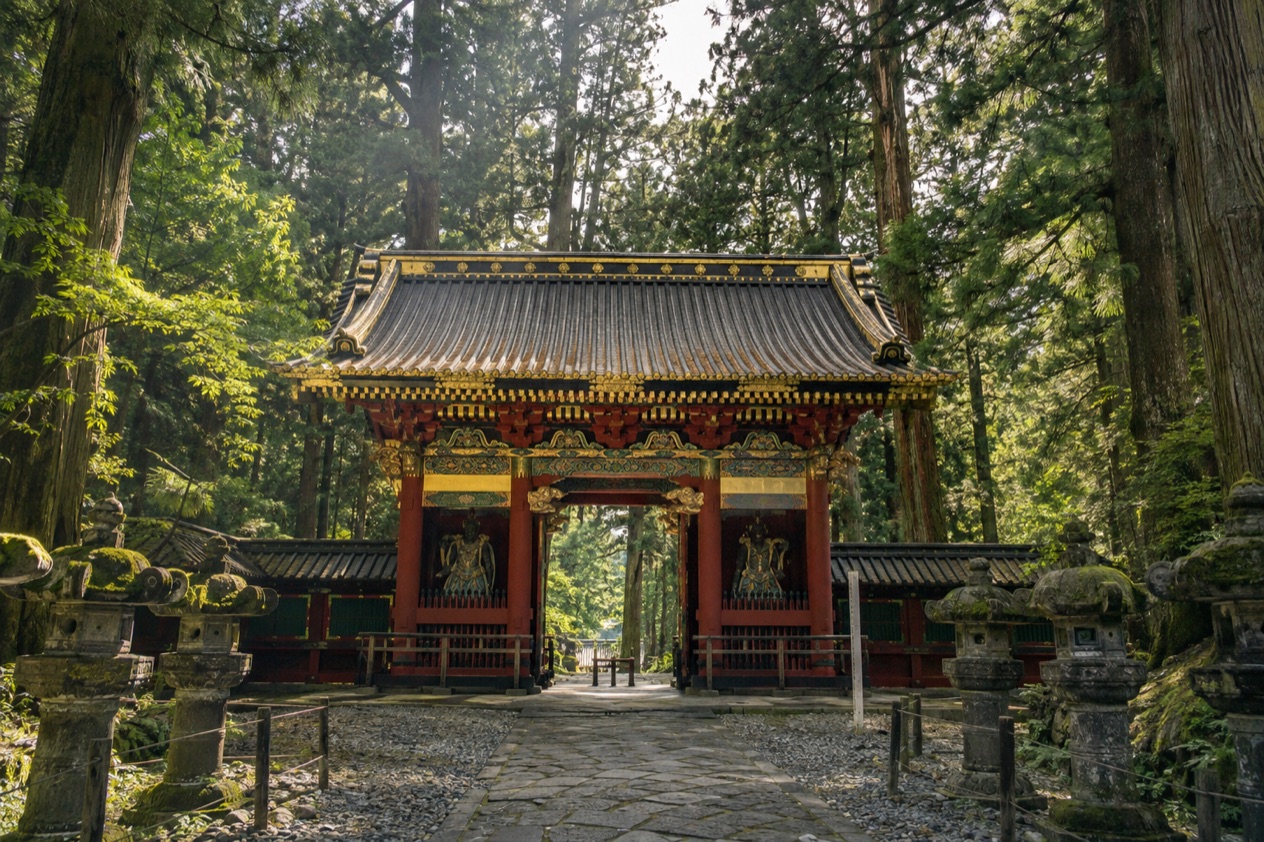
Nikko Toshogu is a Shinto shrine set among tall cedars, and it is the reason people come to Nikko at all. You walk up through gates and courtyards with carved and painted buildings, and in a damp July the stone steps and lanterns are covered in a fresh green moss that photographs beautifully. Rain does little harm here, since much of the visit is a slow wander from one building to the next.
Taiyuin, a mausoleum close by in the same wooded hills, rewards a visit too, with its own gates and halls in a more intimate setting. The cedars give some shelter from light rain, and the dim light under the trees makes the red and gold details stand out.
| Site | Open |
|---|---|
| Toshogu Shrine | 8:00 to 16:30 (April to October) |
| Taiyuin | 8:00 to 16:30 (April to October) |
Lake Chuzenji and Kegon Falls
Lake Chuzenji lies in Nikko National Park, and Kegon Falls drops from the lake’s edge. In July the falls are fed by the month’s heavy rain, so they run strongly, and mist often hangs around the gorge. Walking the lakeshore in the cool air is the natural counterpart to a morning among the shrines.
Cloud can cover the surrounding peaks, so treat the views as a bonus and the water, the trees and the cool air as the main event. A thin waterproof layer is worth having here, because it is noticeably cooler by the lake than in town. People end the outing with a warm drink at a lakeside café.
Eating in Nikko in summer
Nikko’s food is the kind that suits damp, cool days. Look for yuba, the delicate tofu skin that the town is known for, served simmered, in soup or fresh, and for soba noodles, often eaten cold in summer with a dipping sauce. A bowl of shaved ice with syrup is the sweet that fits the season, and grilled skewers and rice-cracker snacks turn up along the streets near the shrines.
After a wet walk, a hot bowl of noodles or a tray of small dishes at a simple restaurant restores you quickly. Green tea with a sweet bean treat makes a good afternoon pause when the rain comes in.
A two-day itinerary for Nikko in July
Day 1 belongs to the shrines. Start with Toshogu in the morning while the grounds are freshly damp and the cedar air is cool, then continue to Taiyuin close by. Take lunch in town over yuba or cold soba, and spend the afternoon on a slower walk through the surrounding streets, with a stop for tea or shaved ice when you need one.
With long daylight, you can stay out into the evening, then eat a simple dinner and turn in early. If rain turns heavy, linger in the covered halls of the shrine, and let the weather decide how far you wander.
Day 2 goes up to the lake. Spend the morning at Lake Chuzenji and Kegon Falls, where the cool air makes walking pleasant and the falls are at their fullest after the month’s rain. Have lunch near the water, then walk the shore at an easy pace in the afternoon.
If low cloud sets in, shift to a café or a restaurant by the lake and wait for a break. Keep a jacket handy for the evening, when the plateau cools further, and finish with a hot meal before heading back.
Is Nikko busy in July?
July is a rainy-season month in Nikko, and the damp, cloudy weather shapes the rhythm of the place more than any festival does. The shrines and the lake remain the draw, but the unsettled skies give the month a slower, more inward feel than a bright spring or autumn day would.
Nikko is reachable from Tokyo by train, with Tobu-Nikko Station about 2 hours from Asakusa and Shinjuku stations, which makes it a place visited both for a day and for a stay. The long daylight of July helps either plan, since there is time in the evening even after a rainy afternoon.
Summer in lowland Honshu is very humid and hot, and that is part of why the cooler mountain air at Nikko appeals this month. Expect a trip shaped by the weather: indoor stops ready for the heaviest showers, and outdoor time when the clouds lift.
What to pack for Nikko in July
Pack for cool, wet mountain days rather than for summer heat.
- A light rain jacket, because showers come on most days.
- A compact umbrella for the walks between shrine buildings.
- A sweater or fleece for the evenings and for the lakeside.
- Shoes with a good grip, since stone steps and forest paths stay wet.
- A light shirt or two, as afternoons are mild and the air is humid.
Good to know before you go
July sits in the wet part of the year, and the figures show a month with rain on many days and heavy totals. Plan your outdoor time flexibly and keep an indoor option in mind for each day.
Nikko in July vs June and August
June is cooler and a little drier, with highs in the mid-60s and fewer rain days, so it suits those who prefer fresh air and lighter totals. Days are slightly longer, which gives you more evening light, though evenings are chillier and a warm layer matters more.
August is a touch warmer and brighter, with more hours of sun but also the heaviest rain total of the three months. Daylight shortens a little, and the Tanabata festival in Sendai falls in early August for those traveling more widely. For Nikko itself, the weather is the main difference. Choose June if you want the coolest, driest walking, July if you like the full green of the rainy season and a middle path, and August if you want a bit more sun and do not mind heavier rain.
Is July a good time to visit Nikko?
Yes, for travelers who enjoy green, misty landscapes and cool air and who are happy to carry a rain jacket. It suits people who like shrines, waterfalls and lakeside walks, and who treat a gray sky as part of the scenery rather than a setback.
It is a poorer fit for those who want reliably bright days or wide mountain views, since cloud and showers are common and the sun is limited. On arrival, begin with the shrine grounds, which hold up well in any weather, and save the lake for a window of lighter sky. What stays with you from July in Nikko is the moss on the stone lanterns, the roar of Kegon Falls swollen by rain and the cool, damp scent of cedar.
Sources
- Japan Meteorological Agency (JMA), Normal values 1991-2020, monthly (https://www.data.jma.go.jp/stats/etrn/view/nml_sfc_ym.php?prec_no=41&block_no=47690), station Okunikko, elevation 1292 m, checked October 11, 2026
- Computed from the date and the latitude of the place (sunrise equation, solar elevation -0.833 degrees), October 11, 2026
- Japan National Tourism Organization, weather and seasons in Japan (https://www.japan.travel/en/plan/weather/), checked October 11, 2026
- Wikipedia, Climate of Japan (https://en.wikipedia.org/wiki/Climate_of_Japan), checked October 11, 2026
- Japan National Tourism Organization, summer in Japan (https://www.japan.travel/en/guide/summer-guide/), checked October 11, 2026
- Japan National Tourism Organization, festivals and events (https://www.japan.travel/en/see-and-do/festivals-and-events/), checked October 11, 2026
- Wikipedia, Hanabi (https://en.wikipedia.org/wiki/Hanabi), checked October 11, 2026
- Wikipedia, Gion Matsuri (https://en.wikipedia.org/wiki/Gion_Matsuri), checked October 11, 2026
- Japan National Tourism Organization, Mount Fuji guide (https://www.japan.travel/en/fuji-guide/), checked October 11, 2026
- Official website for Mt. Fuji climbing, about the climb (https://www.fujisan-climb.jp/en/about/), checked October 11, 2026
- Wikipedia, Tanabata (https://en.wikipedia.org/wiki/Tanabata), checked October 11, 2026
- Japan National Tourism Organization, Nikko (https://www.japan.travel/en/destinations/kanto/tochigi/nikko-area/), checked October 11, 2026
- Wikipedia, Nikkō, Tochigi (https://en.wikipedia.org/wiki/Nikk%C5%8D,_Tochigi), checked October 11, 2026
- Wikivoyage, Nikko (https://en.wikivoyage.org/wiki/Nikko), checked October 11, 2026
- Wikipedia, Nikkō Tōshō-gū (https://en.wikipedia.org/wiki/Nikk%C5%8D_T%C5%8Dsh%C5%8D-g%C5%AB), checked October 11, 2026
- Wikipedia, Kegon Falls (https://en.wikipedia.org/wiki/Kegon_Falls), checked October 11, 2026
- Wikipedia, Lake Chūzenji (https://en.wikipedia.org/wiki/Lake_Ch%C5%ABzenji), checked October 11, 2026
To plan your stay
- Things to Do in Nikko: Toshogu Shrine, Lake Chuzenji, Kegon Falls and Kinugawa Onsen
- Where to Stay in Nikko: Station Side, Shrine Precinct, Ryokan Stays and Heritage Stays
- Nikko from Tokyo: Tobu Railway Trains, Limited Express Names and a Day in Nikko
- Know Before You Go to Nikko: Entry, Getting There, Weather and Etiquette