
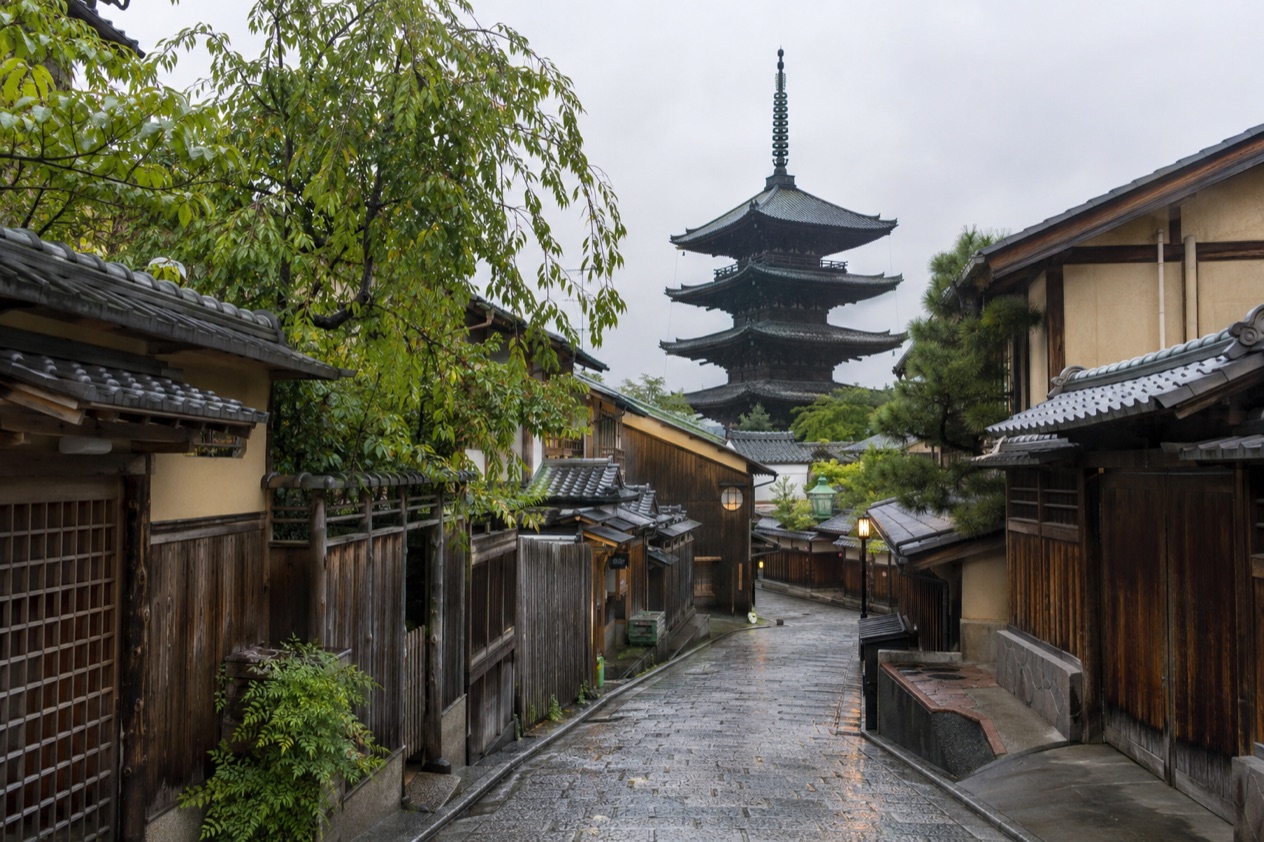
In June, Kyoto’s temple gardens turn a deeper green, moss glows after a shower, and umbrellas bloom along the lanes of Higashiyama like a second planting. The air is warm and damp, the tatami rooms smell faintly of rain, and a cold bowl of noodles or a green tea sweet suddenly makes perfect sense. This is Kyoto in the wet early weeks of summer, a month for gardens, shrines and long meals indoors for travelers who don’t mind a little rain.
What is the weather like in Kyoto in June?
June in Kyoto is warm, humid and clearly wetter than May, with showers on a good share of the days and summer heat starting to build.
| Month | Average high (°F) | Average low (°F) | Precipitation (in) | Days with 1 mm or more of precipitation | Hours of sunshine | Daylight on the 15th |
|---|---|---|---|---|---|---|
| May | 77.2 | 58.1 | 5.96 | 9.7 | 182 | 13 h 58 min |
| June | 82.6 | 66.6 | 7.86 | 11.5 | 133 | 14 h 30 min |
| July | 89.6 | 74.5 | 8.80 | 11.6 | 143 | 14 h 18 min |
What this means on the ground: afternoons are warm enough for short sleeves, and the damp air makes them feel warmer than the thermometer says. Nights stay mild, so you will not need more than a light layer after dinner. Sunshine drops well below May’s, which gives the month a softer, grayer light that suits wet stone, bamboo and moss.
Rain arrives on roughly every other day, sometimes as a passing shower and sometimes as a gray, drizzly spell that lingers. Kyoto sits in a basin, so the city feels humid and still when the sky is overcast. A compact umbrella and shoes that can handle wet paving matter more than a heavy coat.
Daylight stretches past fourteen hours, so evenings stay light long after dinner is ordered. That leaves room for a late stroll along the Kamo River or through Gion once the rain has stopped, and it makes a full day of sightseeing possible even when you wait out a downpour in a café.
What to do in Kyoto in June
June does not bring Kyoto’s biggest processions. The Aoi Matsuri parade is held on May 15, and the Jidai Matsuri parade waits until October 22. What June offers is the city in its green season, when the gardens are the main event. Hydrangeas, which grow wild across Japan and flower in the damp part of the year, show up in temple precincts and gardens, and the moss under the maples looks its richest.
Food leans toward the cool and the light. Cold soba or somen noodles, tofu dishes, pickles and chilled green tea sweets such as matcha parfaits and kuzu jelly fit the humid air. Kyoto’s kaiseki tradition, the multi-course meal built on the season, turns to young greens and river fish in early summer, and a sit-down lunch is a good way to wait out a shower.
The city is divided into five main areas: Central, Eastern, Northern, Southern and Western Kyoto. Kyoto was the capital of Japan from 794 to 1869, and the city holds 14 UNESCO World Cultural Heritage sites, so even a wet day has no shortage of places to go.
Higashiyama: Kiyomizu-dera, Gion and the lanes between
Eastern Kyoto is where the umbrellas come out. Kiyomizu-dera, with its wooden stage perched over the hillside, looks over a canopy of trees that are thick and dark green in June. The slopes below it are lined with shops selling pickles, sweets and pottery, and tea houses where you can sit under a roof while the rain taps the eaves.
Gion is a short step from there on the map, a district of wooden machiya townhouses, narrow lanes and teahouses. After a shower the paving darkens and the lanterns reflect in puddles. Kyoto City buses and the subway reach Kiyomizu-dera, Gion and Ginkaku-ji, so you can link these three without a car.
Ginkaku-ji, the Silver Pavilion, is known for its raked sand garden and mossy grounds. In a wet month the moss is the star, and the garden paths invite a slow walk with an umbrella in hand. Wear shoes with grip, since stone steps and temple paths stay slick.
Fushimi Inari Taisha and the tunnels of torii
Fushimi Inari Taisha is the shrine of thousands of vermilion torii gates that line the path up a wooded hillside. A guided tour of the shrine by DMO Kyoto is among the featured activities listed for the city, which suits anyone who wants the stories behind the foxes, the offerings and the gates.
In June the forest around the path is dense and green, and the gates glow orange against the wet leaves. The rain gives the hillside a hushed sound as drops fall through the trees. Bring a rain jacket rather than a wide umbrella if the path feels tight, and expect the stone steps to be damp.
Hands-on afternoons: samurai, kanji and craft
A rainy afternoon is the time for the activities that keep you under a roof. At Myokakuji Temple, a samurai experience includes a sword-fighting lesson taught by a professional actor, a lively break from temple-hopping. In Central Kyoto, you can turn your name into kanji and carve a Japanese stamp, a souvenir you make yourself.
These indoor sessions pair well with a long lunch of noodles or tofu, and they give the day a shape when the sky refuses to clear. Each is a chance to leave with something other than photos, whether a stamped card or a story about a wooden sword.
Farther out, the Keihoku area offers farm stays that put visitors in touch with nature and agriculture. In June, with the fields and woods at their greenest, it is a different side of Kyoto from the temples and teahouses of the city.
A two-day itinerary for Kyoto in June
Day 1 is Eastern Kyoto on foot. Start at Kiyomizu-dera in the morning, when you are fresh and the day is still ahead of you, and walk down through the shop-lined slopes.
Stop for a bowl of cold noodles or a tofu lunch at one of the small restaurants nearby, then head into Gion for the afternoon. The wooden townhouses, tea houses and lanes reward slow wandering, and a passing shower only improves the look of the paving.
Later, use the Kyoto City bus or the subway to reach Ginkaku-ji and its moss garden. Daylight lasts well past fourteen hours in mid-June, so there is time to finish with a stroll back toward the river and dinner at a kaiseki restaurant or an izakaya, a casual pub serving small plates. If rain sets in, switch to the indoor stamp-carving activity in Central Kyoto and keep the temples for a gap in the clouds.
Day 2 begins at Fushimi Inari Taisha, walking up under the red gates in the morning. The hillside path takes longer than it looks on a map once you stop for photos, so give it a generous stretch. Back in the city, eat a lunch of soba or a set meal in a small restaurant, then spend the afternoon on a hands-on activity.
End with dinner in a market street or a quiet kaiseki room, followed by a long evening stroll if the sky has cleared. Rain card for both days: matcha sweets in a tea house, a long kaiseki lunch, or the kanji stamp workshop.
Is Kyoto busy in June?
June is the gap between Kyoto’s spring season and its summer festivals, so the city runs at a slower pace than in months built around a parade or a blossom season.
The big processions sit on either side. The Aoi Matsuri, with its courtly Heian-era costumes, is held on May 15, and the Jidai Matsuri, with a parade representing over a thousand years of the city’s history, is held on October 22. In between, June has no single event that pulls everyone toward one street, which lets the city’s gardens, tea houses and shrines set the rhythm.
The weather shapes how the month feels more than any calendar date. Rainy days send people into museums, cafés, craft workshops and restaurants, while clearer spells bring them back to the temple paths. Planning a mix of indoor and outdoor stops is a more useful strategy than trying to guess when a place will be full.
A city that is warm, damp and green also changes what you look for: shade, a covered walkway, a seat with a view of a garden. These are the small pleasures of Kyoto in June, and they matter more here than a long list of must-sees.
What to pack for Kyoto in June
Pack for warm, humid days with regular showers, and for a lot of walking on stone paths and temple steps.
- A compact umbrella or light rain jacket, since showers come on about every other day.
- Breathable short-sleeved shirts, because the damp air feels warmer than the thermometer reads.
- Shoes with good grip that can get wet, for mossy paths and the stone steps at Fushimi Inari.
- A light layer for cooler evenings after a gray day.
- A small towel or handkerchief for humid afternoons and wet umbrellas.
- A tote or dry bag to protect a camera or phone in a downpour.
Good to know before you go
June is a wet month in Kyoto, so build the days around a mix of indoor and outdoor stops and keep a rain plan in your pocket. Kyoto City buses and the subway reach Kiyomizu-dera, Gion and Ginkaku-ji, and the city runs a Sightseeing Limited Express Bus for visitors.
Holders of the JR-WEST RAIL PASS can use the Subway & Bus 1-Day Pass in Kyoto. Humidity runs high through the month, so plan breaks in cafés or tea houses between temple visits.
Kyoto in June vs May and July
Moving the trip four weeks earlier brings you to May, when the weather is drier and sunnier, with far more hours of sunshine and fewer days of rain. The Aoi Matsuri procession is held on May 15, and its courtly Heian costumes are a draw for those who plan a trip around events. Evenings are cooler, so you will need a light jacket in May that you can leave at the hotel in June.
Moving four weeks later brings July, which is hotter and a bit wetter. Highs climb toward 90°F, nights are warmer, and the damp air feels heavier. The Gion Matsuri fills much of the month with floats, lanterns and street life, so July suits travelers who want the festival atmosphere and can handle the heat. Mount Fuji’s climbing season also begins in July, a draw for hikers.
Choose May if you want brighter days and a parade on the calendar. Choose July for festival energy and don’t mind heat. June suits those who prefer green gardens, a softer light and a slower pace, and who are happy to carry an umbrella.
Is June a good time to visit Kyoto?
Yes, for travelers who love gardens, moss and temple grounds in a soft, rainy light and who don’t mind a few wet afternoons. June is a month for tea houses, long lunches and craft workshops as much as for walking, and it rewards flexibility more than a rigid schedule.
It is a poorer fit for anyone who wants a bright, dry week of sightseeing, or who finds humid air tiring. For those travelers, May is the better choice. If a trip is already set for June, a plan that mixes indoor activities with outdoor visits keeps the days working whatever the sky does.
On arrival, start with the part of the city you most want to see in good light, then keep the more flexible stops, such as the stamp workshop or the samurai experience, for the wettest hours. June in Kyoto is the season of green moss and wet stone, of hydrangeas in temple corners and cold green tea after a damp walk, and that is what makes the month worth the umbrella.
Sources
- Japan Meteorological Agency (JMA), Normal values 1991-2020, monthly (https://www.data.jma.go.jp/stats/etrn/view/nml_sfc_ym.php?prec_no=61&block_no=47759), station Kyoto, elevation 41 m, checked October 11, 2026
- Computed from the date and the latitude of the place (sunrise equation, solar elevation -0.833 degrees), October 11, 2026
- Japan National Tourism Organization, weather and seasons in Japan (https://www.japan.travel/en/plan/weather/), checked October 11, 2026
- Wikipedia, Climate of Japan (https://en.wikipedia.org/wiki/Climate_of_Japan), checked October 11, 2026
- Japan National Tourism Organization, flowers by season: cherry blossom, plum, wisteria, hydrangea, where and when (https://www.japan.travel/en/see-and-do/flowers/), checked October 11, 2026
- Wikipedia, Hydrangea (https://en.wikipedia.org/wiki/Hydrangea), checked October 11, 2026
- Japan National Tourism Organization, summer in Japan (https://www.japan.travel/en/guide/summer-guide/), checked October 11, 2026
- Kyoto City Official Travel Guide, activities (https://kyoto.travel/en/activities), checked October 11, 2026
- Kyoto City Official Travel Guide, areas (https://kyoto.travel/en/areas), checked October 11, 2026
- Kyoto City Transportation Bureau, bus and subway guide (https://www2.city.kyoto.lg.jp/kotsu/webguide/en/), checked October 11, 2026
- Kyoto City Official Travel Guide, discover Kyoto (https://kyoto.travel/en/discover), checked October 11, 2026
- Kyoto City Official Travel Guide, festivals and events (https://kyoto.travel/en/events), checked October 11, 2026
To plan your stay
- Things to Do in Kyoto: Temples, Gardens, Food and Day Trips
- Where to Stay in Kyoto: Kyoto Station, Central and Eastern Districts, and Ryokan Stays
- Kyoto from Tokyo: Shinkansen Trains, Nozomi vs. Hikari and Kodama, and a First Day in Kyoto
- Know Before You Go to Kyoto: Entry, Money, Getting Around and Local Etiquette