
A tea room in Kyoto begins with a small ritual before any tea is poured. Shoes come off, hands are rinsed over a stone basin, and the voices around you drop as you step onto tatami.
Then a host whisks bright green matcha in a bowl and hands it to you with a bow.
Is visiting tea ceremony in Kyoto worth it?
Yes, if you want to sit still for a while and see Japanese hospitality up close rather than only photograph it. It suits travelers who like to learn the meaning behind a custom, couples and friends who want one calm hour in a busy itinerary, and anyone curious about the roots of Japanese food and design. It asks little of you except attention.
What sets Kyoto apart from other cities is the history behind the cup. Tea from Kyoto was historically said to be the best in the country, grown from seeds brought over from China by a monk, and the city’s traditions of machiya townhouses, hanamachi districts and the Gion Matsuri all surround the tea room. Beginner lessons exist in all major Japanese cities, but here the setting does a lot of the work.
The ceremony is also a way into ideas you will meet all over the city. Omotenashi, the concept of profound hospitality, is practiced in every gesture: the way the bowl is turned toward you, the sweet served first to soften the bitterness of the tea, the hanging scroll chosen for the day. You leave with a better eye for the temples, gardens and shops you visit afterward.
What to see at tea ceremony in Kyoto
The tea room and its rituals
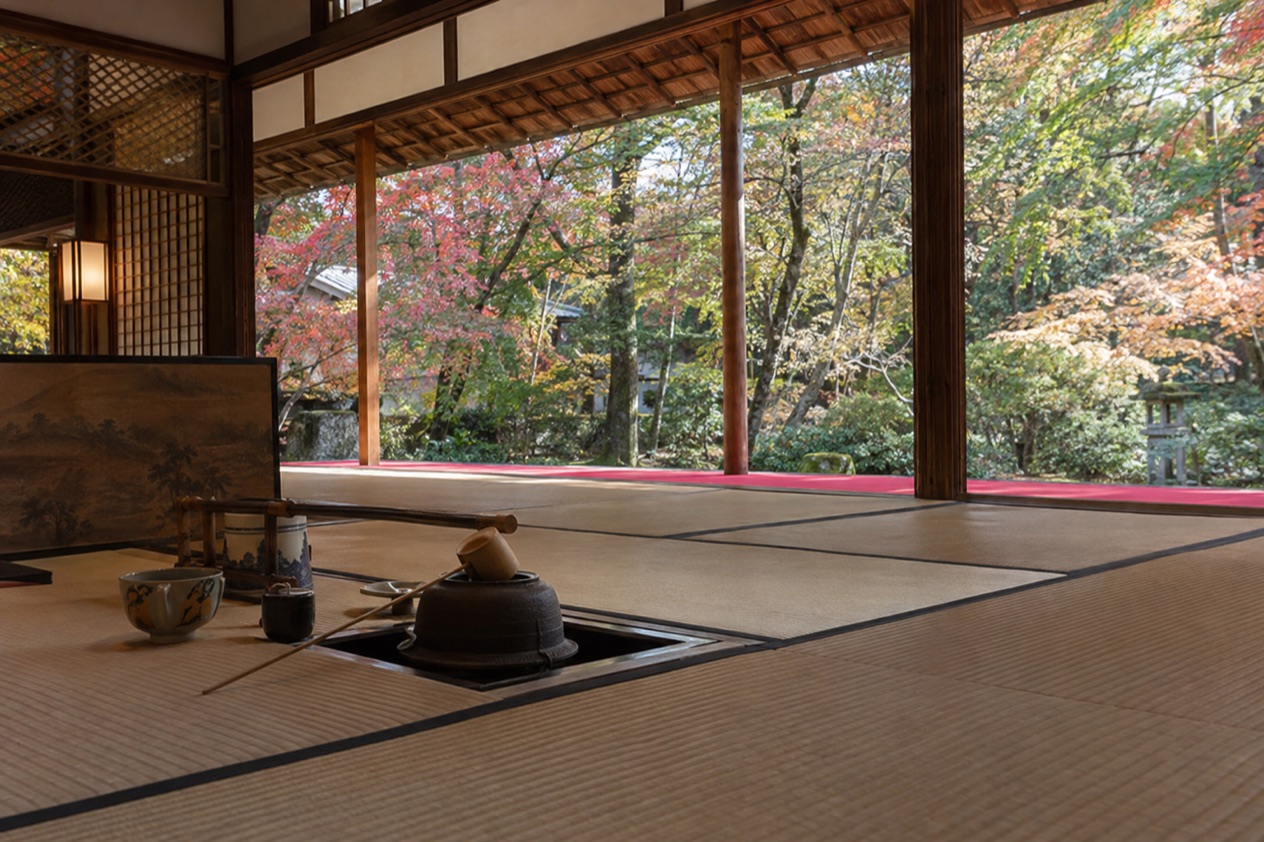
Traditionally the ceremony takes place in a chashitsu, a purpose-built tea pavilion with tatami flooring and a built-in hearth. In the wabi style, the ideal room is small, about four and a half tatami mats in floor area, so everything happens within arm’s reach. Look at the scroll in the alcove, the flowers set beside it and the quiet lines of the room itself.
Before entering the waiting room, guests remove their shoes and purify themselves by washing their hands and rinsing their mouths over a stone basin. It is the first moment when the outside world is left behind, and the gesture is easy to follow even if you have never done it.
The utensils and the preparation
The host works with codified utensils: a tea bowl (chawan), a bamboo scoop (chashaku) and a bamboo whisk (chasen). The art of preparing and presenting matcha is called otemae, and watching it is much of the pleasure. Notice how each tool is wiped and placed in a set order, and how the whisking turns the powder into a fine froth.
There are two ways of preparing matcha. Thin tea (usucha) is the lighter bowl, while thick tea (koicha) uses the best quality leaves and is deeper in flavor. In a formal gathering, one bowl of thick tea is shared among several guests, while thin tea is served to each guest in an individual bowl.
Informal and formal gatherings
Informal gatherings are called chakai and may include confections, thin tea and a light meal. Formal ones, called chaji, include a full-course kaiseki meal followed by confections, thick tea and thin tea, and can last up to four hours. The noon gathering with one host and a maximum of five guests is considered the most formal chaji.
A less common variant uses tea leaves instead of powder and is called senchado. If you want to see the main tradition, look for matcha. If you are curious about the other, it is worth asking which style a host teaches.
The four principles behind it
Sen no Rikyu, the most iconic figure in Japanese tea history, identified four fundamental principles: harmony, respect, purity and tranquility. The ceremony has roots in Zen Buddhism and dates back to the year 815, when the monk Eichu, newly returned from China, prepared sencha for Emperor Saga. Keep the four principles in mind and the choreography starts to make sense.
Hours, tickets and rules
Tea ceremony is not a single site with one set of hours. It is offered in many tea rooms, and the length of the experience depends on the style. A chaji, the formal gathering, may last up to four hours, while informal chakai are lighter occasions with sweets, thin tea and sometimes a light meal.
| Gathering | Open |
|---|---|
| Chaji (formal) | Up to four hours |
Guests must remove their shoes before entering the waiting room of the tea pavilion and then purify themselves by washing their hands and rinsing their mouths over a stone basin. Tradition also divides the year into two seasons: the sunken hearth season, traditionally November to April, and the brazier season, traditionally May to October.
How to get to tea ceremony in Kyoto
Most visitors reach Kyoto at Kyoto Station, which is served by the Tokaido Shinkansen line and connects to major cities across Japan. It makes a good starting point for exploring all of Kyoto’s attractions. The station building houses a full floor of ramen restaurants, an Isetan department store, a theater and a Granvia hotel, so it is an easy place to eat before or after your session.
Kyoto Tower stands a few steps from the main entrance of the station and, at over 130 meters, is visible across the entire city. It is a handy landmark when you get your bearings.
Tea rooms are spread across the city, from the district of Gion, where many geisha live and train, to central Kyoto, where Nijo Castle stands. Since each host sets their own location, the address given when you book is what decides your route from the station.
When to visit tea ceremony in Kyoto
A tea ceremony works in every season, and the season changes the feeling of the room. The traditional calendar splits the year in two: from November to April the hearth is sunken into the floor, and from May to October a portable brazier is used. Visiting either side of that line shows you a slightly different ritual.
| Month | Avg high (°F) | Avg low (°F) | Precipitation (in) | Rain days |
|---|---|---|---|---|
| January | 48.4 | 34.7 | 2.10 | 6.4 |
| April | 68.2 | 48.6 | 4.61 | 9.4 |
| July | 89.6 | 74.5 | 8.80 | 11.6 |
| October | 74.1 | 57.9 | 5.64 | 8.2 |
January is cold, with snow or sleet on many days, so a warm room and a hot bowl feel especially welcome. April is mild, with rain on about nine days. July is hot and humid, and a cool bowl of tea in a tatami room offers a pause from the heat. In October, days are comfortably warm, and the air cools in the evening.
July is also when the Gion Matsuri festival takes place in Kyoto, which adds a festive mood to the city that month. For any season, visitors are recommended to visit shrines at less crowded times such as early morning or late evening, and a tea session is a good way to fill the hours in between.
Tips for your visit
Plan on a relaxed pace. A formal chaji can take up to four hours, so leave room in your day if you choose one. Wear something you can sit comfortably in on tatami, and expect to take off your shoes. Learning the terms ahead of time, such as chanoyu, sado, otemae and chakai, helps you follow what the host says.
Tea fits well with other cultural experiences in Kyoto. You can rent a kimono or yukata for a few hours and walk around the city, wander the Gion district where geisha can often be seen, or visit Nijo Castle, built in 1603 by Tokugawa Ieyasu, whose nightingale floors make a bird-like sound when walked on.
If the tea room has sparked your interest, the same city offers beginner courses in ikebana, the art of flower arranging, which is one of the three traditional refined arts of Japan along with the tea ceremony and kodo, the appreciation of incense. For a longer immersion, a traditional ryokan inn offers futons on tatami floors, hot spring baths and Japanese meals, sometimes served in your room.
Good to know before you go
The tea ceremony is as much about manners as about drinking tea, so watching what the host does and following at your own pace is all that is asked. A brief word of thanks after the bowl is finished goes a long way. Whatever the season, pack for the weather of the day, since Kyoto’s rain, heat and cold all change the feel of the walk to the tea room.
Sources
- Japan National Tourism Organization, cultural experiences (https://www.japan.travel/en/guide/cultural-experiences/), checked October 11, 2026
- Japan National Tourism Organization, tea ceremony (https://www.japan.travel/en/guide/tea-ceremony/), checked October 11, 2026
- Wikipedia, Japanese tea ceremony (https://en.wikipedia.org/wiki/Japanese_tea_ceremony), checked October 11, 2026
- Japan National Tourism Organization, Kyoto (https://www.japan.travel/en/destinations/kansai/kyoto/), checked October 11, 2026
- Japan Meteorological Agency (JMA), Normal values 1991-2020, monthly (https://www.data.jma.go.jp/stats/etrn/view/nml_sfc_ym.php?prec_no=61&block_no=47759), station Kyoto, elevation 41 m, checked October 11, 2026
To plan your stay
- Best Time to Visit Kyoto: Cherry Blossoms, Autumn Leaves, Weather by Month and Festivals
- Where to Stay in Kyoto: Kyoto Station, Central and Eastern Districts, and Ryokan Stays
- Kyoto from Tokyo: Shinkansen Trains, Nozomi vs. Hikari and Kodama, and a First Day in Kyoto
- Know Before You Go to Kyoto: Entry, Money, Getting Around and Local Etiquette