
A Kobe morning can begin with the smell of fresh bread drifting from a bakery near the hillside streets, and end with the lights of the harbor switching on along the water. The city runs between mountain and bay, and each neighborhood carries a different mood: a bullet train station, a downtown of shops and restaurants, a waterfront promenade, a hot spring village in the hills. Choosing where to sleep decides which of those moods you wake up in.
What is the best area to stay in Kobe?
For a first visit, the city center around Kobe City Hall is the best base, because restaurants, shops, the port and the hillside streets all sit within one stretch of the city. Travelers arriving or leaving by bullet train will find Shin-Kobe Station handy for a night, and anyone who wants hot water and a ryokan dinner should look at Arima Onsen instead of the city itself.
Think of it by kind of trip. For sightseeing, the center and the harbor put the Western-style houses of the hillside, Chinatown and the waterfront parks within reach of one another. For a stay built around Kobe beef dinners and an evening out, the center is the natural pick, since that is where most of the city’s restaurants and bars gather.
Families with children often like the harbor side, where open promenades and waterfront attractions give a break from city blocks. Travelers keeping costs down can look at the area around the bullet train station and at the city center, where the range of lodging is wider than at a hot spring village.
The areas differ less in distance than in character. Kobe is a port city in Hyogo Prefecture, part of the same urban belt as Osaka and Kyoto, and it is Hyogo’s capital.
Its center is about 22 miles from Osaka and 43 miles from Kyoto, which is why visitors treat it as one stop on a wider Kansai trip. Staying in Kobe itself means mornings on the hillside, afternoons by the water and dinners that feel like those of a seaside city rather than a commuter suburb of its neighbors.
If you plan to use Kobe as a base for Osaka and Kyoto, the choice leans toward the station areas. If you want Kobe for its own sake, the downtown streets and the waterfront give the most to do between breakfast and a late dinner. And if the goal is to slow down, Arima Onsen belongs to Kobe too, with a ryokan stay that suits a night or two rather than a long base.
One thing shared by every area is the season. Spring runs mild, summers are hot, autumn is comfortably cool and winter turns cold, so a hot spring night in the hills reads very differently in January than in August. That is worth keeping in mind when you pick between the harbor, with its open air, and the indoor warmth of a ryokan bath.
The best areas to stay in Kobe
Shin-Kobe, by the bullet train station
Shin-Kobe is where the bullet trains stop, and the area is organized around that fact. The JR Tokaido/Sanyo Shinkansen links it directly with Tokyo, and the ride from Tokyo takes between 2 hours 40 minutes and 3 hours 15 minutes. Staying here suits travelers who arrive late, leave early or are carrying luggage from one Kansai city to the next.
The streets around the station feel like a gateway more than a destination, with hotels clustered near the platforms and the green slopes of the hills rising behind. It is a sensible pick for a one-night stop on a longer rail itinerary.
Anyone planning several days of dinners and strolling will likely want to continue on to the city center. A good tip is to decide your Kobe evenings first: if they will be spent downtown, a base near the station only makes sense when an early train is on the schedule.
The city center around Kobe City Hall
The center is the part of Kobe that visitors picture: shopping streets, covered arcades, cafés, steak restaurants and the Western-style architecture left from the days when the port opened to foreign trade. The observation deck on the 24th floor of Kobe City Hall gives a view over the city toward the bay. It opens at 8:15 a.m. on weekdays and at 10:00 a.m. on weekends and holidays, and closes at 10:00 p.m. every day.
Lodging here ranges from large hotels near the main stations to smaller boutique properties and apartment-style rooms on the side streets. This is the best base for a first visit, for couples who want dinner options at the door and for travelers who like to step out of the hotel and be in the middle of things. The hillside streets with the old foreign residences rise just behind the downtown, and Chinatown and the waterfront lie in the other direction.
Because Kobe is a port city, dinner here often means meat or seafood. Kobe beef must meet strict standards before it earns the Kobe seal of approval, and the steakhouses of the center are where visitors try it. Pair that with a night in the bars and jazz rooms the city is known for, and the center becomes a base where you rarely need to leave for the evening.
The harbor and waterfront
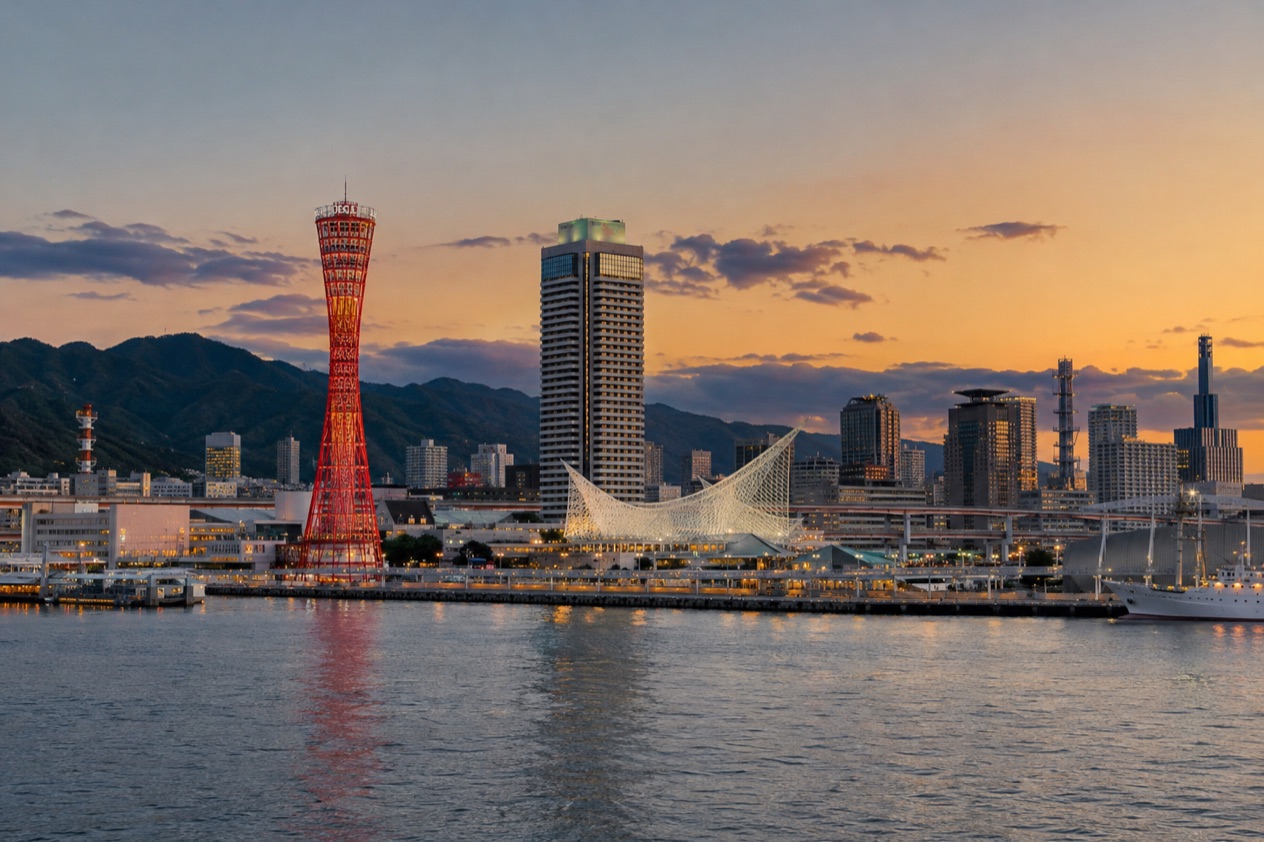
Kobe is the third-largest port city in Japan after Tokyo and Yokohama, and the waterfront shows it. Wide promenades, a red port tower, a maritime park and the glow of ships and ferries at dusk give the harbor its own character, more open and airy than downtown. Hotels here tend to be larger waterfront properties, with rooms looking over the bay.
The harbor side suits families, couples who want an evening walk by the water and travelers who like their hotel window to frame the view. Shopping malls and attractions along the waterfront give rainy-day options, which matters in the wetter months. The trade-off is that the dense restaurant streets of the center lie a little apart from the shoreline, so plan on moving between the two for dinner.
Arima Onsen, the hot spring village
Arima Onsen is one of Japan’s most famous hot spring resorts, and it lies within Kobe’s city limits. It is the place to spend a night on tatami floors, soak in a bath, put on a yukata (a light cotton robe) and eat a dinner of many small courses. Ryokan typically offer futons laid out on the floor, private baths that are sometimes outdoors and a traditional Japanese breakfast the next morning.
This is an overnight for travelers who want the ritual of a Japanese inn rather than the convenience of a city hotel, and it suits couples and anyone wanting a slower evening after days of sightseeing. In winter, with the cold at its sharpest, the baths take on a special pull. A practical tip: treat Arima as a stop of its own, one or two nights with the evening built around the inn, rather than as a base for the rest of Kobe.
Kobe areas compared
| Area | Best for | Feel | Getting around |
|---|---|---|---|
| Shin-Kobe | One-night rail stops | Station district with hills behind | Shin-Kobe Station on the JR Tokaido/Sanyo Shinkansen |
| City center near Kobe City Hall | First visit, dinners, shopping | Arcades, cafés, restaurants, Western-style architecture | Central Kobe, about 22 miles from Osaka |
| Harbor and waterfront | Families, evening walks, bay views | Open promenades and port scenery | Port city waterfront on Osaka Bay |
| Arima Onsen | Ryokan stay, hot spring baths | Village of inns and baths | Hot spring resort within Kobe |
The core trade-off is between convenience and atmosphere. A hotel by the bullet train station saves time on arrival and departure day, but it keeps you a step away from the streets that make Kobe worth visiting.
A second trade-off is old against new. The hillside streets and the foreign-style houses speak of the port’s early international days, and staying near them puts that history on your morning walk.
The waterfront and the station district are the modern face of the city, with larger hotels and wide open spaces. Neither is better than the other. They answer different questions: do you want to wake up in a historic neighborhood or beside the bay?
Arima Onsen stands apart from all three, because it is less a base than an experience. Where the others compete on access, Arima competes on atmosphere: the ryokan, the baths, the dinner. If your Kobe days are mainly about the city, you can still spend a single night in Arima at the end of the trip and return to the center or the station afterward.
For travelers splitting time between Kobe, Osaka and Kyoto, the picture changes slightly. Kobe sits across the bay from Osaka, and Kyoto lies farther on, so a Kobe hotel can serve as a base for all three. The center or Shin-Kobe makes the most sense for that plan, while the harbor and Arima reward travelers who intend to stay put.
How to choose your hotel in Kobe
Start with the kind of night you want. A city hotel gives you a bed, a private bath and the freedom to come and go, while a ryokan turns the evening itself into the point of the stay. Ryokan, the traditional Japanese inns, are believed to have emerged in the 8th century, and they typically combine tatami floors, futons, private baths, yukata robes, a kaiseki dinner (a multi-course meal of small seasonal dishes) and a traditional Japanese breakfast.
If a ryokan appeals, Arima Onsen is the natural place within Kobe to look, since the hot spring tradition belongs to that village. Many ryokan include dinner and breakfast as part of the stay, which shapes the evening: you are expected to be at the table at a set hour rather than wandering out to a restaurant. That suits a slow night, and it is worth weighing against a trip where you want to eat out in the center.
Some travelers want more than a bed and a bath and look at heritage stays instead. Visitors at Heritage Stays can take part in cultural activities such as a tea ceremony, calligraphy and wearing traditional Japanese clothing. Reservations for these are required and can often be made through the property’s website or by phone, so they suit a trip where the stay itself is part of the plan.
Next, think about how you will arrive and leave. If your bullet train comes into Shin-Kobe Station, a hotel near it removes a transfer on the first and last day. Travelers coming from Tokyo reach Shin-Kobe directly by shinkansen, and the Hikari is the train the Japan Rail Pass covers on that route. If you are staying in the center, factor in the move between station and hotel, especially with heavy bags.
Families and travelers with limited mobility should look closely at the hotel’s position. Kobe’s hillside streets rise steeply behind the center, so a room on the lower, flat side of town makes daily outings simpler than one partway up a slope.
Station-side and waterfront hotels sit on open ground, which suits strollers and anyone who tires on inclines. A ryokan stay adds its own habits: shoes come off at the entrance and sleeping happens on a futon at floor level, which is worth considering for anyone who finds low seating hard.
Finally, match the season to the setting. Summer in Kobe runs hot, so air-conditioned city rooms and waterfront views feel good, while winter turns cold enough that a hot spring soak becomes the highlight of the trip. Spring and autumn sit in between, comfortable for walking between the hillside streets, the harbor and the center, and for choosing whichever base fits the plan.
Good to know before you go
Kobe is reached directly from Tokyo by the JR Tokaido/Sanyo Shinkansen, which stops at Shin-Kobe Station, and the Hikari service on that route is free with the Japan Rail Pass. Prices at hotels and restaurants are in yen.
Sources
- Japan National Tourism Organization, Kobe (https://www.japan.travel/en/destinations/kansai/hyogo/kobe-and-around/), checked October 11, 2026
- Visit Kobe, the official travel guide (https://www.feel-kobe.jp/en/), checked October 11, 2026
- Wikipedia, Kobe (https://en.wikipedia.org/wiki/Kobe), checked October 11, 2026
- Wikivoyage, Kobe (https://en.wikivoyage.org/wiki/Kobe), checked October 11, 2026
- Japan National Tourism Organization, ryokan stays, what is included, etiquette (https://www.japan.travel/en/guide/japanese-ryokan/), checked October 11, 2026
- Japan National Tourism Organization, heritage stays (https://www.japan.travel/en/heritage-stays/), checked October 11, 2026
To plan your stay
- Best Time to Visit Kobe: Cherry Blossoms, Autumn Leaves, Weather and Festivals
- Things to Do in Kobe: Kobe Beef, Kitano's Foreign Houses, Arima Onsen and Harbor Night Views
- Kobe from Osaka: Trains, Two Stations, the Bus and a Day at the Harbor
- Kobe vs Osaka: Beef, Dotonbori Nights, Getting Around and Weather