
In Hopkins, the sound that carries the farthest is the drum. It rolls out of a thatched hut in the evening, and Garifuna voices answer it while cassava bread bakes nearby and the Caribbean breaks on the shore.
The year here moves between a bright, breezy winter, a hot and wet summer, and one big day in November when the whole coast celebrates. Hopkins is a small village between the Maya Mountains and the sea, and each season gives it a different face.
When is the best time to visit Hopkins?
The best months for most travelers run from about late November through April, when the sea is warm without being hot, the days are bright and the village is at its liveliest. That stretch also takes in Garifuna Settlement Day, the big date of the Hopkins year, and the winter holidays. May and the months after it grow hotter, and the sea keeps climbing with them.
For the beach and the water, March and April are the favorites. The sea warms to the low 80s and then the mid-80s, the daylight stretches past twelve hours, and the cayes off Dangriga (South Water Caye, Tobacco Caye and Glover’s Reef) are a short boat ride away. For sightseeing, the winter months suit the inland outings: the waterfalls and trails of Mayflower Bocawina National Park, and the jaguar reserve at Cockscomb Basin Wildlife Sanctuary, which sits off the Southern Highway south of Dangriga.
If you prefer quiet and a slower pace, look to the late spring and the summer, when the village settles down and the heat sets the rhythm of the day. You trade some comfort for space, and the sea is at its warmest, so mornings in the water feel like a second shower. Hurricane season runs from June 1 to November 30, so a summer or fall trip comes with that backdrop.
Families should know that March brings spring break, and the village and its guesthouses fill with more people and more noise than in other months. Early December, just after the hurricane season ends, and the weeks after the New Year are calmer for travelers with children. Outside the school holidays you often have long stretches of shore almost to yourself.
Hopkins weather by month
The sea off Hopkins stays warm all year, and the length of the day shifts by only about two hours between December and June.
| Month | Sea at Hopkins (°F) | Daylight on the 15th (hours and minutes) |
|---|---|---|
| January | 80.8 | 11 h 16 min |
| February | 80.6 | 11 h 38 min |
| March | 83.4 | 12 h 05 min |
| April | 84.3 | 12 h 34 min |
| May | 86.8 | 12 h 58 min |
| June | 88.3 | 13 h 10 min |
| July | 86.7 | 13 h 04 min |
| August | 87.9 | 12 h 43 min |
| September | 88.6 | 12 h 16 min |
| October | 86.9 | 11 h 48 min |
| November | 83.2 | 11 h 23 min |
| December | 80.8 | 11 h 10 min |
The shape of the year is easy to read. The sea is at its coolest in winter, in the low 80s, then warms steadily through spring and peaks from June to September near 88°F. By November it eases back. Days are longest around June, with a little over thirteen hours of light, and shortest in December, so winter evenings fall early and dinner on the porch starts in the dark.
In Belize City, highs average about 86°F in March and close to 90°F from May through September, with the wettest stretch coming in the fall, when October brings the most rain days of the year.
What is there to do in Hopkins in each season?
Winter and early spring: sea, drums and trails
From December to April the village is most social. Days start with a walk along the shore, and a drumming and dancing evening can be arranged at one of the cultural spots in the village, where Garifuna musicians play the drums that UNESCO recognized in 2001 as part of the community’s heritage. Cassava bread, hudut (fish in coconut broth with mashed plantain) and fresh seafood turn up on menus all along the road.
This is also the time for the boat trips out to South Water Caye, Tobacco Caye and Glover’s Reef Atoll, and for the inland outings. At Mayflower Bocawina you can go ziplining, rappel waterfalls or hike to Antelope Falls. At Cockscomb Basin, the world’s first jaguar preserve, the trails run through forest where you may hear much more than you see.
Summer: hot, wet and quiet
From June through September the sea is at its warmest, the days are longest, and the village slows. Mornings are for the water, whether that means a boat out to the cayes or a paddle on the nearby Sittee River, and the heat suits a hammock and a cold drink on the porch. Rain comes in heavier spells than in winter, so keep a plan B, such as a cooking class or a visit to a drum-maker.
Summer is also when the green is at its deepest, and the mountains behind the village look their lushest. Leave the waterfall hikes for the drier weeks if you can, since trails get muddy and rivers run high after rain.
Fall and the November celebration
October is the wettest month in Belize City’s record and the peak of hurricane activity falls earlier, from mid-August to mid-October, so this is the season for staying flexible. Things pick up in November as the sea cools and the rains ease. On November 19, Garifuna Settlement Day, villages along the coast celebrate with drumming, song and dance, and nearby Dangriga is the heart of it.
When is Hopkins cheapest and least crowded?
The quietest months are the hot, wet ones: roughly May through early November, outside the July and August school vacation. Rooms are easier to find, the beach has few footprints, and the village feels like itself, with kids on bikes and fishermen mending nets.
The busiest weeks are Christmas and New Year, spring break in March, and Easter week, which moves from year to year. U.S. school holidays push guesthouses toward full, and the shore is livelier with visitors.
If you want good weather with fewer people, aim for the shoulder weeks: January after the New Year rush, late April after Easter, and the first half of December. You get the winter sea and bright days without holiday crowds. September and October are the most unhurried of all, with the trade-off that the weather is most unsettled.
Which months should you avoid in Hopkins?
September and October are the months most travelers are better off skipping, since they sit at the heart of the Atlantic hurricane season, which runs from June 1 to November 30, with its peak on September 10 and most activity from mid-August to mid-October.
That does not mean a trip is ruined. An average season brings 14 named storms across the whole Atlantic, and most never come near Belize. But October is also the wettest month in Belize City’s record, with many days of rain, and the sea and trails are affected. A flexible schedule and travel insurance that fits your plans make sense then.
Heat is the other factor. From May to September the highs reach about 90°F in Belize City, and the sea is as warm as a bath, so afternoons are for the shade.
Sargassum, the brown seaweed that floats in clumps and smells of rotten eggs when it piles up on the sand, tends to be worst from spring into summer, and it can be the first disappointment of a beach trip. No beach is guaranteed to be free of it.
In winter, cold fronts from the north can bring a gray, breezy day with showers. They pass, and they matter much less than a summer storm, but they can cancel a boat trip to the cayes.
When can you swim in Hopkins?
The sea off Hopkins is warm in every month of the year, so the question is more about comfort than about whether you can get wet. It is coolest in January and February, near 81°F, which feels refreshing on a bright day.
From March the water climbs through the low 80s into the mid-80s in April, and by May it is close to 87°F. June through September it sits near 88°F, which many travelers find more like a warm bath than a cooling dip. October eases back toward 87°F, and November brings it down to about 83°F.
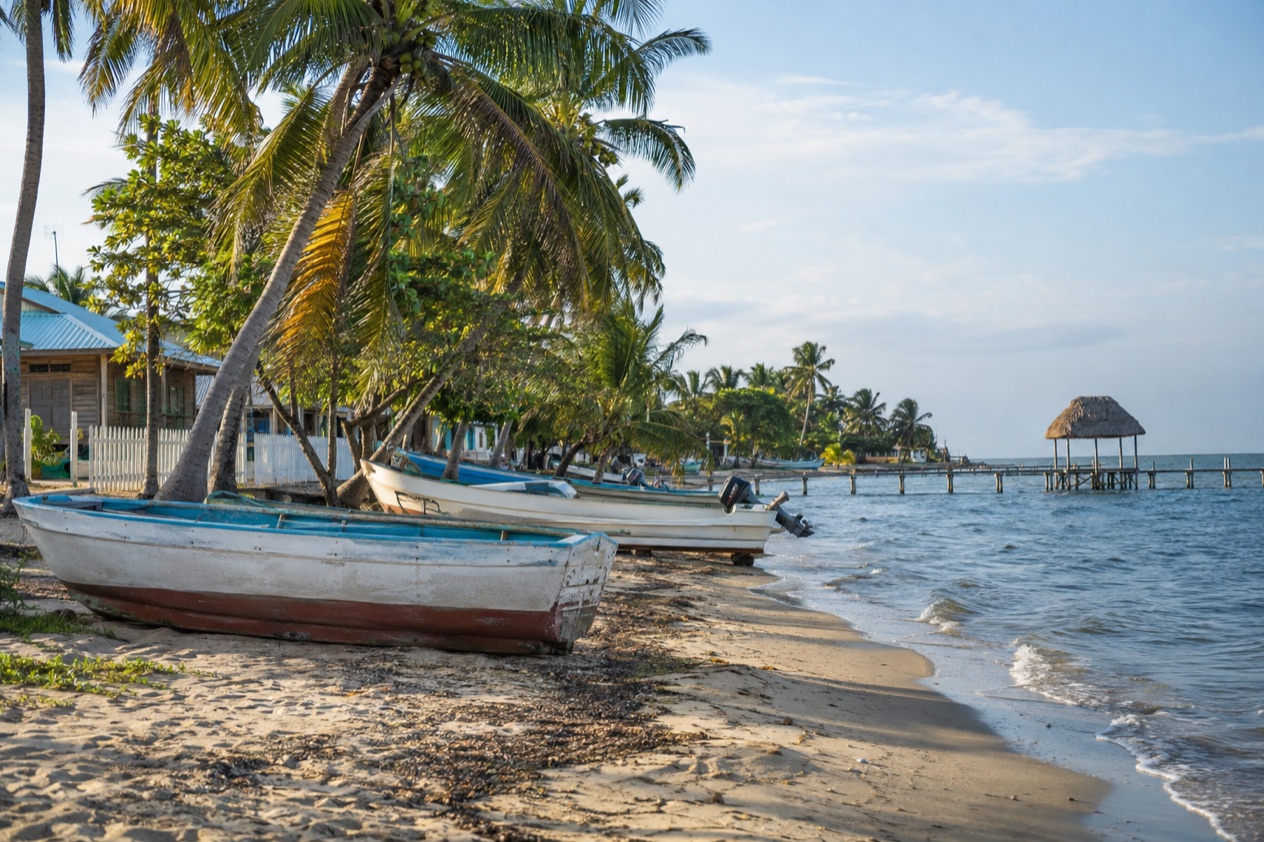
The beach in the village is a stretch of shore with palms and small guesthouses, and its character changes with the season. In winter you may find breezes and a little more movement in the water. In summer the shore is quiet and hot. For clearer water and reef life, the cayes off Dangriga are the places visitors head for.
Festivals and events in Hopkins through the year
Garifuna Settlement Day and the fall
Garifuna Settlement Day, on November 19, is a public holiday in Belize. It marks the arrival of the Garinagu in Belize, and it was created by the civil rights activist Thomas Vincent Ramos in 1941. Dangriga, the cultural center of the Garifuna people, holds the biggest celebrations, and Hopkins, where most residents are Garifuna, joins in with drumming and dancing.
Expect an early start, with a boat reenactment of the arrival, then processions, punta dancing and food stalls. The language, dance and music of the Garifuna are recognized by UNESCO, and the festivities are the best chance to hear them in full voice. Plan lodging ahead of time, since the days around the 19th are among the busiest of the year in the area.
Winter holidays and Carnival
Christmas and New Year bring families home and visitors in, and the village fills with music, with Garifuna songs and drums mixing with the usual holiday cheer. Meals turn festive, and beaches are busy with a mix of locals and travelers.
Carnival season and Easter week follow, with dates that vary from year to year. Easter week in particular is a time when many Belizeans head to the coast, so the shore feels more like a holiday camp than a sleepy village. If you want the music without the crowds, a quieter week in January or February can still deliver an evening of drumming.
Nature seasons on the coast and in the forest
Nature here follows the rhythm of the rains. The forest at Cockscomb Basin and Mayflower Bocawina is greenest in the wet months, when waterfalls run full and birdsong is loud at dawn. Jaguars live in the Cockscomb reserve, but they are elusive, so treat any sighting as a bonus, not a promise.
Out on the reef and around the cayes, South Water Caye Marine Reserve protects a large stretch of mangrove and coastal waters that belong to the Belize Barrier Reef System. Marine life shifts through the year, and you may see rays, turtles and schools of reef fish on a boat day, though what you find depends on the day.
Sources
- Open-Meteo Marine API, average 2015-2024, checked October 11, 2026
- sunrise-sunset.org, sunrise and sunset calculated for the 15th of the month, checked October 11, 2026
- NOAA NCEI, GHCN-Daily station BHM00078583 (Philip S. W. Goldson International Airport, Belize City), normals 1991-2020 computed from the daily record (https://www.ncei.noaa.gov/access/services/data/v1?dataset=daily-summaries&stations=BHM00078583), checked October 11, 2026
- Wikipedia, Hopkins, Belize (https://en.wikipedia.org/wiki/Hopkins,_Belize), checked October 11, 2026
- Wikipedia, Dangriga (https://en.wikipedia.org/wiki/Dangriga), checked October 11, 2026
- Wikivoyage, Dangriga (https://en.wikivoyage.org/wiki/Dangriga), checked October 11, 2026
- Wikipedia, Cockscomb Basin Wildlife Sanctuary (https://en.wikipedia.org/wiki/Cockscomb_Basin_Wildlife_Sanctuary), checked October 11, 2026
- Belize Audubon Society, Cockscomb Basin Wildlife Sanctuary (https://belizeaudubon.org/cbws/), checked October 11, 2026
- Wikipedia, Garifuna (https://en.wikipedia.org/wiki/Garifuna), checked October 11, 2026
- Wikipedia, Mayflower Bocawina National Park (https://en.wikipedia.org/wiki/Mayflower_Bocawina_National_Park), checked October 11, 2026
- Tropic Air, Dangriga and Hopkins (https://www.tropicair.com/dangriga-hopkins-dga/), checked October 11, 2026
- Maya Island Air, Dangriga and Hopkins flights (https://www.mayaislandair.com/belize-flights-dangriga-hopkins/), checked October 11, 2026
- Wikipedia, Stann Creek District (https://en.wikipedia.org/wiki/Stann_Creek_District), checked October 11, 2026
- Wikipedia, South Water Caye Marine Reserve (https://en.wikipedia.org/wiki/South_Water_Caye_Marine_Reserve), checked October 11, 2026
- Belize Fisheries Department, South Water Caye Marine Reserve (https://fisheries.gov.bz/swcmr/), checked October 11, 2026
- Wikipedia, Tobacco Caye (https://en.wikipedia.org/wiki/Tobacco_Caye), checked October 11, 2026
- Wikipedia, Climate of Belize (https://en.wikipedia.org/wiki/Climate_of_Belize), checked October 11, 2026
- NOAA National Hurricane Center, Climatology (https://www.nhc.noaa.gov/climo/), checked October 11, 2026
- Belize Tourism Board, Sargassum resource (https://www.belizetourismboard.org/tourism-resources/sargassum-resource/), checked October 11, 2026
- U.S. Department of State, Belize Travel Advisory, Level 2, March 11, 2026 (https://travel.state.gov/), checked October 11, 2026
To plan your stay
- Things to Do in Hopkins: Garifuna Drumming, Cockscomb Jaguar Preserve, Waterfalls and the Cayes
- Where to Stay in Hopkins: Beachfront Resorts, Village Life and the Sittee River
- Hopkins from Belize City: Flights, Rental Cars, the Road South and Cockscomb
- Know Before You Go to Hopkins: Entry, Money, Getting Around and Garifuna Culture