
Somewhere after sunset in Hopkins, a drum starts up, a second one answers, and a Garifuna song drifts down a sandy lane toward the sea. Cassava bread is baking over a fire, hammocks sway under the palms, and the Maya Mountains turn dark behind the village. Hopkins is a small Garifuna village on the Caribbean shore, a base for travelers who want drumming, rainforest, reef and home cooking along one stretch of the Belize coast.
What are the best things to do in Hopkins?
The best things to do in Hopkins are the ones that tie the village to what surrounds it: Garifuna music and cooking in the lanes, jungle and waterfalls behind it, and the barrier reef and its cayes out to sea. A single day can start with a drum lesson and end with a plate of fresh fish, and a week can be spent moving between all three.
The village sits between the Maya Mountains and the Caribbean, close to the Sittee River, so the landscape does a lot of the work. What follows is the short list. Each item is picked up in the sections after it.
- Sit in on Garifuna drumming and dance, because Hopkins is a place where the music is lived, not staged for a brochure.
- Walk the village lanes and the shore at sunrise, when the light comes up over the water and the fishing boats are already out.
- Spend a day at Cockscomb Basin Wildlife Sanctuary, the world’s first jaguar preserve, for forest trails and the chance to see wildlife.
- Head to Mayflower Bocawina National Park for ziplining, waterfall rappelling and the hike to Antelope Falls.
- Take a boat out to Tobacco Caye or South Water Caye for the reef, with snorkeling and diving along the barrier reef.
- Eat hudut, the Garifuna fish and coconut stew with mashed plantain, and bread made from cassava.
- Go to Dangriga, the culture capital of Belize, for the Garifuna heart of the region.
- End the evening on the beach with a drum, a cold Belikin and a sky with very little light competing with it.
Sights and landmarks in Hopkins
Hopkins has no ruins to climb and no grand museum, and that suits it. Its landmarks are a village, a culture and a coastline, and they are best taken slowly, on foot, with time to stop when someone invites you to listen or taste something.
The village and its Garifuna life
Hopkins was created in 1942 to replace the village of Newtown, which a hurricane further up the coast had devastated. The people who founded it carried a history with them, and today the Garifuna make up most of the population, roughly seven in ten residents at the last census. That shows in the pace of the place: brightly painted wooden houses on stilts, a few lanes of sand and packed earth, and a language you hear on the porches that is not English and not Spanish.
Walk the main road in the early morning and you will see nets being mended, children heading to school and cassava being grated for the day’s bread. Small craft stands and drum makers work from front yards. The drums, carved from hollowed logs and covered with hide, are part of everyday life here, and stopping to watch one being made tells you more than any sign could.
Drumming, dance and song
In 2001 UNESCO proclaimed the language, dance and music of the Garifuna a Masterpiece of the Oral and Intangible Heritage of Humanity in Belize. In Hopkins you can feel what that means. Evenings bring the deep, layered rhythms of the primero and segunda drums, call-and-response singing, and the punta and sambai dances in which hips and feet move fast against a steady beat.
Some drummers offer lessons and some villagers share their songs with guests, and a cultural evening is one of the best ways to understand the place. The contemporary scene reaches well beyond the village too: musicians such as Andy Palacio, Mohobub Flores and Aurelio Martinez have helped bring a resurgence of Garifuna music, and hearing their albums before the trip gives the live drumming more context.
Dangriga and Garifuna Settlement Day
Dangriga, formerly Stann Creek Town, is commonly called the culture capital of Belize because of its influence on punta music and other Garifuna traditions, and traditional Garifuna dancers can be seen there. It is the district capital, and the town where the big national celebration is at its loudest.
Garifuna Settlement Day falls on November 19 and marks the arrival of the Garinagu in Belize. It began as an idea of the civil rights activist Thomas Vincent Ramos in 1941 and is now a public holiday. Expect dawn boat reenactments, drumming through the streets, church services, and the food and clothing of the community in full display, in Dangriga and in villages like Hopkins.
The shore and the river
Not every landmark is made by people. The Sittee River runs close to the village, and its banks of mangrove and forest give the area a different face from the beach front. The shoreline itself is a long stretch of sand lined with coconut palms, small guesthouses and open-air bars, and the Cockscomb Range stands in the distance as a blue backdrop on clear days.
Beaches and outdoor things to do in Hopkins
Outdoor time in Hopkins splits into three pieces: the village beach on the Caribbean, the forest and waterfalls inland, and the reef and cayes a boat ride away. Nothing here is a resort strip. The beach is a place for walking, hammocks and watching the light change, and the larger adventures begin when you leave it.
The beach at Hopkins
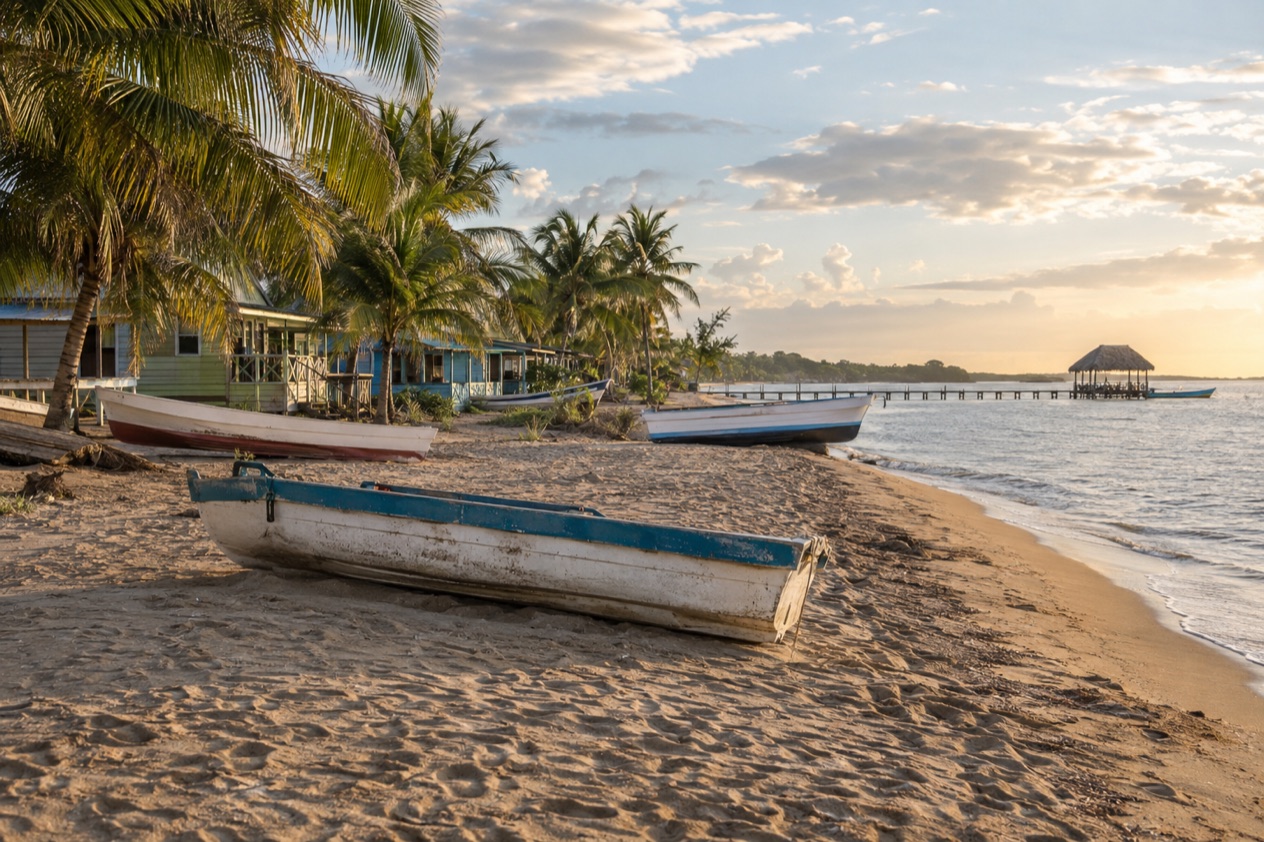
The village beach runs along the Caribbean, a ribbon of sand with palms leaning over it, boats pulled up on the shore and hammocks tied between trunks. It is good for long walks at sunrise, for reading in the shade and for watching the evening turn the water orange. The sea along this coast changes with the weather and the day, so look at the water and ask locally before choosing where to get in.
Kayaks and paddleboards are the usual way to spend time on the water from here, and the guesthouses along the shore tend to be the starting point for such outings. Sand, shade and a view are the simple pleasures of the front, and the village rewards anyone who stays long enough to learn when the fishermen come in.
Mayflower Bocawina National Park
This national park sits at mile six on the Southern Highway and is managed by the Friends of Mayflower Bocawina National Park. Visitors can go ziplining through the canopy, rappel down waterfalls and hike to Antelope Falls, and the forest trails also pass through stretches of rainforest where birds and howler monkeys may be heard and sometimes seen.
The park is listed in Category 2 of the IUCN list, which puts it among areas protected mainly for their ecosystems and for visitors to enjoy them. For travelers who like movement, it is the adventure day of the area, with the waterfalls as the reward at the end of the trail.
Snorkeling and diving the reef
The Belize Barrier Reef is the second largest in the world and a World Heritage Site, and the cayes off this coast are the way to reach it. From Dangriga, travelers can take a boat to South Water Caye, Tobacco Caye and Glover’s Reef Atoll, and Hopkins guesthouses and dive operators often connect guests to the same trips.
Out on the reef the colors are the point: coral heads, schools of small fish, rays gliding over sand, and on some trips turtles and sharks. The reef at the cayes is a world apart from the village shore, and a day out here is a natural pairing with the forest day inland.
Birds, river and forest walks
Between the sea and the mountains, the land around Hopkins is made of mangrove, river and broadleaf forest. Guides lead boat trips on the Sittee River and walks into the forest, and early morning is the moment birdwatchers value. You may see herons, kingfishers and parrots, and with luck a toucan, though nature never promises its appearances.
Day trips from Hopkins
The day trips from Hopkins reach into the forest, out to the cayes and along the coast, and each one gives a different side of southern Belize.
Cockscomb Basin Wildlife Sanctuary
Cockscomb Basin Wildlife Sanctuary was established in 1986 as the first protected area for the jaguar, and it is recognized internationally as the world’s first jaguar preserve. It lies off the Southern Highway, about 20 miles south of Dangriga, in the Stann Creek District, and is operated by the Belize Forest Department and the Belize Audubon Society.
Inside, the Cockscomb Range rises above forest trails, rivers and small waterfalls. Jaguars are elusive, so a walk here is about the forest itself: bird calls, tracks in the mud, butterflies and the sound of the canopy. Go with the idea of seeing the rainforest and treat any wildlife sighting as a bonus. The sanctuary was designated in 1984.
| Site | Visitor | Admission |
|---|---|---|
| Cockscomb Basin Wildlife Sanctuary | Non-nationals | BZD 10 |
| Cockscomb Basin Wildlife Sanctuary | Belizean nationals | BZD 2.50 |
Tobacco Caye and South Water Caye
Tobacco Caye is a tiny island about 10 miles east of Dangriga, covering roughly three acres, with a permanent population of about 20 and five small lodges. It is the kind of caye where you can walk around the whole island in a few steps and spend the day with a mask and fins or a book and a hammock.
South Water Caye lies within the South Water Caye Marine Reserve, designated in 1996 and the second largest marine protected area in Belize. The reserve is part of the Belize Barrier Reef Reserve System World Heritage Site, so the water around it carries real weight for reef lovers. Glover’s Reef Atoll is reached from the same coast and draws divers and snorkelers farther out.
Dangriga and the district capital
Dangriga is a town of about 9,500 people, flanked by the Maya Mountains and rainforests to the west and by islands and the barrier reef to the east. It is where Garifuna culture feels most concentrated, with drum makers, musicians and cooks, and it has a seaside walk and a working waterfront.
The Hummingbird Highway, paved along its length and known for its scenery as it cuts through the mountains, is the main route to Dangriga from Belmopan. Dangriga Airport is served by Maya Island Air and Tropic Air several times daily, with flights to Belize City, Placencia and Punta Gorda, which puts the town on the map for anyone linking the coast by air.
Smaller outings
Placencia is the other coastal name in the district, a peninsula town known for its resorts, guesthouses and white sandy beaches, and it makes a change of scenery for anyone who wants a different kind of beach day. Mayflower Bocawina, described above, can also be done as a stand-alone day. All of these outings pair well with a night back in Hopkins, with its drums and its cooking.
What to eat in Hopkins
Eating in Hopkins means Garifuna home cooking, built on coconut, cassava, plantain and fish, served in small family places and beach cafes where the menu is whatever came in that morning. The flavors are warm and savory more than hot, and nearly everything is cooked from scratch.
Hudut and the Garifuna table
Hudut is the dish to try first: fish simmered in a broth of coconut milk with garlic, peppers and herbs, served with a mound of mashed green plantain called fufu. The broth is rich but not heavy, and the plantain is meant to be broken into pieces and dipped. It is the dish most closely tied to the Garifuna kitchen, and it is often the centerpiece of a Sunday meal.
Alongside it you may find sere, a coconut soup with fish or other seafood, and darasa, a Garifuna tamale made with green banana or plantain, wrapped in leaves and steamed. These are slow dishes made by people who learned them from their grandmothers, and ordering them is one of the ways to spend a few hours well.
Cassava bread and village baking
Ereba, the flat, round cassava bread, is a signature of the Garifuna table. The root is grated, squeezed of its liquid and pressed into rounds that are baked on a hot surface until firm and lightly crisp. It is neutral and slightly nutty, good with soups, with fish or simply with a drizzle of something sweet.
Some families and guesthouses run cooking demonstrations in which guests take part in grating, pressing and baking, and there is no better way to see where the bread comes from. Coconut bread, johnnycakes and sweet cassava treats appear at breakfast tables around the village.
Seafood, rice and beans, and drinks
The coast supplies the rest: grilled snapper, shrimp, lobster when it is in season, conch fritters and ceviche. Rice and beans cooked in coconut milk show up on nearly every plate, with stewed chicken or fish, and pickled onions and a dab of habanero sauce brighten things up. Belizean hot sauces are everywhere, and a bottle makes a fine souvenir.
For drinks, Belikin beer is the local standard, and rum shows up in coconut punches and fruit cocktails at the beach bars. Fresh juices of watermelon, lime and pineapple are sold in the village, and strong Belizean coffee suits the early start for a day of hiking or boating.
Things to do in Hopkins at night
Evenings in Hopkins are for music, a plate of something grilled and a slow walk along the sand, not for clubs. The village is small, the lighting is gentle and the pleasures are simple, so the night here is more about atmosphere than schedule.
Drums by the sea
The signature night in Hopkins is a Garifuna drumming session. Several drummers sit with their drums between their knees and a singer takes the lead while others answer, and soon the dancing begins. Guests are often invited to join a circle, and learning the basic steps of punta is half the fun.
Beach bars along the shore also bring in live music, from Garifuna bands to Belizean pop and reggae, and the mood is relaxed, with sandy feet and lights strung between palms. Dinner often stretches into the music, so plan to eat and stay put.
Beach bars and slow dinners
Dinner in Hopkins is an unhurried affair at a table under a thatched roof, with the sound of waves in the background. Grilled fish, coconut curry and rice and beans are standard fare, and a rum punch or a cold Belikin goes with all of it. Hours for the village’s kitchens depend on each place, so evenings run at the pace of the owners.
Stars, sand and quiet
With few streetlights and a long beach, Hopkins is a good place for looking at the sky. On clear nights the stars come out thickly over the Caribbean, and the Milky Way can show.
A walk along the shore after dinner, listening to the surf and the distant drums, may be the best part of the day. If you are on the move early for a boat or a hike, a hammock on the porch makes a fine end to the evening.
Things to do in Hopkins with kids
Children tend to enjoy Hopkins because so much of it is hands-on: drums to bang, cassava to grate, sand to dig in and a forest full of sounds. Nothing here is built as an attraction for kids, which means the best days are the ones that bring them into the life of the village.
Drums, dance and bread
A drumming lesson is a hit with many children, who get to hold a real Garifuna drum and follow a rhythm. Dance circles are casual and welcoming, and cassava bread demonstrations let kids grate the root and watch the round loaves bake. These are the moments that stay with them after the trip.
Beach, boats and wildlife
The village beach offers sand for castles, shells to collect and fishing boats to watch as they come in. Hermit crabs, pelicans and frigatebirds are regular sights. Kayak and boat outings on the river can bring herons and iguanas into view, and the cayes offer snorkeling for those old enough to try it.
Mayflower Bocawina National Park adds ziplining and waterfall hikes for families with adventurous older children, and Cockscomb has forest trails where kids can listen for birds and look for tracks. Take the sun seriously near the sea and on the water, and build in shade breaks and plenty of water for long days out.
Good to know before you go
The U.S. State Department rates Belize Level 2, “Exercise increased caution”, because of crime, and says the south side of Belize City has historically had the highest concentration of violent crime.
Hopkins sits on the coast with the Maya Mountains behind it, and the Hummingbird Highway, paved along its length, is the scenic route into the region from Belmopan. Dangriga Airport has domestic flights to Belize City, Placencia and Punta Gorda, and boats from Dangriga reach South Water Caye, Tobacco Caye and Glover’s Reef Atoll. The Atlantic hurricane season runs from June 1 to November 30, a stretch to keep in mind when planning a trip to the coast.
Sources
- Wikipedia, Hopkins, Belize (https://en.wikipedia.org/wiki/Hopkins,_Belize), checked October 11, 2026
- Wikipedia, Dangriga (https://en.wikipedia.org/wiki/Dangriga), checked October 11, 2026
- Wikivoyage, Dangriga (https://en.wikivoyage.org/wiki/Dangriga), checked October 11, 2026
- Wikipedia, Cockscomb Basin Wildlife Sanctuary (https://en.wikipedia.org/wiki/Cockscomb_Basin_Wildlife_Sanctuary), checked October 11, 2026
- Belize Audubon Society, Cockscomb Basin Wildlife Sanctuary (https://belizeaudubon.org/cbws/), checked October 11, 2026
- Wikipedia, Garifuna (https://en.wikipedia.org/wiki/Garifuna), checked October 11, 2026
- Wikipedia, Mayflower Bocawina National Park (https://en.wikipedia.org/wiki/Mayflower_Bocawina_National_Park), checked October 11, 2026
- Tropic Air, Dangriga and Hopkins (https://www.tropicair.com/dangriga-hopkins-dga/), checked October 11, 2026
- Maya Island Air, Dangriga and Hopkins flights (https://www.mayaislandair.com/belize-flights-dangriga-hopkins/), checked October 11, 2026
- Wikipedia, Stann Creek District (https://en.wikipedia.org/wiki/Stann_Creek_District), checked October 11, 2026
- Wikipedia, South Water Caye Marine Reserve (https://en.wikipedia.org/wiki/South_Water_Caye_Marine_Reserve), checked October 11, 2026
- Belize Fisheries Department, South Water Caye Marine Reserve (https://fisheries.gov.bz/swcmr/), checked October 11, 2026
- Wikipedia, Tobacco Caye (https://en.wikipedia.org/wiki/Tobacco_Caye), checked October 11, 2026
- Wikipedia, Tourism in Belize (https://en.wikipedia.org/wiki/Tourism_in_Belize), checked October 11, 2026
- U.S. Department of State, Belize Travel Advisory, Level 2, March 11, 2026 (https://travel.state.gov/), checked October 11, 2026
- NOAA National Hurricane Center, Climatology (https://www.nhc.noaa.gov/climo/), checked October 11, 2026
To plan your stay
- Best Time to Visit Hopkins: Weather, Sea Temperatures, Garifuna Festivals and Seasons
- Where to Stay in Hopkins: Beachfront Resorts, Village Life and the Sittee River
- Hopkins from Belize City: Flights, Rental Cars, the Road South and Cockscomb
- Know Before You Go to Hopkins: Entry, Money, Getting Around and Garifuna Culture