
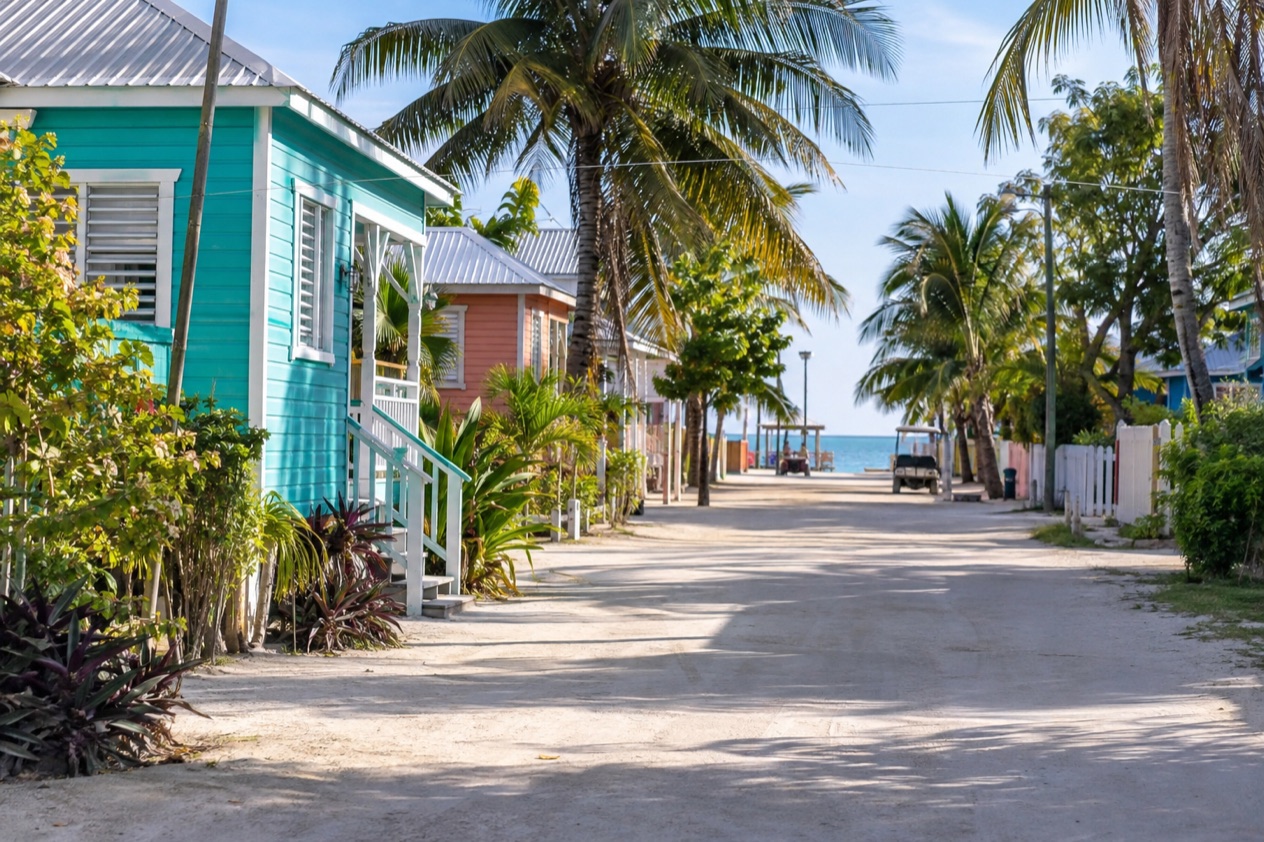
On Caye Caulker, the only traffic sign asks bikers and pedestrians to go slow, and nearly everyone obeys. Sandy lanes run past painted wooden houses, shoes stay in the room, and the lagoon in front of the village glints a pale green. It is a small, barefoot island for snorkelers, backpackers and anyone who wants the Belize reef without much fuss.
Where is Caye Caulker and what is it like?
Caye Caulker is a small island off the coast of Belize, about 20 miles north-northeast of Belize City and a mile west of the Barrier Reef. The island is roughly five miles long, and nearly everything happens in Caye Caulker Village, the one town on it. Depending on the source, the population is put at 2,000 or at around 4,000, and either way it feels like a village where people know each other.
The mood is the whole point. Caye Caulker has been on the backpacker circuit since the 1960s, and the mellow feel is partly owed to a Rastafarian influence: locals remind visitors to go slow and leave their shoes at home. There are no cars here, only golf carts and pedestrians, so the soundtrack is bicycle bells, music drifting from a bar and the slap of water against a dock.
In front of the village, a shallow lagoon meets the Belize Barrier Reef to the east. The water ranges from a few inches to about fourteen feet deep, and the reef there is a dry reef exposed at the surface. On the western side of the island lies the protected bay called La Ensenada, where, by one theory, boats were once caulked, which may be how the island got its name.
The village once lived mainly from lobster fishing, and seafood is still the thing to eat here, for anyone who loves it. Hotels have multiplied and now cater to a wider range of visitors than the old backpackers, with more than fifty on the island plus restaurants and shops.
If you want nightclubs, big resorts or a long list of paved roads, this is not your island. If you want a sandy-lane town where the reef is close, it is.
What is there to do in Caye Caulker?
The reasons to come are mostly in the water, and the island has the advantage of a reef that is easy to reach. What sets it apart from its neighbors is the pace: it is described as entirely free of hustle and bustle, with sandy beaches and clear water.
Snorkeling and diving the Marine Reserve
The Caye Caulker Marine Reserve is described as a diver and snorkeler’s paradise, and it covers more than 9,000 acres of the Mesoamerican Barrier Reef System. It was established in April 1998 and holds five habitats, among them mangroves, lagoon marshlands, sea-grass beds and coral reef. The reef itself is about a mile offshore from the island.
The Belize Barrier Reef shelters 70 hard coral species, 36 soft coral species and 500 species of fish, so even a simple snorkel outing can turn up a lot of life. Pair a reef day with an evening in the village, where the same fish may turn up on your plate.
Hol Chan and Shark Ray Alley
The Hol Chan reserve and Shark Ray Alley are nearby excursions from Caye Caulker and are called not to be missed. They are the classic add-ons for anyone who has settled into the island and wants a change of scene on the water. San Pedro, the larger town on Ambergris Caye, is reached by a ferry of about half an hour, which makes these outings feel like part of a single island-hopping stay rather than a separate trip.
Manatees at Swallow Caye
Manatee tours go to the Swallow Caye Wildlife Sanctuary. Swimming with the manatees is not allowed on these tours, and some days it may be harder to spot them than others, so treat a sighting as a chance and not a promise. It suits travelers who like their wildlife watched from a boat, and it adds a gentle, quiet counterpart to the reef trips.
Slow days and seafood
The fourth reason to come is doing very little. Walk the sandy lanes, rent a bike or take a golf cart, watch the lagoon change color and eat lobster in the village that built its living on it. Evenings are for the small bars and the dock, where the island’s easygoing, Rasta-tinged mood is easiest to feel.
How many days do you need in Caye Caulker?
A long weekend gives you a real taste of Caye Caulker, and a week lets you settle into it. The island is small enough that you will have seen the village within a day, so the time is really spent on the water and on slowing down.
With two or three nights, you can fit in a reef snorkeling outing, an evening or two of seafood in the village and plenty of time wandering the sandy lanes. This is enough if the island is one stop on a wider trip through Belize, and it is how many travelers pair it with the mainland.
With four or five nights, add the manatee tour to Swallow Caye Wildlife Sanctuary, and an outing to Hol Chan and Shark Ray Alley. These spread out the water time and leave room for an unplanned day lying on a dock with a book.
A week or more suits people who like to take a place at its own speed. You can hop to San Pedro by ferry for a change of atmosphere, or look further afield to the atolls of the reef system: Turneffe Atoll, Lighthouse Reef with its Great Blue Hole, and Glover’s Reef. Lighthouse Reef is the most easterly diving area in Belize, and the Great Blue Hole was made famous by Jacques Cousteau in 1970.
Keep in mind that Caye Caulker rewards unhurried stays. If you try to cram it, you lose the very thing that makes it different from its neighbors.
Where to stay in Caye Caulker
Almost all lodging is in or near Caye Caulker Village, since that is where the island’s life is. There are more than fifty hotels, along with restaurants and shops, and the range has grown from the budget rooms of the backpacker years to places catering to a wider variety of visitors.
Backpackers have been coming since the 1960s, and the village still has that easygoing, shoes-off feel.
The island is long and narrow, with the lagoon and reef on the east side and the protected bay of La Ensenada on the west. Which shore you choose shapes your view: the reef side faces the open water and the barrier reef, while the western side looks toward the bay.
One property rule is worth knowing for families. Iguana Reef Inn does not allow children under 10 years old, so travelers with younger kids should look elsewhere on the island.
Because the whole island is small, no choice of lodging puts you far from the water. The decision is mostly about atmosphere: a lively spot near the village center, or a quieter stretch further along the lanes.
How do you get to Caye Caulker and get around?
Caye Caulker is reached by high-speed water taxi or by small plane. The San Pedro Belize Express ferry from Belize City takes approximately 45 minutes, and the ferry from San Pedro takes about 30 minutes. Both make the island easy to pair with its neighbors.
By air, Tropic Air serves the island with flights using the airport code CUK, and the flight takes 15 minutes. The island’s own airport, Caye Caulker Airport, sits on the same small stretch of land as the village.
Once you arrive, you get around on foot or by bike. There are no cars on Caye Caulker, only golf carts and pedestrians, and the only local traffic sign tells bikers and pedestrians to go slow. That sets the pace for everything.
The island is about five miles long, and the village sits along the sandy lanes where most things are close together. A stay here is organized around the water, so boats do the rest of the work, whether to the reef, to Swallow Caye or on to San Pedro. The village council cares for public properties and sets its own local rules for vehicles, which fits an island where golf carts and pedestrians are all that is allowed.
When is the best time to visit Caye Caulker?
The winter months, around January, are a pleasant choice for travelers who like warm days without the heaviest heat. In Belize City, January highs average in the low 80s with lows in the upper 60s, and the sea near Caye Caulker is in the low 80s. About ten days in the month bring some rain.
July is hotter and the sea is warmer still, in the mid-80s. In Belize City, highs average near 90 and the lows stay in the upper 70s, with rain on about twelve days, so it suits travelers who love heat and warm water more than cool breezes.
The Atlantic hurricane season runs from June 1 to November 30, so July falls inside it and January well outside it. Anyone planning a summer or fall stay should keep that calendar in mind when choosing dates.
Good to know before you go
The U.S. State Department rates Belize Level 2, “Exercise increased caution”, because of crime, and says the south side of Belize City has historically had the highest concentration of violent crime.
Caye Caulker moves at a slower pace than the mainland, and the local custom is to go slow and leave your shoes at home. The Caye Caulker Marine Reserve and its rules govern the water around the island, so follow what the reserve and your boat crew ask of you. Manatee tours do not allow swimming with the animals. The island runs on its village council, which looks after public property in the village, so expect a small-town rather than a resort-style setup.
Sources
- Wikipedia, Caye Caulker (https://en.wikipedia.org/wiki/Caye_Caulker), checked October 11, 2026
- Wikivoyage, Caye Caulker (https://en.wikivoyage.org/wiki/Caye_Caulker), checked October 11, 2026
- Belize Fisheries Department, Caye Caulker Marine Reserve (https://fisheries.gov.bz/ccmr/), checked October 11, 2026
- Caye Caulker Village Council, Traffic (https://www.cayecaulkervillagecouncil.org/traffic), checked October 11, 2026
- Caye Caulker Village Council, About (https://www.cayecaulkervillagecouncil.org/about), checked October 11, 2026
- San Pedro Belize Express Water Taxi, Caye Caulker (https://belizewatertaxi.com/destinations/caye-caulker/), checked October 11, 2026
- Tropic Air, Caye Caulker (https://www.tropicair.com/caye-caulker-cuk/), checked October 11, 2026
- Maya Island Air, Caye Caulker flights (https://www.mayaislandair.com/belize-flights-caye-caulker/), checked October 11, 2026
- Wikipedia, Belize Barrier Reef (https://en.wikipedia.org/wiki/Belize_Barrier_Reef), checked October 11, 2026
- Wikipedia, Climate of Belize (https://en.wikipedia.org/wiki/Climate_of_Belize), checked October 11, 2026
- Open-Meteo Marine API, average 2015-2024, checked October 11, 2026
- NOAA NCEI, GHCN-Daily station BHM00078583 (Philip S. W. Goldson International Airport, Belize City), normals 1991-2020 computed from the daily record (https://www.ncei.noaa.gov/access/services/data/v1?dataset=daily-summaries&stations=BHM00078583), checked October 11, 2026
- U.S. Department of State, Belize Travel Advisory, Level 2, March 11, 2026 (https://travel.state.gov/), checked October 11, 2026
- NOAA National Hurricane Center, Climatology (https://www.nhc.noaa.gov/climo/), checked October 11, 2026
All our pages
When to go
- Best Time to Visit Caye Caulker: Dry Season, Sea Temperatures, Hurricane Months and Festivals
- Caye Caulker in January: Weather, Sea, Things to Do and a Two-Day Plan
- Caye Caulker in February: Warm Sea, Reef Outings and an Unhurried Island
- Caye Caulker in March: Weather, Sea, Things to Do and a Two-Day Plan
- Caye Caulker in April: Warm Sea, Long Days and Slow Island Life
- Caye Caulker in May: Sea, Reef Outings and a Slow Island Itinerary
- Caye Caulker in June: Warm Sea, Reef Outings and the End of Lobster Closed Season
- Caye Caulker in July: Warm Sea, Reef Outings, Hurricane Season and a Two-Day Plan
- Caye Caulker in August: Warm Sea, Marine Reserve and Slow Island Days
- Caye Caulker in September: Weather, Swimming, Independence Celebrations and a Two-Day Plan
- Caye Caulker in October: Warm Sea, Reef Days and Island Pace
- Caye Caulker in November: Garifuna Settlement Day, Warm Sea and Island Life
- Caye Caulker in December: Weather, Sea and What to Do on the Island
Things to do
- Things to Do in Caye Caulker: The Split, Reef Snorkeling, Manatees and Fresh Lobster
- Day Trips from Caye Caulker: Great Blue Hole, Half Moon Caye, San Pedro and the Reef
- 3 Days in Caye Caulker: Reef, Manatees and Village Life
Where to stay
- Where to Stay in Caye Caulker: Village Center, the Split, the North Side and the Lagoon Shore
- Caye Caulker Village, Caye Caulker: Sand Streets, Reef Access and Where to Eat and Stay