
Late in the afternoon, the sand streets of Caye Caulker Village fill with bicycles, barefoot walkers and the smell of fish on a grill, while the Caribbean turns pink beyond the docks. Nobody seems to be in a hurry. This is the only town on the island, a small, low-lying village where the reef sits close to shore and the days follow the water.
What is Caye Caulker Village like?
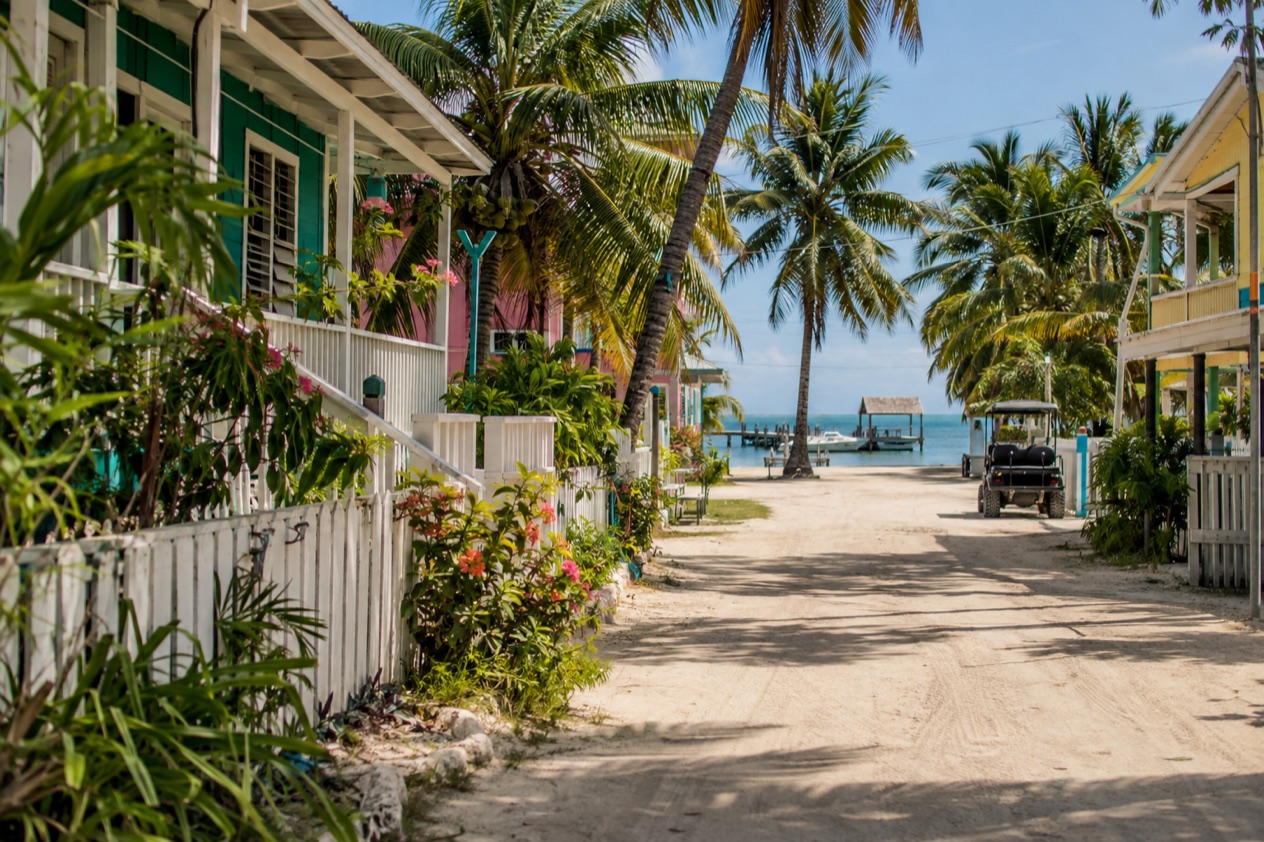
Caye Caulker Village is a small, easygoing island town built on sand, and it is the place nearly everything on the caye happens. Streets are unpaved, storefronts are painted in bright Caribbean colors, and the pace is set by the sea rather than by any clock. The island itself is a narrow strip of land, and the village sits right along its shore.
The name has a story. One theory says boats were caulked in the protected bay on the western side of the island, La Ensenada, and the word stuck. Today the village runs through a village council, a body that has existed in some form for decades and looks after public property, as in every village in Belize.
It has grown into a favorite of backpackers and other travelers, with a good number of hotels, restaurants and shops packed into a very small area. In front of the village, a shallow lagoon stretches toward the barrier reef, which is why the place feels so tied to the water. Windsurfers like the area too.
It suits people who want a relaxed base with the sea at the end of every street, travelers who like to wander on foot or by bicycle, and anyone who would rather talk to the person at the next table than be left alone in a large resort. Those looking for nightlife on a grand scale or a long list of formal attractions may find it quiet.
Things to do in Caye Caulker Village
The waterfront and the lagoon
The village faces a shallow lagoon whose depth runs from a few inches to well over a dozen feet, and the whole shoreline is a place for walking, sitting on a dock and watching the color of the water change. Boats come and go from the piers, and people trail along with towels and snorkel gear.
Go in the early evening, when the light turns gold and the docks are busy with people watching the sky.
The reef and the marine reserve
Just east of the village, the barrier reef runs along the island, and the Caye Caulker Marine Reserve protects a large stretch of it. The reserve takes in mangroves, lagoon marshes, sea-grass beds and coral reef, and its use is divided into preservation, conservation and general use zones. Snorkeling and diving trips are what draw most travelers out on the water.
The reef near the village is a dry reef, exposed at the surface in places, so the scenery is unusual. A boat trip is the way to see it, and the zones are the reason guides move between different spots.
Manatee watching at Swallow Caye
Tours leave the village for Swallow Caye Wildlife Sanctuary, where West Indian manatees live in the north channel of the reserve as seasonal residents. You watch from the boat, because swimming with the manatees is not allowed on these tours.
Some days the animals are harder to spot than others, so treat it as a chance rather than a promise. It suits travelers who like quiet wildlife outings more than fast-paced adventure.
The northern forest reserve
The northern part of the island is set aside as a forest reserve, covering about 100 acres of mostly dense mangrove forest. It is the green, wild counterpart to the village, a reminder that the island is a living coastal ecosystem and not only a row of docks.
You see it as a dark green edge of the island, and it gives the northern shoreline a very different feel from the village streets. Lovers of birds and mangroves will enjoy simply knowing it is there.
Eating and drinking in Caye Caulker Village
Eating in Caye Caulker Village means small, informal places, since the village has a number of restaurants and shops within a very short stretch of sand. The sea sets the menu: fish, lobster when it is in season, shrimp and conch are what Belizean Caribbean kitchens do well, and you find them grilled, fried or simmered in coconut sauce.
Street-side grills fill the air with smoke at dinnertime, and plates often come with rice and beans, coleslaw and fried plantain, a classic Belizean pairing. Fry jacks, the puffy fried dough served at breakfast, are another local staple, often with eggs, beans or cheese on the side.
Drinks follow the same easy rhythm. Fresh fruit juices, cold local beer and rum punch are the usual companions to a long lunch, and many places set tables right on the sand or on a dock so the lagoon is part of the meal. Garifuna and Creole cooking both show up in Belize, and coconut, cassava and spicy peppers are common threads.
A good rhythm for a day is a late breakfast, a simple lunch between swims, and a slow dinner after sunset when the streets come alive. Cafés and small bars fill with travelers swapping stories about the reef, and the mood stays relaxed rather than rowdy. For the best seafood, look for the places where the day’s catch is the main event.
Staying in Caye Caulker Village
Staying in Caye Caulker Village means choosing from a large number of small hotels, since the island has over 50 of them along with guesthouses and rentals. They tend to be low-rise and informal, with a backpacker side to the town and plenty of places aimed at couples and families.
As a base, the village suits travelers who want to walk to the docks, the restaurants and the tour operators without needing any transport. The island is small, only a few miles long, so nearly everything sits close by. Because the village is the island’s only town, the other option is the quieter northern or southern edges, away from the center.
Nights are generally relaxed, with music from a few bars and the sound of the sea rather than traffic. Some properties set their own rules. One inn on the island, Iguana Reef Inn, does not allow children under 10, which is worth knowing if you travel with a family.
The island is low, only about 8 feet at its highest point, and strong storms have covered it with surge in the past, including Hurricane Hattie and Hurricane Keith. The Atlantic hurricane season runs from June 1 to November 30, so visits in those months fall inside it.
Getting to Caye Caulker Village
Getting to Caye Caulker Village is done by high-speed water taxi or by small plane, which lands at Caye Caulker Airport. The island lies about 20 miles north-northeast of Belize City, and the water taxi is the way many travelers cross.
The small plane is the other choice, landing on the island itself. Either way you arrive right at the edge of the village, where the sand streets begin.
Once you are in town, the village is the island’s only settlement, and its streets are made for walking. The barrier reef lies a short way to the east, about a mile from the island, so water excursions begin from the village docks.
Vehicles on the island are regulated by the village council, which handles registration and licensing locally. That is a sign of how small the place is, and a good reason to expect a town of bicycles and feet more than cars.
Good to know before you go
The U.S. State Department rates Belize Level 2, “Exercise increased caution”, because of crime, and says the south side of Belize City has historically had the highest concentration of violent crime.
Caye Caulker Village is a small place, so pack for a beach town: light clothes, reef-friendly habits and patience for a slow pace. The island is low and flat, which means its beauty and its exposure to storms both come from the same sea.
The Atlantic hurricane season runs from June 1 to November 30. The Marine Reserve around the island is protected and divided into zones, so the rules on the water depend on where your boat takes you.
Sources
- Wikipedia, Caye Caulker (https://en.wikipedia.org/wiki/Caye_Caulker), checked October 11, 2026
- Wikivoyage, Caye Caulker (https://en.wikivoyage.org/wiki/Caye_Caulker), checked October 11, 2026
- Caye Caulker Village Council, About (https://www.cayecaulkervillagecouncil.org/about), checked October 11, 2026
- Caye Caulker Village Council, Traffic (https://www.cayecaulkervillagecouncil.org/traffic), checked October 11, 2026
- Belize Fisheries Department, Caye Caulker Marine Reserve (https://fisheries.gov.bz/ccmr/), checked October 11, 2026
- U.S. Department of State, Belize Travel Advisory, Level 2, March 11, 2026 (https://travel.state.gov/), checked October 11, 2026
- NOAA National Hurricane Center, Climatology (https://www.nhc.noaa.gov/climo/), checked October 11, 2026
To plan your stay
- Best Time to Visit Caye Caulker: Dry Season, Sea Temperatures, Hurricane Months and Festivals
- Things to Do in Caye Caulker: The Split, Reef Snorkeling, Manatees and Fresh Lobster
- Caye Caulker from Belize City: Water Taxi, Small Plane and What to Do on Arrival
- Know Before You Go to Caye Caulker: Entry Rules, Money, Water Taxis and Health