
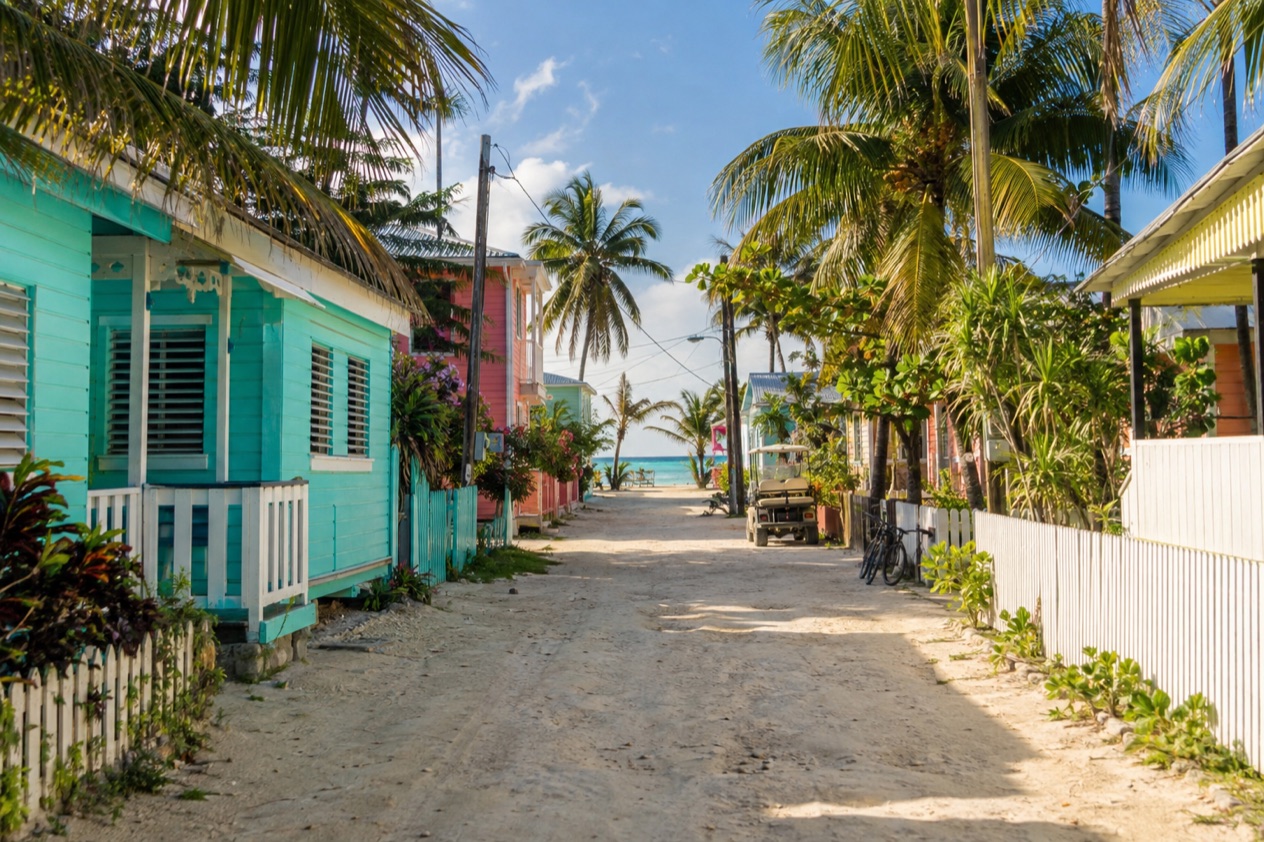
Along the sandy streets of Caye Caulker Village, bicycles glide past barefoot walkers, smoke rises from grill stands cooking the day’s catch, and the only traffic sign on the island asks everyone to go slow. The year here has a clear shape: a long, bright run from late winter into spring, then hot months of heavier rain and hurricane season, then the holiday weeks when the island fills with visitors again. Each stretch changes what you do on this small reef-side island.
When is the best time to visit Caye Caulker?
The best time to visit Caye Caulker is from February through April, with May close behind, when the rainy days are fewest, the sea has warmed and the daylight is lengthening. That window suits almost every kind of trip, though each one weighs the months a little differently.
For the beach and the water, late spring is the pick. The sea warms steadily from March into May and the days stretch long, which gives you more hours on the docks, on the shoreline and out on the reef, which lies a mile off the island. The sand here is narrow and the island is built around its piers, so the pleasure is in jumping off a dock, floating in warm water and watching the light change over the Caribbean.
For sightseeing, think of the island as a base for the reef and the marine reserve. Those outings are best in the drier months, when the sky is more reliably blue and the days are comfortable from morning to dusk. Walking the whole village takes little time, so the rest of your days go to the water, to a slow lunch of grilled fish or fry jacks, and to sunset from the docks near the Split.
If you want quiet and a gentler budget, look at the wet months, from the early summer showers to the fall. You trade sunshine for emptier streets, and you accept the hurricane season that runs through them. January and December sit between the two: pleasant weather, but holiday crowds.
Families should know that March brings spring break, and the island can be loud then, with groups of students and a party mood on the bars along the main street. Parents who want calmer evenings may prefer April or May, or the weeks right after New Year, when the water is still warm and the mood is relaxed.
Caye Caulker weather by month
The sea around Caye Caulker stays warm all year, and the daylight swings by a couple of hours between winter and early summer.
| Month | Sea at Caye Caulker (°F) | Daylight on the 15th (hours and minutes) |
|---|---|---|
| January | 81.3 | 11 h 13 min |
| February | 80.8 | 11 h 37 min |
| March | 81.9 | 12 h 05 min |
| April | 82.7 | 12 h 36 min |
| May | 84.9 | 13 h 01 min |
| June | 86.8 | 13 h 14 min |
| July | 85.7 | 13 h 07 min |
| August | 86.9 | 12 h 45 min |
| September | 87.7 | 12 h 16 min |
| October | 86.5 | 11 h 46 min |
| November | 84.1 | 11 h 20 min |
| December | 82.3 | 11 h 07 min |
In Belize City, highs average about 86°F in March, and the airport there logs only a handful of rainy days that month, while the wet season brings more than twice as many.
Rain does not simply vanish in winter. December and January log about as many rainy days as June, and the difference is in character: winter brings passing showers and the cold fronts known as northers, while summer brings heat and the build-up of the storm season. The driest stretch runs from February through April, and the rain returns as May turns to June.
The sea follows its own calendar. It is coolest in January and February, still warm enough for a swim, then climbs through the spring to its warmest in late summer and early fall. Daylight runs the other way: the longest days arrive around June, the shortest around December, so winter evenings fall earlier and leave more of the night for the island’s open-air restaurants.
What is there to do in Caye Caulker in each season?
The dry months, February to May
Late winter and spring are the months for being on and in the water. Snorkeling the reef is the draw that has kept the island on the backpacker circuit since the 1960s, and the marine reserve, established in April 1998, protects the stretch of the Mesoamerican Barrier Reef just offshore. You may see rays, nurse sharks, turtles and schools of reef fish, though what appears on a given day is never certain.
On land, the pace is bicycle speed. You wander the sand streets between the colorful wooden houses, stop at a bakery for coconut bread, and watch the sunset from the docks at the Split, the channel that divides the island in two. Evenings are for fresh seafood and a rum punch at a beach bar, and the longer days leave room for a late swim before dinner.
Leave for another time any plan built around the cooler, grayer feel of winter fronts. In the dry months you are choosing sun, so save the slower, wetter mood of the island for the off-season.
The hot, wet months, June to November
From June the island turns hotter and greener, and this is the stretch the Atlantic hurricane season covers. The sea is at its warmest and the pace slows further, with fewer visitors on the main street and plenty of time for a long hammock afternoon. Visits then work best when you stay flexible, since rain and storm systems can reshape a day.
This is the season for the island’s local calendar. Lobster season opens in early July and brings the lobster festival, and September fills Belize with national celebrations. If you come in these months, plan around food and local life rather than a perfect run of blue-sky beach days, and keep your bookings adjustable.
The winter holidays and the shoulder months
December and January combine warm sea with a lively island. Christmas lights go up on the guesthouses and bars, and the days are the shortest of the year, so evenings stretch long in the open-air restaurants. Cold fronts, the northers, sometimes pass through, bringing gray, breezy, cooler days that suit a book on a covered porch better than the dock.
November is a shoulder month, still within the hurricane season but past the peak, with the island slowly waking up for the holidays. Late May and early June form the other shoulder, as the dry season gives way to the first heavier rains.
When is Caye Caulker cheapest and least crowded?
The least crowded stretch on Caye Caulker is the wet fall, roughly late September through early November, when the streets thin out and most of the island seems to move at half speed. Rooms tend to be easier to find then, and the docks and shoreline have far more room.
The busiest weeks follow the U.S. calendar and the winter weather up north. Christmas and New Year bring the heaviest traffic, as visitors escape the cold, and Easter week brings more people to the beach, with Belizean families joining the visitors for the long holiday weekend. March, with spring break, is the loud month, when groups of students fill the bars and the main street.
Summer has its own pattern. From about early July to late August, school vacation in neighboring countries sends regional visitors to the coast, so even the hot, wet months have their lively weeks. The days that draw crowds are the ones around holidays and school breaks, and the rest of the wet season passes quietly.
If you want the sun without the crowds, look at late April and May, after Easter and before the summer rains, or the weeks just after New Year. If you want the calmest island, with prices and crowds both softer, the fall is the quietest stretch, as long as you accept the weather risk that comes with it.
Which months should you avoid in Caye Caulker?
The months to think twice about are September and October, which sit in the heart of the Atlantic hurricane season, along with the heavy rains that run from early summer into November. None of this closes the island, but the weather in those months is less predictable than in spring.
The Atlantic hurricane season runs from June 1 to November 30, and its peak falls in the second week of September, with most activity between mid-August and mid-October. An average season brings 14 named storms. If you travel in those months, keep your plans loose and your return flexible.
Heat matters too. In Belize City, highs reach about 90°F in September, and the humid summer months can feel heavy for anyone who wants to walk or bike around the village in the middle of the day. The sea keeps pace, and the water itself is warm.
Sargassum is the other factor, and it is the first disappointment of many beach trips across the Caribbean. This brown algae floats in clumps that can stretch for a mile and gives off a rotten-egg smell when it washes ashore. No beach is guaranteed to be free of it.
Winter has its own wrinkle: northers, the cold fronts that pass through from about December into the early months of the year. They bring a few gray, breezy days and cooler air, which matters for a beach trip but does not close the island, and the sun usually returns.
When can you swim in Caye Caulker?
The sea around Caye Caulker is warm in every month of the year, so the water itself never rules out getting in. The coolest readings come in January and February, and even those are the warm side of comfortable, with no real chill.
From March the water warms steadily, and by late spring it is the temperature of a bath. It stays at that level through the summer and peaks in September, when the warmest water of the year coincides with the heaviest rains. The sea cools only a little through the fall and early winter.
Beaches change with the seasons. Caye Caulker’s shoreline is narrow, and the island’s social life centers on docks and platforms rather than wide stretches of sand, so most visitors find their swimming spots at the piers and shoreline of the village. Sargassum can alter a beach day in some months, and storm weather can reshape the shoreline.
The reef lies about a mile offshore, and because the sea stays warm, a visit to the reef works in any month. The best days are those with the clearest skies, which cluster in the drier stretch from late winter into spring.
Festivals and events in Caye Caulker through the year
Winter holidays and Easter week
Christmas and New Year are the big moments of the winter. Strings of lights go up along the sand streets, restaurants set out special menus, and the island fills with visitors who have come to swap the cold for the Caribbean. December 25 is a public holiday across Belize, and the days around it feel unhurried.
Easter week arrives in March or April, since Holy Week moves every year. Good Friday and the days around it are holidays across Belize, and Belizean families come to the coast for the long weekend, so beach life on the island turns festive, with picnics and music on the shoreline.
Lobster season and the September celebrations
Lobster season opens in early July, and Caye Caulker marks it with its lobster festival, a weekend of grilled, barbecued and stewed lobster, live music and games along the waterfront. It is the island’s own food festival, and the dates move a little from one year to the next, so look for it around the opening of the season.
September is the month of national celebrations in Belize. St. George’s Caye Day comes first, followed by Independence Day on September 21, with parades, music, school bands and the national colors of blue and red hung from houses and shops. The mood on the island is festive even in the middle of hurricane season.
The reef through the year
The reef is the island’s constant, and the marine reserve around it is what draws many people here. The reserve covers more than 9,000 acres of the barrier reef, and snorkelers may see rays, nurse sharks, turtles and reef fish. What shows up on any given day is a matter of chance, and the clearest water usually comes with the clearest skies.
There is no single peak moment, so treat the reef as a year-round reason to come. Plan your swims and boat trips for the calmer, drier months if you want the best visibility, and treat the wet season as a time for slower days on the island itself.
Sources
- Open-Meteo Marine API, average 2015-2024, checked October 11, 2026
- sunrise-sunset.org, sunrise and sunset calculated for the 15th of the month, checked October 11, 2026
- NOAA NCEI, GHCN-Daily station BHM00078583 (Philip S. W. Goldson International Airport, Belize City), normals 1991-2020 computed from the daily record (https://www.ncei.noaa.gov/access/services/data/v1?dataset=daily-summaries&stations=BHM00078583), checked October 11, 2026
- Wikipedia, Caye Caulker (https://en.wikipedia.org/wiki/Caye_Caulker), checked October 11, 2026
- Wikivoyage, Caye Caulker (https://en.wikivoyage.org/wiki/Caye_Caulker), checked October 11, 2026
- Belize Fisheries Department, Caye Caulker Marine Reserve (https://fisheries.gov.bz/ccmr/), checked October 11, 2026
- Caye Caulker Village Council, Traffic (https://www.cayecaulkervillagecouncil.org/traffic), checked October 11, 2026
- Caye Caulker Village Council, About (https://www.cayecaulkervillagecouncil.org/about), checked October 11, 2026
- San Pedro Belize Express Water Taxi, Caye Caulker (https://belizewatertaxi.com/destinations/caye-caulker/), checked October 11, 2026
- Tropic Air, Caye Caulker (https://www.tropicair.com/caye-caulker-cuk/), checked October 11, 2026
- Maya Island Air, Caye Caulker flights (https://www.mayaislandair.com/belize-flights-caye-caulker/), checked October 11, 2026
- Wikipedia, Belize Barrier Reef (https://en.wikipedia.org/wiki/Belize_Barrier_Reef), checked October 11, 2026
- Wikipedia, Climate of Belize (https://en.wikipedia.org/wiki/Climate_of_Belize), checked October 11, 2026
- NOAA National Hurricane Center, Climatology (https://www.nhc.noaa.gov/climo/), checked October 11, 2026
- Belize Tourism Board, Sargassum resource (https://www.belizetourismboard.org/tourism-resources/sargassum-resource/), checked October 11, 2026
- U.S. Department of State, Belize Travel Advisory, Level 2, March 11, 2026 (https://travel.state.gov/), checked October 11, 2026
To plan your stay
- Things to Do in Caye Caulker: The Split, Reef Snorkeling, Manatees and Fresh Lobster
- Where to Stay in Caye Caulker: Village Center, the Split, the North Side and the Lagoon Shore
- Caye Caulker from Belize City: Water Taxi, Small Plane and What to Do on Arrival
- Know Before You Go to Caye Caulker: Entry Rules, Money, Water Taxis and Health