
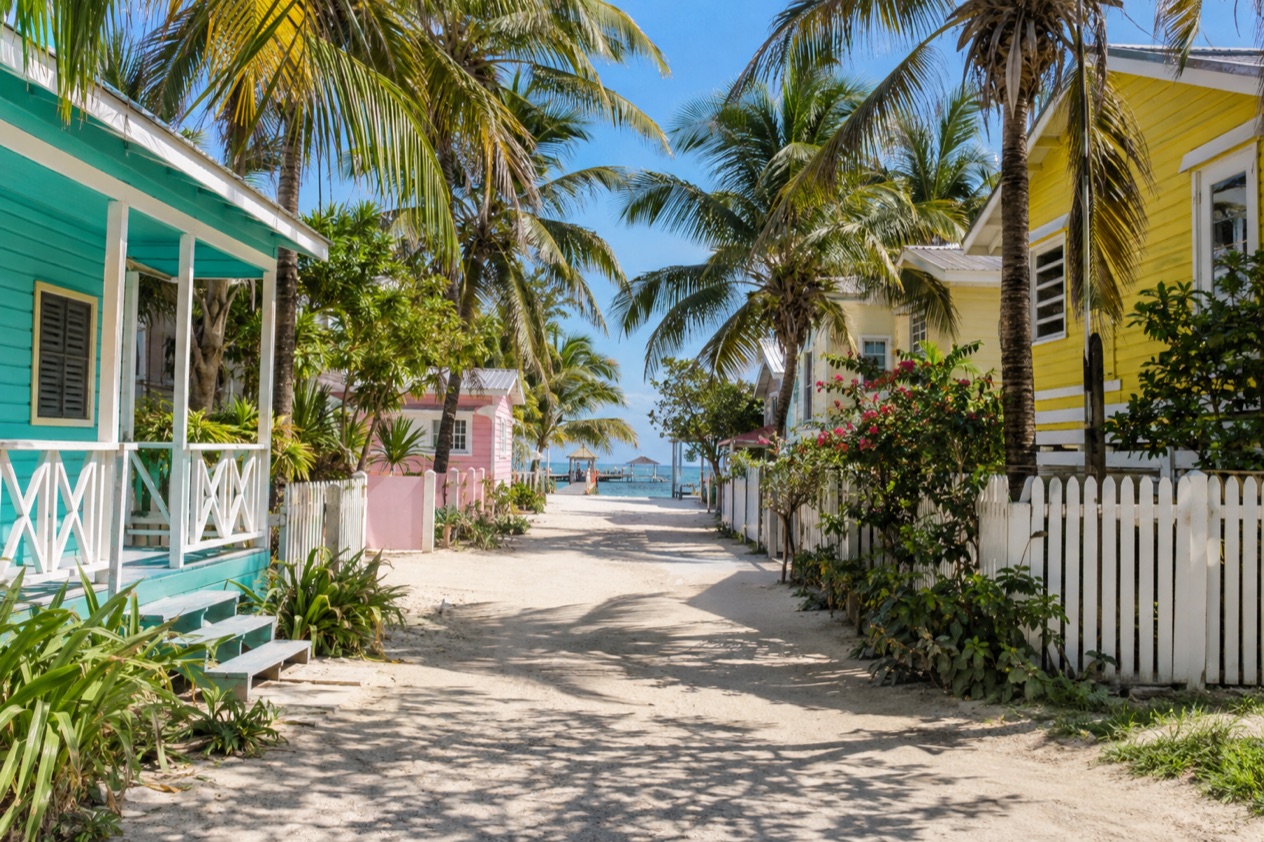
In March, Caye Caulker wakes to the sound of bicycle bells and flip-flops on sandy streets, and the smell of fry jacks and coffee drifting from open kitchens near the Split. Days are long and bright, the water is warm, and the island keeps its slow pace, with the one local traffic sign asking bikers and pedestrians to go slow. It is a good month for reef outings, lazy afternoons on the dock and dinners of grilled fish and lobster-style sides under the stars.
What is the weather like in Caye Caulker in March?
March is warm, bright and mostly dry, with a sea that is already pleasant and days that stretch noticeably longer than in winter.
| Month | Sea at Caye Caulker (°F) | Daylight on the 15th (hours and minutes) |
|---|---|---|
| February | 80.8 | 11 h 37 min |
| March | 81.9 | 12 h 05 min |
| April | 82.7 | 12 h 36 min |
In Belize City, highs average about 86°F in March, and rain falls on only a handful of days, so a trip here is rarely rearranged around the sky. On a small island with almost no shade on the sandy lanes, that means sunscreen and a hat are as important as an umbrella, and an easy way to plan is to put the active things in the morning and leave the hottest hours for the water or a hammock.
The light is the quiet star of the month. With a little over twelve hours of daylight, mornings are bright enough for an early walk to the northern end of the island, and the evening glow lingers on the western dock, where people gather with a cold drink to watch the sun drop behind the water. Nights are comfortable for eating outside.
The sea in March sits in the low 80s, which feels refreshing rather than cold when you step off the dock. Pack for sun first and a passing shower second, and expect evenings that call for nothing more than a light layer.
Can you swim in Caye Caulker in March?
The sea is warm enough for a long dip in March, with water near 82°F that most people find comfortable without a wetsuit for a casual snorkel.
The Caye Caulker Marine and Forest Reserve, established in April 1998, covers more than 9,000 acres of the Mesoamerican Barrier Reef System, and it is the protected stretch of reef and water that surrounds the island. Snorkeling and diving outings here head out toward the reef, which sits close to shore, and the island is known for an easily accessible barrier reef.
Farther afield, the Belize Barrier Reef also includes three atolls: Turneffe Atoll, Glover’s Reef and Lighthouse Reef. Lighthouse Reef is the most easterly diving area in Belize and is home to the Great Blue Hole, made famous by Jacques Cousteau in 1970. Whale sharks gather at Gladden Spit, in the marine reserve that protects it and the Silk Cayes near Placencia, and in Belize it is illegal to take or kill whale sharks or nurse sharks.
What to do in Caye Caulker in March
The big date of the month is March 9, National Heroes and Benefactors Day, originally called Baron Bliss Day to honor a wealthy Englishman who left his fortune to the former British Honduras. It is a national holiday, and on the island it tends to be felt as a long, easygoing day when people head to the water and the dock.
Beyond that, March is simply a month for doing what Caye Caulker does best: moving slowly. The island is five miles long, sandy and free of hustle and bustle, and it has been on the backpacker circuit since the 1960s. Today a growing number of hotels cater to a wider variety of visitors, but the feel is still barefoot, with colorful wooden houses, hand-painted signs and bikes leaning on every fence.
On and around the reef
The reef is the reason most people come, and March’s warm water makes time in it pleasant. Snorkel trips head out into the Caye Caulker Marine Reserve, where coral, rays, turtles and schools of reef fish are the usual sights, and sea life is the draw whether you are in a mask for the first time or the hundredth.
Dive trips can also reach the atolls and the Great Blue Hole on Lighthouse Reef, which is the most easterly diving area in Belize. Those are bigger outings than a morning snorkel, so decide before you arrive whether you want the near reef or a day on the far atolls.
Walking, cycling and the island’s rhythm
The island is best seen slowly. Walk the main sandy streets, which run past small restaurants, rum shops, craft stalls and guesthouses, then wander to the quieter edges where the houses thin out and the water is just beyond the trees. A bicycle suits the length of the island, and the island’s own sign asks bikers and pedestrians to go slow.
Time on the docks is part of the day. Sit with a fruit drink in the afternoon, watch pelicans and frigate birds overhead, and let the light turn gold toward evening. Sunset from the western side is the island’s simple nightly show.
Eating and drinking
Food on Caye Caulker follows the sea and the Belizean kitchen. Expect grilled fish, shrimp and lobster-style plates, rice and beans with stewed chicken, fry jacks at breakfast and fresh fruit juices. Small street-side grills and open-air kitchens fill the evening air with smoke and spice, and rum punch is the common drink at sunset.
In a warm month like March, long lunches in the shade and late dinners outside are the natural rhythm. Choose a table where the breeze reaches you and leave the heavy afternoon plans for another day.
Seaweed on the shore
Sargassum is a brown algae that floats in sometimes mile-long clumps and gives off a rotten egg smell when it washes onto a beach. It is part of the Caribbean story since 2011, when the first wave reached the region, and satellite images in 2015 showed it blooming off Brazil and being pushed into the Caribbean by currents. If it reaches the shore, the reef itself is still the main attraction.
A two-day itinerary for Caye Caulker in March
Day 1 is for settling in and the reef. Arrive by ferry from Belize City, about 45 minutes, or from San Pedro, about 30 minutes, or by Tropic Air flight, which takes 15 minutes. After dropping your bags, walk the main street for a late breakfast of fry jacks and coffee, then head out on a snorkel trip into the marine reserve while the morning light is bright.
Spend the hottest part of the day under a palm or in a restaurant with a fan. In the afternoon, rent a bicycle and cruise the sandy lanes slowly, stopping at a craft stall or a juice bar. Sunset arrives after about twelve hours of daylight, so take a drink to the western dock and watch the sky change, then have grilled fish for dinner.
Day 2 is for the island’s edges and a longer outing. Start early with a walk to the quieter end of the island, then decide between more reef time or a day trip toward the atolls and Lighthouse Reef. If the sky turns gray, shift to a long lunch, a hammock and a slow wander through the small shops. End with rum punch, rice and beans, and a final walk on a sandy street.
Is Caye Caulker busy in March?
March brings a steady flow of visitors rather than a rush, and the island keeps its easygoing feel.
Caye Caulker has been a backpacker destination since the 1960s, and a growing number of hotels now serve a wider range of travelers, so the crowd is mixed: backpackers, couples, divers and families. March 9 is a national holiday, and around it Belizeans may also take time on the coast, which can make the island feel livelier.
As a habit, book rooms earlier when your dates touch a holiday weekend and a little later when you are traveling in a quiet stretch. The same goes for dive and snorkel outings you care about, such as a trip to Lighthouse Reef, where choosing your day first and the rest around it keeps the plan simple. Restaurants on a small island are happiest when you turn up at ordinary hours and leave a long dinner for when you are ready to sit.
What to pack for Caye Caulker in March
Pack light, since the days are warm and the island is casual, and think about sun and water first.
- Reef-safe sunscreen and a hat, because sandy streets offer little shade.
- A swimsuit and a rash guard for repeated time in the water.
- Sandals, since most of the island is sand underfoot.
- A light layer for evenings on the dock.
- A small rain jacket for a passing shower.
- A waterproof bag for boat trips to the reef.
Good to know before you go
The U.S. State Department rates Belize Level 2, “Exercise increased caution”, because of crime, and says the south side of Belize City has historically had the highest concentration of violent crime.
March falls outside the Atlantic hurricane season, which runs from June 1 to November 30. The island is five miles long, and bikes and your own feet cover it, while boats and short flights link it to the mainland. Tropic Air serves the island under the code CUK, and ferries run from Belize City and San Pedro.
U.S. citizens need a passport valid for the length of their stay, an onward or return ticket and enough funds for the whole trip. Tourists staying less than 30 days do not need a visa, and no special immunizations are required.
Caye Caulker in March vs February and April
Moving earlier to February brings slightly cooler water and shorter days, with a little more rain in Belize City. The island itself looks the same, but the sea is a degree or so cooler and the evening light fades sooner, so dinners start under a darker sky.
Moving later to April brings the warmest water of the three months and the longest days, with highs in Belize City climbing toward the high 80s. Afternoons are hotter and the reef feels even more inviting, though shade matters more on the sandy streets.
If you want the sweetest balance, March sits in the middle: warm sea, bright days and the March 9 holiday. Travelers who prefer a gentler heat might lean earlier, while those who want the warmest water and the most light may choose April.
Is March a good time to visit Caye Caulker?
Yes, March suits travelers who want warm water, bright days and a relaxed island with the reef at its doorstep.
It is a good fit for snorkelers, divers, couples and anyone who likes to move slowly, eat outdoors and watch sunsets from a dock. Those who want cooler air or a busy nightlife scene may prefer another time, since the island’s charm lies in its quiet.
On arrival, drop your bags, walk the main street and book your reef outing first, then let the rest of the days fall into place. March here is about warm water, a national holiday for Baron Bliss and a sandy island where the only sign asks you to go slow.
Sources
- Open-Meteo Marine API, average 2015-2024, checked October 11, 2026
- sunrise-sunset.org, sunrise and sunset calculated for the 15th of the month, checked October 11, 2026
- NOAA NCEI, GHCN-Daily station BHM00078583 (Philip S. W. Goldson International Airport, Belize City), normals 1991-2020 computed from the daily record (https://www.ncei.noaa.gov/access/services/data/v1?dataset=daily-summaries&stations=BHM00078583), checked October 11, 2026
- Wikipedia, Public holidays in Belize (https://en.wikipedia.org/wiki/Public_holidays_in_Belize), checked October 11, 2026
- Belize Tourism Board, Sargassum resource (https://www.belizetourismboard.org/tourism-resources/sargassum-resource/), checked October 11, 2026
- Belize Fisheries Department, Gladden Spit and Silk Cayes Marine Reserve (https://fisheries.gov.bz/gsscmr/), checked October 11, 2026
- Belize Fisheries Department, Regulations (https://fisheries.gov.bz/regulations/), checked October 11, 2026
- San Pedro Belize Express Water Taxi, Caye Caulker (https://belizewatertaxi.com/destinations/caye-caulker/), checked October 11, 2026
- Tropic Air, Caye Caulker (https://www.tropicair.com/caye-caulker-cuk/), checked October 11, 2026
- Maya Island Air, Caye Caulker flights (https://www.mayaislandair.com/belize-flights-caye-caulker/), checked October 11, 2026
- Wikipedia, Belize Barrier Reef (https://en.wikipedia.org/wiki/Belize_Barrier_Reef), checked October 11, 2026
- Belize Fisheries Department, Caye Caulker Marine Reserve (https://fisheries.gov.bz/ccmr/), checked October 11, 2026
- Wikipedia, Climate of Belize (https://en.wikipedia.org/wiki/Climate_of_Belize), checked October 11, 2026
- U.S. Department of State, Belize Travel Information, Entry and exit requirements (https://travel.state.gov/), checked October 11, 2026
- U.S. Department of State, Belize Travel Advisory, Level 2, March 11, 2026 (https://travel.state.gov/), checked October 11, 2026
- NOAA National Hurricane Center, Climatology (https://www.nhc.noaa.gov/climo/), checked October 11, 2026
To plan your stay
- Things to Do in Caye Caulker: The Split, Reef Snorkeling, Manatees and Fresh Lobster
- Where to Stay in Caye Caulker: Village Center, the Split, the North Side and the Lagoon Shore
- Caye Caulker from Belize City: Water Taxi, Small Plane and What to Do on Arrival
- Know Before You Go to Caye Caulker: Entry Rules, Money, Water Taxis and Health