
Early in the day, the boats tied along the San Pedro shoreline start to rock as captains load snorkel gear, coolers and sunscreen, and the sand streets fill with the hum of golf carts and bicycles. Out past the pier the reef line shows as a pale seam on the Caribbean.
It suits snorkelers, divers and anyone who wants a sandy-street vacation by the sea.
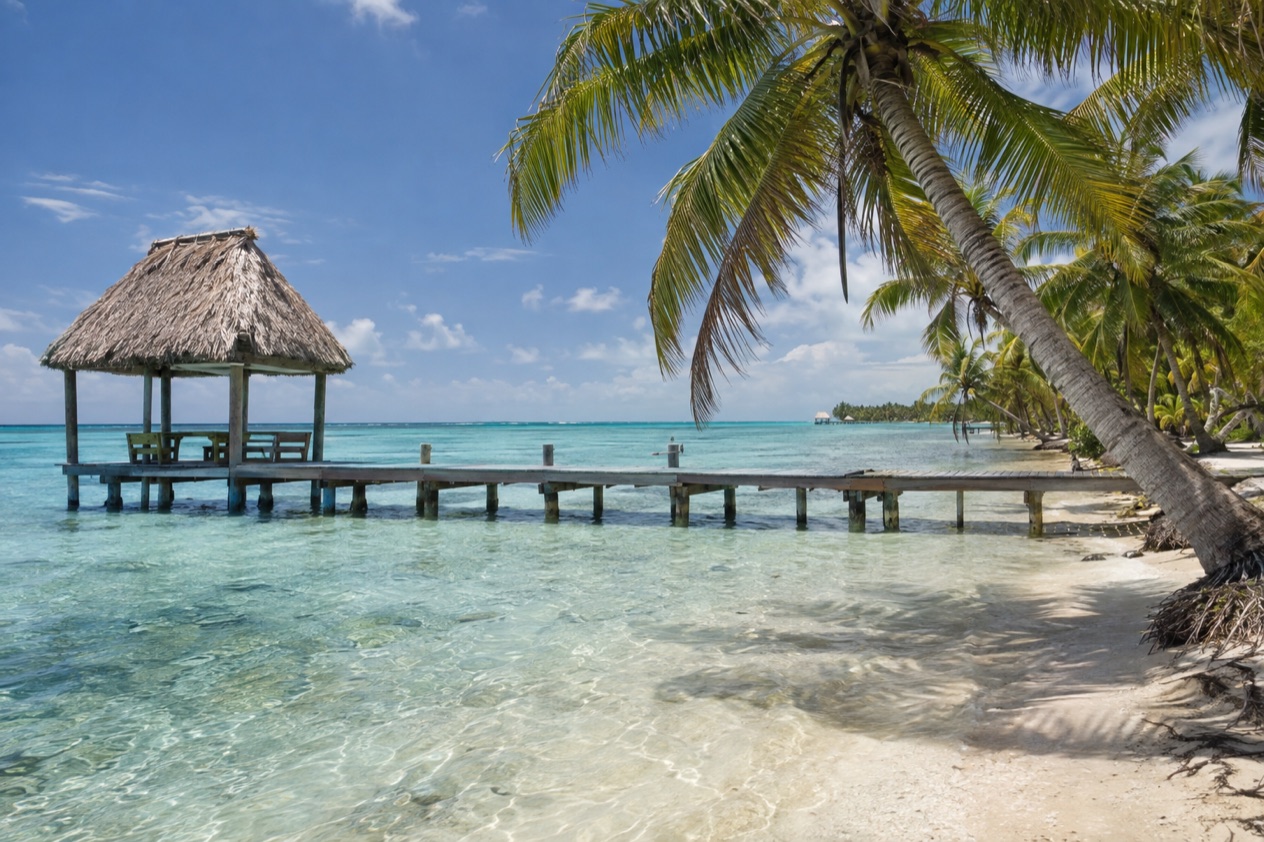
Where is Ambergris Caye and San Pedro and what is it like?
Ambergris Caye is the largest of the several hundred cayes in the northernmost waters of Belize, and San Pedro is the town on its southern part. The island lies at the southern tip of the Yucatán Peninsula, and its closest point on the mainland belongs to the Corozal District, even though the caye itself is administered as part of the Belize District. A long, thin strip of land, it runs about 25 miles from north to south and is only about a mile wide.
That shape explains the feel of the place. The Caribbean is on one side, the calmer lagoon and mangroves are on the other, and nearly everything happens along the shoreline. San Pedro grew from a fishing settlement founded in the middle of the 19th century by families who migrated during the Caste War of Yucatán.
It was granted township status on November 27, 1984. Fishing boats still share the water with dive boats, and you can see that mix of old and new in the town’s docks and in the casual way people greet each other in the street.
What draws people is the Belize Barrier Reef, the second largest in the world after Australia’s Great Barrier Reef. It runs close enough to the beaches that the island has become a base for snorkeling and diving, and the mood in town follows the water. Days start with boats heading out, and evenings drift to beach bars, seafood grills and docks where people watch the light fade over the lagoon.
The pace is slow and informal, with bare feet, sandy streets and conversation in English, Spanish and Kriol. San Pedro suits travelers who want the sea on their doorstep and a choice of places to eat after a day outdoors.
It is less suited to anyone looking for hiking, ruins or a big-city nightlife scene, since this is an island of water, sand and mangrove. The mainland offers rainforest and Maya sites, and the cayes are for the reef.
The island also reaches a long way beyond the town. To the north lies Bacalar Chico National Park and Marine Reserve, and to the south the protected waters of Hol Chan. Between the two, the town is the island’s one real center, and almost every trip begins at its docks.
What is there to do in Ambergris Caye and San Pedro?
Most of what you do here is built around the water, with a few quieter, drier options when you want a break from salt and sun. What sets this island apart from its neighbors is the number of protected reserves within reach of a single town, from marine parks in the south to a UNESCO-listed reserve in the north.
Hol Chan Marine Reserve and Shark Ray Alley
Hol Chan Marine Reserve lies about four miles south of San Pedro. Its name is Maya for “little channel,” after the break in the reef where fish stream through. It was established in July 1987 as the first marine protected area in Belize and is described as a snorkeler’s dream, alive with schools of fish. Its shallow waters are said to suit novice divers as well as snorkelers.
Shark Ray Alley was added to the reserve in 1999 to protect the sharks and rays that gather at a feeding point. Here visitors get close to friendly nurse sharks and stingrays, in water typically only about eight feet deep. It is described as a place for snorkeling and swimming for the entire family. A tip: the encounter is about watching, so bring a waterproof camera or a mask with a good seal.
Bacalar Chico National Park and Marine Reserve
At the northern end of the island, Bacalar Chico reaches from Chetumal Bay in the west to the Caribbean in the east. It was designated in 1996 and is one of the sites that make up the Belize Barrier Reef System UNESCO World Heritage Site. The park mixes a land portion of forest and lagoon with an adjacent marine reserve, and it is described as an adventurer’s paradise.
It suits travelers who want to see something of the island that has little to do with beach bars: mangroves, quiet water and the feeling of the caye’s wilder edge. It is a good counterweight if the first days were spent among docks and crowds of boats, and it gives a sense of what the whole island looked like before the town grew.
Snorkeling and diving on the barrier reef
The reef is a boat ride from town, 20 minutes by the usual account, and it is the reason most people come. It holds 70 hard coral species, 36 soft coral species and some 500 species of fish, along with hundreds of invertebrates. A day on the reef might mean drifting over coral heads, watching schools of fish pass or dropping down a wall on a dive.
The dive reaches stalagmite formations 130 to 150 feet down. It belongs to the wider reef system, which also includes Turneffe Atoll and Glover’s Reef.
San Pedro town and the Ambergris Museum
San Pedro has become one of the most popular tourist destinations in Belize, and its main streets are lined with restaurants, small shops, dive operators and bars facing the sea. The Ambergris Museum is in town, and a visit helps tell the story of the fishing families who made the island home long before the first dive shop opened.
Evenings are for walking the shoreline, picking a seafood place with a sea view and listening to the music that drifts from the bars. Fresh fish, lobster when it is in season and rice and beans with stewed chicken are the local staples to look for on menus. After dark, the docks are a pleasant place to sit with a cold drink and watch the lights of the boats.
How many days do you need in Ambergris Caye and San Pedro?
A long weekend gives you the essentials, and a week lets you see the island properly. The first day usually goes to settling into town, walking the shore and choosing a dock for sunset. With two or three days you can fit in a boat trip to Hol Chan and Shark Ray Alley and a slower day on the sand, which is the classic first taste of the caye.
With four or five days the pace relaxes and the choices widen. A day at Bacalar Chico shows the northern, wilder end of the island, while a day of reef diving or snorkeling deepens what you saw on the first outing. Evenings can go to the town’s restaurants, with a morning to spare for the Ambergris Museum. That balance of sea days and a quiet day ashore works well for couples and families alike.
A week suits divers and anyone who wants to leave the schedule loose. It leaves room to repeat a favorite snorkeling spot, to take the ferry from Caye Caulker for a different island day, or to plan a dive on the wider reef system, where Turneffe Atoll, Glover’s Reef and Lighthouse Reef lie out beyond the barrier reef. The Great Blue Hole is the headline dive for those who come with certification and a free day.
Travelers who add mainland time, such as the Maya sites or the forests of the Cayo District, will want to count those days separately. The island rewards slowness, and a week here feels like a vacation rather than a checklist.
Where to stay in Ambergris Caye and San Pedro
The simplest base is San Pedro town on the southern part of the island, with restaurants, dive operators, shops and the water taxi terminal within reach on foot. Staying in town suits travelers who want to step out of the room and into the evening, and who like having docks, bars and the sea close at hand. It is the natural choice for a first visit and for anyone arriving without a firm plan.
Resorts and lodges also line the island’s shore away from the center, and the helicopter operator that serves the local airstrip also serves various resorts. These properties tend to appeal to couples, divers and families who want a self-contained stay with the reef close by.
To the south, the area toward Hol Chan Marine Reserve puts you closer to the marine park and its mangrove-lined shore. To the north, the island turns wilder toward Bacalar Chico, and a stay there suits travelers who want nature over nightlife. In every case, the island’s shape means the sea is never far from your door.
The right base comes down to the kind of vacation you want. If your days are mostly boats, snorkeling and dinners out, stay in or near town.
If you want calm with a beach and a pool, look to a resort a little farther out along the shore. Since the island is long and narrow, the choice is really about how far you want to be from the center, not about any radical difference in the landscape.
How do you get to Ambergris Caye and San Pedro and get around?
Most visitors arrive by air or by boat from Belize City. The island has a small airstrip served by Tropic Air and Maya Island Air, and the flight from Belize City takes about 20 minutes. Astrum Helicopters also serves the local airstrip and various resorts, so a helicopter transfer is another way in.
By water, numerous fast sea ferries connect Belize City with the island. The SPBE ferry from Belize City to San Pedro takes approximately 1 hour 30 minutes. The ferry ride from Caye Caulker to San Pedro takes 30 minutes, which makes the two islands easy to pair in one trip. It is also possible to reach Ambergris Caye by ferry from Chetumal in Mexico.
The Saca Chispas Water Taxi Terminal in San Pedro Town is operated by the Belize Border Management Agency. It has six berths for small water taxis, tour boats or marine tenders, and it is used for cross border passenger traffic between San Pedro and Chetumal, Quintana Roo, in Mexico. For most arrivals by sea, this terminal is where the island begins.
Once you are on the island, the compact layout of the town makes the sea and the main streets the center of every plan. Boats leave from the docks for the reef, Hol Chan, Shark Ray Alley and the north, so most outings begin at the water’s edge. Every trip beyond the town, whether to the marine reserve or to the wilder north, is a matter of boat or road along the long, narrow island.
When is the best time to visit Ambergris Caye and San Pedro?
The months from December through May are the best bet for a first visit, because they fall outside the official Atlantic hurricane season, which runs from June 1 to November 30. January shows the pattern well: in Belize City, highs average in the low 80s and lows in the upper 60s, with about five inches of rain across ten wet days. The sea near San Pedro averages 81.4°F that month, comfortable for time on the reef.
July sits inside the hurricane season and brings a warmer sea, 85.7°F near San Pedro. In Belize City, highs average close to 90°F and lows in the upper 70s, with a bit under six inches of rain over nearly twelve days. Travelers who come in summer trade a warmer sea for more rain and the season’s storm risk, and they should keep plans flexible.
The warm sea and long beach days make the island pleasant for much of the year, and the reef is there whatever the month. The best time for you depends on whether you want drier months, a warmer sea or the freedom to travel when it suits your calendar. Whatever you choose, the first weeks of the calendar are the clearest choice for a first trip.
Good to know before you go
The U.S. State Department rates Belize Level 2, “Exercise increased caution”, because of crime, and says the south side of Belize City has historically had the highest concentration of violent crime.
The water in San Pedro is safe to drink, although on the mainland and the smaller islands of Belize it is wiser to use bottled water. Several credit card fraud rings are believed to be active in Belize, particularly in San Pedro, so keep an eye on your statements after the trip. The Atlantic hurricane season runs from June 1 to November 30, so travelers visiting in those months should keep plans flexible and watch the forecast.
Sources
- Wikipedia, Ambergris Caye (https://en.wikipedia.org/wiki/Ambergris_Caye), checked October 11, 2026
- Wikipedia, San Pedro Town (https://en.wikipedia.org/wiki/San_Pedro_Town), checked October 11, 2026
- Wikivoyage, Ambergris Caye (https://en.wikivoyage.org/wiki/Ambergris_Caye), checked October 11, 2026
- Wikivoyage, San Pedro (Belize) (https://en.wikivoyage.org/wiki/San_Pedro_(Belize)), checked October 11, 2026
- Wikipedia, Hol Chan Marine Reserve (https://en.wikipedia.org/wiki/Hol_Chan_Marine_Reserve), checked October 11, 2026
- Belize Fisheries Department, Hol Chan Marine Reserve (https://fisheries.gov.bz/hcmr/), checked October 11, 2026
- Belize Fisheries Department, Bacalar Chico Marine Reserve (https://fisheries.gov.bz/bcmr/), checked October 11, 2026
- Wikipedia, Belize Barrier Reef (https://en.wikipedia.org/wiki/Belize_Barrier_Reef), checked October 11, 2026
- San Pedro Belize Express Water Taxi, San Pedro (https://belizewatertaxi.com/destinations/san-pedro/), checked October 11, 2026
- Tropic Air, San Pedro (https://www.tropicair.com/san-pedro/), checked October 11, 2026
- Maya Island Air, San Pedro flights (https://www.mayaislandair.com/belize-flights-san-pedro/), checked October 11, 2026
- Belize Port Authority, San Pedro terminal (https://portauthority.bz/belize-port-facilities/san-pedro-terminal/), checked October 11, 2026
- Wikipedia, Caye Chapel (https://en.wikipedia.org/wiki/Caye_Chapel), checked October 11, 2026
- Wikipedia, Climate of Belize (https://en.wikipedia.org/wiki/Climate_of_Belize), checked October 11, 2026
- Open-Meteo Marine API, average 2015-2024, checked October 11, 2026
- NOAA NCEI, GHCN-Daily station BHM00078583 (Philip S. W. Goldson International Airport, Belize City), normals 1991-2020 computed from the daily record (https://www.ncei.noaa.gov/access/services/data/v1?dataset=daily-summaries&stations=BHM00078583), checked October 11, 2026
- U.S. Department of State, Belize Travel Information, Safety and security (https://travel.state.gov/), checked October 11, 2026
- U.S. Department of State, Belize Travel Advisory, Level 2, March 11, 2026 (https://travel.state.gov/), checked October 11, 2026
- NOAA National Hurricane Center, Climatology (https://www.nhc.noaa.gov/climo/), checked October 11, 2026
All our pages
When to go
- Best Time to Visit Ambergris Caye and San Pedro: Dry Months, Sea Temperatures, Hurricane Season and Festivals
- Ambergris Caye and San Pedro in January: Weather, Sea, Hol Chan and George Price Day
- Ambergris Caye and San Pedro in February: Weather, the Reef, Local Food and a Two-Day Plan
- Ambergris Caye and San Pedro in March: Warm Sea, Hol Chan and Days on the Water
- Ambergris Caye and San Pedro in April: Warm Sea, Hol Chan Reef and Bacalar Chico
- Ambergris Caye and San Pedro in May: Sea Temperature, Hol Chan and a Two-Day Plan
- Ambergris Caye and San Pedro in June: Warm Water, Reef Outings and the End of Lobster Season
- Ambergris Caye and San Pedro in July: Weather, Sea Temperature, Hol Chan and Lobster Season
- Ambergris Caye and San Pedro in August: Warm Sea, Hol Chan and a Two-Day Plan
- Ambergris Caye and San Pedro in September: Saint George's Caye Day, Independence Day, Sea and What to Do
- Ambergris Caye and San Pedro in October: Weather, Sea Temperature, Hol Chan and Bacalar Chico
- Ambergris Caye and San Pedro in November: Garifuna Settlement Day, Sea Temperature and What to Do
- Ambergris Caye and San Pedro in December: Sea Temperatures, Hol Chan and a Two-Day Plan
Things to do
- Things to Do in Ambergris Caye and San Pedro: Reef Snorkeling, Hol Chan, Bacalar Chico and Island Dining
- Day Trips from Ambergris Caye and San Pedro: Hol Chan, Bacalar Chico, the Great Blue Hole and Chetumal
- 3 Days in Ambergris Caye and San Pedro: Hol Chan, Shark Ray Alley, Bacalar Chico and Evenings in Town
Where to stay
- Where to Stay in Ambergris Caye and San Pedro: Beach Resorts, Town Stays and a Private Island
- San Pedro Airport to Your Hotel: Flights, the Ferry and the Water Taxi to Ambergris Caye