
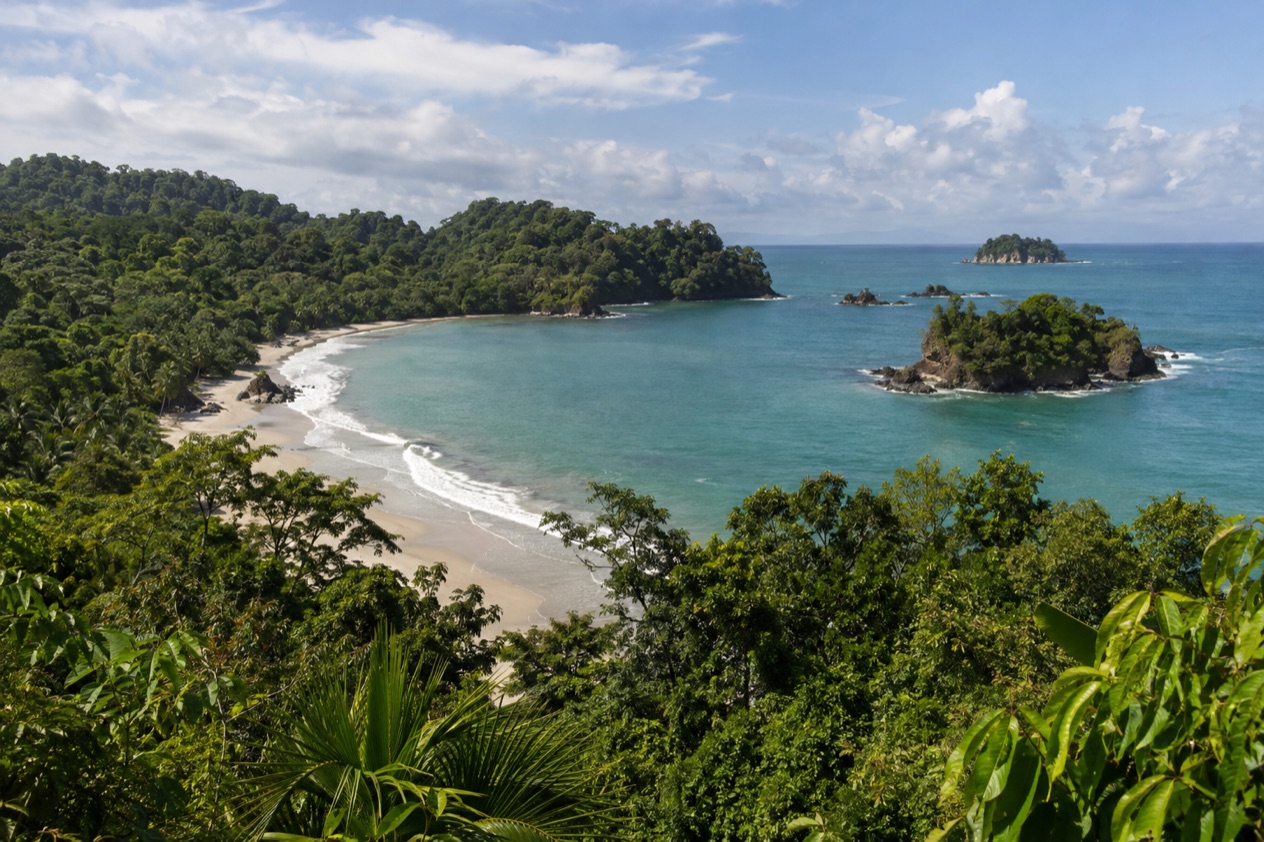
Early on a July morning in Manuel Antonio, the howler monkeys start up before the light does, and the hills behind the beaches steam under a low band of cloud. By the time the sun burns through, the forest is a deeper green than at any other season, and the sand is nearly empty. On the central Pacific coast, July brings the green season, a time for dawn wildlife walks, swims in the warm sea and long, unhurried afternoons as the rain moves through.
What is the weather like in Manuel Antonio in July?
July is warm, humid and wet: sunny mornings, then clouds and rain in the afternoon on most days, with a sea as warm as the air.
| Month | Average high (°F) | Average low (°F) | Rain days | Sea (°F) |
|---|---|---|---|---|
| June | 79.8 | 71.3 | 28.6 | 85.8 |
| July | 79.8 | 70.8 | 29.9 | 85.2 |
| August | 79.8 | 70.8 | 29.9 | 85.5 |
The pattern is the one that rules the whole green season on this coast. Mornings are often bright and steamy, the best hours for the park trails and the beach. Clouds build over the hills around midday, and the rain tends to arrive in the afternoon, sometimes as a quick shower, sometimes as a long, heavy downpour that drums on the roofs for hours.
Rain shows up on nearly every day this month, so build your plans around it instead of trying to avoid it. Do your walking early, keep the late afternoon for a pool, a café or a nap, and treat a clear evening as a bonus. The rain total for the month is large, yet it falls in bursts, and plenty of days still give a good stretch of sun.
A T-shirt and dinner out on an open terrace are plenty for the mild evenings. Pack for humidity more than for cold, since clothes dry slowly and the forest air clings.
Can you swim in Manuel Antonio in July?
The sea is as warm as a lukewarm bath, and stepping in barely registers, but safe swimming depends on the day’s conditions.
The beaches here are wide, curving bays backed by forest, and the ones outside the park, such as Playa Espadilla, usually carry surf that suits bodyboarders and beginner surfers more than anyone wanting a flat swim. Inside the park, Playa Manuel Antonio and Playa Espadilla Sur are the main beaches; Playa Biesanz is a small cove outside the park.
Conditions shift with tides and swells, so see how it looks on the day. Visibility can drop after a heavy rain, when rivers carry silt to the shore.
Each year, rip currents prove deadly in these waters, leading to multiple drownings among visitors from the United States. On many shores there are no lifeguards and nothing posted to alert you to dangerous conditions, so ask the hotel or a surf school about the day’s conditions, follow flags where there are any, never swim alone, and keep children within arm’s reach at the edge of the water, a place to wade, float or play. Where flags or lifeguards are present, follow them. Pack a rash guard for sun protection, plus a mask if watching fish appeals to you.
What to do in Manuel Antonio in July
July here is about the forest at its greenest and the coast at its quietest, wrapped around the two weeks of the Costa Rican school break. The big date on the calendar is July 25, the Annexation of the Partido de Nicoya, a national holiday that marks Guanacaste joining Costa Rica. It is not a Manuel Antonio festival, but Costa Rican families travel that week, and the beaches and restaurants feel it.
The rhythm of the month is simple: wildlife and trails in the morning, sea and rest after, a quiet dinner at night. The rain is part of the scenery, and the rainforest sounds loudest when it drips.
The national park in the morning
One of the country’s most popular national parks sits at the heart of Manuel Antonio, and the main draw for most visitors is its trails through the shade. It is normal to spot raccoons, iguanas, sloths, squirrel monkeys and white-faced capuchin monkeys both within the park and across the neighboring region, so kindly fight the temptation to feed them. Head out at first light, the time of day when wildlife is busiest and temperatures are at their lowest.
The paths run through dense forest to quiet viewpoints and down to the beach inside the park, where capuchins sometimes wander the sand. A guide helps a lot with spotting a sloth hidden in a cecropia tree, and the rain usually holds off until later. Since regulations and admission specifics can change, look at the official park website prior to planning your day.
Beaches, surf and sunset
Outside the park gate, Playa Espadilla is the long public beach, with surf lessons, palm shade and beach bars close behind it. Mornings are the easiest time here, before the afternoon clouds and when the sand feels almost private in July. Pick a spot near other swimmers, and see how the waves behave before getting in.
Sunset is a daily habit on this coast, and when the rain clears, the sky over the Pacific can turn orange behind the offshore islands. Many hillside restaurants and bars put their terraces right at that view, so a drink there is the usual way to close the day.
Boats, mangroves and river trips
If you want a break from walking, the water-based outings from nearby Quepos suit a rainy month well. Mangrove boat rides, kayaking and sunset sails let you see herons, kingfishers and sometimes monkeys from the water, when conditions allow the outing to run. The river side of the coast is lush in July, with higher flows after the rains.
Canopy zip lines and hanging bridges are another popular way to experience the forest. Sloths, birds and frogs are chances rather than promises, and they are far more likely with a guide who knows the trees.
Eating in Quepos and along the hill road
The table here is Costa Rican at heart. Your choice of fish, chicken or beef comes with rice, beans, plantain and salad on a casado, and gallo pinto, the rice and bean breakfast staple usually served with eggs and sweet plantains, is included too. Fresh ceviche, grilled fish, tropical fruit juices and cold coconut water suit the humid weather.
Quepos is where the working town lives, with its small sodas (family-run restaurants), fruit stands and market streets, while the hill road up to Manuel Antonio has the view-heavy restaurants. A quiet dinner on a covered terrace with the rain falling beyond is a very July kind of evening.
A two-day itinerary for Manuel Antonio in July
Day 1 starts early at the national park, because mornings are the best window for animals and for walking before the clouds thicken. Spend the first hours on the trails, then drop down to the park’s beach for a swim. Around noon you should be on your way out, grabbing lunch at a casual spot by the park road, whether that means fish or a casado.
In the afternoon, the rain usually settles in, so use it. Rest at your hotel, take a long shower, or sit in a covered café with a coffee and watch the weather roll across the hills. If the sky clears around the end of the day, go up the hill road for sunset, then have dinner at one of the terraces there.
The next morning, walk the waterfront and market streets of Quepos for fruit, juice and a late lunch at a family-run soda.
For the afternoon, choose Playa Espadilla for a surf lesson or a long walk along the sand if the sky is clear. If the weather turns, the rain card is a zip line or hanging bridge through the wet forest, a cooking class, or a spa hour. Finish with a relaxed dinner and an early night, as the howlers wake the forest again at dawn.
Is Manuel Antonio busy in July?
Moderately, with a clear bump while Costa Rican schools are on their two-week mid-year break and a lively few days around July 25.
Outside those weeks, July feels like the green season it is. The national park and beaches are less crowded than in the dry months, restaurant tables are easy to get, and rooms are easier to find. Visitors are a mix of Costa Rican families on vacation, North Americans traveling in the school break, and independent travelers who like quiet trails.
During the holiday weeks, popular hotels and the most sought-after beachfront restaurants fill faster, so book early if your dates overlap with the break or the long weekend around July 25. Outside those dates, you can usually decide later, though booking ahead still makes sense for rental cars and for the best-reviewed guides.
Before you head out, consult the park’s official SINAC page for current entry and reservation requirements. If a particular guided tour or boat outing matters to you, reserve it as soon as your dates are set, because small operators fill their mornings first.
What to pack for Manuel Antonio in July
Pack light, quick-drying clothes and plan for rain at some point nearly every day. The forest is humid, so anything that dries fast will serve you better than cotton.
- A light rain jacket or poncho, because afternoon showers can be heavy and sudden.
- Sandals with a good grip, for wet beach paths and slippery trail steps.
- Closed shoes that can get muddy, for forest walks in the morning.
- Pack sunscreen and a hat, because during the sunny hours the rays beat down hard.
- Insect repellent, which is useful at dawn, at dusk and near the mangroves.
- A dry bag or zip bags, so phones and cameras stay safe from rain and spray.
Good to know before you go
The U.S. State Department rates Costa Rica Level 2, ‘Exercise increased caution,’ due to crime; it says petty crime is common throughout Costa Rica and that violent crime also affects tourists, including armed robbery, homicide and sexual assault.
July sits in the green season, and the main practical point is the afternoon rain, which can slow roads and cancel a late outing. Start days early and keep a flexible plan. The school break and the July 25 holiday make weekends busier on the roads and at the beaches, so reserve your rooms and rental car first, then the guided activities.
Do not feed the monkeys or other animals, and keep food out of sight on the beach. Most beaches have no lifeguards, so the sea is your own call, and the flags are worth following wherever they exist.
Manuel Antonio in July vs June and August
Moving the trip to June gives a similar sea and the same green forest, with a bit less rain on paper. The big difference is the calendar: June comes before the school break, so it tends to be quieter, and rooms are easier to find. It is the better choice if you want a calmer park and fewer families on the beaches.
August keeps the same warm air and sea, and the rain pattern is the same as in July. The holiday crowds ease once the school break ends, and the July 25 holiday week is behind you, so beaches and trails feel more relaxed. If you are flexible, late August often feels less busy than July.
Choose July if the school break fits your calendar, if you are traveling with children on the same schedule as Costa Rican families, or if you want the lively week around July 25. Shift to June or August if you prefer a quieter park, a calmer sense in the restaurants, and more freedom to choose rooms at the last minute.
Is July a good time to visit Manuel Antonio?
Absolutely, for those who enjoy a relaxed rhythm, warm ocean water and thick forest, and who don’t mind arranging their day around a shower in the afternoon.
You will love July if mornings on a wildlife trail are your idea of a good day, if you enjoy a warm swim and a long lunch while the rain passes, and if you would rather share the beach with a few people than a crowd. Families on school break fit well too, as the sea is warm and the activities, from boat rides to zip lines, work in damp weather.
Choose another month if you want a dependable sunny afternoon on the beach every day, or if wet roads and humid air will spoil the trip for you. The dry months, with their clearer afternoons, suit that style better.
Once you get there, make the national park your first priority and plan the other days around the rain. What July gives Manuel Antonio is its green: dripping leaves, a warm sea, a howler chorus at first light and monkeys on a nearly empty beach.
Sources
- Open-Meteo / ECMWF ERA5, normals 1991-2020 computed for the grid cell at 9.392N 84.1366W, checked October 8, 2026
- Open-Meteo Marine API, average 2015-2024, checked October 8, 2026
- sunrise-sunset.org, sunrise and sunset calculated for the 15th of the month, checked October 8, 2026
- U.S. Department of State, Costa Rica Travel Information, Safety and security (https://travel.state.gov/content/travel/en/international-travel/International-Travel-Country-Information-Pages/CostaRica.html), checked October 8, 2026
- U.S. Department of State, Costa Rica Travel Advisory, issued April 1, 2026 (https://travel.state.gov/content/travel/en/traveladvisories/traveladvisories/costa-rica-travel-advisory.html), read via the State Department open data API on October 8, 2026
To plan your stay
- Things to Do in Manuel Antonio: National Park Trails, Beaches, Day Trips and Food
- Where to Stay in Manuel Antonio: Quepos, the Hill Road and the Beach End
- Day Trips from Manuel Antonio: Carara Macaws, Tarcoles Crocodiles, Jaco and Quepos
- 3 Days in Manuel Antonio: Park Trails, Beaches and a Slow Final Day