
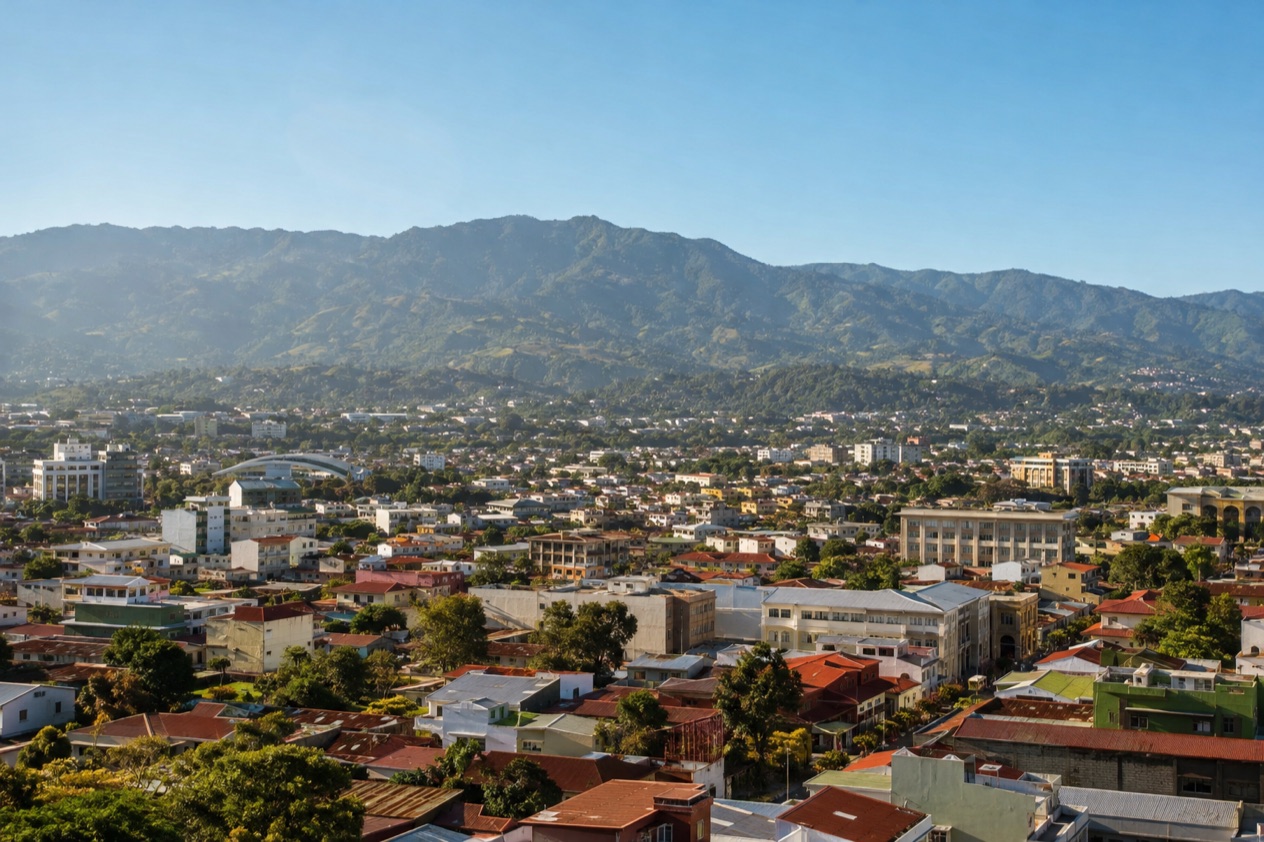
February mornings in San Jose start cool and bright, with the smell of fresh coffee drifting out of corner sodas and the mountains around the Central Valley standing sharp against a pale blue sky. Office workers line up for pan dulce and a cup of café chorreado before the sun warms the plazas. This is the capital in its dry season, a good month to use the city as a base for volcanoes, coffee farms and the first or last night of a trip.
What is the weather like in San Jose in February?
February is mild, bright and mostly dry in San Jose, with spring-like afternoons and cool mornings and evenings. Showers are few, and a rainy day is the exception rather than the rule.
| Month | Average high (°F) | Average low (°F) | Rain days |
|---|---|---|---|
| January | 75.9 | 61.7 | 7.1 |
| February | 77.9 | 61.9 | 5.6 |
| March | 79.5 | 62.8 | 6.0 |
Mornings feel fresh, so a light layer is welcome over breakfast, and by midday the sun is warm enough for short sleeves. Afternoons are pleasant for walking the downtown pedestrian streets, the parks and the museum district without the heavy heat you meet on the coasts. Because the city sits high in the valley, the air stays comfortable even at the warmest hour.
When rain does come, it tends to be a brief shower rather than a soaking, and a downpour of an inch or more is rare. Days are a little shorter than in summer, with a bit under twelve hours of daylight in mid-February, so the sun sets in the early evening and you will want to plan dinner and the walk back with that in mind.
Evenings turn cool enough for a sweater or light jacket, especially if you eat outdoors or head up to the hills. The light is clear and golden in the late afternoon, which makes it a lovely time for photos of the city rooftops with the surrounding ridges behind them. Higher up, at the volcanoes, it is noticeably colder and cloud can roll in at any time, so the weather in town tells you only part of the story.
What to do in San Jose in February
The dry season is the reason to be out and about in February. Skies in the valley are often clear in the morning, which suits the outings San Jose is known for: coffee farms, volcano viewpoints and a slow wander through the capital’s markets and museums. The city itself moves at an easy pace, with families in the parks on weekends and street vendors selling fruit, fried plantain and cold drinks.
For festivals, the month’s main date in the region is the Envision Festival, a music, art and yoga gathering at Uvita on the Pacific coast, which usually takes place in late February (dates change every year). It is a trip away from the capital rather than a city event, so treat it as a reason to build a beach leg into the journey and plan transport and rooms well in advance.
Poas and Irazu volcanoes
Both volcanoes are day trips by road from the capital, and February’s drier weather gives you a better chance at views than in the green season, though never a guarantee. Craters can fill with cloud within minutes, so go early, when the air is usually clearer, and dress as if it were a different climate from the city: it is much cooler and windier at the top.
Poas is the one many visitors choose for its steaming crater and the cloud forest trails around it. Irazu is the highest of the volcanoes near the capital and has a stark, almost lunar landscape at the summit. Pairing one of them with a coffee farm on the way down makes a natural full day. Because park rules and access can shift, look at the official page for the park before you head out.
Coffee farms and the Central Valley
The hills around San Jose are coffee country, and February is a lovely time to visit a farm: the air is dry, the rows of shrubs are green, and the harvest season is part of the rhythm of the valley. A farm visit usually walks you through the plants, the drying and roasting, and ends with a cup brewed the old way through a cloth filter.
It suits travelers who like to learn how things are made and anyone who wants a gentle half day after a long flight. Bring a few bags of beans home as souvenirs, since the roasted coffee travels well and is far better than the supermarket versions back home.
Cartago and its basilica
Cartago, the former colonial capital, is another day trip by road, and its basilica is the main reason to go. The church is a landmark of Costa Rican devotion, with a calm, dim interior, and the surrounding streets give you a look at an everyday provincial town far from the tourist circuit. It combines easily with Irazu, since the two lie in the same direction.
Make time downtown for the pedestrian avenues, the Central Market, the National Theater, the National Museum and the Pre-Columbian Gold Museum, with a stop at a soda for casado or gallo pinto. The cool mornings are the best time for walking, and an afternoon in a museum or a café is an easy way to ride out a passing shower.
For drinks, order a fresh fruit batido or agua fresca from a market stall, and finish the day with a cup of local coffee. Because crime is a concern across the country, exercise increased caution.
A two-day itinerary for San Jose in February
Day 1 is for Poas and the valley. Check the official park page before leaving, then make your way to Poas. After Poas, stop for a long lunch at a roadside restaurant serving casado or a local strawberry dessert.
In the afternoon, stop at a coffee farm for a tour and a tasting, then return to the city before dusk, since daylight lasts only until the early evening. Dinner can be a soda or a small restaurant near your hotel, then an early night.
Day 2 is the city and Cartago. Start with breakfast of gallo pinto and coffee, then head to Cartago for the basilica and a stroll around town in the cool morning. Continue to Irazu if you want a second volcano, remembering that it is colder and windier at the top.
Back in San Jose by late afternoon, wander the central market and the pedestrian avenues, then pick a theater, a museum or a café for the evening. If the weather turns, a museum and a long café stop make a comfortable rain card, and the shower is usually brief.
Is San Jose busy in February?
February is a lively month in Costa Rica because the dry season draws visitors from North America, but San Jose itself is more a gateway than a destination, so it feels busy at the airport and quiet in the hotels once travelers move on. Most people land and head out to the beaches, volcanoes and cloud forests within a day or two.
What fills up is the rest of the country: popular coastal towns, tour operators and rental cars in the dry-season weeks. In the capital, rooms are usually easier to find than on the coast, but it is wise to book early for the first and last night around holiday weeks and festival dates, and a little later is fine for quieter weeks.
If you plan to be at the Envision Festival in Uvita in late February, rooms and transport in that part of the coast tighten well before the dates, so arrange them first and build the rest of the trip around them. Before you leave, check each volcano park’s official page for current booking requirements and access conditions.
What to pack for San Jose in February
Think layers: mild days, cool mornings and evenings, and a colder, windier volcano summit.
- A light jacket or fleece, for cool mornings, evenings and the volcano summits
- Short sleeves and a hat, since afternoons are warm and sunny
- Comfortable walking shoes, for city streets and park trails
- A compact rain jacket, for the occasional brief shower
- Sunscreen, because the sun is strong at altitude
- A small crossbody bag with zippers, to keep valuables close in crowds
Good to know before you go
The U.S. State Department rates Costa Rica Level 2, ‘Exercise increased caution,’ due to crime; it says petty crime is common throughout Costa Rica and that violent crime also affects tourists, including armed robbery, homicide and sexual assault.
February is the dry season, so the main planning question is not weather but timing: book rooms, rental cars and tours early for the busy weeks, and leave the volcano trips for clear mornings. Mountain routes may take a while, so give yourself plenty of time for outings that last a day. The Atlantic hurricane season does not affect San Jose in February, but conditions in the mountains can change quickly.
San Jose in February vs January and March
Moving the trip to January brings a slightly cooler and wetter city, with a little more rain and a touch less warmth in the afternoons. It is still in the dry season, and the capital feels much the same, so the choice rarely comes down to the city itself.
March is warmer, with highs creeping up and the valley getting hotter in the afternoons, and rain is about the same as in February. The Envision Festival falls in late February, so if it matters to you, February is the month to choose, while travelers who prefer the warmest afternoons may like March.
If you want cooler mornings and a calm city, January suits you. If you want the festival on the coast and a balance of cool starts and warm afternoons, stay with February.
Is February a good time to visit San Jose?
San Jose makes a fine February destination, above all for anyone seeking gentle temperatures, bright starts to the day and simple outings to coffee farms and volcanoes. The air is spring-like, rain is brief, and the city works well as a base for a night or two before you head to the coast.
It suits first-time visitors, coffee lovers, and anyone who wants a gentle start to a trip at altitude. Travelers who dislike crowds on the coast or want the lush green of the rainy season may prefer another month.
On arrival, settle in, have a plate of gallo pinto or a casado, and plan your volcano morning first, since clear skies are the thing you cannot count on later. February in San Jose is a month of crisp mornings, warm afternoons and coffee in every cup.
Sources
- Open-Meteo / ECMWF ERA5, normals 1991-2020 computed for the grid cell at 9.9281N 84.0907W, checked October 8, 2026
- sunrise-sunset.org, sunrise and sunset calculated for the 15th of the month, checked October 8, 2026
- U.S. Department of State, Costa Rica Travel Advisory, issued April 1, 2026 (https://travel.state.gov/content/travel/en/traveladvisories/traveladvisories/costa-rica-travel-advisory.html), read via the State Department open data API on October 8, 2026