
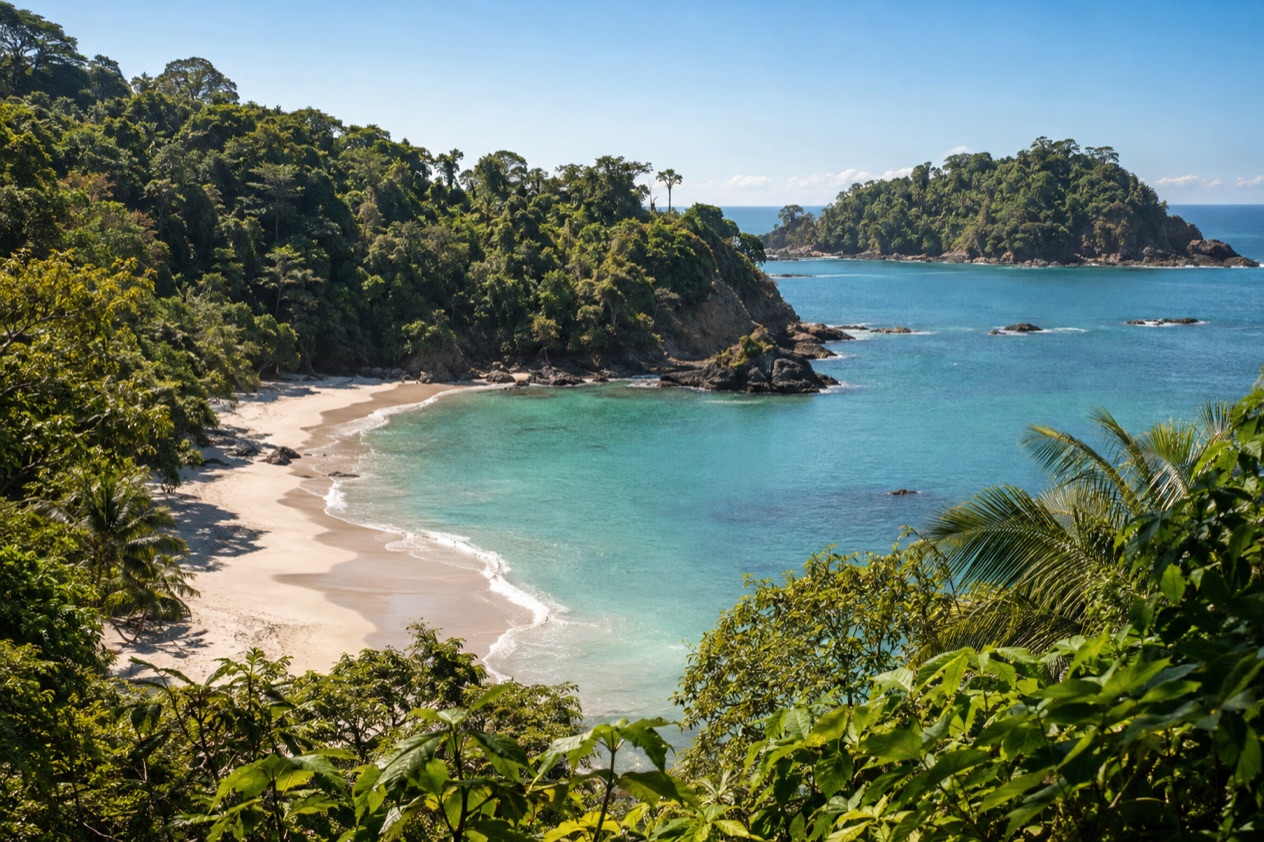
At first light in March, howler monkeys start up in the canopy behind the beach, a low roar that rolls down the hill long before the sun clears the ridge. By midmorning the sand at Playa Espadilla is warm underfoot, the sea is the color of green glass, and the coatis are already patrolling for dropped snacks.
What is the weather like in Manuel Antonio in March?
| Month | Average high (°F) | Average low (°F) | Rain days | Sea (°F) |
|---|---|---|---|---|
| February | 81.7 | 72.3 | 12.7 | 86.8 |
| March | 82.7 | 73.4 | 14.6 | 87.2 |
| April | 81.9 | 72.9 | 22.3 | 87.6 |
By early afternoon the heat builds and clouds often stack up over the hills, and a shower can arrive in the later hours. Many days pass with only a brief spell of rain, and a full inch in one day is rare.
Evenings stay warm enough for dinner outside in a short-sleeved shirt, with no jacket needed. The humidity is the thing you notice, especially on the forest paths, where a quick-dry shirt beats cotton. Rain on this coast tends to come as a downpour that passes, not a gray day that settles in, and it keeps the jungle green and the air a little cooler for an hour or so afterward.
The days are close to evenly split between light and dark, with roughly twelve hours of daylight in mid-March, so plan outdoor time before the afternoon clouds and leave sunset for the beach or a hillside viewpoint.
Can you swim in Manuel Antonio in March?
Warm water does not mean easy water. Rip currents are very dangerous, so never treat the presence of other swimmers as proof that the water is safe.
Conditions change from day to day, and no beach can be promised calm. Snorkelers tend to head for the sheltered side of the cove, and a mask is worth bringing.
Families with small children and nervous swimmers should remember that most beaches have no lifeguards or warnings about unsafe conditions. Surf lessons are popular on the long beach for those who want waves.
What to do in Manuel Antonio in March
March is a month for getting outside early. The dry-season rhythm is still in place, the forest is busy, and the beaches are most inviting by mid-morning. Unlike some months of the year, March does not hinge on a single big festival here.
The one date the calendar gives for the month is the Dia del Boyero, the second Sunday of March, a parade of painted oxcarts in Escazu near San Jose honoring the drivers who once hauled coffee to the coast. It is a cultural detour in the capital region, not something you will see in Manuel Antonio itself.
What you will see here is the everyday theater of the coast: vendors cutting fresh pineapple and coconut along the road, restaurants grilling whole fish, and plates of casado, the classic lunch of rice, beans, salad, plantains and a choice of meat or fish. Gallo pinto, the rice and beans mixed together and served at breakfast, fuels most mornings. A cold fruit smoothie after a hot walk is hard to beat.
Walking the national park
The national park is why most people come, and it rewards an early start. Short trails wind through forest down to the coves, and with a little patience you may spot white-faced capuchin monkeys, squirrel monkeys, iguanas, sloths hanging in the cecropia trees and a parade of birds. Animals are chances, not promises, and a guided walk with a naturalist and a spotting scope is how most visitors catch the sloths and the smaller creatures they would otherwise walk past.
Go in the morning, when the air is cooler and the animals are most active, and plan to finish with a swim at the beach inside the park.
Beaches, viewpoints and the hill road
Hotels and rentals climb the hill between Quepos and the park entrance along one winding road with sea views.
Playa Espadilla suits long walks and sunset, with the park’s forest as a green backdrop. Quepos, just to the north, is the practical town for groceries, banks and the marina, and its waterfront restaurants are a good place for fresh ceviche and grilled snapper after a day outside.
Boats, zip lines and other outings
Beyond the park, the area is set up for outings: catamaran trips along the coast with time for swimming and snorkeling, zip lines and canopy walks through the forest, kayaking in the mangroves, and horseback rides. On a hot March day, a boat trip with a swim stop is a good way to spend the middle of the day, when forest trails feel stuffy.
Pick activities that match your energy: a guided forest walk in the morning, something on the water at midday, and a slow evening. Afternoon showers can pass quickly, but thunder and lightning are good reasons to head ashore and wait for the sky to clear.
A two-day itinerary for Manuel Antonio in March
Day 1 is for the park. Be at the entrance early, when the forest is loud and the heat has not yet built, and take a guided walk if you want to see sloths and smaller wildlife. Move on to the park’s beach before midday for a swim in the sheltered cove, then have a late lunch of casado at a family-run place near the road.
In the afternoon, when clouds gather and a shower is possible, rest at your hotel pool or wander the shops along the road. Later, climb to a hillside viewpoint for the sunset, then eat grilled fish at a terrace restaurant with a view of the dark water.
On the second day, walk Playa Espadilla in the morning, then take a catamaran or kayak outing along the coast, or head into Quepos to stroll the marina and eat ceviche at a waterfront spot. If the weather turns, a cooking class, a chocolate or coffee tasting, or a long lunch under a roof will fill the hours until the clouds clear. Finish the evening with a drink on a terrace as the light fades.
Is Manuel Antonio busy in March?
Yes, March is a lively month here, with the dry-season crowds still in place and the park and beaches drawing steady visitors.
Many visitors are North American travelers escaping winter, and families take advantage of school breaks, so popular hotels, restaurants and tour operators fill up. The hillside road can be slow when traffic backs up between Quepos and the park, and the beach buses are well used at peak hours. Early mornings are the calm moment, before the day crowds arrive.
Book rooms early, especially for any holiday weeks, and reserve rental cars and popular guided tours well ahead. Restaurant tables with sunset views are worth securing the same day or the day before. Weeks outside school breaks are easier, and you can often arrange a boat trip or a guide closer to the date.
What to pack for Manuel Antonio in March
Pack for heat, humidity, a passing shower and forest trails. Light, quick-drying clothes will serve you better than heavy fabrics.
- Quick-dry shirts and shorts, because the humidity does not let cotton dry.
- A light rain jacket for afternoon showers.
- Sturdy sandals or trail shoes for wet forest paths.
- Sunscreen and a hat for the hot hours on the sand.
- A mask and snorkel if you like swimming in the cove.
- A small dry bag to protect phones and cameras from rain and spray.
- Insect repellent for the forest and the evenings.
Good to know before you go
The U.S. State Department rates Costa Rica Level 2, ‘Exercise increased caution,’ due to crime; it says petty crime is common throughout Costa Rica and that violent crime also affects tourists, including armed robbery, homicide and sexual assault.
March falls in the drier months on this coast, so the main planning questions are rooms, tours and getting around. Hotels and rentals climb the hill between Quepos and the park entrance along one winding road, so where you stay decides whether you walk or take a bus to the beach. Book lodging and your most wanted activities first, and keep a flexible plan for the afternoons, since showers can reshape the day.
Manuel Antonio in March vs February and April
Moving four weeks earlier brings a slightly drier feel, with fewer rainy days and similar warmth. February still brings plenty of rain days, often as short showers or a wetter spell, and the sea is a touch cooler, though still very comfortable. It suits those who want the most reliably sunny mornings and the long beach days.
Moving four weeks later changes the picture more. April brings many more rainy days, and the green season begins to take hold, with clouds building earlier and showers more frequent. The sea is a shade warmer, and the forest looks fresher, but afternoon plans need more flexibility. Some travelers like the lusher scenery and the thinner crowds.
If you want maximum beach time and the most predictable mornings, choose February or early March. If you do not mind a shower and enjoy a greener landscape, April works well, as long as you plan your outdoor time for the morning.
Is March a good time to visit Manuel Antonio?
Yes, March is a good time for travelers who want warm sea, forest walks and long beach days, and who can plan around a few afternoon showers.
It suits couples, families with older children, birdwatchers and anyone who likes to be outdoors from early morning. Those who dislike heat and humidity, or who want empty beaches and quiet trails, may prefer a different month.
On arrival, settle in and take a first evening walk along the hill road or the beach to feel the rhythm of the place. Plan the park visit for the first full morning, when your energy is highest and the animals are most active. What sets March apart here is the warmth of the water meeting the last of the dry-season light, with howler monkeys calling at dawn and a sunset over the islets that fills the terraces each evening.
Sources
- Open-Meteo / ECMWF ERA5, normals 1991-2020 computed for the grid cell at 9.392N 84.1366W, checked October 8, 2026
- Open-Meteo Marine API, average 2015-2024, checked October 8, 2026
- sunrise-sunset.org, sunrise and sunset calculated for the 15th of the month, checked October 8, 2026
- U.S. Department of State, Costa Rica Travel Information, Safety and security (https://travel.state.gov/content/travel/en/international-travel/International-Travel-Country-Information-Pages/CostaRica.html), checked October 8, 2026
- U.S. Department of State, Costa Rica Travel Advisory, issued April 1, 2026 (https://travel.state.gov/content/travel/en/traveladvisories/traveladvisories/costa-rica-travel-advisory.html), read via the State Department open data API on October 8, 2026
To plan your stay
- Things to Do in Manuel Antonio: National Park Trails, Beaches, Day Trips and Food
- Where to Stay in Manuel Antonio: Quepos, the Hill Road and the Beach End
- Day Trips from Manuel Antonio: Carara Macaws, Tarcoles Crocodiles, Jaco and Quepos
- 3 Days in Manuel Antonio: Park Trails, Beaches and a Slow Final Day