
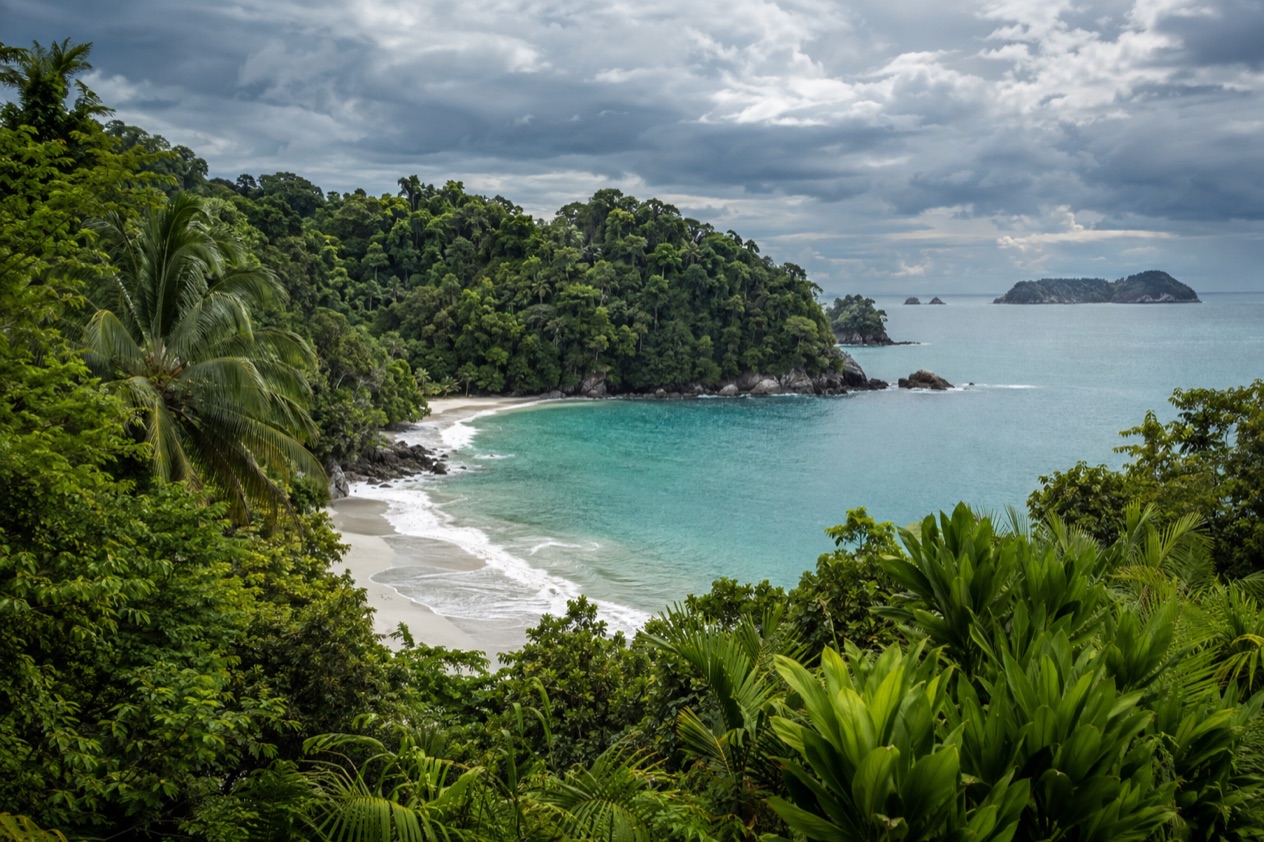
Come August, the woods behind Manuel Antonio glisten and rise with mist once the afternoon rain has passed, howler monkeys cry out from the branches at first light, and pineapple and watermelon vendors line the route descending from Quepos. The hills are at their greenest, the beaches have room to spare, and the Pacific is as warm as bathwater. This is Manuel Antonio in the heart of the green season, for travelers who would rather trade a few showers for lush jungle and quieter sand.
What is the weather like in Manuel Antonio in August?
August is warm, humid and wet, with mornings that are often bright and afternoons that often turn gray and stormy. The air barely changes from July, and September is only a hair cooler.
| Month | Average high (°F) | Average low (°F) | Rain days | Sea (°F) |
|---|---|---|---|---|
| July | 79.8 | 70.8 | 29.9 | 85.2 |
| August | 79.8 | 70.8 | 29.9 | 85.5 |
| September | 79.4 | 70.6 | 29.4 | 85.7 |
Rain here does not mean a lost day. It tends to arrive after lunch, sometimes as a short shower and sometimes as a loud, heavy downpour that drums on the roofs and sends the streets running with water.
Mornings are the time for anything outdoors: the light is clear, the forest is full of birdsong, and the heat has not yet built. Some days the clouds hang low over the hills from the start, and then it is a softer, grayer kind of day, still warm enough for a T-shirt.
Evenings stay mild and sticky, comfortable for dinner on an open-air terrace with a ceiling fan turning, though the air never really cools off. Expect to work up a sweat in the forest and get soaked once a storm rolls through, so keep a small umbrella or a light rain jacket with your everyday gear. Mid-August brings about twelve and a half hours of daylight.
The sea does not follow the rain. It stays so warm that stepping in is never a shock, and the water often looks a deep green-blue under the cloud shadows. Skies can clear dramatically late in the day, and a sunset over the water after a stormy afternoon is one of the pleasures of the month.
Can you swim in Manuel Antonio in August?
You can swim for a long, lazy stretch in water that is warm enough, and you will not need a wetsuit or a towel-wrapped dash back to shore. The temperature is the easy part. The conditions are what you have to read each day.
Outside the park gate, the long public stretch of Playa Espadilla is the place for surf lessons and bodyboarding, and its waves can be sizable. Rip currents are very dangerous and cause several drownings of U.S. tourists each year, while most beaches have no lifeguards or warnings about unsafe conditions.
So treat every swim as a decision. Look at the water for a few minutes before going in, follow any flags and lifeguard instructions where they exist, stay close to shore, and keep an eye on children at all times.
Pack a light shirt or rash guard for the strong sun between rain spells, along with plenty of sunscreen, plus a mask if looking at fish near the rocks appeals to you.
What to do in Manuel Antonio in August
The biggest date of the month is not in Manuel Antonio at all, but the whole country feels it. On August 2, hundreds of thousands of Costa Ricans walk on pilgrimage to the Basilica of Our Lady of the Angels in Cartago, many of them on foot from far away.
In the Pacific towns the day is quieter than in the Central Valley, but you will notice it in the churches, on local radio and in conversations at the corner sodas. August 15 is Mother’s Day, a national holiday, and families gather for long lunches, so restaurants fill with big tables and the beaches see more local picnics than usual.
Food in August follows the green season. Seek out casado, a plate of rice, beans, salad, plantain and either fish or chicken, plus gallo pinto, the rice and beans that begin almost every morning meal.
Seafood is the coast’s strength, from whole fried fish to ceviche, and fruit stands sell pipas (cold green coconuts opened with a machete) that hit the spot after a hot walk. Tropical fruit batidos, blended with milk or water, make a good rainy-afternoon treat.
The national park on a green-season morning
August is a great match for the park, which is why most visitors head there, since the forest is dense, green and noisy. Trails run from the entrance down to the small beaches, through shade that makes the humidity easier to bear.
You may see white-faced monkeys, squirrel monkeys, raccoons, iguanas and, with luck, a sloth hanging in a cecropia tree. Wildlife is a chance, never a promise, and most visitors spot far more with a guide who carries a spotting scope.
Go early, before the clouds build. You get cooler air, active animals and better light for photos, and you can be on a beach by midmorning with time for a swim before lunch. Since regulations, entry procedures and bookings may change, check the park’s official website before planning your day around it. Wear shoes with grip, since trails turn slick and muddy after rain.
Beach days on Playa Espadilla
Just beyond the park entrance lies Playa Espadilla, a long public beach lined with palms and a row of casual beach eateries. In August it has more room than in the dry months, and you can find a patch of shade without a struggle. It is a good spot for walking at low tide, watching surfers, or reading under a tree while a shower passes through.
Morning is the best window for sun, and sunset can be spectacular when the rain clears off. Swimming here needs care because waves and currents are real, and the long open shape of the beach means help can be far away. The small beaches inside the park are another option, but check conditions before entering the water.
Rainy-afternoon plans in Quepos and the hills
When the afternoon storm sets in, the town of Quepos, just north of Manuel Antonio, makes a good fallback. Its waterfront has cafés, small shops and a local market where you can browse tropical fruit, coffee and handmade crafts. A long lunch of fresh fish at a family-run soda is a pleasant way to wait out the downpour.
Back in the hills above the beaches, many hotels and restaurants have covered terraces with sweeping ocean views, ideal for watching the weather roll in. Spas offer massages, and some places run cooking classes or chocolate tastings that fit a wet afternoon. Birdwatching from a dry porch can be rewarding too, since toucans and parrots often keep moving during light rain.
A two-day itinerary for Manuel Antonio in August
Day 1 starts early, because August mornings are the clear part of the day. Have gallo pinto and fruit for breakfast, then head to the national park for the forest trails and the small beaches while the animals are active. Swim at one of the park beaches in the late morning, taking a few minutes to check the water and the flags first.
By midday the clouds usually start to thicken, so leave the park and have a long lunch at a casual place near the road, with fresh fish or a casado. If the sky is still bright in the afternoon, walk Playa Espadilla and watch the surfers. When the rain comes, shelter under a beach restaurant roof, and later find a terrace in the hills for sunset, which can arrive in a burst of orange after the storm.
Day 2 can be slower and more local. Spend the morning in Quepos. Book a guided boat or mangrove outing if you want more wildlife, and keep an eye out for herons, kingfishers and the occasional monkey in the canopy. Lunch can be a seafood plate at a small dockside place.
When rain shows up, you have simple backup plans: a spa treatment, a cooking class, a chocolate tasting, or a leisurely coffee on a hotel terrace with a view of the clouds. Dinner on your last night works well at a restaurant with a covered deck, where you can listen to the rain and the frogs at once.
Is Manuel Antonio busy in August?
It is moderately busy, with a calmer feel than in the dry months, though the days around Mother’s Day bring local families to the coast. The mood is relaxed, and you will often find space on the beach and on the trails.
The visitors you meet are a mix of international travelers who like the green season, Costa Rican families on a long weekend, and wildlife lovers who time their trip for lush forest. Hotels have more availability than in the busiest weeks of the year, and restaurants usually have a table, though the popular terraces with views fill on weekends and holiday dates. Rental cars are easier to arrange than in peak season, but it is still wise to reserve ahead if you want a specific vehicle.
As a habit, book early for the weekend around August 15, and later for the quiet weeks on either side. Rooms with ocean views, small boutique hotels and popular guides tend to go first, so lock those in before the rest.
One practical side effect of the lighter crowds is that mornings in the park feel less packed, and guides have more time to spot animals and let you look properly. Afternoon rain also thins out the beaches, which means a late-day walk on a wet, empty stretch of sand can feel almost private.
What to pack for Manuel Antonio in August
Bring quick-drying items, and prepare for hot, humid conditions with rain that arrives without warning. Everything you carry should be ready to get wet.
- Because afternoon downpours can be intense, bring a poncho or a lightweight rain jacket.
- Quick-drying clothes and a spare shirt, because nothing dries fully in the humidity.
- Trail shoes with grip, for muddy forest paths in the park.
- Sunscreen and a hat, for the strong sun between showers.
- Insect repellent, useful at dawn and dusk and near the mangroves.
- A dry bag for your phone and camera, to protect them from sudden rain.
- Binoculars, to spot monkeys, toucans and sloths high in the canopy.
Good to know before you go
The U.S. State Department rates Costa Rica Level 2, ‘Exercise increased caution,’ due to crime; it says petty crime is common throughout Costa Rica and that violent crime also affects tourists, including armed robbery, homicide and sexual assault.
August is the green season, so plan outdoor activities for the morning and keep the afternoon flexible.
Mother’s Day on August 15 is a national holiday. Book your rooms and any guided outings first, then fill in the rest around the weather.
Manuel Antonio in August vs July and September
Moving a month earlier changes little on the weather side. July has nearly the same air and sea, and the same afternoon showers, so the main difference is the calendar. It sits closer to school-vacation travel, which can mean more families on the beaches, while August feels a touch more settled once the early summer rush has passed.
Moving a month later takes you into September, which is a hair cooler and a little less rainy on paper, with a sea that is a bit warmer still. The forest is just as green, and the crowds tend to thin even more, so rooms and tables are often easier to find. The August pilgrimage and Mother’s Day holiday fall away, which means a quieter feel but fewer local celebrations to watch.
Choose August if you want the holiday on August 15 and the lush forest with a bit of life around you. Shift to July if you want to line up with school vacations, and to September if you prefer calm streets and an even quieter trail. Anyone who dislikes afternoon rain will find all three months similar, so pick by mood and crowds rather than weather.
Is August a good time to visit Manuel Antonio?
Yes, for travelers who like their jungle lush and their beaches uncrowded, and who are happy to build a day around a morning of sun and an afternoon of rain. It suits wildlife lovers, photographers, couples and families with older children who enjoy a walk in the forest.
It is a poorer match for anyone who wants guaranteed sunshine all day, long beach afternoons without a cloud, or a dry, dusty landscape. If you come for a week of lying on the sand from morning to night, the dry months will suit you better.
On arrival, get the early-morning park visit and any guided outing sorted first, since those are the plans that depend most on clear skies and on current rules. Then let the rest of the days flow around the weather: a swim after breakfast, a market lunch, a nap through the storm and a terrace at sunset. What stays with you from August here is the sound of it: rain on a tin roof, frogs after dark, monkeys in the wet leaves, and a warm sea waiting once the clouds break.
Sources
- Open-Meteo / ECMWF ERA5, normals 1991-2020 computed for the grid cell at 9.392N 84.1366W, checked October 8, 2026
- Open-Meteo Marine API, average 2015-2024, checked October 8, 2026
- sunrise-sunset.org, sunrise and sunset calculated for the 15th of the month, checked October 8, 2026
- U.S. Department of State, Costa Rica Travel Information, Safety and security (https://travel.state.gov/content/travel/en/international-travel/International-Travel-Country-Information-Pages/CostaRica.html), checked October 8, 2026
- U.S. Department of State, Costa Rica Travel Advisory, issued April 1, 2026 (https://travel.state.gov/content/travel/en/traveladvisories/traveladvisories/costa-rica-travel-advisory.html), read via the State Department open data API on October 8, 2026
To plan your stay
- Things to Do in Manuel Antonio: National Park Trails, Beaches, Day Trips and Food
- Where to Stay in Manuel Antonio: Quepos, the Hill Road and the Beach End
- Day Trips from Manuel Antonio: Carara Macaws, Tarcoles Crocodiles, Jaco and Quepos
- 3 Days in Manuel Antonio: Park Trails, Beaches and a Slow Final Day