
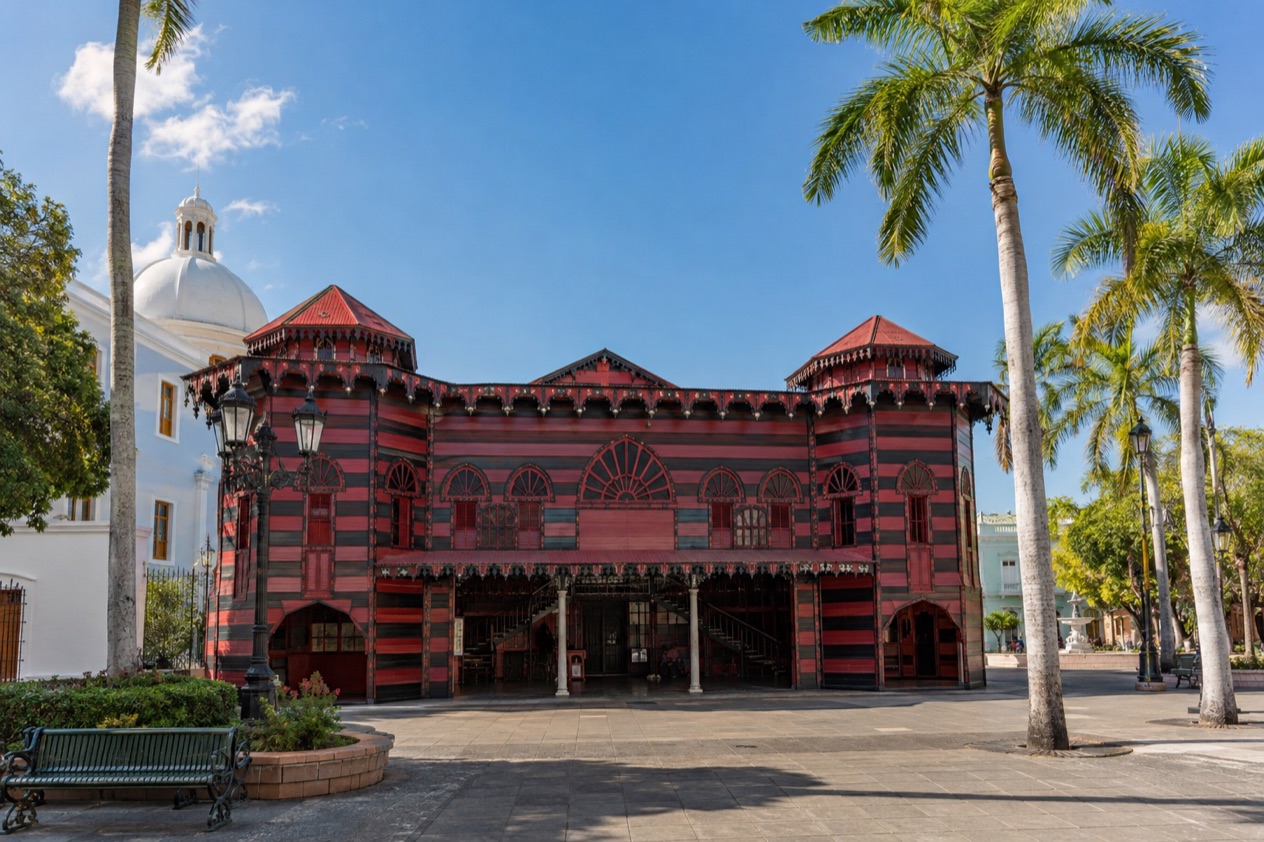
A March morning in Ponce finds the Parque de Bombas glowing in low sun, its red-and-black stripes bright as vendors arrange their stalls around Plaza Las Delicias and the scent of strong coffee floats from the cafés. The south coast is sunny and warm, the rains of the wetter months are a memory, and the pace is easy. It is a good month for anyone who wants to wander a colonial center, see a few museums and still end the day by the sea.
What is the weather like in Ponce in March?
In Ponce, March brings warmth and sunshine with little rain, as afternoons turn hot and nights stay comfortably mild. It sits in the drier season, and the south coast is shielded from much of the rain that falls on the north side and in the mountains.
| Month | Average high (°F) | Average low (°F) | Rain days | Sea (°F) |
|---|---|---|---|---|
| February | 83.0 | 70.7 | 2.1 | 80.2 |
| March | 83.5 | 71.0 | 3.3 | 81.2 |
| April | 83.6 | 72.2 | 5.3 | 82.5 |
Mornings start soft and bright, and the best hours for walking the historic streets are before the sun climbs. By early afternoon the pavement radiates heat, so shade, a cold drink and a museum with air conditioning become welcome. Evenings stay warm enough to eat outside in a short-sleeved shirt.
Rain, when it comes, is a brief shower rather than a washed-out day, and a downpour of an inch or more is a rarity. Skies are often clear, and the light is clean and golden near sunset. Days last a little over twelve hours, which leaves room for a full day of sightseeing and a long dinner.
Pack for sun first: a hat, sunglasses, sunscreen and breathable clothes. A light layer is only needed for strong air conditioning indoors. The sea is warm and pleasant, which shapes the beach days described next.
Can you swim in Ponce in March?
Absolutely, you can enjoy a long, comfortable swim because the sea stays in the low 80s. Ponce faces the Caribbean, but water conditions still vary by site and by day.
Still, the water can vary depending on the day and the particular beach. Trade winds can add chop in the afternoon, and currents can be present near some shores. Follow posted warnings and lifeguard instructions, and do not enter the water when conditions or supervision are unclear.
La Guancha is a seaside boardwalk for ocean views, kiosks and evening walks, not a specific swimming beach. For snorkeling, boats and small islands off the coast are the usual choice, and mornings tend to be the quieter, clearer hours. Bring a rash guard or a shirt, plenty of sunscreen and water, because the March sun is strong even when a breeze keeps you comfortable.
What to do in Ponce in March
Ponce’s Carnaval takes place in the weeks leading up to Lent and may fall entirely before March. Whether a given March catches the full run depends on when Lent begins that year, since the calendar moves.
When it does, the streets fill with vejigantes in horned masks, bright costumes, music and parades, and the center turns into a long party. If you land on a quieter week, the town still wears its festive character, with masks and color in shop windows.
Outside carnaval, March is simply a good month to be outdoors in the city. Cafés spill onto sidewalks, shaded benches around the plaza fill with conversation, and the dry air makes the walk between sights pleasant in the morning. When the afternoon warms, seek out mofongo, fried plantain mashed with garlic and pork or seafood, alcapurrias, green banana and taro fritters filled with meat, and either a chilled coconut or a piragua, fruit syrup poured over shaved ice.
Plaza Las Delicias and the Parque de Bombas
Plaza Las Delicias forms the heart of the historic center, a square shaded by old trees with fountains and a cathedral along one edge. Parque de Bombas, the vintage firehouse, draws every camera with its red-and-black stripes, and since it sits directly on the plaza, almost anywhere in the center puts you within walking distance.
Arrive at dawn, while the square sits quiet and the light stays gentle, and return after dark, once residents come together and the lamps switch on. The surrounding streets have colorful façades with ironwork balconies, small shops and places for a coffee. It suits everyone, including families and travelers who dislike rushing.
Ponce Museum of Art
The Ponce Museum of Art is one of the city’s major landmarks, but check its current operating status and location before planning a visit. It is a natural midday refuge, when the sun is highest and the galleries are cool, and it pairs well with a long lunch nearby.
Allow a relaxed visit rather than a sprint, and wander slowly through the rooms. It suits art lovers, but also anyone who wants an air-conditioned break in the heat of the day.
Castillo Serralles and La Guancha
From Castillo Serralles, a 1930s hilltop mansion overlooking the city, you can take in rooftops stretching clear to the sea and sense the sugar and rum fortune behind it all. Reach it by car or taxi from the center, and plan it for the morning or late afternoon, when the heat is easier on the gardens and terraces.
At the end of the day, everyone winds up at La Guancha, the boardwalk that runs along the sea. Locals walk, fish and eat here at sunset, and the mood is relaxed, with music from kiosks and a breeze off the water. It suits families, couples and anyone who wants a casual dinner with a view.
A two-day itinerary for Ponce in March
Day 1 belongs to the historic center. Start early at Plaza Las Delicias, while the air is cool and the light is soft, and photograph the Parque de Bombas before the crowds. Take coffee and a pastry at a café on the square, then walk the nearby streets with their balconies and small shops.
When noon arrives, head inside the Ponce Museum of Art, whose chilled halls turn the day’s warmest stretch into a breeze. Take your time over a midday meal at a neighborhood spot where mofongo or fried snacks are on the menu, and afterward, relax. In the late afternoon, return to the plaza for the golden hour, and stay for dinner at an open-air table as the lamps come on.
Day 2 moves up and out. In the morning, head to Castillo Serralles by car or taxi, while the hilltop is still bright and not yet hot, and take in views of the city and the sea.
Come back down for lunch, then head to La Guancha in the afternoon for a stroll, a snack and a cold drink by the water. Stay for sunset, and check which seaside dining options are open before making dinner plans.
If rain turns up, which is brief and unlikely, lean on indoor stops: a longer lunch, a second pass through the museum rooms, or a slow coffee under an awning. Showers usually pass, so the plan rarely has to change.
Is Ponce busy in March?
Ponce is moderately busy in March, with the liveliest weeks tied to Carnaval and to spring breaks, and quieter stretches in between. Locals and visitors from around the island come for the parades, so the center fills with families, music and street food.
If your trip falls during carnaval weekends, reserve well ahead, since accommodations close to the plaza and seats at well-liked restaurants are claimed quickly. On ordinary weekdays, you can often find a table without a long wait and a room with less planning. Rental cars are easier to arrange ahead of time, especially if you plan to reach the hilltop sights or other towns.
The museums and the plaza stay pleasant outside the festival days, and the boardwalk is busiest on weekend evenings. A good habit is to book early for holiday weeks and spring break, and to leave the quieter weeks more flexible. Check current opening and reservation requirements directly with each sight before you go.
What to pack for Ponce in March
Think sun, heat and long walks on stone streets. Light, breathable clothes carry you through almost every day and evening.
- Sunscreen and a wide-brimmed hat, because the midday sun is strong on the open plaza.
- Comfortable walking sandals or sneakers for the historic center’s uneven streets.
- A swimsuit and a light cover-up for La Guancha or a boat day.
- A refillable water bottle for hot afternoons.
- A thin layer for air-conditioned museums and restaurants.
- Sunglasses for the bright light at the seafront.
Good to know before you go
March falls outside the official hurricane season, which runs from June 1 to November 30, so the main planning questions are crowds and carnaval dates. Because the festival follows the calendar of Lent, check when it falls in your year before booking. You will want a vehicle for the hilltop castle and to get to other towns, though the historic center is ideal on foot. Book your room first, then fill in restaurants and outings.
Ponce in March vs February and April
Going a month earlier gives you a slightly cooler sea and the driest of the three months, with carnaval often in full swing depending on the calendar. The days are a touch less hot, which suits travelers who prefer to walk a lot, though the water is a shade less inviting for a long swim.
Going a month later brings the warmest sea and nights, but also more frequent showers, which come as short interruptions rather than all-day rain. The carnaval season is usually over, so the center is calmer and rooms are easier to find. Beach lovers may prefer this side.
Choose February or March if the festival and dry skies matter most, and April if a warmer sea and a quieter plaza matter more. March sits comfortably in the middle for travelers who want a bit of everything.
Is March a good time to visit Ponce?
Yes, March is a very good time for travelers who want sun, a walkable historic center and a chance at carnaval, without the heavy rain of later months. It suits couples, families and culture-minded visitors who enjoy museums, plazas and long dinners outside.
It is less ideal for those chasing big surf or a very cool climate, since the south coast stays hot and the water is gentle rather than dramatic. Once you get there, begin at Plaza Las Delicias, check out the Parque de Bombas, and soak up the rhythm of local life. What makes March special in Ponce is the mix of masks and music in the streets and the soft evening light on a plaza that has watched carnaval pass for generations.
Sources
- Open-Meteo / ECMWF ERA5, 1991-2020 normals calculated on the grid cell 18.0111N 66.6141W, checked October 8, 2026
- Open-Meteo Marine API, average 2015-2024, checked October 8, 2026
- sunrise-sunset.org, sunrise and sunset calculated for the 15th of the month, checked October 8, 2026
- NOAA National Hurricane Center, Climatology (https://www.nhc.noaa.gov/climo/), checked October 8, 2026
To plan your stay
- Things to Do in Ponce: Plaza Las Delicias, Art Museum, Caja de Muertos and Local Food
- Where to Stay in Ponce: Plaza Las Delicias, La Guancha, the Museum District and the Hills
- Ponce Airport to City: Getting to Plaza Las Delicias, Carros Públicos and Driving
- Know Before You Go to Ponce: Entry, Getting Around, Heat and Local Customs