
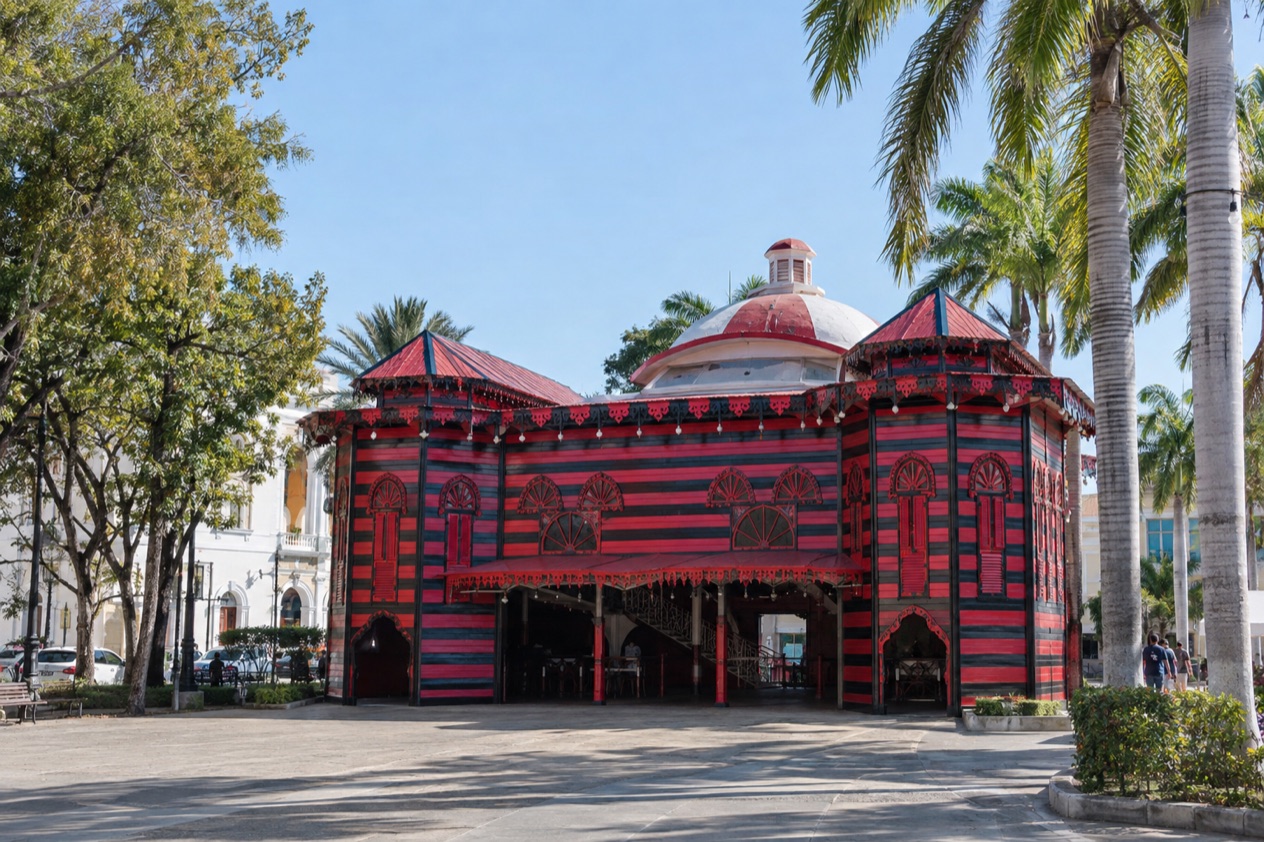
You step out of the small airport at Mercedita into the warm, salty air of the south coast, and the Pearl of the South is only a short hop away. Beyond the runway fence there are palms, low hills and the first hint of Ponce’s old-town color, the red and black of its famous firehouse. The question is how to cover those last few miles to Plaza Las Delicias, and the answer depends mostly on what you plan to do once you arrive.
How do you get from the airport to Ponce?
The airport is about three nautical miles from the central business district, so this is a hop rather than a journey. The airport is close to central Ponce, which is one of the quiet pleasures of landing here instead of San Juan.
Puerto Rico has an islandwide jitney-type system of carros públicos, shared vehicles that follow set routes, and it is the traditional budget way to move around the island. It suits people traveling light and in no hurry, and it tends to be a better fit for getting between towns than for a first arrival with a big suitcase. If you are carrying a lot of luggage, traveling as a family or landing late, a ride straight to your door is simpler.
What decides the choice is mostly what comes after. The plaza, museums and cafés cluster in Ponce’s historic center, making that area easy to explore on foot.
If you plan to climb toward the mountain villages, reach the hilltop mansion of Castillo Serralles or drive on to other coasts, a car makes the whole trip easier. Arrival time matters too: after dark, you will want a plan that is settled before you leave the terminal.
Your options from the airport
Carros públicos, the shared jitneys
It is the way many Puerto Ricans travel between towns, and riding one gives you a taste of daily life that a private car never will.
This option suits travelers with a small bag, a flexible schedule and a few words of Spanish. It is less comfortable for large suitcases, and routes are built around local needs rather than hotel doors, so you may finish your ride a short walk from where you sleep. Have your lodging address handy and ask the driver where to get off for it.
Driving yourself into town
With a car you control your own schedule, and the airport lies close enough to the center that the first drive is short. The island has a dense network of paved roads, including tolled freeways called autopistas, and the old PR-1 still runs between San Juan and Ponce as a scenic route used mostly by people who live nearby. Leaving the airport, you travel west in the direction of the historic district, located a few miles inland from the Caribbean coast.
Having your own vehicle is worth it mainly if your plans go beyond the plaza, taking in the mountain roads above the city, where the island’s highest peak, Cerro de Punta, rises within the municipality, plus the beaches and towns along the south coast. In the old center itself, streets are narrow and parking takes patience, so many visitors leave the car at the hotel and walk. Check your rental conditions with the company directly before you plan long drives.
Arriving through San Juan instead
Many visitors reach Ponce by flying into Luis Muñoz Marín International Airport, the largest and busiest on the island, with direct connections to most major cities on the mainland, Latin America, Canada, the Caribbean and Spain. From there you continue south by road, and you can choose between the autopistas and the slower, scenic PR-1.
This route suits travelers who want a wider choice of flights or who plan to see more of the island on the way. It turns the transfer into a day of its own, with mountain scenery and a chance to stop in small towns. Arriving directly at Mercedita is simpler if your flight allows it, because the city is a few minutes away.
Airport transfer options compared
| Option | Best for | What to know |
|---|---|---|
| Carros públicos | Light packers on a flexible schedule | Shared jitneys on set routes, part of a network covering almost 500 routes islandwide |
| Driving a car | Mountain roads, beaches and day trips | Autopistas are tolled, PR-1 is the scenic alternative toward San Juan |
| Via San Juan airport | More flight choices and a road trip south | Largest airport on the island, then a drive to Ponce on autopistas or PR-1 |
The trade-offs come down to comfort against local color. Carros públicos give you the feel of how the island moves, but they ask for flexibility and a bit of Spanish, and they are not designed around luggage or hotel doors. A car gives you freedom and the whole south coast, but you will deal with tolls, parking in the old center and the need to focus on the road after a long flight.
Think about what your first evening looks like. If you want to drop your bags and stroll straight to Plaza Las Delicias for dinner, the shortest path from airport to hotel is the right one, and you can sort out the rest tomorrow.
If you are arriving to start a road trip, arrange your car before you land and let the drive be the beginning of the vacation. Either way, the distance is so small that a wrong choice costs you very little.
Arriving at the airport
It has a single runway, set a few feet above sea level on flat coastal land, and it covers a modest stretch of ground compared with the island’s main hub. Scheduled commercial flights began here in the mid-1960s, and international service followed a few years later.
Since Puerto Rico belongs to the United States, travelers from the mainland fly domestic routes, and U.S. citizens can leave their passports and visas at home. Your arrival feels just like landing at any airport in the States, and you will pay with U.S. dollars. A few words of Spanish are welcome, though English is also an official language and you will manage in both.
The setting is a good introduction to the south. The coast is hot and often breezy, the sky tends to be bright, and the city center a short drive away is built around Plaza Las Delicias, with the red-and-black striped Parque de Bombas firehouse beside it and the Ponce Museum of Art a few streets off. If you have time before checking in, that plaza is the natural first stop, a place where families, vendors and retirees gather in the shade.
The seafront is the other early outing. La Guancha, the boardwalk by the sea, is where locals go for an evening stroll, snacks and music, and it gives you a first view of the Caribbean. Up on its hill, Castillo Serralles, a mansion from the 1930s, looks back over the city and the water, and it makes a good morning outing once you are settled.
If you land in the weeks before Lent, the mood in town changes. Carnaval de Ponce fills the streets with parades of vejigantes in horned masks, and the center can feel busier and noisier than usual. It is a fine reason to arrive with a plan for your transfer already in place.
Good to know before you go
Keep some U.S. dollars handy, since that is the currency across the island, and keep your lodging address written down in case a driver or jitney needs it. The Atlantic hurricane season runs from June 1 to November 30, with the busiest stretch from mid-August to mid-October, so if you travel in those months, follow the National Hurricane Center and local official alerts as your trip approaches. Outside those months, the south coast is mostly a place of sun, warm sea and easy afternoons in the plaza.
Sources
- Wikipedia, Mercedita Airport (Ponce) (https://en.wikipedia.org/wiki/Mercedita_Airport), checked October 8, 2026
- Wikipedia, Ponce (https://en.wikipedia.org/wiki/Ponce,_Puerto_Rico), checked October 8, 2026
- Wikipedia, Transportation in Puerto Rico (https://en.wikipedia.org/wiki/Transportation_in_Puerto_Rico), checked October 8, 2026
- NOAA National Hurricane Center, Climatology (https://www.nhc.noaa.gov/climo/), checked October 8, 2026
To plan your stay
- Best Time to Visit Ponce: Weather by Month, Beaches, Carnaval and Hurricane Season
- Things to Do in Ponce: Plaza Las Delicias, Art Museum, Caja de Muertos and Local Food
- Where to Stay in Ponce: Plaza Las Delicias, La Guancha, the Museum District and the Hills
- Know Before You Go to Ponce: Entry, Getting Around, Heat and Local Customs