
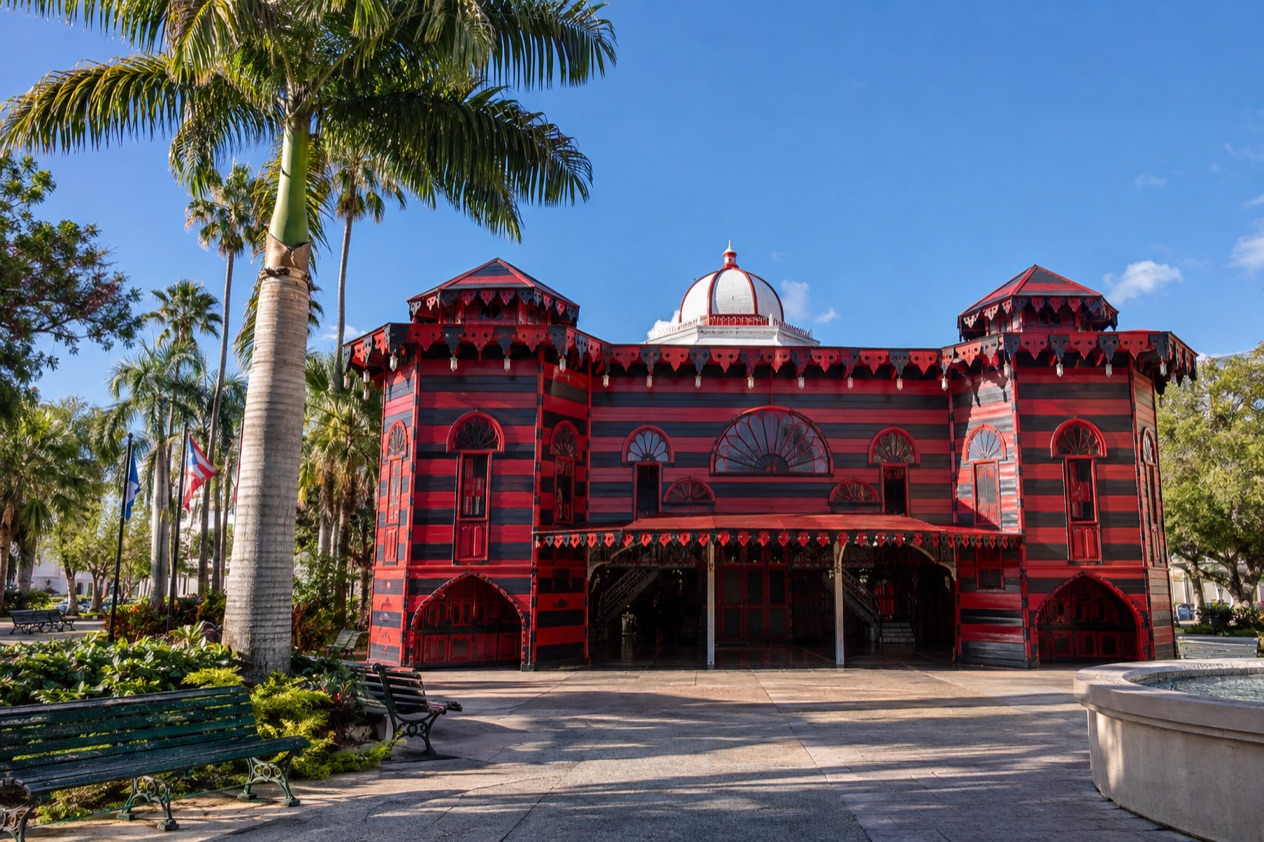
You step out into Plaza Las Delicias and the first thing you notice is the sound: the fountain, church bells, and someone selling coconut ice from a cart under the laurel trees. The red-and-black striped firehouse glows across the square, and the afternoon heat sends everyone toward the shade of the arcades. Ponce rewards a little preparation, so learn the essentials about paperwork, money, getting around, the sun and local manners before you arrive.
What should you know before visiting Ponce?
Four things matter most: Ponce is hot and sunny nearly all year, its sights are spread out rather than packed into one walkable block, the best outings leave the city (a hacienda in the hills, an island reserve offshore), and the pace of life follows the heat. If you plan mornings for walking and afternoons for museums, a long lunch or the water, the city falls into place.
The historic center is the heart of any visit. Plaza Las Delicias, the Parque de Bombas firehouse and the Ponce Museum of Art anchor it, and a good deal of the town’s character is in the streets around them: pastel facades, wrought-iron balconies, small bakeries and bars where locals stop for coffee. Avenida Las Américas is where the museum is located, a quick drive away from the plaza instead of a walk, and that catches some first-timers off guard since they figure all of it should be right on the square.
What usually surprises first-time visitors is how much Ponce feels like its own place, not a quieter copy of San Juan. It is the island’s second city, nicknamed the Pearl of the South, and it carries its own pride in architecture, art and tradition.
Many visitors arrive expecting a quick stop and end up wishing they had booked another night. The old town lies a few miles away from the coast, which means the beach and the historic district make for two different trips, not a single one.
Another surprise is the variety within reach. The municipality holds a waterfront boardwalk, a hilltop mansion, and Puerto Rico’s tallest mountain, Cerro de Punta, standing 4,390 feet high in Barrio Anón. You are unlikely to visit all of it on one trip, so choose what you want most and let the rest wait for next time.
The calendar can change the mood of the whole city. As Lent approaches, Ponce’s Carnaval takes over the city for weeks, filling the streets with music and color while vejigantes in horned masks march along. If you visit then, expect crowds and a festive, noisy atmosphere. Outside that window, Ponce is calmer and the museums and plazas are easier to enjoy at your own pace.
Entry, fees and paperwork
U.S. citizens traveling from the mainland do not need a passport or visa for Puerto Rico because the flight is domestic.
Mercedita International Airport, the city’s own airport, lies just east of the center of Ponce, close enough that the trip into town is short. It has handled domestic flights since the middle of the 1960s, and it is a handy option if your plans focus on the south of the island. Many travelers still land in San Juan and cross the island by road, which lets them see the mountains on the way.
Entrance fees are modest and apply at specific sights rather than to the city as a whole. You will pay a small entrance charge at the Ponce Museum of Art, and at Hacienda Buena Vista, which the Puerto Rico Conservation Trust runs as a museum, your visit comes with a tour of its own. The amounts and schedules are best confirmed on the museum’s website, www.museoarteponce.org, and on the official city site, visitponce.com, before you go.
Strolling the plaza, the boardwalk at La Guancha and the old streets costs nothing, which makes Ponce an easy city to enjoy on a flexible budget. Save your admission money for the places that need a ticket and spend the free hours simply wandering, sitting on a bench by the fountain, or watching the town go by.
Money, cards and tipping
Puerto Rico uses the U.S. dollar, so there is nothing to exchange and no conversion to do in your head. Prices, bills and coins are the ones you already know, which makes budgeting for a few days in Ponce simple.
It is sensible to carry a little cash for small purchases, such as a snack from a kiosk, a coffee at a counter or something from a street vendor. Small family-run places in a town like this often like to be paid in bills, and a few singles in your pocket make everyday stops easier. Beyond that, plan your payments as you would at home and keep a backup way to pay.
Tipping follows American habits. In restaurants where a server brings your food, leaving a tip is the custom, as it is on the mainland, and the same goes for taxi drivers, hotel porters and guides who spend time with you.
For a quick coffee or a pastry at a counter, a little change in the jar is a friendly gesture and nothing more.
If you take the ferry to Caja de Muertos or join a tour in the hills, a modest tip for the people who make the day smooth is welcome, as it would be anywhere. Treat it as thanks for good service, not as an obligation, and give what feels right.
Getting around and staying connected
Ponce is a city where you will mix walking with short rides. The old center is pleasant on foot, especially in the morning, but the distances to the museum, the seafront and the hills are too long to walk in the heat. You can also use public transit, since SITRAS Orange Line routes E, F, and G serve a Museo stop at the Ponce Museum of Art.
The sights outside town need more planning. Roughly seven miles north of the city, in Barrio Magueyes, Hacienda Buena Vista lies on PR-123, up in the coffee country. The road climbs into cooler, greener hills, and the contrast with the sunny plaza is part of the pleasure. Visitors on guided walks through the historic Vives family estate, its plantation structures and surrounding land may also see sections of the protected natural area, so bring footwear suited for hiking.
For the sea, the departure point is La Guancha, the boardwalk on the waterfront, where the ferry to Caja de Muertos leaves from the Ponce Playa sector. The island lies a few miles off the coast, uninhabited and protected as a nature reserve.
Think of the day in blocks: the city in the morning, a meal and some rest in the hottest hours, and then the seafront or a museum later on. That rhythm works better than trying to cover everything at once. Wherever you go, a little flexibility goes a long way, because plans bend to heat, to events in the plaza and to how long you want to linger.
Health, water and the sun
The sun is the main health matter in Ponce. The south coast is bright and hot for most of the year, and the old center has long stretches of open pavement with little shade. A hat, sunglasses and sunscreen are ordinary gear here, and a water bottle you refill is just as useful. Take breaks in the arcades, in churches and in the museums, which are a welcome escape from the glare.
Heat and humidity tire you out faster than you expect, especially if you walk the plaza at midday and then climb to a hilltop mansion. Do the most active things early, drink water often, and let yourself slow down in the afternoon. Light, breathable clothes make a real difference, and so does a seat in the shade with something cold.
Mosquitoes are part of life in a tropical place, most noticeably around dusk and near vegetation, such as the grounds of the hacienda or a shaded garden. Insect repellent in your bag is a small precaution that pays off on an evening stroll or a trail walk. Long, light sleeves help too if you are out at sunset.
At the beach, conditions change from day to day and from one shore to the next. Five beaches sit on Caja de Muertos, and Playa Pelícano is one of them, a Blue Flag beach by designation, yet the water still varies from one day to the next.
Where a flag, a sign or a lifeguard is present, follow it. Sargassum seaweed can reach some south and east coast shores in certain springs and summers, so you may see some on the sand.
If you visit the high country around Cerro de Punta, expect cooler air than in the city. It is still tropical, so sun and sudden showers are both possible, and a light layer is a good idea if you plan to spend time in the hills.
Local customs and etiquette
Greetings in Ponce are warm and a little unhurried. People usually say buenos días or buenas tardes when they enter a shop, a small restaurant or an elevator, and it is polite to answer in kind. Puerto Rico recognizes Spanish and English as official languages, and both reach your ears, yet even a small amount of Spanish earns gratitude and frequently draws a smile.
Dress is casual, and shorts and sandals are normal in the heat. For churches, though, a little modesty is a courtesy: cover your shoulders and avoid beachwear when you step inside, and keep your voice low if a service or prayer is under way. In the old town, locals tend to dress a bit smarter for dinner than for a day at the beach.
Meals follow a relaxed rhythm. Lunch is often the main meal and can stretch out, while dinner tends to start later than many Americans are used to. Expect to linger over a plate of mofongo, a dish of fried and mashed plantain, or a bowl of something simmered with rice and beans. Rushing a server for the check is not the custom, so ask when you are ready to go.
Markets and small shops are not places for hard bargaining. Prices are generally fixed, and a friendly chat matters more than a discount. If you buy a craft, such as a vejigante mask, you are paying for the work behind it, and the person selling it will probably be glad to tell you about the tradition. During Carnaval, those horned masks are everywhere, and watching the parades with the locals is part of the fun.
Ponce takes pride in its history, its museum and its plaza, and conversation about them is a good way to connect. Ask about a favorite bakery or the best spot for coffee, and people will usually be happy to share. A relaxed, curious attitude opens more doors here than a tight schedule.
Good to know before you go
The Atlantic hurricane season, which covers the Caribbean Sea, runs from June 1 to November 30, with the peak around September 10 and most activity between mid-August and mid-October. Should your travels land within that period, keep in mind that conditions can change even outside the official dates, so watch the National Hurricane Center and pay attention to local official alerts.
The city is most pleasant when you give it time, and the museum, the plaza and the boardwalk are all better with a relaxed pace.
Sources
- Wikipedia, Ponce (https://en.wikipedia.org/wiki/Ponce,_Puerto_Rico), checked October 8, 2026
- Wikipedia, Museo de Arte de Ponce (https://en.wikipedia.org/wiki/Museo_de_Arte_de_Ponce), checked October 8, 2026
- Wikipedia, Hacienda Buena Vista (Ponce) (https://en.wikipedia.org/wiki/Hacienda_Buena_Vista), checked October 8, 2026
- Wikipedia, Mercedita Airport (Ponce) (https://en.wikipedia.org/wiki/Mercedita_Airport), checked October 8, 2026
- Wikipedia, Caja de Muertos Island (https://en.wikipedia.org/wiki/Caja_de_Muertos_Island), checked October 8, 2026
- NOAA National Hurricane Center, Climatology (https://www.nhc.noaa.gov/climo/), checked October 8, 2026
To plan your stay
- Best Time to Visit Ponce: Weather by Month, Beaches, Carnaval and Hurricane Season
- Things to Do in Ponce: Plaza Las Delicias, Art Museum, Caja de Muertos and Local Food
- Where to Stay in Ponce: Plaza Las Delicias, La Guancha, the Museum District and the Hills
- Ponce Airport to City: Getting to Plaza Las Delicias, Carros Públicos and Driving