
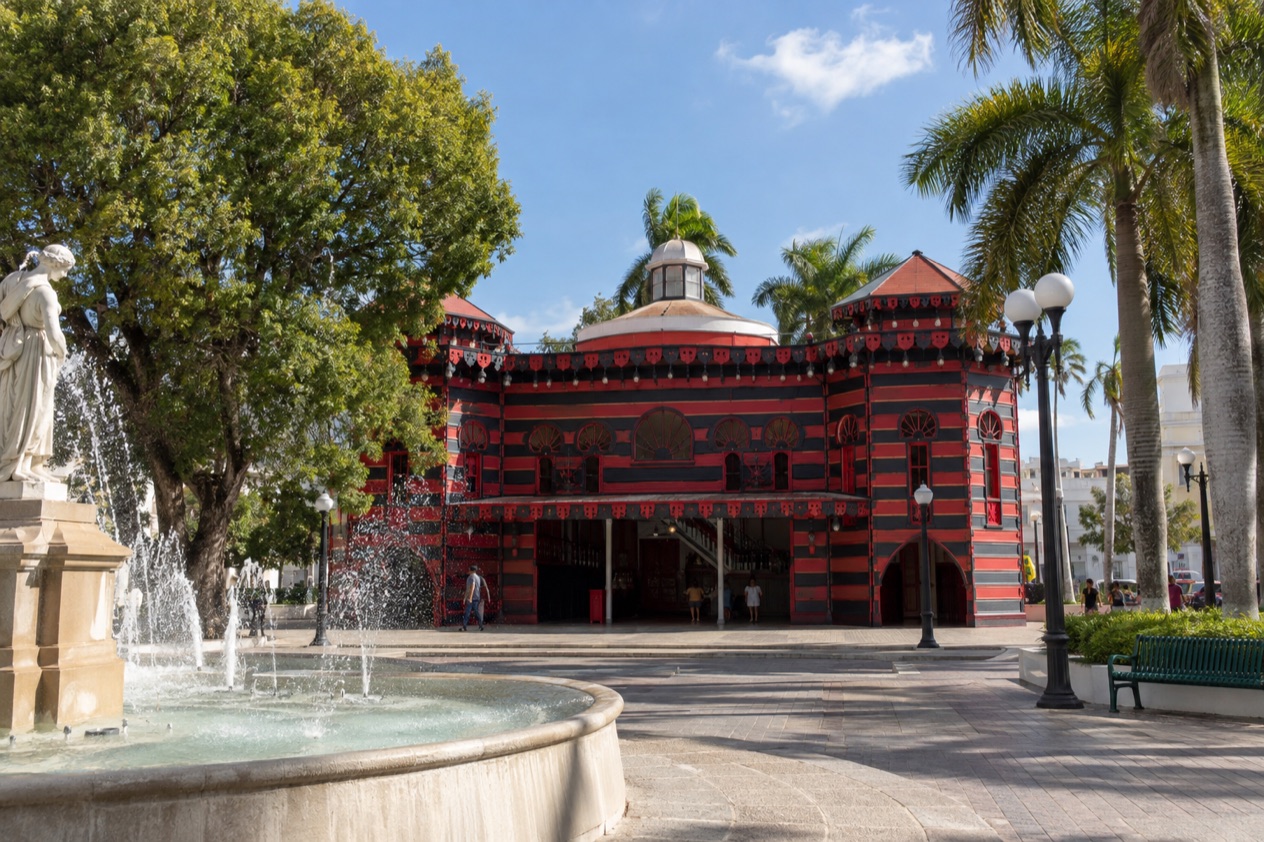
On a warm evening in Ponce, the benches around Plaza Las Delicias fill with families, ice cream in hand, while the bells ring and the red-and-black firehouse glows across the square. Old men argue over baseball under the trees, and the smell of fried snacks drifts from the side streets. This is the Pearl of the South, a proud, walkable city on Puerto Rico’s Caribbean side, made for travelers who like architecture, art, history and a slower rhythm than San Juan.
Where is Ponce and what is it like?
Ponce sits on the south coast of Puerto Rico, facing the Caribbean, with the central mountains rising directly behind it. It is the island’s second city, and it feels like one: a real working town with its own cathedral, its own museums, its own baseball loyalties and a quiet confidence that comes from not needing to compete with the capital. The historic center lies about three miles from the water, so the city is really two places, the old downtown and the seafront.
The center is built around Plaza Las Delicias, a square of shade trees, fountains and benches that works as the living room of the whole city. Facing it stand the Parque de Bombas, the striped firehouse that appears on every postcard, and the cathedral. Streets of pastel facades, wrought-iron balconies and tall wooden doors fan out from there, and the easiest way to enjoy them is to wander with no plan and duck into a cafe when the sun gets heavy.
The pace is gentle. Mornings start early because the heat builds, afternoons are for museums and long lunches, and evenings belong to the plaza. The south coast is one of the drier parts of the island, so skies are often bright, and the air stays hot and humid for most of the year. The trade winds help, but you will still want a hat, water and an unhurried schedule.
Ponce suits travelers who care more about streets, buildings and paintings than about resort amenities. History lovers, photographers, families who like to see a real town and anyone who wants a base for the south coast will be happy here. It may feel quiet to those who want nightlife on every corner or a beach right outside the hotel door, since the sea is a short ride from downtown rather than a step away.
The city has also been part of Puerto Rican identity for a long time. It was founded on August 12, 1692, and the local pride shows in everything from the nickname painted on shop signs to the way residents talk about their Carnaval.
Nearby, the municipality stretches all the way up into the mountains, where Cerro de Punta, the island’s highest peak at 4,390 feet, rises in Barrio Anón. A single stay can take you from a Caribbean boardwalk to cool, misty farmland.
What is there to do in Ponce?
Ponce offers a handful of big reasons to come, and they fit together well: a beautiful historic center, one of the Caribbean’s finest art museums, a boardwalk and island by the sea, and a mountain coffee estate. What sets it apart from its neighbors is how compact and cultural it is. Where many south coast towns are about the beach alone, Ponce adds a city’s worth of buildings, collections and traditions.
The historic center and Plaza Las Delicias
Start at the plaza and let the day unfold on foot. The Parque de Bombas, with its red-and-black stripes, is the landmark everyone photographs, and the cathedral stands just beside it. From there, stroll the surrounding blocks to see the balconied houses, small museums, bakeries and shops that give the center its charm.
Go early in the morning, when the light is soft, or return after sunset for a different view of the square. It suits everybody, requires no plan and is easy to pair with a long lunch of local food nearby. Wear comfortable shoes, because the sidewalks are old and uneven in places.
Museo de Arte de Ponce
The Museo de Arte de Ponce, on Avenida Las Américas, is the cultural highlight of the city. Its Pre-Raphaelite collection is among the most important in the Western Hemisphere, and the famous canvases include Flaming June and The Last Sleep of Arthur in Avalon. The building itself, designed by Edward Durell Stone, is worth a look, and a tall aluminum sculpture by Roy Lichtenstein stands in the front yard.
Check the museum’s official website for current access before you go. The museum charges a small admission fee and can be reached by the SITRAS Orange Line buses E, F or G, which have a Museo stop. It suits art lovers, but even people who rarely visit museums tend to remember Flaming June.
La Guancha and the seafront
La Guancha is the boardwalk by the sea, where Ponce families come on weekends to walk, eat and watch the water. Small food stands, a breezy promenade and a view of the Caribbean make it a pleasant sunset stop after a day downtown. It is also where the boats leave for Caja de Muertos.
Other beaches around the city include Playa de Ponce, El Malecón, Las Salinas, Punta Salinera and El Tuque. Conditions change from day to day and from beach to beach, so look at the sea first, and where a flag, sign or lifeguard is present, follow it. Sargassum seaweed can reach south and east coasts in some springs and summers, so it is a chance rather than a certainty.
Caja de Muertos island
Caja de Muertos is an uninhabited island in the Caribbean, part of the municipality of Ponce and protected as a nature reserve. It has five beaches, among them Playa Pelícano, which has been named a Blue Flag beach, as well as Playa Larga and Playa Blanca. A working lighthouse stands on the highest hill, and the island has plants and animals found nowhere else in the world.
The island is reached by ferry from the La Guancha sector, which makes it a natural day out for beach lovers and anyone who likes wild, undeveloped places. Bring water, sun protection and a sense of adventure, because there is no town here, only the reserve, its staff and the shoreline.
Hacienda Buena Vista
Some seven miles north of the city on Route PR-123, Hacienda Buena Vista is a restored coffee and farm estate in the hills. It is the only farm museum in Puerto Rico, run by the Puerto Rico Conservation Trust, and visitors can tour the old Vives country home, the plantation buildings and the grounds. Guided tours may include parts of the protected natural area.
The estate holds the last remaining example of the Barker hydraulic turbine, recognized as a historic mechanical engineering landmark. In the late nineteenth century, coffee from Puerto Rico was counted among the finest in the world, and the hacienda helps you understand why. It is a good counterpart to the city: green, quiet and cooler, and a fine pick for curious travelers and families with older children.
How many days do you need in Ponce?
A long weekend is the right amount for Ponce, and two nights is enough to see the essentials, while three or four let you add the island and the mountains without rushing. Staying only a few hours as a stop on a drive around the island works for the plaza alone, but you would miss the museum and the sea.
With one full day, spend the morning in the historic center, taking in the plaza, the Parque de Bombas, the cathedral and the side streets. Eat lunch near the square, trying Puerto Rican staples such as mofongo or arroz con gandules, then use the hot afternoon for the Museo de Arte de Ponce. Finish at La Guancha for the sea breeze and the sunset, then return to the plaza for the evening crowd.
A second day opens up the surroundings. You can take the ferry from La Guancha to Caja de Muertos and spend the day on its beaches, or head up the mountain road to Hacienda Buena Vista for a tour of the old coffee estate. Both are easier in the cooler hours, and they combine poorly in a single day, so choose the one that suits your mood.
With a third day, add the Castillo Serralles, the mansion from the 1930s on a hill above the city, which gives a wide view over the rooftops toward the sea. Leave room for lingering as well. A long breakfast, an extra walk through the older streets or a second visit to the plaza at night is often the best part of a stay in Ponce.
Heat is the more usual problem than rain, so build the day around a long midday pause. Travelers using Ponce as a base for the south coast can add beaches and mountain drives beyond these, and a week would feel comfortable.
Where to stay in Ponce
The best area to stay depends on how you want to spend your days, and Ponce gives you three clear choices: the historic center, the seafront and the hills or main avenues. Each has a different feel, so choose according to the places where you expect to spend the most time.
The historic center around Plaza Las Delicias is the first choice for most visitors. You can walk to the firehouse, the cathedral, cafes and restaurants, and you step out of your door into the evening scene on the square. Rooms here are often in restored or older buildings, which adds character, though you should expect some street sound on busy nights and festival weekends.
The seafront near La Guancha suits travelers who care about the water. You are close to the boardwalk, the sunset and the departure point for Caja de Muertos, so mornings on the island become easy. The trade-off is distance from the old town, which you reach by a short drive or taxi rather than on foot.
The area around Avenida Las Américas and the hillsides toward Castillo Serralles is a calmer, more residential base. It puts you near the art museum and gives you views and a quieter evening, which works for couples and people traveling with a car. Wherever you choose, a pool and air conditioning are welcome, because the heat can be strong, and it is wise to book early for Carnaval and holiday weekends.
If you plan to spend much of your time on the coast or in the mountains, a stay outside the city can also make sense, but Ponce itself gives the richest evenings. Having dinner in the plaza and walking back to your room is a pleasure that is hard to match elsewhere on the south coast.
How do you get to Ponce and get around?
Most visitors reach Ponce by road from San Juan or other parts of the island, crossing the central mountains toward the Caribbean, and a rental car is the most flexible way to do it. The drive is a pleasant change of scenery, with the landscape turning drier as you descend to the south coast.
There is also an airport close to the city. Mercedita International Airport lies east of the center, a few miles away, and it has handled commercial flights since the 1960s. Flights from the mainland are domestic, and no passport is needed for U.S. citizens, so arrival is simple. Check airlines for current routes, since service can change.
In the historic center, walking is the best way to get around. The plaza, the cathedral, the firehouse and many cafes are within a few blocks of each other, and you will see more on foot than from any vehicle. Wear light clothes, take breaks in the shade and carry water.
For the Museo de Arte de Ponce, the SITRAS Orange Line buses E, F and G stop at the museum. For places farther out, such as La Guancha, Castillo Serralles and the hills, a car is more practical. Hacienda Buena Vista lies on Route PR-123 in the mountains, so a drive is the usual way to reach it.
To get to Caja de Muertos, you take the ferry from the La Guancha boardwalk. Plan to be at the dock in good time, and bring what you need for a day on an island with no town. Parking and local conditions around the waterfront vary, so give yourself a margin on busy weekends.
When is the best time to visit Ponce?
The best months for Ponce are December through April, the drier season on the island, when days are sunny and the humidity is a little easier to bear. The south coast is already one of the drier parts of Puerto Rico, so these months often feel bright and comfortable for walking the center, though it stays warm all year.
The calendar adds color. Carnaval de Ponce takes place in the weeks before Lent, with parades of vejigantes in horned masks, music and crowds in the streets, and it is the most festive moment in the city. The long Christmas season, from late November into mid-January, brings lights, parrandas and Three Kings Day on January 6. Holy Week moves every year and fills the city with processions and visitors.
From May through November the weather is wetter and hotter, with showers that often arrive in the afternoon. This is also the Atlantic hurricane season, which runs from June 1 to November 30, with the peak around September 10 and most activity between mid-August and mid-October. Follow the National Hurricane Center and local official alerts if you travel in these months, and stay flexible with plans.
Outside the official hurricane season, from December on, the city feels easier to plan for. Festival weekends and holidays are busier, so rooms need earlier booking, while quieter weeks give you more room in the museum and on the plaza. If heat bothers you, start days early and keep afternoons for indoor visits.
Good to know before you go
Ponce uses the U.S. dollar, and Spanish and English are both spoken, though a few words of Spanish are always appreciated in the shops and cafes. Use the usual city habits: keep valuables out of sight, stay aware of your surroundings and ask your hotel which areas to enjoy at night. Sun protection, a hat and plenty of water matter more than any gear, and in hurricane season, check official alerts before you go.
Sources
- Wikipedia, Ponce (https://en.wikipedia.org/wiki/Ponce,_Puerto_Rico), checked October 8, 2026
- Wikipedia, Museo de Arte de Ponce (https://en.wikipedia.org/wiki/Museo_de_Arte_de_Ponce), checked October 8, 2026
- Wikipedia, Hacienda Buena Vista (Ponce) (https://en.wikipedia.org/wiki/Hacienda_Buena_Vista), checked October 8, 2026
- Wikipedia, Mercedita Airport (Ponce) (https://en.wikipedia.org/wiki/Mercedita_Airport), checked October 8, 2026
- Wikipedia, Caja de Muertos Island (https://en.wikipedia.org/wiki/Caja_de_Muertos_Island), checked October 8, 2026
- NOAA National Hurricane Center, Climatology (https://www.nhc.noaa.gov/climo/), checked October 8, 2026
All our pages
When to go
- Best Time to Visit Ponce: Weather by Month, Beaches, Carnaval and Hurricane Season
- Ponce in January: Weather, Swimming, Plaza Las Delicias and a Two-Day Plan
- Ponce in February: Carnaval, Sunny Weather and Things to Do
- Ponce in March: Carnaval Season, Warm Dry Weather and a Walkable Historic Center
- Ponce in April: Weather, Sea Temperatures, Plaza Life and a Two-Day Plan
- Ponce in May: Weather, Swimming, Plaza Las Delicias and a Two-Day Plan
- Ponce in June: Weather, Beaches, Plaza Life and a Two-Day Plan
- Ponce in July: Summer Heat, Plaza Las Delicias, Sea Swims and a Two-Day Plan
- Ponce in September: Weather, Sea Temperatures and What to Do
- Ponce in October: Weather, Warm Sea and What to Do in the Pearl of the South
- Ponce in November: Weather, Warm Sea, Plaza Las Delicias and the Start of the Christmas Season
- Ponce in December: Weather, Swimming, Christmas Season and a Two-Day Plan
Things to do
- Things to Do in Ponce: Plaza Las Delicias, Art Museum, Caja de Muertos and Local Food
- Day Trips from Ponce: Caja de Muertos, Hacienda Buena Vista, Cerro de Punta and the Dry Forest
- 3 Days in Ponce: Plaza Las Delicias, Art Museum, Hacienda Buena Vista and Caja de Muertos
Where to stay
Getting there
- Ponce Airport to City: Getting to Plaza Las Delicias, Carros Públicos and Driving
- Ponce from San Juan: The Drive Across the Island, Your Transport Options and a Day in the Pearl of the South