
Early on a weekend morning, cars start filling the small plateau behind a gas station on the highway, and people in sneakers file onto a boardwalk that disappears into the forest, heading for a cave mouth high above a river valley. Down on the coast the Atlantic keeps hammering the rocks below an old lighthouse, and in the hills the great dish of the radio telescope is gone, though the story of it still draws visitors. Arecibo is a big, rugged, unpolished stretch of Puerto Rico’s north coast, for travelers who like caves, cliffs, sea views and a day that does not feel arranged for tourists.
Where is Arecibo and what is it like?
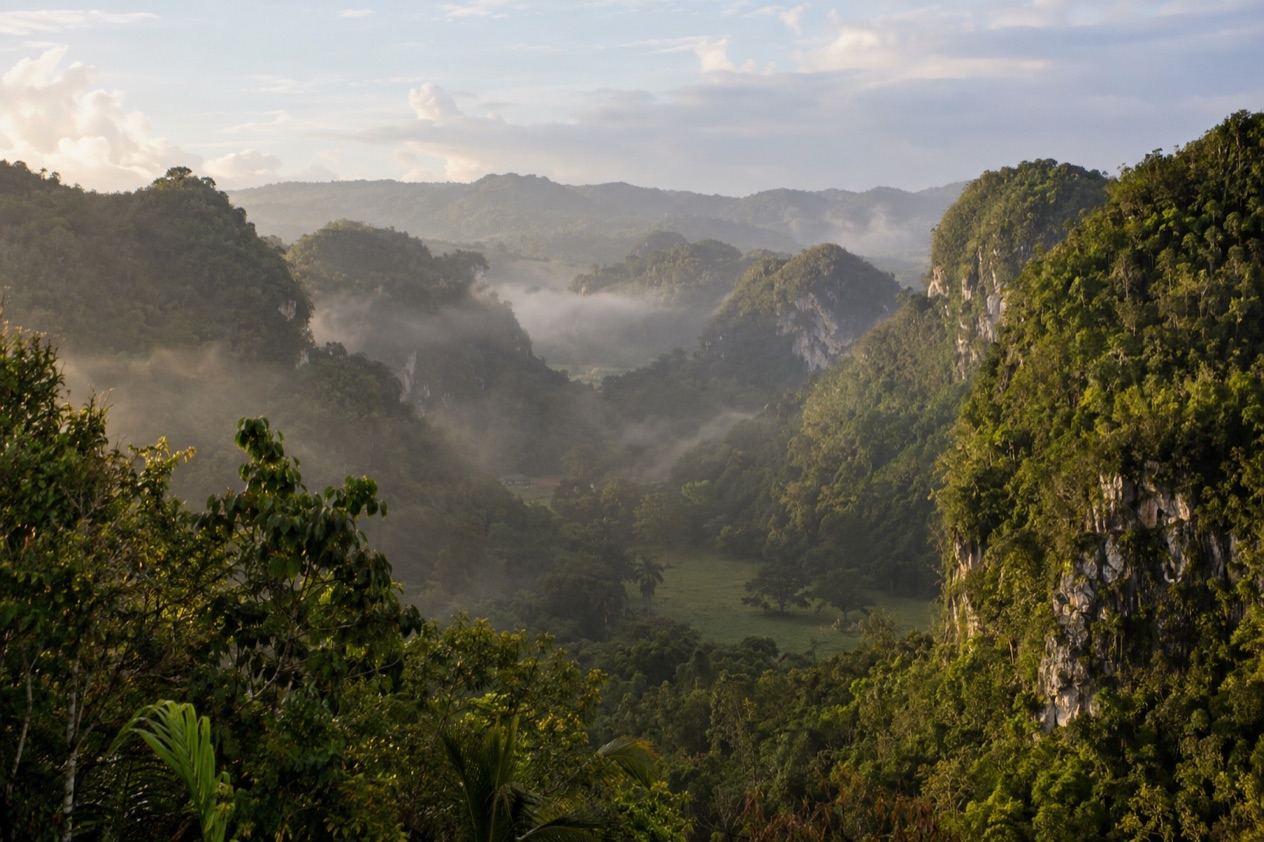
Arecibo sits on the Atlantic side of Puerto Rico, along the north coast, with the limestone hills and the Río Grande de Arecibo valley rising behind it. It is the largest municipality on the island by area, which tells you something right away: this is not one compact resort but a wide territory of a coastal town, cliffs, farmland, forested barrios and karst country, with the interior mountains close by and the coast road running toward neighbors such as Hatillo and Camuy to the west and Manatí and Barceloneta to the east.
The town itself is a working Puerto Rican city, with a plaza, a church, busy streets and a seafront that locals use for strolls, fried snacks and Sunday outings. Nobody here is arranging a resort experience for you. The pleasures are the ones residents enjoy: a seafood lunch near the water, a drive with the windows down, a cave visit with the family, a festival with rides and music in the street.
The pace is unhurried and a little rough around the edges, and that is much of the charm. The sea on this coast faces open Atlantic, so it is powerful and often rough, more a place to look at, walk beside and photograph than to treat as a resort lagoon. Hotels are not the draw, and you will not find a strip of beach bars.
Arecibo suits travelers who have a rental car, curiosity about science and history, and a taste for caves and dramatic coastlines. It may disappoint anyone hoping for a polished beach vacation with lounge chairs, a walkable tourist district and swimming in glassy water. Think of it as a very good day trip or a one or two night stop on a north coast loop, rather than a place to unpack for a week.
What the town has in its favor is variety within a short distance. In a single day you can stand on a lighthouse headland, look into a cliffside cave above a river, and drive up toward the hills where the observatory sits. That mix of coast, cave and mountain is what makes Arecibo different from its neighbors, which tend to offer one or the other.
What is there to do in Arecibo?
The big reasons to come are a cave above a river valley, a famous observatory site in the hills, and a rocky coast with a lighthouse, sea caves and beaches. Treat them as separate outings rather than rushing from one to the next.
Cueva Ventana, the Window Cave
Cueva Ventana is a large cave set atop a limestone cliff, and its wide opening frames a postcard view of the Río Grande de Arecibo valley, with green hills folding away into the distance. You see stalactites, bats flitting in the dim light, and then the bright window itself. It is one of the best-loved outings in the area for Puerto Ricans and visitors from elsewhere, and it was used as a filming location for Wizards of Waverly Place: The Movie, Treasure Island and Runner, Runner.
The cave and the land around it are privately owned, and you visit on a guided tour that includes the safety equipment you need and lasts about three-quarters of an hour. The trail begins beside a gas station on PR-10, with a small parking lot on the plateau behind it and a boardwalk that carries you the first stretch of the way into the forest. The cave is also visible from PR-123 if you only want a look.
Saturdays and Sundays are the busiest, from early morning until an hour before nightfall, so a weekday visit feels calmer. Nightly tours are offered on Wednesdays and Thursdays, which gives a very different experience in the dark. Wear shoes with a good grip, since limestone is slick, and bring a camera for the view.
The observatory site in the hills
For decades the Arecibo Observatory was the home of the world’s largest radio telescope, until July 2016, and the dish appeared in films and in the imagination of anyone who ever looked up at the night sky. It stands in Barrio Esperanza, high in the hills at an altitude of 1,634 feet, and the telescope collapsed on December 1, 2020. The National Science Foundation, which owns the site, announced in 2022 that it would not be rebuilt.
The Ángel Ramos Foundation Visitor Center, which opened in 1997, remained operational after the collapse, and an educational facility is planned for the site. The grounds also hold a smaller radio telescope and a lidar facility, and the observatory has been on the National Register of Historic Places since 2008. It is a quiet, thoughtful stop, more about the story of what stood here and what scientists learned from it than about spectacle.
The drive up through the hills is part of the appeal, with winding roads, small farms and cooler air than on the coast. It suits science-minded travelers, families with curious kids and anyone who grew up with the dish in a movie. Pair it with a drive through the interior rather than rushing back to the shore.
The lighthouse, the caves and the beaches
The Punta Los Morrillos Lighthouse was built in 1898 and is still in use, and it stands inside a small park, the Arecibo Lighthouse and Historical Park. You come for the headland, the white tower, the breakers below and the long views along the coast. Late afternoon light on the rocks is the moment photographers wait for.
Not far along the coast, Cueva del Indio is an archeological site where Taíno drawings can be found, set among sea-carved cliffs where the waves boom into the rock. The beaches include Los Morrillos, Los Negritos, Poza del Obispo and Las Tunas. Pozo del Obispo Beach is considered dangerous, so treat it as a place to look rather than swim.
On this open Atlantic coast, conditions change from day to day and beach to beach, so ask locally and follow any flag, sign or lifeguard where one is present. Many travelers enjoy the shoreline most for its scenery, a picnic and the sound of the surf.
How many days do you need in Arecibo?
One full day lets you choose two highlights, while a night or two lets you visit at a relaxed pace. Because the municipality is so large and the highlights are spread out, a rushed day can feel like mostly driving.
With a single day, choose two anchors. A good combination is a morning tour of Cueva Ventana, a seafood lunch near the coast, and the lighthouse park in the late afternoon when the light softens.
With two days, you can do all three highlights without pushing. Spend one day on the coast, with the lighthouse, Cueva del Indio, a beach walk and a long lunch, and the second in the cave and the hills. A Wednesday or Thursday stay opens the nightly cave tour, which makes a memorable evening.
A longer stay works well as a base for the north and northwest. Hatillo and Camuy lie to the west, a region known for its cave country, and the Hatillo Mask Festival on December 28 is a fun reason to time a December visit. To the east are Manatí and the beaches toward Dorado, and inland the mountain towns around Utuado and Lares are an easy detour for a taste of the central highlands, with coffee country and cooler air.
If you are building a loop of the island, Arecibo fits well between San Juan and the west coast around Rincon. Giving it a night, rather than a pass-through, lets you see the lighthouse at sunset and wake up for an early cave visit before the weekend lines form.
Where to stay in Arecibo
Most visitors stay in or near the town of Arecibo itself, close to the plaza, the seafront and the road network that links everything else. It suits travelers who want restaurants and local life within a short drive, and a base from which the lighthouse, the coast and the cave are all reachable. The atmosphere is that of a real Puerto Rican city rather than a vacation enclave.
The coastal stretch toward the lighthouse and the beaches is the choice for those who want sea views, the sound of surf and early walks along the shore. It is quieter in the evening, and the trade-off is that you will want a car for dinner.
The hills toward the observatory and the interior suit travelers who prefer cooler air, green views and a countryside feel, with small guesthouses and rural stays appearing here and there. You are closer to the mountain roads, though farther from the coast.
Another option is to stay in a neighboring town on the north coast, such as Hatillo, Camuy or Manatí, and treat Arecibo as a day trip. This works well on a loop around the island, since you can sleep near a beach or a cave park and still reach the highlights in the morning.
Weekends are the busiest time in the cave area, while weekdays feel calmer. On weekdays the whole region feels calmer and easier to enjoy.
How do you get to Arecibo and get around?
Most travelers fly into San Juan and drive west along the north coast, since Arecibo’s own airport, Antonio (Nery) Juarbe Pol Airport, is small and noncommercial, with no commercial airline flights. Flights from the mainland are domestic, and from the airport you continue by road. The route follows the Atlantic coast with the hills rising to the south.
Once you are there, the geography decides how you move. Arecibo is the largest municipality on the island by area, and its main sights lie far from one another, with the cave off PR-10, the lighthouse and beaches on the coast, and the observatory up in the hills. A car is the natural way to string them together, since the places are not within an easy walk of each other.
Within the town center you can stroll the plaza, the church and the streets around them on foot, and the seafront is pleasant for a walk. At the cave, parking is on a small plateau behind the gas station along PR-10, and a boardwalk covers the first stretch of the trail.
The cave is also visible from PR-123, which gives a quick look at the cliff if you are driving through. Leave extra time on weekends, when the area around the cave fills up from early morning, and plan your coastal stops for the quieter hours of the day.
If you prefer not to drive, ask your lodging about tours and local transport, since the options vary and change. Many visitors find that a day with a rental car, a map and a loose plan is the most satisfying way to see the area.
When is the best time to visit Arecibo?
The drier months, roughly December through April, are the most comfortable for a visit, with sunnier days for the cave trail, the lighthouse and the hills. Puerto Rico is hot and humid all year, and the north coast and the hills get their share of rain, so even in the dry season expect a passing shower now and then. Winter is also when the Atlantic swells run biggest, which makes the coastline dramatic to watch but not a place to count on easy swimming.
From about May to November, the wetter season, afternoon downpours become more frequent and the cave trail and the hill roads can get slick. The Atlantic hurricane season runs from June 1 to November 30, with its peak on September 10 and most of the activity between mid-August and mid-October. If you travel then, follow the National Hurricane Center and local official alerts, and keep your plans flexible.
Festivals add color. The Fiestas Patronales de San Felipe Apostol in May bring parades, games, artisans, amusement rides, regional food and live entertainment, a lively moment to see the town in its full social swing. December and early January bring the long Puerto Rican Christmas season, with parrandas and Three Kings Day on January 6, and the Hatillo Mask Festival on December 28 is a short drive west.
Weekends are the crowded days at the cave, in any month, so a weekday gives you a calmer visit. Holiday weeks are busier on the coast, when families from across the island head out for the day. For a balanced trip with decent weather and fewer people, many travelers favor the shoulder months at either end of the dry season.
Good to know before you go
Arecibo is in Puerto Rico, a U.S. territory, so U.S. citizens need no passport and no visa, and the currency is the U.S. dollar. English and Spanish are both official, and a few words of Spanish are always appreciated.
The sea on this coast can be powerful, so look at the beach and follow any flag, sign or lifeguard present rather than assuming a beach is safe for swimming, and treat Pozo del Obispo as a place to look, not to swim. Keep an eye on the National Hurricane Center if you travel between June and November, and wear shoes with good grip for the cave trail.
Sources
- Wikipedia, Arecibo (https://en.wikipedia.org/wiki/Arecibo,_Puerto_Rico), checked October 8, 2026
- Wikipedia, Río Camuy Cave Park (https://en.wikipedia.org/wiki/Camuy_Caves), checked October 8, 2026
- Wikipedia, Cueva Ventana (https://en.wikipedia.org/wiki/Cueva_Ventana), checked October 8, 2026
- NOAA National Hurricane Center, Climatology (https://www.nhc.noaa.gov/climo/), checked October 8, 2026