
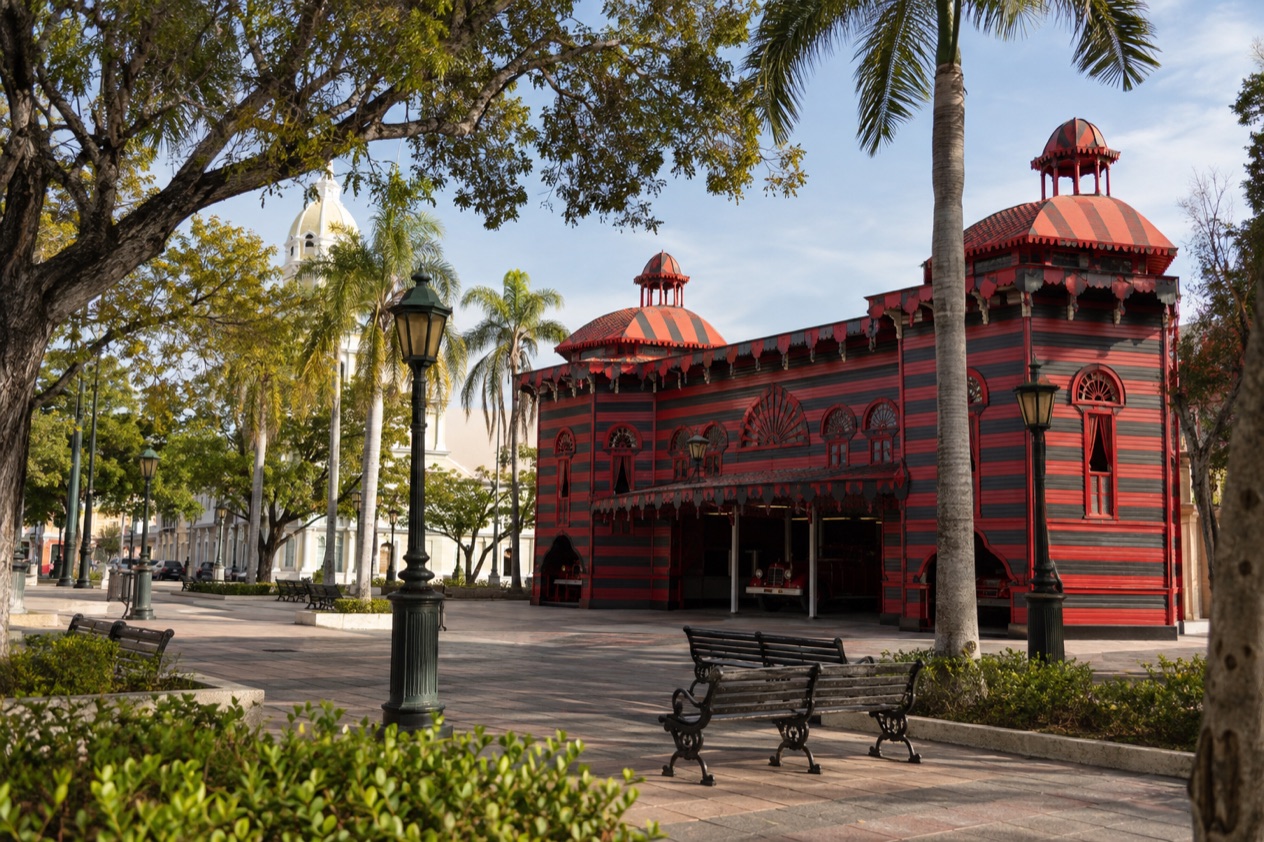
Early in the morning, the plaza in Ponce fills with the sound of church bells, shoe-shiners setting up their chairs and old men settling onto benches beneath the laurel trees, a few steps from a red-and-black firehouse that looks like a carnival ride. The Pearl of the South moves at its own pace, with colonial streets, serious art and a coastline that opens to the Caribbean. It suits travelers who like to walk, eat well and see Puerto Rico away from the San Juan crowds.
What are the best things to do in Ponce?
The best things to do in Ponce combine a walk through its historic center with a few standout visits: a world-class art museum, a coffee plantation in the hills and a boat ride to an island reserve. Everything else, the food, the boardwalk and the evenings in the plaza, fills the gaps between them.
Here are the essentials, each one developed in the sections that follow:
- Walk around Plaza Las Delicias and the Parque de Bombas, the heart of the historic center and the best place to feel the city.
- Spend a morning at the Museo de Arte de Ponce, home to famous Pre-Raphaelite paintings.
- Climb up to Castillo Serralles for its 1930s mansion and its view over the city and the sea.
- Board a boat at La Guancha that carries you to Caja de Muertos, where you will find a lighthouse, a nature reserve and stretches of sand.
- Visit Hacienda Buena Vista in the hills to see how a coffee plantation worked.
- Eat your way through the city: mofongo, fritters, fresh fish and a cold piragua from a cart.
- Stroll the La Guancha boardwalk at dusk, when families, music and snacks fill the waterfront.
- If the calendar lines up, catch Carnaval de Ponce and its horned vejigante masks.
Ponce rewards a slow approach. Mornings are best for anything outdoors, since the south coast is hot and sunny for much of the year. When afternoon comes, that is the time for museums and leisurely lunches, while the plazas and the waterfront take over once evening arrives.
Most visitors give the city at least a full day and add a second for the island or the plantation. Ponce is also a good base for the south coast generally, with the airport close to town and the mountains a short drive north.
Sights and landmarks in Ponce
The historic center is the first stop in Ponce, a compact grid of pastel facades, wrought-iron balconies and shaded arcades built around one great square. The old district sits a few miles inland from the Caribbean, so the sea is not in view, but the city’s wealth, built on sugar and trade, shows in every cornice. Plan on walking, and carry water.
Plaza Las Delicias and the Parque de Bombas
Plaza Las Delicias is the living room of Ponce. Trimmed trees give shade to the benches, a fountain sits at the center, and a cathedral stands on one side. Locals meet here to talk, sell ice treats and play dominoes, and on weekends the square often fills with families.
Across the way, the Parque de Bombas is the red-and-black striped firehouse that appears on nearly every postcard of the city. It was built as a fire station and is now a small museum, and its bold paint makes it the easiest landmark to find. Go early for photographs without crowds, then sit with a coffee and watch the square wake up.
Museo de Arte de Ponce
The art museum sits on Avenida Las Américas, a short ride from the plaza, in a modern building designed by Edward Durell Stone. The Western Hemisphere counts few Pre-Raphaelite collections as significant as this one, and its best-known painting is ‘Flaming June,’ with ‘The Last Sleep of Arthur in Avalon’ a near second. Out front, a tall aluminum sculpture by Roy Lichtenstein announces the place.
Founded in 1959 and in its current home since 1965, it was the first museum in Puerto Rico accredited by the American Alliance of Museums. The galleries also cover European and Latin American art, so allow a couple of hours. Public buses on the SITRAS Orange Line (E, F and G) stop at the Museo, which is handy if you do not want to drive.
Castillo Serralles
On a hill above the city, Castillo Serralles is a mansion from the 1930s, built for a family whose fortune came from sugar and rum. The house mixes Spanish revival style with tropical gardens, and its terraces look out over rooftops toward the sea. It is the kind of stop where the view is half the reward.
Visit in the morning or late afternoon, when the light is soft and the hill is cooler. It pairs naturally with a lunch back in town, and it gives a sense of how the city’s wealthy families lived in the early twentieth century.
| Site | Open |
|---|---|
| Museo de Arte de Ponce | Check the museum’s website |
More to see in the center
Between the major stops, wander the side streets for tile-fronted houses, small galleries and the occasional mural. The old cathedral on the plaza is worth a quiet few minutes inside, and the blocks around it hold craft shops and bakeries.
Ponce is also the island’s second city, with a long cultural reputation: it was founded in 1692 and has always seen itself as a place of art, music and sport. Take your time, and let one landmark lead to the next.
Beaches and outdoor things to do in Ponce
The best beaches near Ponce are on Caja de Muertos, a short boat ride out, while the mainland coast has a mix of boardwalks, small beaches and working waterfront. Along the south coast, which looks out on the Caribbean, every beach and every day brings different conditions, so if a flag, sign or lifeguard is there, do what it says.
Caja de Muertos
Caja de Muertos is an uninhabited island about five miles off the coast, protected as a nature reserve since 1980. The ferry leaves from the La Guancha boardwalk. On the island you find five beaches: Playa Pelícano, Playa Ensenadita (known as Pocitas), Playa Larga, Playa Blanca and Playa Chica. Playa Pelícano holds the distinction of a Blue Flag beach.
Past the beach, a lighthouse from 1887 that still operates sits atop the tallest hill, and the island is home to plants and animals that exist nowhere else. Trails climb through dry coastal scrub, with views back toward the mainland. Rangers staff the island, but nobody lives there, so plan for a day trip with your own water, sun protection and snacks.
Snorkelers like the clear shallows near the beaches, where fish are often easy to spot. Go in the morning, when the sun is gentler.
La Guancha and the waterfront
At the close of the day, La Guancha, a boardwalk beside the sea, is the most laid-back spot in Ponce. La Guancha is a landmark boardwalk beside the sea.
It is also the departure point for the Caja de Muertos ferry, so many travelers see it twice. Nearby are other stretches of coast, including Playa de Ponce, El Malecón, El Tuque, Punta Salinera and Las Salinas. They vary from busy local hangouts to quieter shorelines, so look at the water before you swim.
Up in the mountains
Inland reaches of Ponce’s municipality go as far as Cerro de Punta, which rises to 4,390 feet and ranks as Puerto Rico’s tallest mountain. It lies in Barrio Anón, high in the cool, misty interior. Even if you do not hike, a drive into the hills gives a very different picture from the sunny coast, with ferns, coffee farms and winding roads.
The change in air and scenery is the draw. Carry a light layer for the higher elevations and start early, since cloud often builds as the day goes on.
Day trips from Ponce
The best day trips from Ponce head either north into the coffee hills or south by boat to an island reserve. Both can be done in a day, and they make a good contrast with the city itself.
Hacienda Buena Vista
Hacienda Buena Vista sits about seven miles north of Ponce on Route PR-123, in Barrio Magueyes. The Puerto Rico Conservation Trust operates this restored coffee and corn plantation as a museum, and no other farm museum exists in Puerto Rico. Visitors tour the old Vives country home and explore the plantation buildings and grounds. Guided tours may include portions of the protected natural area.
What draws visitors most is the Barker hydraulic turbine, the sole surviving specimen of the earliest reaction-type turbine ever built. The site is on the National Register of Historic Places, and the turbine was honored as a historic monument of mechanical engineering. In the late nineteenth century, coffee from this part of the island was considered among the finest in the world, and it was even said to be a favorite at the Vatican.
It suits curious travelers, history lovers and anyone who wants a cool, green break from the city. Go in the morning and pair it with a lunch in the hills.
Caja de Muertos by ferry
Caja de Muertos also works as a full-day trip from Ponce. The ferry runs from La Guancha, and the crossing covers the roughly five miles of open water between the mainland and the reserve. Arrive with a hat, water and a plan for how to spend the hours: a beach morning, a hike to the lighthouse, then a last swim before heading back.
It suits families, hikers and snorkelers alike. Pick your beach based on how the water looks that day.
Other short outings
The mountain drive toward Cerro de Punta makes a scenic half day for travelers who prefer to see Puerto Rico’s interior. Closer to town, the cliffs and beaches along the nearby coast are an easy detour in the late afternoon.
Mercedita Airport sits just east of the city, so you can also fly into Ponce directly and begin the south-coast loop right away. From there, every sight, beach, and plaza in Ponce is a short trip.
What to eat in Ponce
Eating in Ponce means Puerto Rican comfort food done with a southern accent: fried, stewed, grilled and always generous. Start with mofongo, a mound of mashed fried plantain, often filled or topped with shrimp, chicken or pork, and finished with garlicky broth. Alcapurrias, made from green banana or root vegetables and filled with meat, and bacalaitos, crisp cod fritters, are snacks you eat from a kiosk with your hands.
Near the water, fresh fish and seafood take over: whole fried snapper, shrimp in garlic sauce and ceviche-style plates. Rice with pigeon peas, pasteles and roast pork (lechón asado) turn up around Christmas, but good versions appear on menus through much of the year.
Street snacks and sweets
Walk around the plaza and you will meet vendors selling piraguas, shaved ice drenched in fruit syrup, a perfect answer to the heat. Tembleque, a coconut pudding set with cornstarch and dusted with cinnamon, is the classic dessert.
Bakeries sell pastries and sweet breads, and cafés serve strong Puerto Rican coffee, which makes sense given the hills behind the city. A café con leche in the morning is a local ritual.
Where to eat
Look for family restaurants near the plaza serving lunch plates of rice, beans and stewed meat, and for casual seafood spots along the waterfront. Kiosks at La Guancha serve fried snacks and cold beer in an easy, open-air setting.
Lunch is the main meal for many locals, so a long midday table is a good way to see the city as residents do. Save the fritters for the boardwalk.
Things to do in Ponce at night
Evenings in Ponce are social and outdoors, and the best of them happen in the plaza and along the sea. As the heat drops, the square fills with families, couples and teenagers, and the Parque de Bombas glows under its lights.
The plaza after dark
Plaza Las Delicias is at its liveliest once the sun goes down. Ice cream and snack vendors set up, musicians sometimes play on weekends, and people simply sit and talk. A walk around the square takes only a few minutes, but most people linger for an hour or more.
The surrounding streets have small bars and cafés where you can have a drink and watch the evening pass. The mood is easygoing rather than rowdy.
La Guancha at dusk
The boardwalk is a favorite for sunset and the hours after. Kiosks serve fried food and cold drinks, music drifts from speakers, and families stroll along the water. It is casual and affordable in feel, with a breeze that makes it more comfortable than the town in the afternoon. Come before dark to catch the light on the sea, then stay for dinner at one of the nearby seafood places.
Quieter evenings
If you prefer calm, a late dinner in the historic center followed by a slow walk past the illuminated facades is enough. In the weeks leading up to Lent, Carnaval de Ponce brings festive nights, when costumed vejigantes in horned masks parade and music fills the streets.
Things to do in Ponce with kids
Children in Ponce do best with a mix of outdoor space, short museum visits and plenty of snacks. The firehouse is a hit on sight, since the red-and-black stripes and the old fire equipment appeal to almost any child. The plaza is a shaded place to take a break and watch the pigeons.
Parque de Bombas and the plaza
A visit to the Parque de Bombas takes little time and gives kids a vivid piece of local history. Afterward, the plaza gives them room to move and a fountain to look at. Treat them to a piragua from a cart, the sort of small reward that makes a walking day easier. Plan the walking for the morning, take breaks in the shade and keep water close.
Boats, beaches and the boardwalk
The ferry to Caja de Muertos is an adventure in itself, and the island’s beaches offer sand and shallow areas for exploring. Conditions vary, so watch the water carefully with small children and follow any flags or signs. There is little shade on parts of the island, so bring hats, sunscreen and plenty of water. La Guancha is easier for a shorter outing, with open space to run and snacks close by.
Museums and the plantation
At the art museum, the big Lichtenstein sculpture in the yard is a fun photograph, and shorter visits keep younger children from tiring. Hacienda Buena Vista, with its old buildings and the famous turbine, appeals to curious older kids who like to see how things work. Ponce is hot and sunny for much of the year, so schedule outdoor time early and keep afternoons for indoor stops and long lunches.
Good to know before you go
U.S. citizens can visit Ponce without a passport or a visa because Puerto Rico is a U.S. territory. The currency is the U.S. dollar, and flights from the mainland are domestic, with Mercedita Airport just east of the city. The historic center is easy to walk, but a car helps for the hacienda, the castle and the mountains.
The Atlantic hurricane season runs from June 1 to November 30, so follow the National Hurricane Center and local official alerts if you travel then. Sargassum seaweed can reach some southern and eastern shores in certain springs and summers.
Sources
- Wikipedia, Ponce (https://en.wikipedia.org/wiki/Ponce,_Puerto_Rico), checked October 8, 2026
- Wikipedia, Museo de Arte de Ponce (https://en.wikipedia.org/wiki/Museo_de_Arte_de_Ponce), checked October 8, 2026
- Wikipedia, Hacienda Buena Vista (Ponce) (https://en.wikipedia.org/wiki/Hacienda_Buena_Vista), checked October 8, 2026
- Wikipedia, Mercedita Airport (Ponce) (https://en.wikipedia.org/wiki/Mercedita_Airport), checked October 8, 2026
- Wikipedia, Caja de Muertos Island (https://en.wikipedia.org/wiki/Caja_de_Muertos_Island), checked October 8, 2026
- NOAA National Hurricane Center, Climatology (https://www.nhc.noaa.gov/climo/), checked October 8, 2026
To plan your stay
- Best Time to Visit Ponce: Weather by Month, Beaches, Carnaval and Hurricane Season
- Where to Stay in Ponce: Plaza Las Delicias, La Guancha, the Museum District and the Hills
- Ponce Airport to City: Getting to Plaza Las Delicias, Carros Públicos and Driving
- Know Before You Go to Ponce: Entry, Getting Around, Heat and Local Customs