
Halyards clink at the Fajardo marina on an April morning, and the air smells of coffee and diesel, as snorkel bags and coolers are loaded onto catamarans. The trade winds keep the heat friendly, the water is turning a deeper blue, and the east coast feels busy without being frantic. April is a good month to spend on the water and on the beaches of Puerto Rico’s northeast corner, with the cays, the nature reserve and the night kayaks all within easy reach.
What is the weather like in Fajardo in April?
For the Caribbean, Fajardo in April stays warm and sunny with fairly dry days, plus brief showers now and then and a constant Atlantic breeze that keeps the heat from feeling too harsh.
| Month | Average high (°F) | Average low (°F) | Rain days | Sea (°F) |
|---|---|---|---|---|
| March | 84.2 | 71.9 | 5.5 | 80.8 |
| April | 85.9 | 73.3 | 6.3 | 82.2 |
| May | 86.7 | 75.4 | 8.4 | 84.6 |
If you are standing in Fajardo in April, the water feels about the same as it does a short way down the coast at Ceiba. The sea figure is the average of daily maximum sea-surface temperatures from a marine data series, a shade warmer than a full day-and-night average.
Mornings are the best hours for walking, with bright, clear light and a breeze at the marina. By midday the sun is strong and the air feels heavy, so shade, a cold drink and a swim become the plan.
Rain, when it comes, usually arrives as a quick passing shower that blows in from the ocean, lasts a short while and leaves the pavement steaming. Only about one day in a month brings a real downpour, so most days are not rained out.
Evenings stay warm enough for a T-shirt and for dinner outside. Pack light cotton, a hat and sunscreen, because the April sun and the reflection off the water burn quickly even when the breeze makes it feel mild. Days run long, with a little over twelve hours of daylight, which leaves room for a boat trip and a late seafood dinner.
Can you swim in Fajardo in April?
Yes, the water is warm enough to swim for a long time, and the majority of guests remain in it for as long as they want.
The cays and beaches off the northeast corner are the main swimming and snorkeling draw. Icacos, a small uninhabited cay reached by boat, is a classic day trip for white sand and clear water over reef patches.
Boat days are usually the most pleasant way to swim here, since the water around the cays is often more sheltered than the open Atlantic shoreline. Along the coast road toward San Juan, Luquillo beach is a popular stop for families, with food kiosks right behind the sand.
Conditions change from day to day and from beach to beach. Waves and currents are possible along the shores that face the Atlantic, and though the winter swells ease in spring, they never fully go away, so check the water before entering.
When a flag, a sign or a lifeguard gives you a direction, follow it. Pack a mask and snorkel, water shoes for stony entrances, and a rash guard if you sunburn easily. Beginners and children do best on the quieter stretches and on guided boat trips.
What to do in Fajardo in April
April is a month for boats, beaches and night kayaking. The dry-season calm is still around, the big holiday crowds have thinned a little, and the water is inviting. Fajardo is a marina town, and the whole rhythm of the place follows the docks, where catamarans and sailboats leave in the morning and return sunburned and happy in the afternoon.
Holy Week moves from year to year, and when it falls in April the whole island takes time off. Beaches fill with local families, kiosks sell fried snacks and cold drinks, and processions pass through town centers. If your dates land on it, expect the coast to feel more like a family reunion than a quiet escape.
Day trip to Icacos and the cays
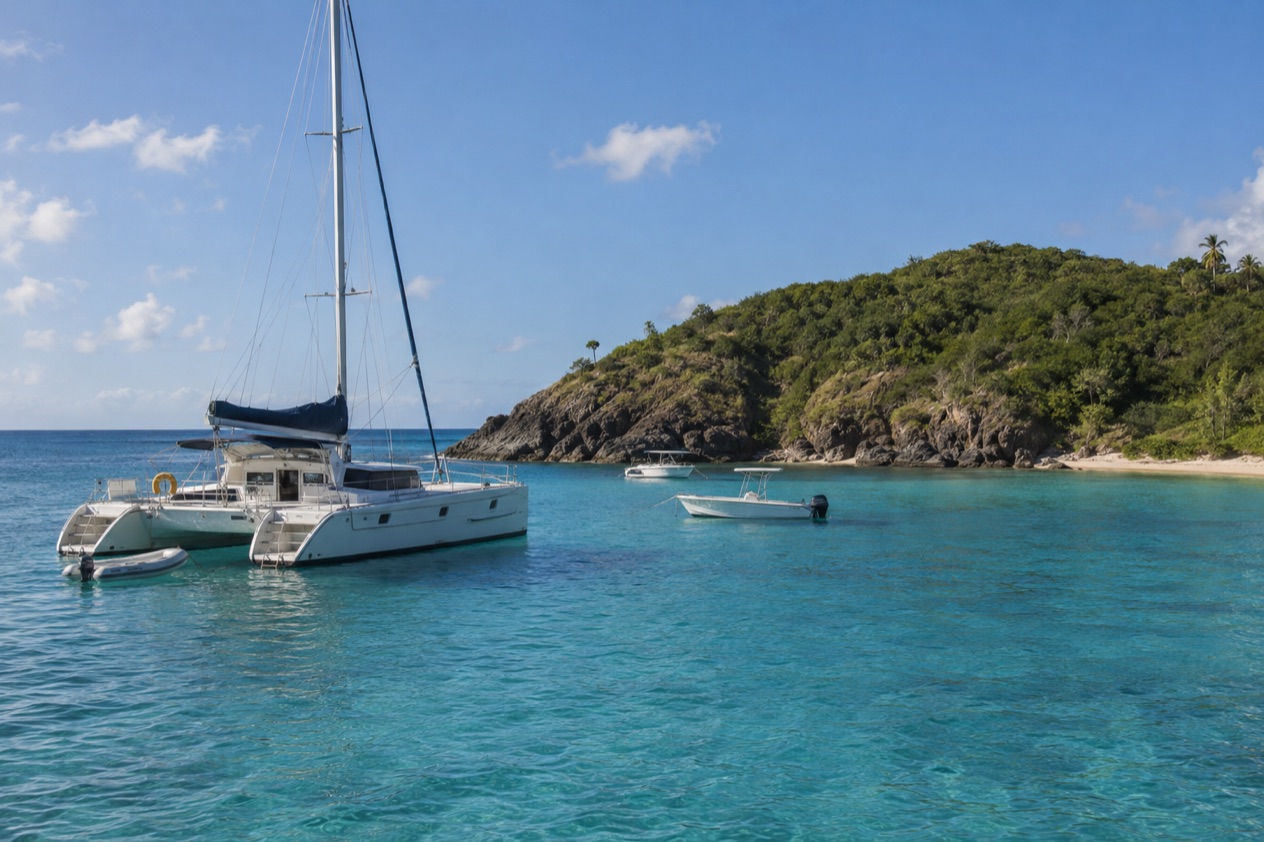
A boat day to the cays is the signature outing from Fajardo. From the marinas lining the waterfront, catamaran and sailing trips typically depart in the morning, then cross blue water toward Icacos and the cays nearby.
You anchor off a white-sand beach, snorkel over reef, and often have lunch and drinks on board. The crossing takes you past mangrove coast and small islets, and in April the light is bright and the horizon sharp.
The trip suits nearly everyone, from families to couples, though people who get seasick should know the open stretch can be bumpy when the trades blow hard. Go early, since mornings are calmer and the beach is emptier before the other boats arrive. Bring sunscreen, a hat, a towel and a waterproof bag for your phone. There is little shade on a cay, so a shirt over your swimsuit is a smart idea.
Night kayaking in Laguna Grande
Laguna Grande, one of Puerto Rico’s three bioluminescent bays, sits within the Las Cabezas de San Juan Nature Reserve. At night, with a guide, you go by kayak, crossing a mangrove channel to a lagoon where blue-green light might surround your paddle and your fingers. When the night is dark with no moon at all, the glow is at its strongest, so the moon’s phase matters more than the month, and the sparkle is best treated as a chance, never a promise.
The paddle is easy for most people, and the guide handles the route in the dark. Couples, families with older children, and anyone drawn to calm water and a sky full of stars will find it a good fit. Wear a swimsuit or quick-dry clothes, bring bug spray for the mangroves, and leave the flashlight off once you reach the lagoon, since light dims the effect.
Luquillo kiosks and the road to El Yunque
If you want to eat the way locals do, Luquillo is the spot on the coastal route from San Juan to Fajardo. A row of food kiosks sells alcapurrias (fritters of mashed taro and green banana stuffed with meat), fried fish, empanadillas and cold coconut water. The beach beside them is wide and lined with palms, a good stop after a morning on the road.
The turnoff for El Yunque, the rainforest on the mountainside above, is also near Luquillo. Many visitors pair the two, with a green morning under the canopy and a salty lunch by the sea. Even in a fairly dry month the mountain makes its own clouds, so bring a light rain layer and expect it to be wetter and cooler up there than on the coast.
Back in Fajardo, the waterfront restaurants serve the catch of the day with tostones and rice and beans, and a cold Medalla beer or a piña colada tastes right at sunset. Piraguas, shaved ice with fruit syrup, are the street treat of choice on hot afternoons. Ceiba, a short drive south, is the port for public ferries to Culebra and Vieques, which are worth considering if you have extra days.
A two-day itinerary for Fajardo in April
Day 1 is for the water. Arrive at the marina at first light, while the breeze is fresh and the glow is gentle, and step aboard a catamaran or sailing outing bound for Icacos and its neighboring cays. Spend the late morning swimming and snorkeling, have lunch either on board or on the sand, then return in the early afternoon as the sun grows harshest and the trade winds strengthen.
Spend the hot hours in a shaded waterfront restaurant or back at your hotel, then stroll the marina as the sun drops. Sunset comes after the long, bright April day, so there is time for a seafood dinner on the water. Keep it easy, because the next night is a late one.
Day 2 starts slowly with coffee and a mallorca (a sweet, powdered-sugar bread) at a local bakery. Drive west along the coast road to Luquillo for a beach morning and a kiosk lunch, then continue toward the El Yunque turnoff if you want a taste of the rainforest. If showers roll in, the mountain is lovely in the mist, and Luquillo’s kiosks have covered seating.
Make your way back to Fajardo by late afternoon, take it easy, and once darkness falls, paddle a kayak to Laguna Grande within the Las Cabezas de San Juan reserve. If the weather turns bad, the rain card is a long lunch, a slow drive and a night tour rescheduled to the next evening, since the lagoon can be visited on another night of your stay.
Is Fajardo busy in April?
Fajardo is moderately busy in April, with a lively weekend crowd but less pressure than in the peak winter months.
Local families fill the beaches and boats on weekends, and Holy Week, when it falls in April, brings the biggest surge of the month. Spring break travelers from the mainland also keep catamarans and kayak tours well booked. Weekdays outside those stretches are much calmer, and the cays are easier to enjoy before the afternoon boats arrive.
Book catamaran trips and the bioluminescent bay kayak tour early for holiday weeks, since seats on the best nights go first, and nights close to the new moon are the ones many visitors want. For quieter weeks, a few days ahead is a common habit.
Rental cars are worth reserving early too, as the drive to Luquillo and El Yunque is easy by car and awkward without one. Restaurant tables at the marina fill on weekend evenings, so plan dinner a little ahead.
What to pack for Fajardo in April
Think light, quick-drying and sun-ready, with one layer for the breeze on the water.
- Sunscreen and a wide-brimmed hat, because the sun on the cays is strong and there is little shade.
- Mask and snorkel, for the reefs around Icacos.
- Water shoes, for rocky entries and the kayak launch.
- A light rain jacket, for showers and for the damp air at El Yunque.
- Bug spray, for the mangroves at dusk.
- A waterproof phone pouch, for boat days and kayaking.
Good to know before you go
April falls outside the official hurricane season, which runs from June 1 to November 30, but follow local weather updates as you would anywhere in the Caribbean. If you want to reach Culebra and Vieques by public ferry, head to Ceiba, a quick trip south, since those boats do not depart from Fajardo. A rental car makes it simple to discover the coast road, Luquillo and El Yunque, and U.S. citizens need neither a passport nor a visa to visit.
Fajardo in April vs March and May
March is a touch cooler and drier, with a slightly cooler sea that some swimmers feel on the first dip. Winter swells can still linger on the Atlantic side, and the spring break crowds are in full swing. If you prefer cooler mornings and the driest weather, March is the better pick.
May is hotter and wetter, with showers more frequent and the sea at its warmest of the three. Crowds thin as the school year winds down, and the island tips toward its wetter season, so afternoons are likelier to turn stormy. If you want bathwater swimming and fewer people, May suits you, as long as you accept more rain.
April sits in the middle, which is its charm. It keeps most of the dry-season ease, the water is warm, and the heat has not yet turned heavy. Choose April for boat days and kayak nights, March for the coolest air, and May for the warmest sea and quieter beaches.
Is April a good time to visit Fajardo?
Yes, April is a very good time for anyone who wants to spend their days on the water, with sunny weather, a warm sea and manageable crowds outside the holiday weeks.
It will suit snorkelers, families, couples and anyone chasing a night kayak under the stars. It is less ideal for travelers who dislike heat and humidity, or for anyone hoping for empty beaches during Holy Week. If you plan to see the bioluminescent bay, check the moon and aim for a dark night.
On arrival, book the catamaran day and the Laguna Grande kayak first, since both depend on weather and the moon, then fill the rest around them. What makes April in Fajardo special is the balance: a warm, bright sea, long evenings at the marina, and a glowing lagoon waiting after dark.
Sources
- NOAA NCEI, monthly normals 1991-2020, station RQW00011630 (Roosevelt Roads (Ceiba)), checked October 8, 2026
- Open-Meteo Marine API, average 2015-2024, checked October 8, 2026
- sunrise-sunset.org, sunrise and sunset calculated for the 15th of the month, checked October 8, 2026
- NOAA National Hurricane Center, Climatology (https://www.nhc.noaa.gov/climo/), checked October 8, 2026
To plan your stay
- Things to Do in Fajardo: Bioluminescent Bay, Icacos Cay, Beaches and Day Trips to Culebra
- Where to Stay in Fajardo: Marina Town, Reserve Villages, Luquillo and Ceiba
- Day Trips from Fajardo: Icacos Cay, Culebra, the Bioluminescent Bay and Luquillo
- Best Time to Visit Fajardo: Weather by Month, Beaches, Crowds and Festivals