
PORTUGAL · JANUARY · THE INDOOR MONTH, REGION BY REGION
Portugal spends January indoors, and it does that well. Lisbon holds 56°F afternoons under a sky that delivers rain on about nine days, Porto counts twelve wet days and 154 mm, and the country’s hotels run at 31 percent of their August load. That adds up to something specific: museums without lines, tascas with a free table at 8pm on a Friday, and long-haul fares at their quietest point of the year (est.).
So this page splits the month by region, because a soaked week in the north and a bright one in Faro are the same January on paper only.
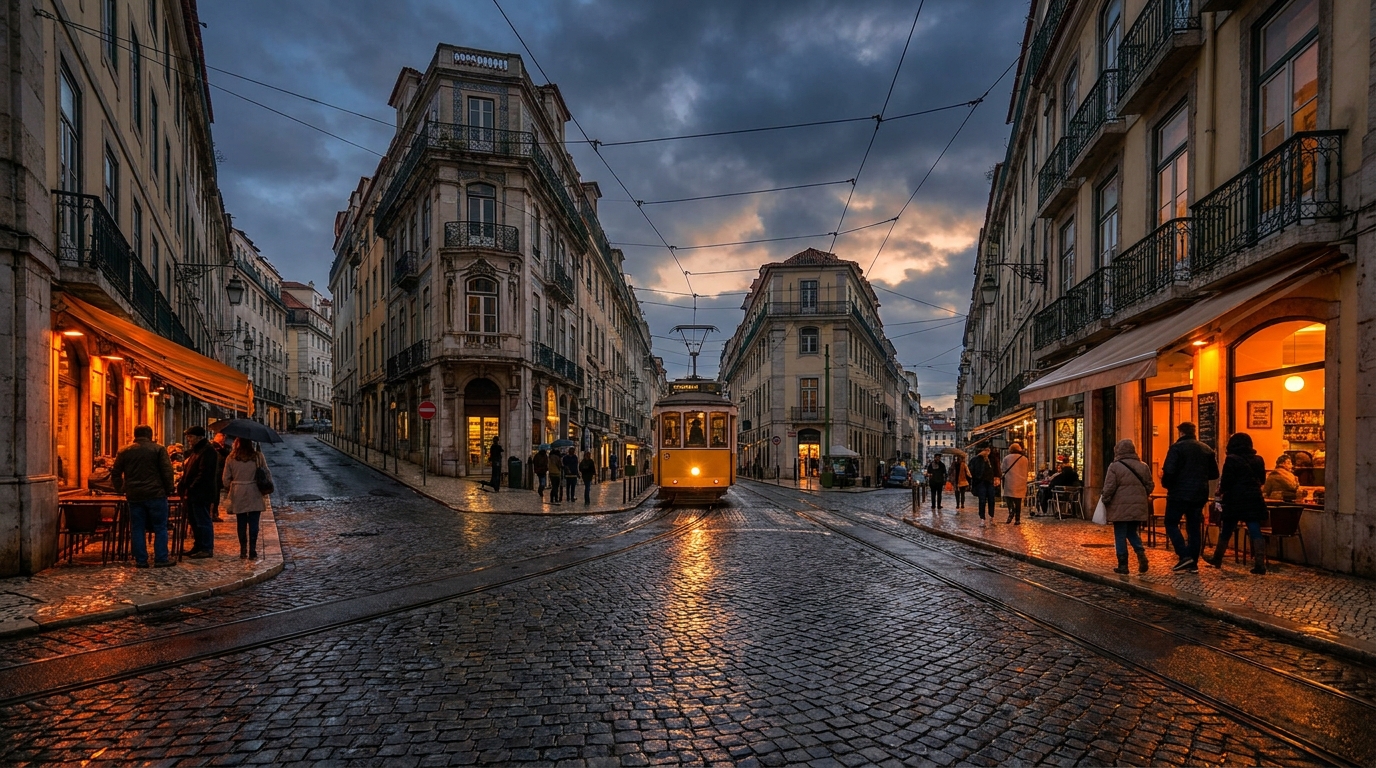
THE MONTH AT A GLANCE · PORTUGAL IN JANUARY
January is Portugal’s indoor month: 56°F in Lisbon, 154 mm of rain in Porto, seven wet days in Faro, and lodging running at less than a third of the August peak.
MIXED MONTH NATIONALLY · BEST FOR: CITIES & TABLES · WETTEST IN: THE NORTH
Go for: Lisbon and Porto with the volume down, winter cooking in the tascas, port lodges on a wet afternoon, and the emptiest roads the Alentejo gets.
Think twice if: the trip needs beach days. The sea sits near 59°F and the Algarve resorts run on half staff.
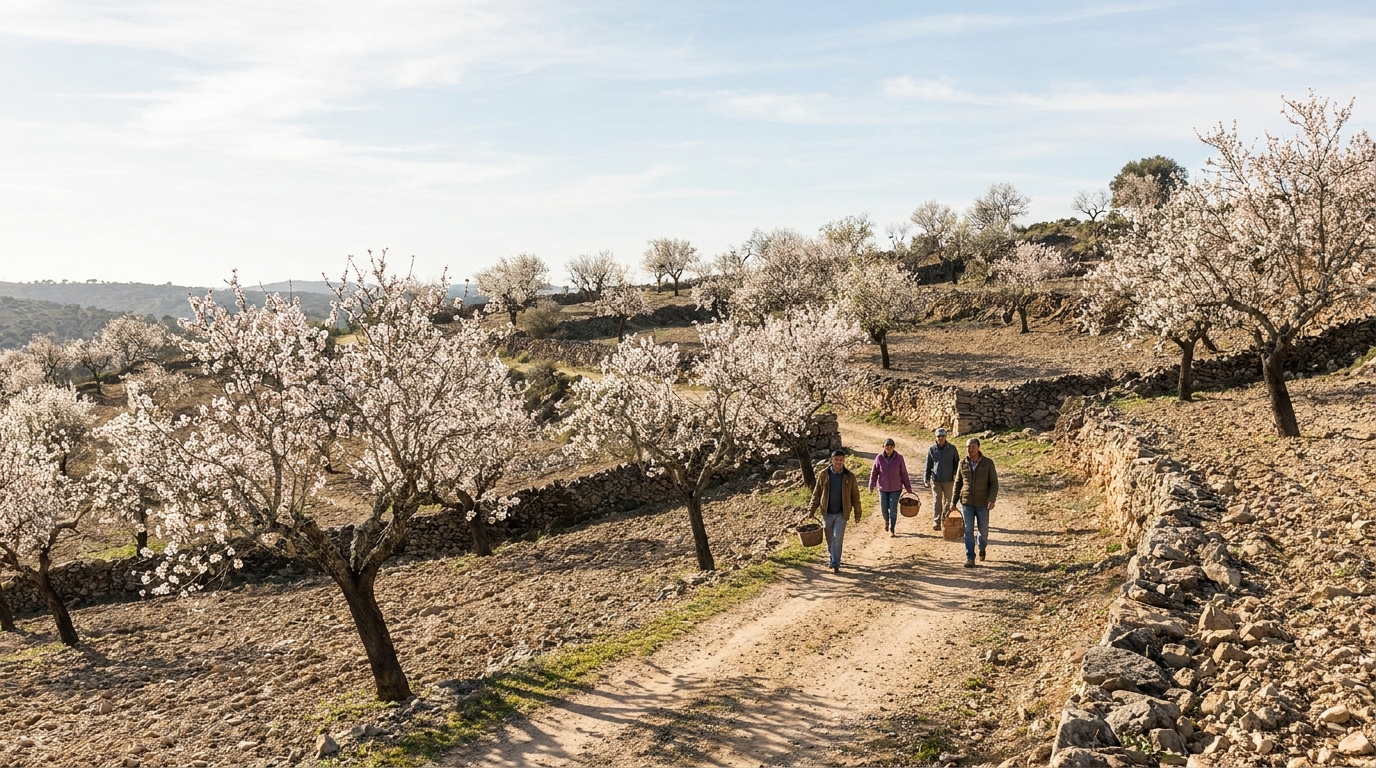
Epiphany falls on January 6 and closes the bolo-rei season in bakery windows. Almond blossom usually starts in the Algarve interior in the last week of the month (est.).
Climate: 1991–2020 normals per city (ERA5) · Crowds: Eurostat monthly nights · full sources at the end
See Portugal’s full 12-month verdict →
On this page
- Museums, tascas and 5:30 sunsetsLisbon & the center
- 59°F days, cliff paths, almond blossomThe Algarve
- 154 mm of rain and the port lodgesPorto & the north
- Green plains, empty roads, dark skiesThe Alentejo
Where to go in Portugal in January: Lisbon, the Algarve, Porto and the Alentejo
Lisbon & the center: 56°F days, 9 rain days
Days at 56°F, nights at 48°F, rain on roughly nine of them: a Lisbon January runs close to a San Francisco winter with better pastry. The hills are climbable without sweating through a shirt, the miradouros belong to whoever shows up, and the big collections feel nearly private on a wet Tuesday. Sunset moves from 5:26pm on the 1st to 5:57pm on the 31st, so evenings start early. Sintra trades summer queues for mist, and the rest of the base sits in the Lisbon guide.
Verdict: Good · the month’s default base · Rain: 9 days · For: museums, tascas, day trips
The Algarve: 59°F, 7 rain days and the almond blossom
Faro is the warm end of the country: 59°F by day, 51°F at night, 55 mm of rain across seven days. Nobody swims, since the water sits around 59°F, but the cliff path from Lagos toward Sagres was built for a January morning, and the almond trees inland usually flower in the final week of the month (est.). Resort towns operate at half staff, which reads as peace or as a ghost town depending on your tolerance for closed shutters. The two coasts.
Verdict: Best · warmest and driest · Rain: 7 days · For: walkers, golfers, blossom
Porto & the north: 154 mm of rain, and the port lodges
One number defines a Porto January: 154 mm falling across twelve wet days, close to triple Faro’s ration, with afternoons at 55°F and dawns at 44°F. The city absorbs weather better than its reputation suggests. Gaia’s port lodges are cellars by definition, the Bolhão market has a roof, and a bica at the counter costs a fraction of your airport coffee. Up the valley the Douro terraces stand pruned and bare, since the picking story belongs to September and October.
Verdict: Mixed · wettest region, cheapest beds · Rain: 12 days · For: port lodges, city weekends
The Alentejo: green plains, empty roads, dark by six
Winter turns the plains green, which startles anyone who has only met the August version. Daytime numbers track Lisbon with a colder dawn inland, cork oaks stand in wet grass, and the road linking Évora, Estremoz and Monsaraz carries almost nobody. Estates light fires and put game stew and açorda on the menu, and the famously starry sky over Monsaraz is fully dark by six. A car is the only sensible way through it, so the rental and toll rules matter here more than anywhere.
Verdict: Good · green, quiet, cheap · For: drivers, wine estates, stargazers
January weather in Portugal: temperatures and rain days in three cities
| Region (city) | Days | Nights | Rain | The trade |
|---|---|---|---|---|
| Lisbon | 56°F / 14°C | 48°F / 9°C | 9 days · 68 mm | Walkable city, coat weather |
| Algarve (Faro) | 59°F / 15°C | 51°F / 11°C | 7 days · 55 mm | Warmest and driest, half-closed |
| North (Porto) | 55°F / 13°C | 44°F / 6°C | 12 days · 154 mm | Real rain, indoor rewards |
1991–2020 normals for each reference city (ERA5). The Alentejo interior tracks Lisbon by day and runs colder at dawn. Sea temperature nationally averages about 59°F, and lodging demand sits at 31 percent of the August peak (official monthly nights).
January in Portugal: Epiphany tables, Nazaré swell and the year’s lowest prices
The table. Bolo-rei sits in bakery windows until Epiphany on January 6, and the winter menu is a genuine reason to fly: caldo verde, cozido, roast kid, chickpeas and salt cod, all of which make sense at 48°F. Restaurants that wave you off in July have room at 8pm now, and lunch runs long because the light goes early anyway.
The swell. Winter is when the Atlantic sends its heaviest waves at Nazaré, watched from a headland in a windproof coat rather than from the water. Ericeira and Peniche run the same season in smaller, rideable form, with wetsuits and mostly local lineups on a Tuesday.
The price. At 31 percent of the August load, hotels stop rationing. A room in Chiado or a Douro-view apartment lands near what a highway chain charges back home (est.), and the good tables take walk-ins. Daily numbers by tier sit in the Portugal trip cost breakdown, and the coat, shoe and umbrella question is settled in what to pack.
Portugal in December, February or April instead
Gain: Christmas lights across Baixa and the New Year’s Eve crowd on the riverfront, per December.
Lose: the price floor. Holiday-week flights and rooms cost noticeably more (est.).
Gain: almond blossom at full spread and Carnival in the back half of the month (est.). See February.
Lose: nothing much. The sea is still wetsuit territory and terraces stay shut.
Gain: evenings that last past dinner, drier days, Sintra’s gardens in bloom (April).
Lose: the empty museums and the winter room rates, both of which start climbing.
The last word
January asks you to trade the coast for the cities and the swim for a table. Take the trade. Lisbon at 56°F with nine wet days is a walking city with the sound turned down, Porto’s 154 mm buys the port lodge afternoon nobody else booked, and Faro keeps seven dry days out of thirty-one for the cliff path. Pack a real coat and shoes that grip wet calçada, then aim the day at a 5:30 sunset instead of arguing with it.
Compare the whole year in the twelve-month verdict, see what shifts in February, or settle the base question with Lisbon vs Porto before the flight goes on the card.
Sources & data for this guide
- Climate: 1991–2020 normals computed from ERA5 daily data for the Lisbon, Porto and Faro grid cells · Open-Meteo (ECMWF ERA5) · checked Sep 3, 2026
- Crowds: 31% of the August peak · Eurostat monthly nights, Portugal · checked Sep 3, 2026
- Sunset, Lisbon local time, Jan 1 (5:26pm) and Jan 31 (5:57pm) · NOAA solar calculation · checked Sep 3, 2026
- Sea temperature: multi-year January coastal average, about 59°F · Open-Meteo Marine API · checked Sep 3, 2026
- Editorial note: almond blossom dates, off-season room rates and airfare levels are marked (est.). Bloom shifts a week or two with the year, and we don’t publish prices we haven’t verified ourselves.