
LISBON · THE CITY GUIDE · 38.72° N
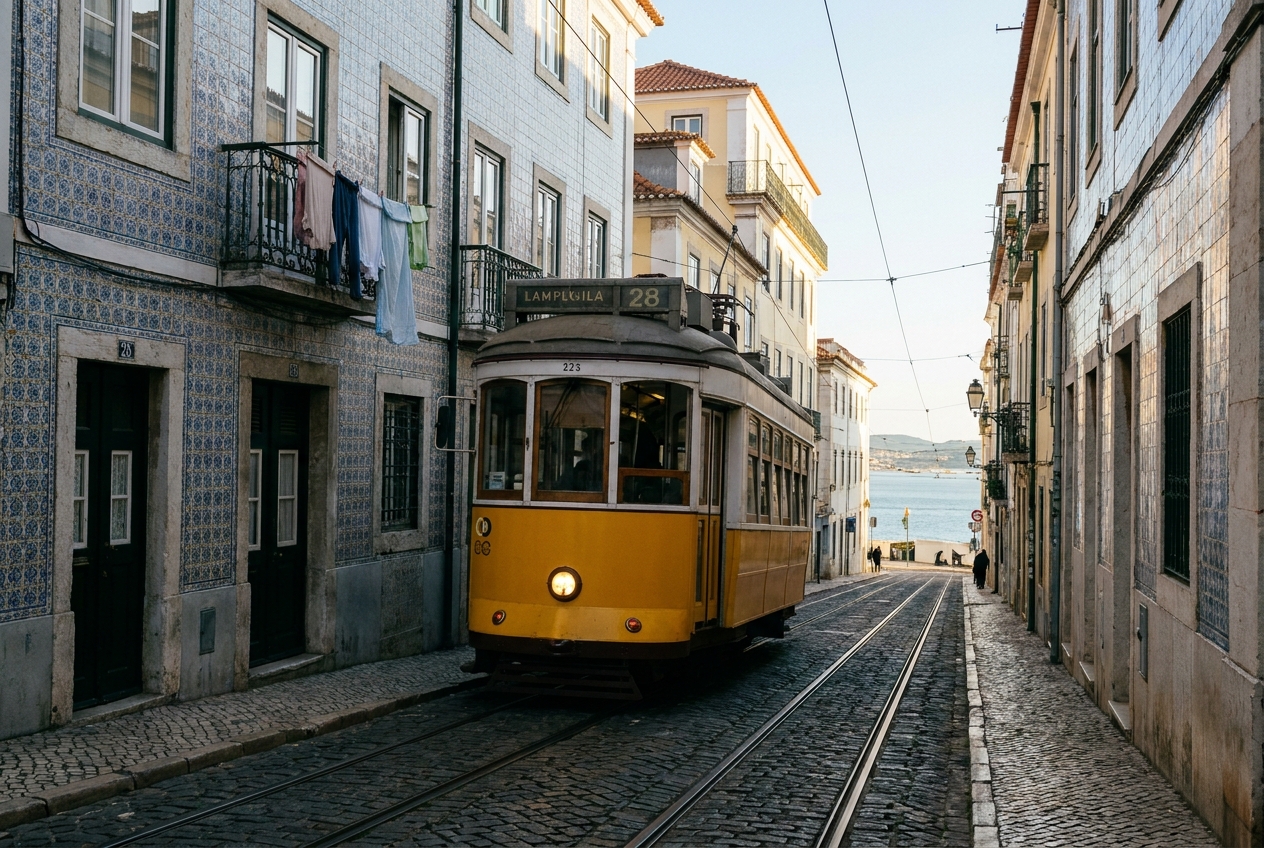
Lisbon does its seducing in the first ten minutes. A tram grinds up a street you’d have sworn was a staircase, the river flashes silver at the bottom of every lane, and someone hands you a custard tart that redefines the category. Europe’s second-oldest capital (older than Rome, the locals will mention) wears its age lightly: tiled façades and fado cellars downstairs, rooftop bars and a genuinely great food scene upstairs.
It’s also the easiest hard-to-leave city in Europe: compact enough to cross on foot, cheap enough to linger, and positioned so that palaces, beaches and wine country all sit within an hour. The only real mistakes you can make are bad shoes and too few days.
THE CITY AT A GLANCE · LISBON
Give Lisbon three full days plus one for Sintra, stay central, and let the hills set the pace: this is a city you walk, eat and watch, not one you check off.
BEST MONTHS: MAY–JUNE & SEPTEMBER–OCTOBER · 3 DAYS MINIMUM · WALKING SHOES NON-NEGOTIABLE
Go for: hill-and-river walking, the best-value great food scene in Western Europe, tiled beauty at every turn, and day trips that punch far above their train fare.
Think twice if: mobility is limited: the historic center is a festival of slopes, stairs and cobbles (flat refuges exist: Baixa and the riverfront).
June is the Santos Populares — a month of sardine smoke, paper garlands and street parties that peaks on the night of the 12th.
Transit: Metropolitano de Lisboa · Character: Visit Lisboa · full sources at the end of this guide
On this page
- First visit: where do I sleep?The neighborhoods, honestly compared
- What’s the city like in my month?Lisbon month by month
- When is Portugal at its best overall?The 12-month verdict
- Is Lisbon chapter one of a bigger trip?The whole Portugal playbook
Lisbon neighborhoods: the shape of the city
Lisbon is a amphitheater of seven hills (the count is diplomatic) facing the Tagus. The flat stage at the bottom is Baixa, the grand grid rebuilt after 1755; everything else climbs.
East of Baixa, Alfama tangles up toward the castle: the oldest, most photogenic quarter, fado drifting from its cellars. West, Chiado and the nightlife grid of Bairro Alto stack up the opposite slope, with leafy Príncipe Real above.
Downriver sits monumental Belém; upriver, the modern riverside of Parque das Nações. Where you sleep among these decides your daily choreography (we’ve compared all eight).
What to do in Lisbon, day by day
The classics, paced right. One day for Alfama and the Castelo de São Jorge (go up early, wander down slowly). One for Belém: Jerónimos Monastery and the Tower, with the warm pastéis as negotiated salary. One for the Baixa–Chiado–Príncipe Real spine: the Santa Justa lift viewed from below (the queue is for the view you can get free next door), Carmo’s roofless convent, the shops and the long lunch.
The Lisbon in between. The city’s best moments are unticketed: Tram 28 before nine, the miradouro circuit at golden hour (Portas do Sol, Senhora do Monte, Santa Catarina), the azulejo hunt (and its cathedral, the National Tile Museum), the covered markets (Time Out Market for the greatest hits, Campo de Ourique for the local cut), LX Factory’s bookshop-and-brunch sprawl under the bridge, and a fado house in Alfama or Mouraria after dark — the small smoky kind, not the dinner-show kind.
The water. The Tagus is a character, not a backdrop: ride the commuter ferry to Cacilhas for the cheapest skyline cruise in Europe, or walk the riverfront from Cais do Sodré to Belém when the afternoon needs flattening.
The Lisbon shortlist: viewpoints, museums, food
Viewpoints: the miradouro circuit is the city’s free opera: Portas do Sol (the Alfama postcard), Senhora do Monte (the sunset champion), Santa Catarina (young, guitar-strummed), São Pedro de Alcântara (arrive by funicular, leave on foot).
Museums worth the indoor hours: the Gulbenkian (a world-class private collection in a garden), the National Tile Museum (the azulejo backstory, in a golden convent), the MAAT (riverfront contemporary under a walkable roof), the Berardo/MAC in Belém for the modern fix, and the Fado Museum before your first fado night, so the songs land.
Experiences over tickets: Tram 28 before 9am or forget it. The Cacilhas ferry at sunset (skyline cruise, commuter price). A fado cellar in Mouraria (the small kind: arrive at 9, order the wine, hush). The Feira da Ladra flea market (Tuesdays and Saturdays, haggle gently). Ginjinha standing up at A Ginjinha by Rossio. And one long peek inside Livraria Bertrand, the world’s oldest working bookshop.
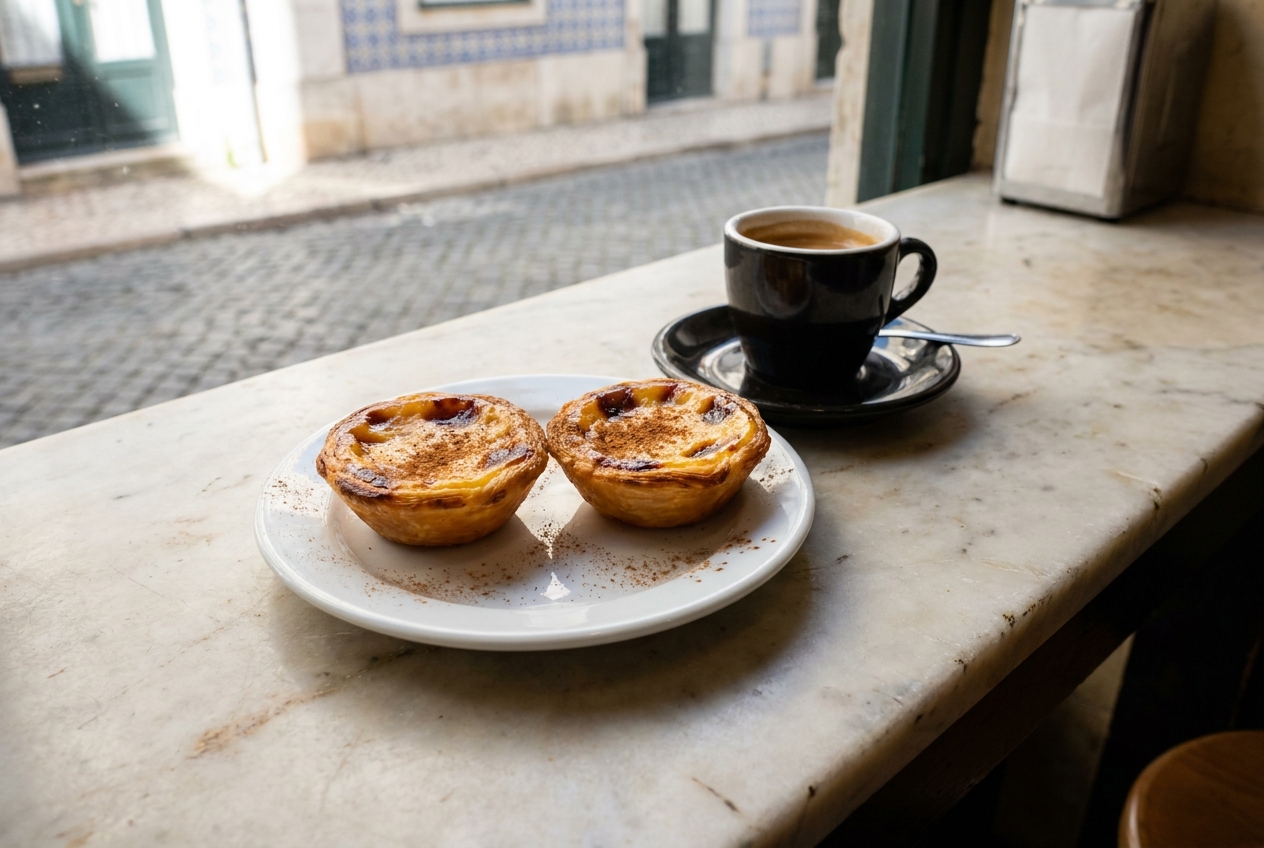
Food targets: Time Out Market for the panorama, Campo de Ourique market for the neighborhood cut, a cervejaria for the seafood counter (garlic shrimp, clams à Bulhão Pato), Manteigaria’s counter for the nata-and-espresso ritual, and a Sunday cozido if the season and the stomach allow.
Want the whole menu with prices, queue math and verdicts? Things to Do in Lisbon ranks it all, including what to politely skip.
Day trips from Lisbon: the belt
Lisbon multiplies within the hour. Sintra is the non-negotiable: a hilltop of storybook palaces (Pena’s colors, Quinta da Regaleira’s initiation well), forty minutes by train (go early, book Pena ahead, expect company).
Cascais and the coast make an easy sea-air afternoon by the same rail line. And south across the bridge, the Arrábida hills drop vineyards into turquoise coves, with Setúbal’s muscatel cellars as the designated-driver’s dilemma. The five escapes, ranked with trains and traps, live in the day-trips guide; the rule of thumb is one day trip per three city days.
Getting around Lisbon (and in from the airport)
The airport sits inside the city: the metro’s Red line runs from the terminal to the center, and a taxi to most central quarters is a short, honest ride.
In town, you’ll walk more than you plan to. The metro’s four lines are clean and simple, the historic trams and funiculars are transport that happens to be sightseeing, and the hills will still win.
No car: the center is a low-emission zone with hostile parking, and everything the car unlocks (the Algarve, the Alentejo) is better collected on your way out of town, as our car guide explains.
How many days do you need in Lisbon?
| Days | What realistically fits |
|---|---|
| 2 | The postcard: Alfama, Belém, one sunset. You’ll book a return flight. |
| 3–4 | The real visit: the three classic days plus breathing room |
| 5 | Add Sintra and a slow day: the city at its natural pace |
| 6+ | You’re not visiting anymore, you’re auditioning to stay |
What to eat in Lisbon (and how to order it)
Lisbon is Western Europe’s best-value serious food city. The starter kit: a warm pastel de nata (Manteigaria in Chiado, or the Belém original), grilled sardines in summer Alfama, bacalhau à brás when the menu offers it, bifanas (the garlicky pork sandwich) at a counter with locals, ginjinha cherry liqueur from the hole-in-the-wall by Rossio, and one meal built entirely from the seafood counter of a cervejaria.
Remember the local grammar: the unasked bread-and-olives couvert goes on the bill only if you touch it, and coffee is um café or um galão, never “a latte.”
Choosing between them. the Algarve or Lisbon sets the two side by side on the points that decide it — the season, the cost of getting there and what each one closes off.
When to go. The month-by-month case for Lisbon — what the normals say, when the sea is warm enough to swim and which weeks fill up — sits on the best time to visit Lisbon.
The last word
Lisbon rewards surrender more than strategy. Book the central bed, learn three words of Portuguese, and let one wrong turn per day do the guiding — the city’s whole design funnels you toward a viewpoint, a bakery or a tiled surprise. The hills will tire you out precisely on schedule for dinner.
Pick your base with the neighborhood guide, time it with the month-by-month view, and when Lisbon inevitably asks for a sequel, the rest of Portugal is an open-jaw flight away.
Lisbon month by month. Each month has its own page with the station normals, the sea temperature, the daylight and how busy the month runs: January · February · March · April · May · June · July · August · September · October · November · December.
Sources & data for this guide
- Metro lines, airport Red line, stations · Metropolitano de Lisboa official diagram · checked Aug 31, 2026
- Neighborhood and district character · Visit Lisboa (official) · checked Aug 31, 2026
- Low-emission zone · City of Lisbon ZER · checked Aug 31, 2026
- Seasonal crowd pattern · Eurostat monthly nights (national curve) · checked Aug 31, 2026
- Sights, festivals and food notes are editorial; hours and tickets change · check operators when you book.