
THE AZORES · SEPTEMBER · PONTA DELGADA NORMALS
September is the month the Azores hold on to summer water and start giving back rain. At Ponta Delgada the normal high is 77.0°F and the normal low 66.4°F, the sea off the islands averages 75.3°F, and rain reaches the gauge on 9.4 days out of thirty. Nothing in that combination is dramatic. It simply means you plan around cloud rather than heat, and you swim without ceremony.
What the month subtracts is dryness and light. August logs 1.80 inches of rain at the same station, September 3.08, and daylight on the 15th runs 12 hours 28 minutes against the long evenings of midsummer. In exchange, the water is only 1.7°F cooler than August’s, the summer whales are still around, and the thermal pools at Furnas do not care what the sky is doing.
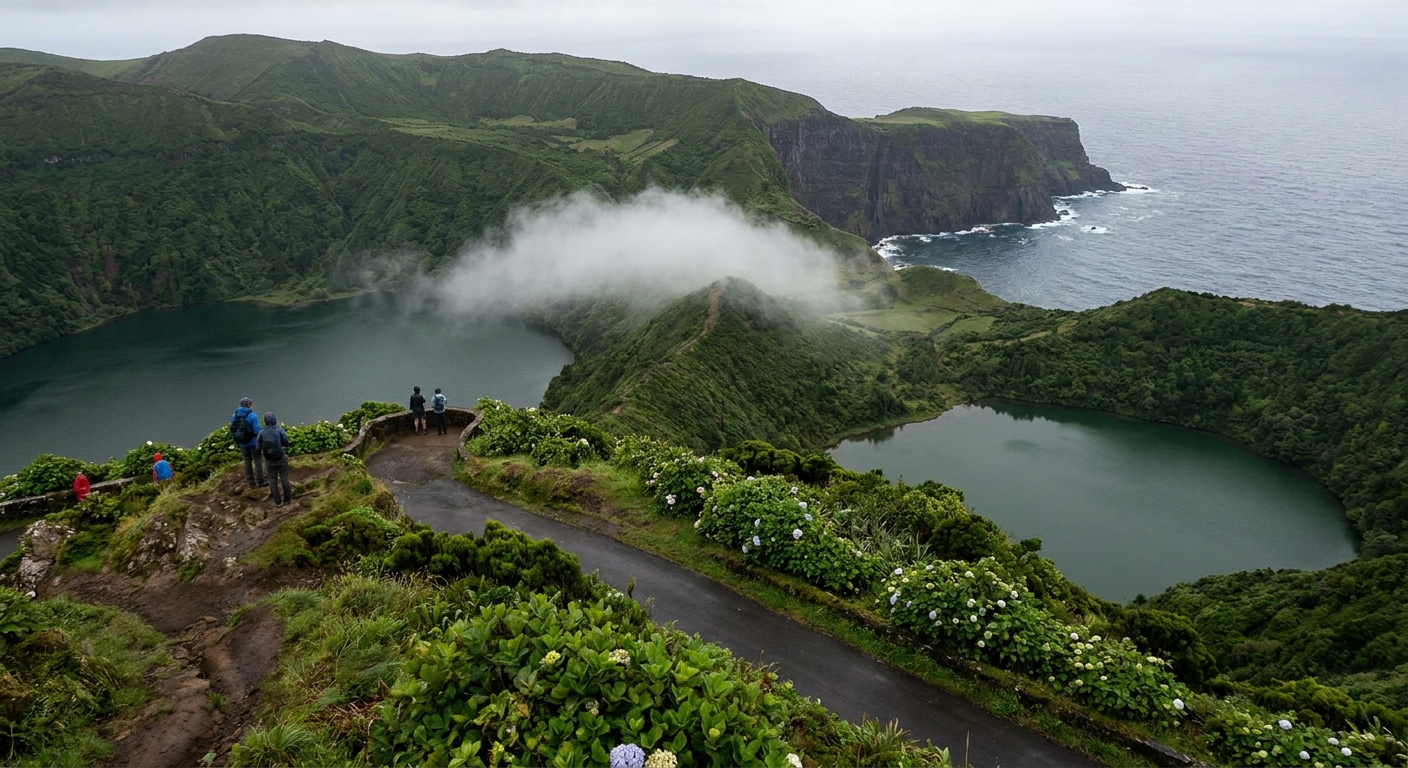
THE MONTH AT A GLANCE · THE AZORES
September keeps almost all of August’s sea warmth and hands back three extra wet days, which makes it a strong month for boats, swimming and hot springs, and a poor one for a rigid plan with a single summit view in it.
AVG HIGH 77.0°F · SEA 75.3°F · 9.4 RAIN DAYS · 12H 28M OF DAYLIGHT ON SEP 15
Go for: whale and dolphin trips with the summer species still frequent, thermal bathing at Furnas, and a sea that runs within 1.7°F of August’s.
Think twice before: booking a mountain day on coastal numbers. The 77.0°F normal comes from a thermometer at 35.0 m on the south coast of São Miguel, and the high ground is colder and far wetter.
Normals: IPMA station 513, Ponta Delgada Observatório · Sea: Open-Meteo Marine · full sources at the end
On this page
- Azores weather in September77.0°F days, 3.08 inches of rain
- Sea temperature for swimming75.3°F, and how that figure is measured
- Prices and the Ponta Delgada tourist taxEUR 2 a night, capped at three
- Whale watching and what runs in SeptemberSperm whales, sei whales, resident dolphins
- A two-day plan on São MiguelSete Cidades early, Furnas next day
- September vs August and OctoberRain days: 6.5, 9.4, 13.7
- Is September a good time to visit?Our verdict, and the month to prefer instead
The islands themselves, the flights and the paperwork live on other pages: Portugal month by month for the country-level calendar, flights from the US for the Atlantic hop, and the car guide before you book a rental on São Miguel.
Azores weather in September: average highs, lows and rain days
| Measure | September normal (1991-2020) |
|---|---|
| Average high | 77.0°F (25.0°C) |
| Average low | 66.4°F (19.1°C) |
| Precipitation | 3.08 in |
| Days at 0.04 in or more | 9.4 |
| Days at 0.39 in or more | 1.9 |
| Sea surface (mean of daily maxima) | 75.3°F |
| Daylight on Sep 15 | 12h 28m |
These are measured numbers, not a model grid cell. They come from IPMA, the Portuguese institute for the sea and the atmosphere, station 513 at the Ponta Delgada Observatório, a thermometer at 35.0 m on the south coast of São Miguel, averaged over 1991-2020. The location matters. It describes a coastal town on one island of nine, and not the high ground behind it, where Pico da Vara rises to 1,105 m and runs colder and much wetter. Pack for a mountain trail on a seafront reading and the trail will correct you.
Rain lands on 9.4 September days at IPMA’s threshold of 1 mm, which is 0.04 inch, and only 1.9 days reach 10 mm, or 0.39 inch. Those thresholds sit below the 0.10-inch line most American tables use, so the counts are not interchangeable with a US forecast page. In practice the wet day here is a shower that crosses, soaks a lookout and moves on, with roughly two days in the month heavy enough to cancel a summit walk outright.
The gap between the average high and the average low is 10.6°F, small by continental standards and quite large enough to matter at 8 p.m. on a north-coast terrace. A windproof shell, one warm layer and shoes that tolerate wet basalt cover the month. Nothing here calls for winter clothing, and nothing here forgives cotton on a caldera rim. Our Portugal packing guide carries the full list.
Daylight on September 15 measures 12 hours 28 minutes. The sun clears the horizon at 7:23 a.m. and sets at 7:51 p.m., with Azores clocks running on UTC through the month. That buys a genuine early start without a headlamp, and a last hour of low light after seven, which on a cloudy day is often the hour the crater rims finally shed their cover.
Can you swim in the Azores in September? Sea temperature at 75.3°F
Sea surface off the Azores averages 75.3°F in September in the Open-Meteo Marine record for 2015-2024. Read the figure the way it was built: it is the mean of daily maxima, so it sits a shade above a true 24-hour average. The water you meet at 8 a.m. after a windy night will be a touch cooler than the number, and a shallow bay in mid-afternoon a touch warmer.
At that temperature the entry is easy and the swim is long. August is warmer by 1.7°F, October colder by 3.0°F, and that 4.7°F band is the whole spread of the shoulder. Snorkelers who start feeling it after twenty minutes will want a shorty; everyone else goes in and stays in. Natural pools cut into lava hold their heat better than open bays, and the thermal water at Furnas is a separate proposition altogether.
Wind and swell are the part we cannot put a number on. Our sources carry no September normal for either off these islands, so we will not invent one, and any Atlantic archipelago in the back half of the year can serve a day of chop. The consequence shows up on boats rather than beaches: a whale-watching trip runs about three hours, and Visit Azores recommends a minimum age of five, because a sea an adult calls calm can be hard on a small child.
How busy are the Azores in September? Crowds, prices and the Ponta Delgada tourist tax
Our sources carry no monthly occupancy series and no price index for the Azores, and we would rather write that than dress a guess up as a season. What can be dated is the weather curve that drives demand and the money the city itself collects. For the wider budget, what a week in Portugal costs and the country’s month-by-month verdict do that work properly.
We will not print a lead-time figure either. What genuinely rewards booking ahead is the thing with fixed seats: boats sail all year, but every sailing is capped by hull and weather. The land side spreads out better than the island’s reputation suggests. São Miguel runs 62.1 km end to end and 15.8 km at its widest, 744.7 square kilometers of crater, coast road and pasture, and it houses 137,856 people at the 2011 census.
Ponta Delgada has charged a municipal tourist tax since January 2025. The city’s own platform confirms the tax exists, but its rate leaflet sits behind a login. Press and host guides agree on EUR 2 per person per night for guests aged 13 and over, capped at three consecutive nights, so about EUR 6 a head, with exemptions for under-13s, medical stays, disability of 60 percent or more, and Azorean residents. Treat those figures as unconfirmed and ask the property to quote the tax in writing.
The cap decides more than the rate does. Porto charges EUR 3 a night up to seven nights, so EUR 21 a fortnight. Funchal charges EUR 2 up to seven nights, EUR 14. Ponta Delgada stops at three. And if one budget line changes the month itself, it is the car: with 9.4 rain days and cloud that parks on one caldera while another coast stays clear, mobility turns a written-off morning into a redirected one. Our Portugal car guide covers the insurance line that catches people out.
Things to do in the Azores in September: whales, crater lakes and Furnas
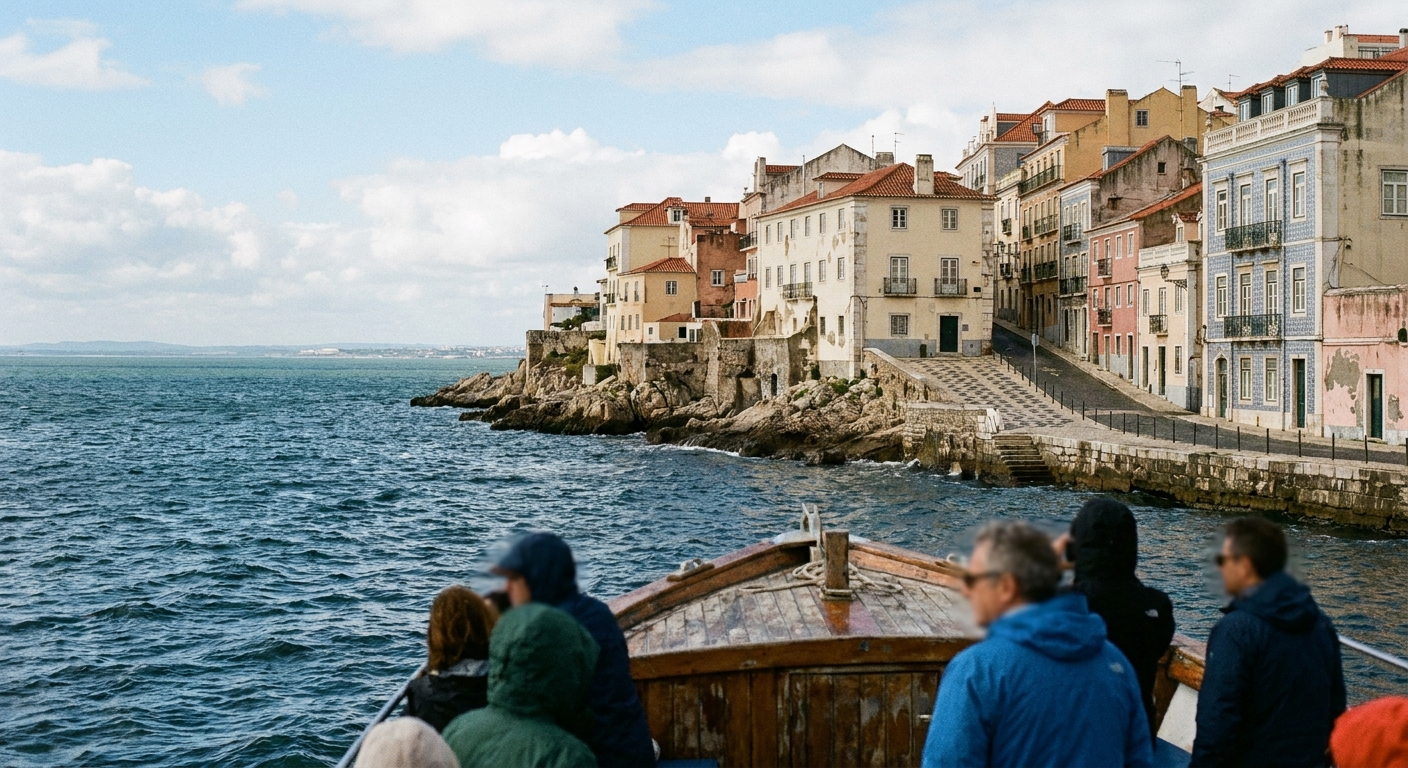
September is a whale month with a specific cast. Sperm whales, sei whales and other baleen whales are frequent through the summer, with spotted dolphins alongside them, while common dolphins and bottlenose dolphins are resident and can turn up in any month of the year. Swimming with the dolphins is allowed. Blue whales are the exception worth naming out loud, because in these waters they are an end-of-winter sighting, and no September operator can promise one.
Prices are where we have to be careful. Terra Nostra Park at Furnas, whose thermal pool sits inside a botanical garden, prices at around EUR 16 for a visiting adult against about EUR 12.80 for a resident, with under-6s free, but the park’s own pages returned errors and the regional tourism portal blocks automated reading, so take those as an order of magnitude and confirm at the gate. Opening hours for Gorreana and Porto Formoso were unreadable too. Both tea plantations run museum-factories open to visitors, and Gorreana has grown tea since 1883.
Several of the island’s set pieces cost nothing beyond the drive. Vista do Rei looks down on the Green and Blue lakes of Sete Cidades, Lagoa do Fogo sits higher and wilder with no building in the frame, and the Caldeiras of Ribeira Grande put fumaroles among the trees beside a thermal building dating from 1811. Poça da Beija at Furnas, clear water over ferrous mud, is a paying bathing spot whose rate we could not verify.
The Azores in September: a two-day itinerary on São Miguel
Day one belongs to the rims. Sunrise is at 7:23 a.m., and caldera walls collect cloud as the ground warms, so stand at Vista do Rei above Sete Cidades early rather than after lunch. Mid-morning, cross to Lagoa do Fogo, the higher and emptier of the two great lakes, then drop to the coast for a swim while the water is at its 75.3°F best. Keep the last light for a shoreline: the sun sets at 7:51 p.m., and on a cloudy day that final hour is often the clearest one.
Day two runs on water of a different kind. Furnas holds dozens of thermal springs, fumaroles and carbonated water, with Poça da Beija and the Terra Nostra pool as the two bathing choices, and the north-coast tea road at Gorreana and Porto Formoso as the way back. If the sky turns, that plan improves instead of collapsing: hot water ignores rain, museum-factories are indoors, and Ponta Delgada has been the island’s capital since 1546, when it took the title from Vila Franca do Campo, destroyed by an earthquake in 1522.
The Azores in September vs August and October: rain days and sea temperature
| Month | Avg high | Avg low | Precipitation | Days at 0.04 in + | Sea (daily maxima) |
|---|---|---|---|---|---|
| August | 78.8°F | 67.8°F | 1.80 in | 6.5 | 77.0°F |
| September | 77.0°F | 66.4°F | 3.08 in | 9.4 | 75.3°F |
| October | 72.7°F | 62.8°F | 4.65 in | 13.7 | 72.3°F |
Highs run 78.8°F, 77.0°F and 72.7°F across the three months, lows 67.8°F, 66.4°F and 62.8°F. Rainfall goes 1.80, 3.08 and 4.65 inches, while the count of days at 0.04 inch or more climbs 6.5, 9.4, 13.7. The sea follows at its own lag, 77.0°F, 75.3°F and 72.3°F. September sits close to August on temperature and closer to October on rain, and every figure comes from the same station and the same 1991-2020 period.
Shift four weeks earlier and you buy 2.9 fewer wet days and the year’s warmest water, and you land inside the European school holidays. Shift four weeks later and October gives you 4.3 more wet days, a sea 3.0°F cooler and 62.8°F nights that end terrace dinners. Both cases are argued in full on the August page and the October page.
Is September a good time to visit the Azores?
Yes for swimmers, boat people and anyone who wants a landscape wet enough to be green. Water at 75.3°F, a 77.0°F day and 9.4 rain days add up to a working outdoor month with an asterisk. No for a tight fixed itinerary with one shot at a caldera view, and no for anyone who needs a guaranteed dry week, which no month in these islands sells.
If that second description fits, August is the month to move toward, not October: 1.80 inches of rain against 3.08, 6.5 wet days against 9.4, and the year’s warmest sea at 77.0°F. The price is the holiday calendar and slightly hotter, hazier air. October runs the wrong way for a dry-weather traveler, at 13.7 wet days and 4.65 inches.
No other month stacks the same overlap: summer’s sperm and sei whales still frequent, resident dolphins you are permitted to swim with, water within 1.7°F of the annual peak, and 4.3 fewer rain days than October.
The last word
Book the boat first and let the land plan bend around the sky. These waters form one of the largest whale sanctuaries on the planet, with more than 20 cetacean species recorded, roughly a third of all the species that exist, and a three-hour trip in September puts you among the summer residents rather than the winter visitors. Then take the rim road early, the tea road late, and file the 1.9 heavy-rain days under the price of everything being that green.
Sources & data for this guide
- September normals (high 77.0°F, low 66.4°F, 3.08 in, 9.4 days at 1 mm, 1.9 days at 10 mm) · IPMA, 1991-2020 normals, station 513 Ponta Delgada Observatório, altitude 35.0 m · checked Sep 9, 2026
- August and October normals, same station and same period, not estimates · IPMA · checked Sep 9, 2026
- Sea surface 75.3°F, mean of daily maxima 2015-2024 · Open-Meteo Marine API · checked Sep 9, 2026
- Daylight 12h 28m, sunrise 07:23 and sunset 19:51 UTC on Sep 15 · sunrise-sunset.org · checked Sep 9, 2026
- Whale and dolphin seasons, three-hour trips, minimum age five, sanctuary and 20+ species · Visit Azores, official regional tourism board · checked Sep 9, 2026
- São Miguel geography, Ponta Delgada capital since 1546, Furnas thermal sites, Gorreana and Porto Formoso · Visit Azores · checked Sep 9, 2026
- Terra Nostra rates (about EUR 16 and EUR 12.80) are unconfirmed: parqueterranostra.com returned 404 on its visit pages and turismo.azores.gov.pt returned 403 · attempted Sep 8, 2026
- Ponta Delgada tourist tax: the municipal platform confirms the tax, its rate leaflet is behind a login; the EUR 2 rate and 3-night cap are relayed by Jornal de Notícias and Correio dos Açores · checked Sep 9, 2026
- Porto (EUR 3 a night, 7-night cap) and Funchal (EUR 2, 7 nights) · municipal sources · checked Sep 9, 2026
- Prices and opening hours change, and several here could not be verified against a primary source · confirm at the gate and with your property when you book.