
You step off the bus into warm, salty air, and the sound of street musicians drifts down from Quinta Avenida while someone grills corn on a cart near the corner. You will quickly fall for Playa del Carmen, and getting around it is simple, yet your first day goes better with a handful of routines. The essentials here are the small tourist tax, how you pay, how you move around, and how to treat the sun and the sea.
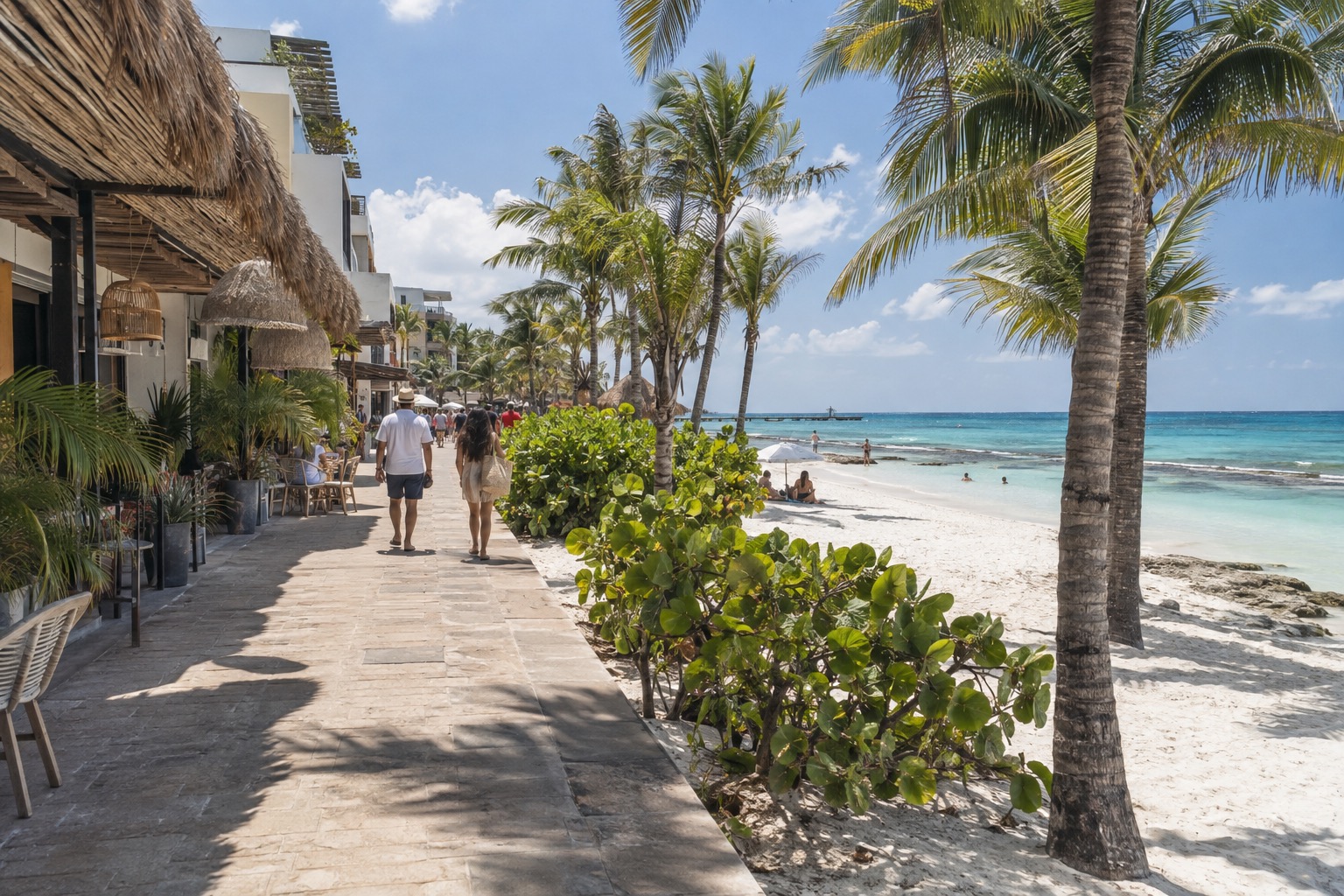
What should you know before visiting Playa del Carmen?
Four things matter most: the Visitax you pay on entering Quintana Roo, the habit of carrying some pesos, a walkable town where you rarely need a car, and the Atlantic hurricane season that shapes the calendar from summer into fall.
First-time visitors are often surprised by how much the town changes from one end to the other. Centro hums with bars and restaurants until late, while the North End and the streets around Avenida 10 feel residential and calm. Playacar, to the south, is a gated world of resorts and golf. The same beach can feel like three different vacations depending on where you sleep.
Entry, fees and paperwork
Foreign visitors entering Quintana Roo pay a state visitor tax called Visitax, with an exception for those who enter through the state’s southern border. Cruise passengers do not pay it directly. Their cruise line handles a separate right on their behalf. The amount is set in a unit that changes each year, so the peso figure below reflects the current value.
| Fee | Amount | Who pays |
|---|---|---|
| Visitax | About 293 pesos per person (2.50 UMA) | Foreign visitors entering Quintana Roo, except through the southern border |
Money, cards and tipping
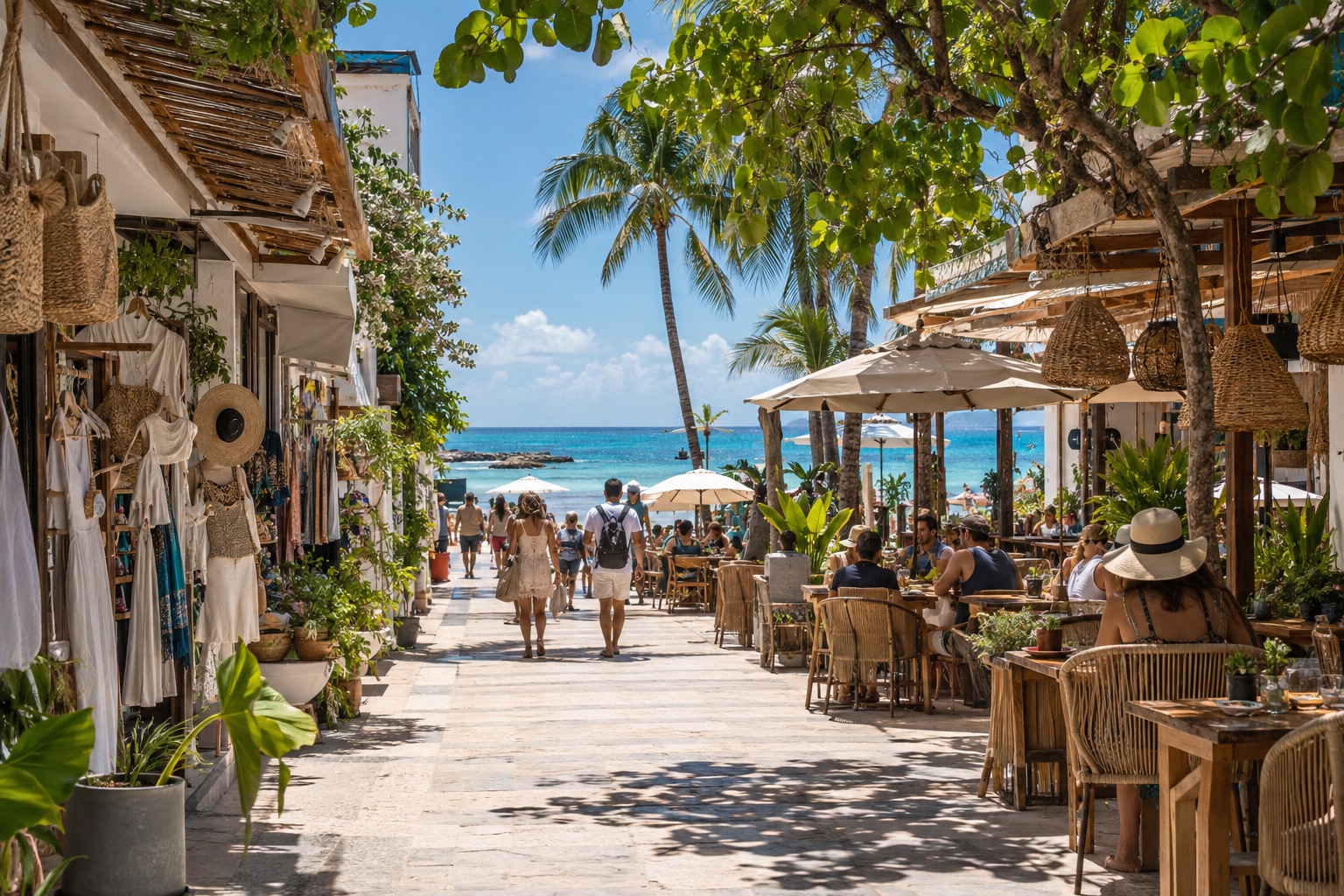
Pesos are the local currency, and many tourist businesses on Quinta Avenida will quote prices in dollars too. Still, small purchases such as street tacos, a fruit cup, a bus ticket or a tip for a bellhop go more smoothly with a few pesos in your pocket.
Cards are widely used in restaurants, hotels and shops in the center of town. Travelers usually pull pesos from an ATM attached to a bank branch, ideally in daylight. Tipping is a habit rather than an obligation: most people add a generous tip at sit-down restaurants, round up for taxi drivers who help with bags, and leave a little for housekeeping and tour guides.
Getting around and staying connected
Most of Centro is a stroll. Quinta Avenida is pedestrian, the beach is a few blocks away, and taxis cover the rest. From Centro to the North End is a short ride, usually 10 to 15 minutes, and Playacar sits about 5 to 10 minutes away by cab. From Phase 2 of Playacar you can also walk to Centro in 20 to 30 minutes.
Arriving from Cancún Airport, a private shuttle or car to Centro takes about 45 to 60 minutes, and the ADO bus runs closer to 60 to 75. Playacar adds a little time, and many resorts and rental agencies arrange the transfer directly to the property. You can get from Centro to the ADO terminal with a quick walk or a short taxi ride. Tulum’s airport is another gateway if you are heading south.
Day trips lean on the water and the road. The Cozumel ferry leaves from the Terminal Maritima on Avenida Benito Juárez, and Xcaret sits along the coast to the south. Cenotes including Dos Ojos and Gran Cenote sit on the way to Tulum, and each one operates on its own, with its own price posted.
Health, water and the sun
The sun here is strong in every season, and the heat builds by midday. Summer afternoons reach the low 90s, while January days stay in the mid-80s with cooler evenings. Sunscreen, a hat and a refillable bottle are part of any beach day, and afternoons are the time for shade and a long lunch.
The sea is warm all year, around the low 80s in winter and the mid-80s in summer. Conditions change from day to day, so check the beach flags before swimming. Seaweed can gather on some beaches, and the North End near Coco Beach is worth a look at recent reports if swimming from the sand matters to you.
Local customs and etiquette
A friendly buenos días or buenas tardes when you enter a shop or sit down in a café goes a long way. Beachwear belongs on the beach, so most people slip on a shirt and sandals before walking into a restaurant or a church in a nearby town.
Lunch is the main meal and often runs late, and dinners start later than many Americans are used to. At craft stalls, a bit of friendly bargaining is common, but keep it light and smiling. In restaurants, the check usually arrives only when you ask for it, which is a courtesy rather than slow service.
Good to know before you go
The U.S. State Department rates the state of Quintana Roo Level 2, ‘Exercise increased caution,’ due to terrorism and crime.
The Atlantic hurricane season runs from June 1 to November 30, with most activity between mid-August and mid-October, so a trip in those months deserves a flexible mindset. Keep your Visitax receipt handy in case anyone asks for it. As a last tip, book a room a block or two from the most bustling area if you prize quiet evenings, yet still stay near enough to stroll to dinner.
Sources
- Wikipedia, "Playa del Carmen", en.wikipedia.org, checked September 29, 2026 (source secondaire)
- common knowledge
- Ultramar (exploitant), ultramarsales.ultramarferry.com/en/ferry-cozumel.php, checked September 29, 2026
- Xcaret (operator), xcaret.com, checked September 29, 2026 (schedule and price unconfirmed)
- reserve de sourcage, aucun chiffre affirme
- U.S. Department of State, Bureau of Consular Affairs, Mexico Travel Advisory, travel.state.gov, checked September 29, 2026 (date issued May 29, 2026) (date issued May 29, 2026)
- Ley de Derechos del Estado de Quintana Roo, art. 51-Octies and 51-Nonies ; UMA value 2026 : INEGI
- NOAA National Hurricane Center, checked September 29, 2026
- Servicio Meteorologico Nacional (CONAGUA), normales climatologicas 1991-2020, estacion 23014 (Leona Vicario, Puerto Morelos), checked September 29, 2026
- Open-Meteo Marine API, average 2015-2024, checked September 8, 2026
- sunrise-sunset.org, sunrise and sunset on the 15th of the month, checked September 8, 2026
To plan your stay
- Best Time to Visit Playa del Carmen: Weather by Month, Crowds, Sargassum and Festivals
- Things to Do in Playa del Carmen: Quinta Avenida, Beaches, Cozumel and Xcaret
- Where to Stay in Playa del Carmen: Centro, Playacar, Zona Norte and Little Italy
- Playa del Carmen Airport to City: Bus, Shuttle, Taxi and Rental Car from Cancún