
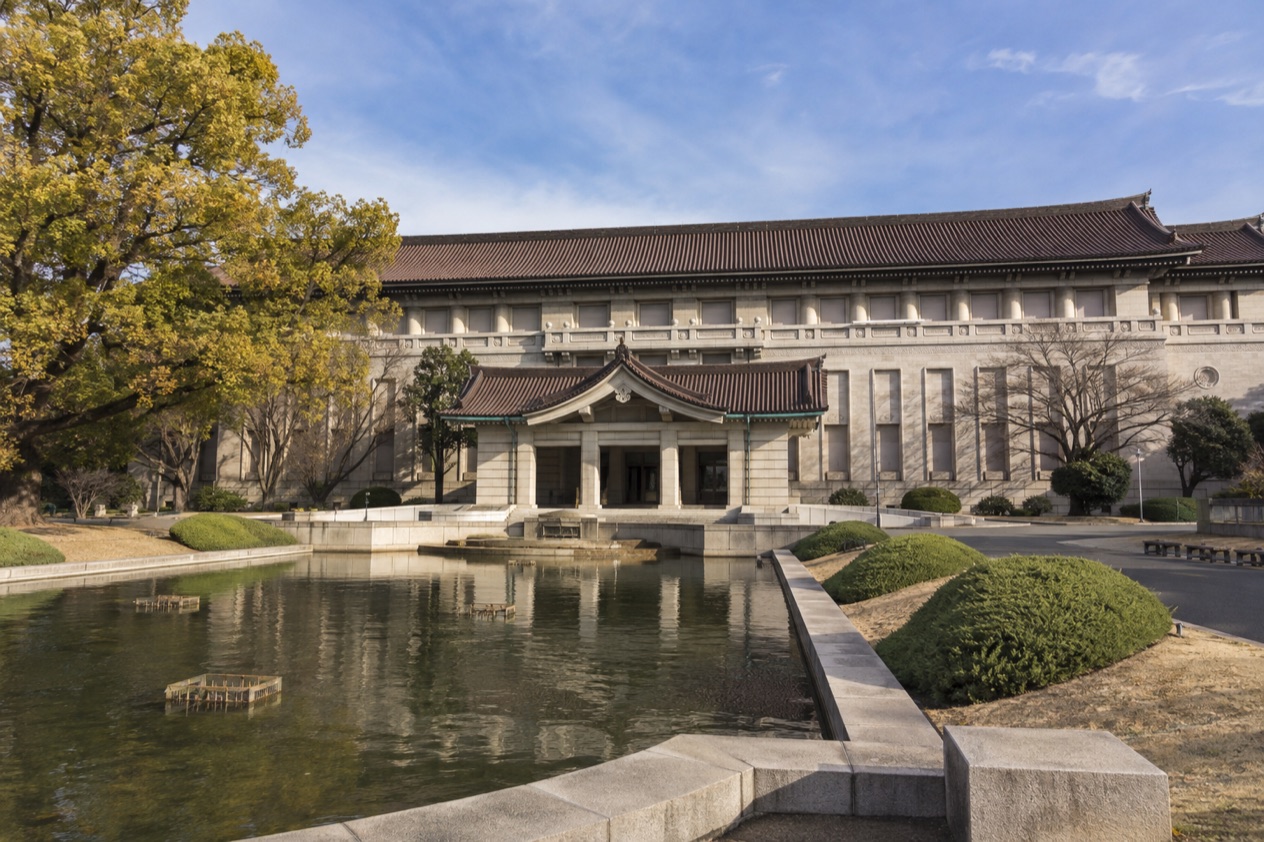
Walk up through Ueno Park and the trees open onto a wide forecourt, with the stately Honkan standing at the far end. Inside, quiet galleries hold swords, lacquer boxes, Buddhist statues and painted screens, each lit like a small stage. The Tokyo National Museum is an art museum for slow looking, and it suits a visit to Tokyo built around Japanese art and the cultures that reached Japan along the Silk Road.
Is visiting the Tokyo National Museum worth it?
Yes, if you want to see Japanese art in depth, from ancient and medieval pieces to works that trace the Silk Road. It suits curious travelers, art lovers, and anyone who likes to understand what they will later see in the temples and shrines of Kyoto and Nara. It also works as a calm, covered break in a city of crowded streets, and a good rainy-day plan.
What sets it apart from other museums in Ueno is scale and focus. It is considered the oldest national museum and the largest art museum in Japan, with a collection of about 120,000 Cultural Properties, among them 89 National Treasures.
Because only a portion is out at any time and objects rotate, the galleries feel different from one visit to the next. The museum also holds a large collection of Greco-Buddhist art, a reminder of how ideas and images traveled across Asia. Rather than one theme, you get a long, well-organized survey spread across several buildings.
Think of it as a place to choose from rather than to finish. Pick one or two buildings that match your interests, linger over a few objects, and walk the grounds between them. That pace is more rewarding than trying to see everything.
What to see at the Tokyo National Museum
The museum is a campus of several buildings, each with its own subject. About 3,000 cultural properties are on display at one time, and each one changes after between four and eight weeks, so exact objects vary. The buildings below give the lay of the land.
Honkan, the Japanese Gallery
The Honkan is the Japanese Gallery and the heart of the collection. It is where the story of Japanese art unfolds, with ancient and medieval pieces that include Buddhist sculpture, calligraphy, ceramics, lacquerware, samurai swords and armor, and painted screens. Look for how a single theme, such as the seasons or the Buddha, changes in style from room to room.
The National Treasures appear among the displays on a changing schedule, so what you find may differ from a friend’s photos.
Toyokan, the Asian Gallery
The Toyokan is the Asian Gallery, and it is where the museum’s interest in Asian art along the Silk Road comes alive. You move between regions and eras, seeing sculpture, textiles, ceramics and metalwork that show how styles traveled. The large collection of Greco-Buddhist art belongs to this wider story, with Buddhist imagery that carries echoes of the Mediterranean.
It is a good choice if you have already seen plenty of Japanese temples and want context for where their art came from. The rooms tend to feel more open and less formal than the Honkan.
Gallery of Horyuji Treasures
This gallery houses 319 items from Horyu Temple in Nara, given to the Imperial Household in 1878. The pieces are small, delicate and often religious in character, and the gallery presents them with a hushed, reverent mood. Take your time with a few objects rather than moving quickly through the room.
If you plan to visit Nara later in your trip, this is a thoughtful way to meet its temple heritage first. If you have already been, it adds a layer of memory.
Heiseikan, Hyokeikan and the other buildings
The Heiseikan and the Hyokeikan host special exhibitions, so what is inside depends on the schedule. The Hyokeikan is closed to the public except during special exhibitions, which means you may see it only from outside unless a show is on. Even then, the building is worth a look from the grounds.
The grounds also include the Kuroda Memorial Hall and the Research and Information Center. Together with the main galleries, they make the compound feel like a small campus of art and study.
Hours, tickets and rules
The Kuroda Memorial Hall has its own hours, separate from the rest of the compound, and admission is free. The Research and Information Center also offers free access, entered through the compound’s west gate and without admission to the rest of the museum.
| Site | Open | Admission |
|---|---|---|
| Kuroda Memorial Hall | 9:30 AM to 5:00 PM (last admission 4:30 PM) | Free |
| Research and Information Center | Access through the west gate | Free, without admission to the rest of the museum |
The Hyokeikan is closed to the public except during special exhibitions. The Research and Information Center’s free access does not include the other galleries.
How to get to the Tokyo National Museum
The museum sits in Ueno Park, in Taito ward, and the main way in by rail is Ueno Station. It is served by JR East (the JU, JK, JY and JJ lines), by Tokyo Metro (the G and H lines) and by the Shinkansen. That makes it a convenient meeting point for travelers arriving from other parts of Japan.
Other stations also serve the museum. Uguisudani Station is on the JR East JK and JY lines, Keisei Ueno Station is on the Keisei Main line, and Nezu Station is on the Tokyo Metro C line. Which one you choose depends on where you are staying and which line you are already on.
If you are coming from the airports, Tokyo is served by Haneda Airport (officially Tokyo International Airport) and Narita Airport, Japan’s largest international airport. From either, you reach Ueno by rail or other connections within the city, and then continue into the park on foot.
When to visit the Tokyo National Museum
The museum is an indoor destination, so it works in any weather, and that is part of its appeal. It is a natural plan for a wet day, when Tokyo’s parks and streets are less inviting. October, for example, brings frequent rain, with about ten rainy days in a typical month and humid air.
For comfort around the park, the shoulder months are pleasant. In April highs reach the mid-60s and the air is milder, while October highs sit in the low 70s. Summer is hot and humid, and July highs reach the mid-80s with damp air, so cool galleries are welcome. January is cold and mostly dry, with highs in the upper 40s and occasional snow.
Because exhibits rotate every four to eight weeks, the museum also changes through the year, and special exhibitions at the Heiseikan and Hyokeikan add their own calendar. Walking up through Ueno Park beforehand is a pleasure in any season, and the weather simply decides how long you linger outside.
Tips for your visit
Choose a focus before you go. With several buildings and a collection that rotates, a plan built around one or two galleries, such as the Honkan and the Toyokan, will feel more satisfying than a rush through everything. Leave time for the grounds between buildings.
Pair the visit with the rest of Ueno Park. It is a natural combination, since the museum sits inside the park, and you can step out into the trees between galleries. The Research and Information Center, reached through the west gate, is a free stop for those curious about the museum’s work.
For the Hyokeikan, remember that it opens only during special exhibitions, so it may be an outside view only. For the Gallery of Horyuji Treasures, go with an interest in Nara’s temple heritage, and look closely at the small objects. Wear comfortable shoes, since a museum campus involves a good deal of walking and standing.
With children or travelers who prefer a lighter visit, a single gallery and a walk in the park is enough. The museum rewards curiosity more than stamina, and nothing requires you to see it all in one go.
Good to know before you go
Tokyo is the capital of Japan, on Tokyo Bay in the Kanto region, and the museum is one stop among many in a very large city. Because the galleries are indoors, a rainy October afternoon is as good a time as any. Keep a light layer for the cooler months, and enjoy the quiet of the rooms after the busy streets of Ueno.
Sources
- Wikipedia, Tokyo National Museum (https://en.wikipedia.org/wiki/Tokyo_National_Museum), checked October 11, 2026
- Japan National Tourism Organization, Tokyo (https://www.japan.travel/en/destinations/kanto/tokyo/), checked October 11, 2026
- Japan Meteorological Agency (JMA), Normal values 1991-2020, monthly (https://www.data.jma.go.jp/stats/etrn/view/nml_sfc_ym.php?prec_no=44&block_no=47662), station Tokyo, elevation 25 m, checked October 11, 2026
To plan your stay
- Best Time to Visit Tokyo: Cherry Blossoms, Autumn Leaves, Weather by Month and Festivals
- Where to Stay in Tokyo: Shinjuku, Shibuya, Asakusa, Ginza and Roppongi
- Tokyo from the airport: Narita and Haneda, the Skyliner, Local Trains and Taxis
- Know Before You Go to Tokyo: Entry, Money, Getting Around and Local Etiquette