
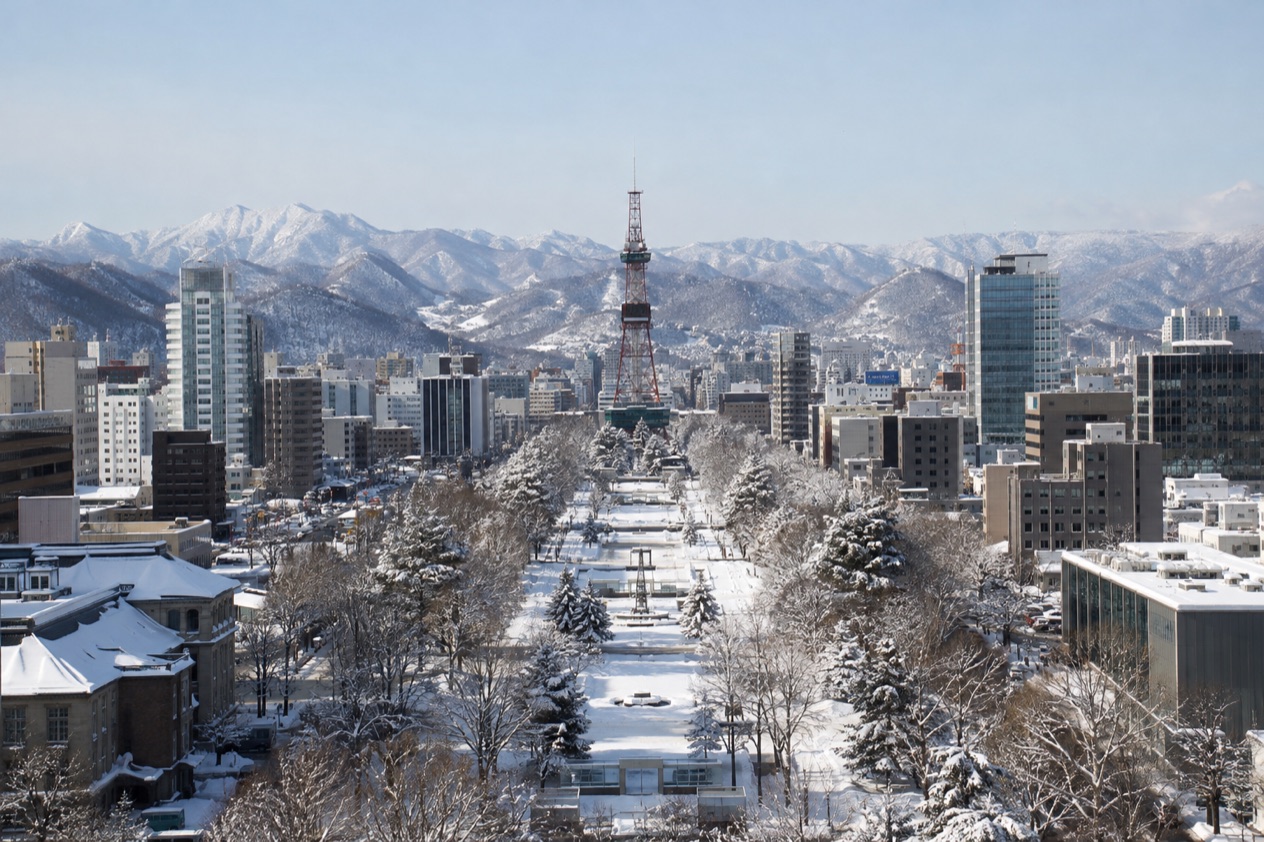
In January, Sapporo is a city of squeaking boots and steaming bowls. Snow lies along the sidewalks, breath hangs in the air outside the ramen counters, and the lamps of Odori Park glow against white ground. This is the heart of Hokkaido’s winter, a month for hot soup, grilled lamb, a day on the slopes and long evenings indoors, in a city that has hosted the Winter Olympics.
What is the weather like in Sapporo in January?
January in Sapporo is properly cold and snowy, with days that hover around freezing and snow or sleet falling on almost every day of the month.
| Month | Average high (°F) | Average low (°F) | Precipitation (in) | Days with 1 mm or more of precipitation | Snowfall (in) | Hours of sunshine | Daylight on the 15th |
|---|---|---|---|---|---|---|---|
| December | 35.6 | 24.8 | 4.51 | 16.0 | 44.5 | 83 | 9 h 02 min |
| January | 31.3 | 20.5 | 4.27 | 18.3 | 53.9 | 90 | 9 h 20 min |
| February | 32.7 | 20.8 | 3.62 | 16.0 | 45.7 | 104 | 10 h 30 min |
Almost all of the precipitation here arrives as snow, so think in terms of powder on your coat rather than rain on an umbrella. January is the snowiest of the three months, and the white you see on the sidewalks is renewed constantly. The cold is steady rather than dramatic: the thermometer stays below freezing at night and barely climbs above it by day.
What this means for packing is layers. A thermal base, a warm mid-layer and a windproof, water-resistant coat let you step in and out of heated shops, subway concourses and restaurants without suffering at either end. Boots with real grip matter more than any other item, since packed snow and ice shape every walk. Hat, scarf and gloves are part of the daily uniform.
Sunshine is scarce, so many days are gray and soft-lit, with the occasional bright break that makes the snow sparkle. Daylight is short, and it is already stretching compared with December. Plan outdoor stops while it is light and leave the evenings for warm interiors and illuminated streets.
What to do in Sapporo in January
The great winter event of the city, the Sapporo Snow Festival, belongs to February, held over seven days. In January the city is in its build-up and its everyday winter routine, which is a pleasure of its own. Odori Park, the long green ribbon at the center of Sapporo, is covered in snow, and the stretch that later hosts the festival’s main site is simply a wide white promenade to walk along.
The New Year holidays begin the month. Japan celebrates the New Year on January 1, and families eat osechi, a selection of small dishes served in stacked boxes. Many restaurants and attractions close during those holidays, so the first days of the month are a quiet moment, and the city picks up its usual pace afterward.
Eating your way through the cold
Sapporo cuisine means ramen, soup curry and jingisukan, and January is the month that makes sense of all three. Ramen here is typically rich and hot, the kind of bowl you finish with your hands wrapped around it. Soup curry is a spiced, brothy curry loaded with big pieces of vegetables and chicken, ordered with a spice level of your choosing.
Jingisukan is grilled lamb cooked at the table on a domed griddle, with vegetables softening around the edge. It is a social meal, smoky and warm, and it fits a snowy night.
The Sapporo Beer Museum and its pub, the Sapporo Beer Garden, serve a beer with a lamb barbecue, making it a natural place to combine both. It is the only beer museum in Japan, and its history of brewing in the city gives you a reason to be there beyond the table.
Skiing and snow outings around Sapporo
January falls within the peak ski season in Hokkaido, when snowfall is most frequent. The ski season in Japan generally opens in December and runs to April, with each resort setting its own dates. Niseko United is one mountain with four resorts: Annupuri, Niseko Village, Grand Hirafu and Hanazono. Rusutsu and Sahoro are also among the ski resorts recommended in Japan.
Niseko United publishes live lift and weather status for every resort on its website, which is worth checking before committing to a day on the mountain. If skiing is the point of your trip, treat Sapporo as the city base for the evenings, where the ramen, the beer and the lights wait for you.
Winter strolls and warm interiors
A January walk in Sapporo is shaped by snow underfoot, so pick destinations with a reward at the end. Odori Park is the obvious place to start, with its bare trees and snow-covered paths.
Cafés, department stores and underground passages offer the chance to warm up between outings. Shops in cities like Sapporo are generally open from 10:00 a.m. to 8:00 p.m. every day, which makes browsing a good use of a cold evening.
Hokkaido is also known for hot springs, and a soak after a day in the cold is one of the great pleasures of the season. Beyond the city, Otaru Canal, with its glowing gas lamps and stone warehouses, gives a nostalgic scene that suits winter light, and the craft shops of Ningle Terrace in the forests of Furano add another excursion for those with extra days.
One thing January can also offer is plum blossom elsewhere in East Asia, as Prunus mume typically flowers from January to late February. In Sapporo itself the garden season is a long way off, so this is a month for snow, not petals.
A two-day itinerary for Sapporo in January
Day 1 is about the center of the city and the table. Start late enough to let the sidewalks be cleared, with a hot breakfast and a coffee, then walk Odori Park in the middle of the day while the light is up. The park runs through the heart of Sapporo and gives you a sense of the city’s layout in a single stroll, with snow piled along its edges.
Spend the afternoon indoors among the shops and underground passages, where you can warm up and browse. As evening comes, go for a bowl of ramen in a counter-style shop, the classic Sapporo winter meal, and then stroll the lit streets to digest. If the weather turns heavy, shift more of the day to department stores and cafés.
Day 2 is for the Sapporo Beer Museum and a hearty lunch. Visit the museum to see the story of brewing in the city, then settle into the Sapporo Beer Garden for a beer with a lamb barbecue. It is a warm, filling stop that suits a snowy afternoon, and it needs no outdoor stamina beyond the walk to the door.
Spend the rest of the afternoon on a hot drink and a slow wander, or visit a soup curry restaurant for an early dinner. Finish the evening with jingisukan, grilled lamb at the table, and a last look at the snow-lit streets. If you want a ski day instead, swap this plan for a day at one of the Hokkaido resorts and keep the grilled lamb for the night.
Is Sapporo busy in January?
January in Sapporo is a month of winter-sports energy, with the heaviest crowds focused on the slopes rather than the city streets. The Christmas and New Year holidays, along with early February, attract the largest number of skiers, so the first days of the month and the run-up to the Snow Festival are the busier moments in the ski calendar.
In the city, the New Year holidays bring a different rhythm, since many restaurants and attractions close then. Once the holidays end, the pace settles into a regular winter routine, with shops generally open from 10:00 a.m. to 8:00 p.m. in urban areas. Rural areas often close earlier, sometimes as early as 6:00 p.m., which matters if you drive out into the countryside for an outing.
The Snow Festival is the big draw that follows in February, and the lead-up gives January a sense of anticipation. Travelers who want snow without the festival crowds will find January a natural fit. Those who come for the ski season will find the slopes in the middle of their peak months.
What to pack for Sapporo in January
Pack for steady snow and cold, with the plan of moving between heated interiors and the street all day.
- A warm, windproof coat, because the days stay near freezing.
- Thermal base layers, to wear under everything on cold walks.
- Waterproof boots with deep tread, for packed snow and ice.
- Hat, scarf and gloves, which you will use every day.
- Warm socks, since boots and snow make feet the first to cool.
- Ski clothing, if you plan a day at a Hokkaido resort.
Good to know before you go
The New Year holidays open the month, and many restaurants and attractions close during them. National holidays that fall on a Sunday shift to the next working day, and a day between two national holidays becomes a holiday of its own, so a closure can appear where you do not expect it.
Shops in urban areas are generally open from 10:00 a.m. to 8:00 p.m., while rural shops often close earlier. January is snowy, so allow for slow footing and keep your plans flexible.
Sapporo in January vs December and February
Moving four weeks earlier, to December, brings milder days and a little less snow, with the ski season just opening. The holiday period at the end of the month is the busiest for skiers, and the daylight is at its shortest. It suits those who want the first snows and the festive lights.
Moving four weeks later, to February, brings the Sapporo Snow Festival, held over seven days across three sites: Odori, Susukino and Tsudome. The days grow brighter, with more sunshine and longer daylight, though early February is also among the busiest times on the slopes. It suits anyone who wants the festival above all.
Stay with January if you want deep winter without the festival’s focus: the coldest and snowiest month of the three, with the ski season at its peak and a calmer city once the holidays pass. Shift to February for the festival, and to December for the lights and the first snow.
Is January a good time to visit Sapporo?
Yes, for anyone who wants real winter: snow on every street, skiing within reach and bowls of ramen that taste better for the cold. It suits skiers, food lovers and travelers who enjoy a city transformed by snow.
Those who dislike cold or icy sidewalks, or who want the Snow Festival, should choose February instead. Anyone wanting mild days and outdoor sightseeing without layers should pick another season altogether. On arrival, sort out your boots and your warm layers first, then head for a hot bowl of ramen or a plate of jingisukan. January in Sapporo is the month of snow-lit streets, grilled lamb at the table and a ski season at its height, all in a city that knows exactly how to enjoy the cold.
Sources
- Japan Meteorological Agency (JMA), Normal values 1991-2020, monthly (https://www.data.jma.go.jp/stats/etrn/view/nml_sfc_ym.php?prec_no=14&block_no=47412), station Sapporo, elevation 17 m, checked October 11, 2026
- Computed from the date and the latitude of the place (sunrise equation, solar elevation -0.833 degrees), October 11, 2026
- Japan National Tourism Organization, shop and attraction hours, national holidays (https://www.japan.travel/en/plan/business-hours-and-holidays/), checked October 11, 2026
- Wikipedia, Japanese New Year (https://en.wikipedia.org/wiki/Japanese_New_Year), checked October 11, 2026
- Wikipedia, Public holidays in Japan (https://en.wikipedia.org/wiki/Public_holidays_in_Japan), checked October 11, 2026
- Japan National Tourism Organization, winter in Japan (https://www.japan.travel/en/guide/winter-guide/), checked October 11, 2026
- Japan National Tourism Organization, skiing and snowboarding in Japan: regions, resorts, seasons (https://www.japan.travel/en/sports/snow/), checked October 11, 2026
- Wikipedia, Climate of Japan (https://en.wikipedia.org/wiki/Climate_of_Japan), checked October 11, 2026
- Japan National Tourism Organization, weather and seasons in Japan (https://www.japan.travel/en/plan/weather/), checked October 11, 2026
- Japan National Tourism Organization, skiing guide (https://www.japan.travel/en/guide/skiing/), checked October 11, 2026
- Wikipedia, List of ski areas and resorts in Japan (https://en.wikipedia.org/wiki/List_of_ski_areas_and_resorts_in_Japan), checked October 11, 2026
- Japan National Tourism Organization, flowers by season: cherry blossom, plum, wisteria, hydrangea, where and when (https://www.japan.travel/en/see-and-do/flowers/), checked October 11, 2026
- Wikipedia, Prunus mume (https://en.wikipedia.org/wiki/Prunus_mume), checked October 11, 2026
- Niseko United, winter (https://www.niseko.ne.jp/en/winter/), checked October 11, 2026
- Japan National Tourism Organization, Sapporo (https://www.japan.travel/en/destinations/hokkaido/hokkaido/sapporo-and-around/), checked October 11, 2026
- Hokkaido Love, the official Hokkaido tourism site (https://www.visit-hokkaido.jp/en/), checked October 11, 2026
- Hokkaido Love, what to see and do (https://www.visit-hokkaido.jp/en/spot/), checked October 11, 2026
- Sapporo Snow Festival official website (https://www.snowfes.com/english/), checked October 11, 2026
- Sapporo official sightseeing website (https://www.sapporo.travel/en/), checked October 11, 2026
- Japan National Tourism Organization, festivals and events (https://www.japan.travel/en/see-and-do/festivals-and-events/), checked October 11, 2026
- Wikipedia, Sapporo Snow Festival (https://en.wikipedia.org/wiki/Sapporo_Snow_Festival), checked October 11, 2026
- Wikipedia, Sapporo Beer Museum (https://en.wikipedia.org/wiki/Sapporo_Beer_Museum), checked October 11, 2026
- Wikipedia, Ōdōri Park (https://en.wikipedia.org/wiki/%C5%8Cd%C5%8Dri_Park), checked October 11, 2026
To plan your stay
- Things to Do in Sapporo: Snow Festival, Odori Park, Ramen and Day Trips
- Where to Stay in Sapporo: Sapporo Station, Odori, Susukino and Ryokan Stays
- Sapporo from Tokyo: The Hayabusa Shinkansen, the Seikan Tunnel and What Awaits on Hokkaido
- Know Before You Go to Sapporo: Entry, Money, Getting Around and Local Customs