
In Otaru the gas lamps come on along the canal and glow against the stone warehouses, and the harbor town takes on the hush of an old postcard. Farther inland, Hokkaido goes on being a place of big weather: snow that skiers cross oceans for, drift ice pressing against the coast, fields of flowers around Furano. This is Japan’s northern island, and it suits travelers who want mountains, hot springs and seafood more than temple-hopping.
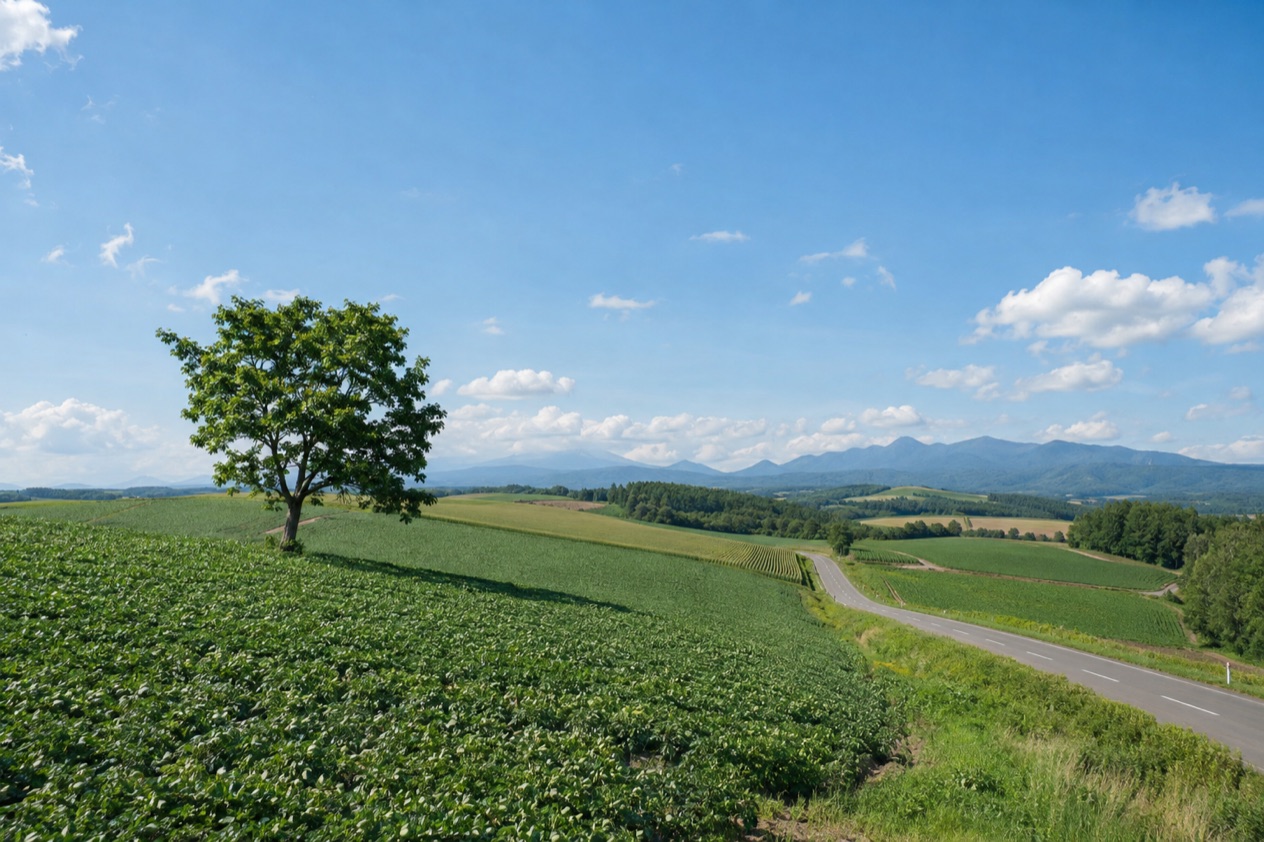
Where is Hokkaido and what is it like?
Hokkaido is the northernmost of Japan’s four main islands and also a prefecture, set apart from Honshu by a strait that a railway tunnel crosses beneath. In size and population it is often compared to Scotland, which gives a fair idea of the scale: this is a big island of long distances, not a single city with a few day trips.
Sapporo is the capital and the largest city, and it is the base for most visits. Around it the island divides into areas that travelers talk about as separate destinations: Sapporo and its surroundings, Asahikawa and northern Hokkaido, Hakodate and southern Hokkaido, and Kushiro and eastern Hokkaido. Sakhalin, in Russia, lies about 27 miles to the north across the water, which says something about how far up the map you have come.
The character of the island is outdoors. Hokkaido draws people for seasonal scenery, skiing and trekking, hot springs, gourmet food and the Ainu and Jomon heritage that sets its history apart from the rest of the country. Cities here have wide streets and a relaxed rhythm, and the countryside is where the days are spent.
It rewards travelers who like to plan around nature: a ski week, a drive through flower country, a soak in a mountain onsen (a hot spring bath). If your idea of Japan is neon streets and old temple towns, Hokkaido is the counterweight, with space, weather and a food culture built on the sea and the farm.
What is there to do in Hokkaido?
The big reasons to come are snow, flowers, hot springs and wild coastline, and each one pulls you to a different part of the island. Visitors enjoy nature, outdoor activities and local cuisine, and the best trips pick one or two of these rather than all of them.
Niseko, Sapporo and the winter season
Hokkaido is recognized for its exceptional snow, and Niseko is the name that carries it abroad. It is described as the most famous ski area in Japan, known for powder snow and a welcoming atmosphere, especially among foreign visitors. Niseko United is one mountain with four resorts: Annupuri, Niseko Village, Grand Hirafu and Hanazono, so skiers move between villages with different moods on the same mountain.
Niseko lies southwest of Sapporo. The resorts publish live lift and weather reports on the Niseko United website, which is the practical tool when the weather turns. In February, the Sapporo Snow Festival fills the capital with winter spectacle, and the city’s place in skiing history goes back to hosting the first Winter Olympic Games in Asia.
Winter also reaches the far east. From late January, drift ice arrives on the coast of Abashiri and covers the Sea of Okhotsk, a sight that has little to do with ski slopes and everything to do with the northern sea. It suits travelers who want a winter trip beyond the resorts.
Furano and Biei: lavender, craft villages and a blue pond
Furano sits in the geographical center of the island and is famous for its lavender fields, for the television drama Kita no Kuni kara, and for a ski resort that has hosted a Snowboarding World Cup. The ski area is split into two zones, Furano Zone and Kitanomine Zone, and one lift ticket is valid for both.
Tucked in Furano’s forests is Ningle Terrace, a craft village of about 15 shops, the kind of place you wander slowly from cabin to cabin. In Biei, the Shirogane Blue Pond is famous for the vivid cobalt color of its water, set among forest. Asahikawa, the second-largest city on the island, is described as an ideal gateway to the Furano area and to Sounkyo Gorge, which makes it a handy base for this inland corner.
Noboribetsu and Otaru: hot springs and a harbor town
Noboribetsu Onsen is a hot spring village in the river valley, inland from Noboribetsu city. It is where you come for the soaking that Hokkaido is known for: a bath after a day outdoors, followed by a dinner of local seafood. Noboribetsu lies southwest of Sapporo.
Otaru faces Ishikari Bay on the Sea of Japan and has long been the bay’s main port. Its historical buildings make it a popular tourist destination, and its canal, with gas lamps and stone warehouses, is the place to stroll as the evening settles. Sapporo and its surroundings are known for local cuisine, so a day that begins at the harbor and ends at a table in the capital fits naturally.
Shiretoko and the wild east
The Shiretoko Peninsula is the easternmost part of the island, a remote corner that pushes out into the Sea of Okhotsk. It was registered as a UNESCO World Heritage Site in 2005 because it is the southernmost point where sea ice usually forms in the Northern Hemisphere. Shiretoko National Park covers the whole peninsula.
Elsewhere in the east and the center, the parks take over: Lake Akan sits in Akan National Park near Kushiro, and Daisetsuzan National Park fills the mountainous center of the island. West of the main island, Rishiri Island lies roughly 12 miles offshore. These are destinations for trekking and for people who like their travel quiet in effort, not in schedule.
| Site | Open |
|---|---|
| Rausu Visitor Center | May to October 9:00 to 17:00, November to April 10:00 to 16:00, closed Mondays and around New Year’s |
How many days do you need in Hokkaido?
A long weekend gets you a taste, a week gets you a region, and ten days or more lets you cross the island. Because Hokkaido is so large, the sensible approach is to choose a base and stay near it instead of chasing every highlight.
The city has the food, the Snow Festival in February, and the pace of a big northern town. Otaru, west of Sapporo along the coast, fits into a day out, with its canal and old warehouses, and Niseko is a ski destination for winter days southwest of the capital.
A week opens a second area. Pair Sapporo with Furano and Biei, using Asahikawa as a gateway, and you have flower country, the craft village at Ningle Terrace and the blue pond. Or pair Sapporo with Noboribetsu Onsen, where the hot springs are the point and the evening is the best part. Both pairings leave room for slow mornings, which suits an island like this.
With more time, add the south and the east. Hakodate sits at the southern tip of the island and is a city and port in its own right, reached by shinkansen from Honshu. In the east, Shiretoko, Lake Akan and Abashiri belong to a longer trip, where the road is part of the experience. Daisetsuzan National Park, in the mountainous center, rewards those who plan time for trekking.
Winter and summer trips call for different budgets of time. A ski week is built around one resort and its snow reports, while a summer trip is a loop of towns and fields. Either way, leave a day free for weather: this is an island where the sky decides things.
Where to stay in Hokkaido
Sapporo is the practical base for visitors, as the capital and largest city and the nearest large city to New Chitose Airport. Staying there puts restaurants, nightlife and the Snow Festival on your doorstep, and it works as a hub for Otaru, Niseko and Noboribetsu. It suits first-time visitors and anyone who wants city comforts between outings.
Niseko is the choice for a ski trip. The four resorts of Niseko United, Annupuri, Niseko Village, Grand Hirafu and Hanazono, each have their own village, so you pick the one that matches the mood you want on the mountain. The area is especially known among foreign visitors, which shapes its atmosphere.
Furano suits both skiers and summer travelers, with its two ski zones and its lavender fields. Asahikawa, the second-largest city on the island and northwest of the Daisetsuzan range, is a city base for Furano and for Sounkyo Gorge. Biei and the forest around Ningle Terrace invite a quieter stay in the countryside.
For hot springs, Noboribetsu Onsen is the village built around the bath, set in a river valley inland from the city of Noboribetsu. A night there fits the rhythm of a ryokan stay, with a soak, a seafood dinner and a futon laid out on tatami, which travelers want to try at least once in Japan.
Hakodate, at the southern tip, is the base for the south and the arrival point for the shinkansen. In the east, towns near Abashiri, Lake Akan and the Shiretoko Peninsula serve travelers heading for the sea ice and the national parks. Otaru can be a base too, with a harbor that looks different once the day trippers leave.
How do you get to Hokkaido and get around?
Visitors arrive by air at New Chitose Airport, near Sapporo, which is the main international gateway with flights from cities such as Hong Kong, Taipei, Seoul and Honolulu. Direct flights from Tokyo take about 1 hour 30 minutes. Hakodate also has air service, with direct flights from major Japanese airports and from other airports within Hokkaido.
By rail, Hokkaido and Honshu are connected through the Seikan Tunnel. The Hokkaido Shinkansen links Aomori to Hakodate, and Hayabusa trains take about four hours from Tokyo to Hakodate.
Shin-Hakodate-Hokuto is the shinkansen terminal on the island, and from there a 15- to 20-minute shuttle train runs to central Hakodate, or a 3.5-hour limited express called the Hokuto continues to Sapporo. The whole trip from Tokyo to Sapporo by train takes about 8 hours. The Japan Rail Pass is valid on shinkansen trains from Tokyo to Hokkaido.
Ferries connect Honshu to ports near Sapporo, from Niigata, Oarai in Ibaraki Prefecture, Sendai, Nagoya, Maizuru in Kyoto Prefecture and Tsuruga in Fukui Prefecture. It is a different way to arrive, for travelers who want the sea crossing.
Around the island, JR Hokkaido sells passes to foreign visitors. These are the prices when bought outside Japan.
| Pass | Consecutive days | Adult (yen) | Child (yen) |
|---|---|---|---|
| Sapporo-Noboribetsu Area Pass | 4 | 8,000 | 4,000 |
| Sapporo-Furano Area Pass | 4 | 9,000 | 4,500 |
| Hokkaido Rail Pass | 5 | 19,000 | 9,500 |
The Sapporo-Noboribetsu pass matches the hot spring route, while the Sapporo-Furano pass matches flower country. The Hokkaido Rail Pass covers a wider loop. From Hakodate, the limited express Hokuto reaches Noboribetsu in 2 hours 30 minutes.
When is the best time to visit Hokkaido?
The two best seasons are winter, centered on February, and summer, centered on August. February brings the Sapporo Snow Festival, the ski season at Niseko and Furano, and, from late January, drift ice at Abashiri. August is the warm month, with averages that run from the low 60s to the low 70s Fahrenheit, which makes it the time for the lavender fields around Furano, the blue pond at Biei and trekking in the national parks.
January is the coldest stretch, with averages that sit well below freezing at the cold end and just under it at the warm end. Otaru’s winters are less severe than in most other cities of the island, which is worth remembering if you want a snowy town without the harshest cold. This is the season for hot springs: a steaming outdoor bath in winter air is one of the pleasures people travel here for.
The seasons in between have their own appeal, but they are not the ones Hokkaido is built around. Plan winter trips around snow reports, which Niseko United publishes live for each resort, and summer trips around the long days outdoors. Whichever you choose, the coast and the mountains behave differently, so a loop that includes both gives you a fuller picture.
Good to know before you go
Prices for rail passes and many services are quoted in yen, so it helps to think in that currency while you plan. Hokkaido is large, so a trip is best built around a few bases rather than a long list of stops. In winter, snow shapes the day, and the resorts’ live lift and weather reports are the thing to watch before heading up the mountain.
Hot springs, ryokan stays and a seafood dinner are part of the island’s rhythm, and the habits that go with them, like taking off your shoes at the entrance of a ryokan, are quickly learned. Ainu and Jomon heritage adds a thread of history that you will meet in museums and place names across the island.
Sources
- Japan National Tourism Organization, Hokkaido (https://www.japan.travel/en/destinations/hokkaido/hokkaido/), checked October 11, 2026
- Hokkaido Love, the official Hokkaido tourism site (https://www.visit-hokkaido.jp/en/), checked October 11, 2026
- Hokkaido Love, what to see and do (https://www.visit-hokkaido.jp/en/spot/), checked October 11, 2026
- JR Hokkaido, Rail passes and tickets (https://www.jrhokkaido.co.jp/global/english/ticket/index.html), checked October 11, 2026
- Wikipedia, Hokkaido (https://en.wikipedia.org/wiki/Hokkaido), checked October 11, 2026
- Wikipedia, Regions of Japan (https://en.wikipedia.org/wiki/Regions_of_Japan), checked October 11, 2026
- Wikivoyage, Hokkaido (https://en.wikivoyage.org/wiki/Hokkaido), checked October 11, 2026
- Wikipedia, Lake Tōya (https://en.wikipedia.org/wiki/Lake_T%C5%8Dya), checked October 11, 2026
- Wikipedia, Lake Akan (https://en.wikipedia.org/wiki/Lake_Akan), checked October 11, 2026
- Wikipedia, Daisetsuzan National Park (https://en.wikipedia.org/wiki/Daisetsuzan_National_Park), checked October 11, 2026
- Wikipedia, Rishiri Island (https://en.wikipedia.org/wiki/Rishiri_Island), checked October 11, 2026
- Japan National Tourism Organization, Sapporo (https://www.japan.travel/en/destinations/hokkaido/hokkaido/sapporo-and-around/), checked October 11, 2026
- Japan National Tourism Organization, Hakodate (https://www.japan.travel/en/destinations/hokkaido/hokkaido/hakodate-and-hokkaido-south/), checked October 11, 2026
- Wikipedia, Hakodate (https://en.wikipedia.org/wiki/Hakodate), checked October 11, 2026
- Japan National Tourism Organization, Niseko (https://www.japan.travel/en/destinations/hokkaido/hokkaido/niseko-and-nearby-ski-resorts/), checked October 11, 2026
- Niseko United, winter (https://www.niseko.ne.jp/en/winter/), checked October 11, 2026
- Wikipedia, Otaru (https://en.wikipedia.org/wiki/Otaru), checked October 11, 2026
- Wikivoyage, Otaru (https://en.wikivoyage.org/wiki/Otaru), checked October 11, 2026
- Wikipedia, Furano, Hokkaido (https://en.wikipedia.org/wiki/Furano,_Hokkaido), checked October 11, 2026
- Wikivoyage, Furano (https://en.wikivoyage.org/wiki/Furano), checked October 11, 2026
- Wikipedia, Noboribetsu (https://en.wikipedia.org/wiki/Noboribetsu), checked October 11, 2026
- Wikivoyage, Noboribetsu (https://en.wikivoyage.org/wiki/Noboribetsu), checked October 11, 2026
- Japan National Tourism Organization, Asahikawa (https://www.japan.travel/en/destinations/hokkaido/hokkaido/asahikawa-and-hokkaido-north/), checked October 11, 2026
- Wikipedia, Asahikawa (https://en.wikipedia.org/wiki/Asahikawa), checked October 11, 2026
- Wikipedia, Shiretoko Peninsula (https://en.wikipedia.org/wiki/Shiretoko_Peninsula), checked October 11, 2026
- Wikivoyage, Shiretoko National Park (https://en.wikivoyage.org/wiki/Shiretoko_National_Park), checked October 11, 2026
All our pages
When to go
Things to do
- Things to Do in Hokkaido: Sapporo, Otaru Canal, Hot Springs and Hokkaido Seafood
- 7 Days in Japan: Itinerary Through Hokkaido, Sapporo, Furano and Hakodate