
A bowl of miso ramen arrives steaming, topped with sweet corn and a slab of butter that slowly melts into the broth, while outside the first cold wind of the north slips down the wide avenues. Sapporo is Hokkaido’s big city, a place of parks, red-brick buildings, beer halls and late-night noodle counters. It suits travelers who like to eat well, wander green space by day and keep a cold evening for something warm.
What are the best things to do in Sapporo?
The best things to do in Sapporo are to walk Odori Park, eat the city’s three signature dishes, drink beer where the brewing tradition lives, and use the city as a base for the harbor town of Otaru and the flower country around Furano. Winter adds the Snow Festival, and the seasons in between each have an event of their own.
Sapporo is a city built on a grid, with a long green ribbon of park running through its middle. That layout makes it a gentle place to find your bearings, and it means most of the headline sights sit in a handful of districts. What changes from month to month is the mood: snow sculptures in February, lilacs in May, beer tables in the park through the summer.
- Odori Park, the green spine of the city, where festivals and seasonal events take place across the year.
- The Sapporo Snow Festival in February, with giant snow sculptures at three separate sites.
- The Sapporo Beer Museum and its beer garden, for a pint with lamb barbecue.
- Susukino after dark, the city’s great district of bars, neon and late dinners.
- A bowl of Sapporo miso ramen, then soup curry and jingisukan on the days that follow.
- Mount Moiwa, for a look over the whole city grid.
- Otaru and its canal, lined with stone warehouses and gas lamps.
- Furano’s forests and craft shops, a day away from the city streets.
Sapporo also carries a sporting history. The city hosted the first Winter Olympic Games held in Asia in 1972, and the winter-sports spirit still colors the place, from ski slopes within reach of town to the way people treat snow as a reason to celebrate rather than to stay indoors.
If you have only a short time, put Odori Park, a ramen counter and a Susukino evening into one day, and give a second day to Otaru. With more time, add the museum and the hill views, then stretch out to Furano.
Sights and landmarks in Sapporo
The sights of Sapporo gather around Odori Park, the beer museum and a few brick-and-garden landmarks from the city’s early years as the administrative heart of Hokkaido. Most are close enough to string together over a day or two, and the city’s circular streetcar adds a charming way to see part of the route. It is one of only two operational circular tram systems in Asia, the other being in Kaohsiung, Taiwan.
Odori Park and the TV Tower
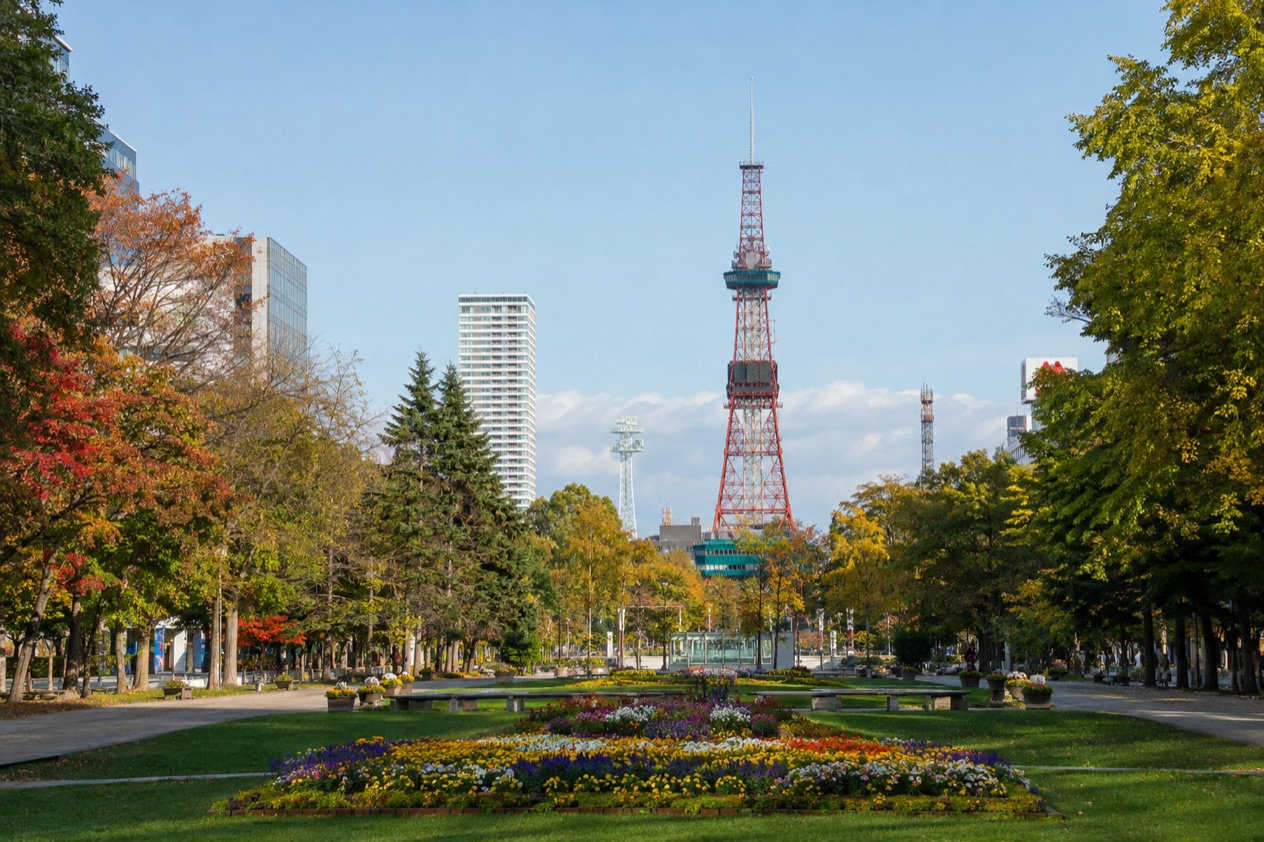
Odori Park lies in the heart of Sapporo and stretches for just under a mile, a long band of lawns, fountains, flower beds and sculptures that divides the city in two. Locals eat lunch on its benches, children run along its paths and, depending on the season, whole blocks of it are given over to a festival.
The Sapporo TV Tower stands in the park, a red-and-white lattice tower that works as the city’s compass point. Look for it when you lose your sense of direction among the streets. Come back at different times of year and you will find the same park wearing snow, lilacs, summer beer tables or autumn color.
The Sapporo Beer Museum
This is the only beer museum in Japan, and it was registered as one of the Hokkaido Heritage sites in 2004. The building is a handsome piece of red brick that recalls the era when Hokkaido was being developed and Sapporo’s brewing began. Exhibits trace how beer was made and sold here, and the story fits neatly with the city’s pioneer past.
The museum goes naturally with its pub, the Sapporo Beer Garden, where visitors can enjoy a beer and lamb barbecue. It is a pleasant way to turn a museum visit into a meal, and it introduces the dish known as jingisukan, which you will meet again in the city’s restaurants.
Mount Moiwa
Mount Moiwa rises about 3 miles southwest of the center of Sapporo, and it gives you the view that makes sense of the city: the grid of streets, the line of Odori Park, the surrounding plain and the mountains beyond. It is a good place to end a day of sightseeing, letting what you have walked fall into place below you.
Dress for a change in air as you go up, since a hill outside a northern city can feel cooler than the streets. The mountain suits travelers who like a panorama more than a museum, and photographers will find the city layout particularly satisfying from above.
Brick buildings, shrines and campus lanes
Beyond the headline sights, Sapporo has smaller pleasures that reward an unhurried walk. The old red-brick Hokkaido government building and the wooden clock tower recall the city’s frontier-era beginnings, and Hokkaido Shrine sits in the wooded Maruyama area, a spot where people come to stroll and, in spring, to enjoy the blossoms.
The Hokkaido University campus, with its tree-lined avenues and open lawns, is also open to wander, and the Sapporo Factory, a redeveloped brewery complex of brick and glass, mixes shopping with a taste of the city’s beer-making roots. Together these places show a Sapporo that is as much about gardens and old walls as about neon.
Outdoor things to do in Sapporo
Sapporo’s outdoors begin in the middle of town, with a park that changes costume with the season, and extend to hills, gardens and the wider Hokkaido landscape of ski slopes, trails and hot springs. Hokkaido as a whole draws travelers for seasonal views, skiing and trekking, and the capital is the practical door into all of that.
Odori Park through the seasons
Summer in Sapporo runs from June to August, and Odori Park hosts several outdoor events in June. The Sapporo Lilac Festival takes place in Chuo-ku in May, when the scent of lilacs drifts through the city’s parks. Those events give the park a social rhythm, with food stalls, music and picnic blankets filling the grass.
In February the same park becomes the main stage of the Snow Festival. At the Odori Site you find large, medium and small snow sculptures, projection mapping, Sapporo Citizen Snow Sculptures and a snow slide. The site stretches about a mile along the park, so you can walk its length and see the sculptures one after another.
The Snow Festival and its three sites
The Sapporo Snow Festival is a winter event held annually in Sapporo over seven days in February. It has three sites: Odori, Susukino and Tsudome. Odori is the large open-air gallery in the park, Susukino is the nightlife district turned into a showcase for ice sculptures, and Tsudome is set up for playing in the snow.
Dress warmly for any evening spent outdoors in Sapporo in February, and take time to stop for hot drinks and snacks between the sculptures. The festival suits couples, families and photographers alike, and it is the reason travelers pick Sapporo in winter at all.
Gardens, hills and parks beyond the center
The Botanical Garden near the university has ponds, wooded paths and a collection of northern plants, and Moerenuma Park, designed by the sculptor Isamu Noguchi, turns a landfill site into a landscape of mounds, a glass pyramid and wide lawns.
Hitsujigaoka Observation Hill adds rolling pasture with a view of the city, along with a statue that recalls the American educator who taught in Hokkaido in the nineteenth century. These places show a gentler side of the city, one of grass and trees rather than concrete.
Beyond them, Hokkaido’s skiing, trekking and hot springs are the reason people make the island a longer trip. Sapporo’s winter sports heritage, with the 1972 Games behind it, means the ski hills and jumps that surround the city are part of local life, not just a tourist offer.
Day trips from Sapporo
The day trips from Sapporo lead to a harbor town of canals and glass, a region of flower fields and forest, and the hot-spring country of the island. Hokkaido is the northernmost island and prefecture of Japan, and the second largest island of the country, so its scenery changes sharply once you leave the city.
Otaru and its canal
Otaru is a harbor town where the Otaru Canal features glowing gas lamps and stone warehouses that create a timeless, nostalgic scene. Walk along the water, step into warehouses that have become shops and cafés, and follow the lanes up from the canal to the music-box and glass-making stores for which the town is known.
The town also has a strong seafood identity, with sushi counters and harbor-side meals that make lunch part of the visit.
Furano and the forest craft village
Furano is a region of farmland, forest and hillside that Hokkaido visitors associate with open landscapes and seasonal color. Ningle Terrace is a craft village with about 15 shops tucked away in Furano’s forests, a cluster of small cabins where you can browse handmade goods and wander between the trees.
The area suits travelers who prefer countryside to city streets, who want to see a different side of Hokkaido, and who enjoy a slow walk with a few shops on the way. Pack for forest air that feels fresher than Sapporo’s streets.
Hot springs and mountain country
Hokkaido offers hot springs among its main attractions, and the hills around Sapporo hold several onsen towns where visitors soak in mineral baths. A bath after a day of outdoor activity, or on a cold day, is one of the northern island’s signature comforts.
Check opening arrangements and bathing customs at each place, and bring a small towel to the baths, as is the custom. This is a trip for those who want to rest rather than sightsee.
Farther afield: drift ice and the northeast coast
Every year from late January, drift ice reaches the coast of Abashiri, covering the Sea of Okhotsk. It is a winter spectacle far from the capital, better thought of as a trip of its own than a quick outing, but it shows the scale of Hokkaido and its seasonal drama.
What to eat in Sapporo
Sapporo cuisine includes ramen, soup curry and jingisukan, and the three together make a good plan for a few days of eating. Add Hokkaido seafood, dairy sweets and a glass of the local beer, and you have the city’s whole table.
Ramen, Sapporo style
Ramen is a Japanese-Chinese fusion noodle dish that includes Chinese-style alkaline wheat noodles served in hot broth. It originated in Yokohama Chinatown in the late nineteenth century and spread across the country, and in Sapporo it has a cold-weather character. Miso broth is the local calling card, rich and savory, often with corn, bean sprouts and a pat of butter.
Counters range from tiny shops with a handful of stools to long, lively lanes of ramen stalls. Order, slurp and enjoy the steam. The dish is as much about the experience of sitting elbow to elbow with locals on a cold evening as it is about the noodles.
Soup curry and jingisukan
Soup curry is a Sapporo specialty in which spiced broth comes with big pieces of chicken or vegetables, and you choose a spice level to taste. The result is lighter than a thick curry and arrives with whole carrots, potato and pumpkin, a hearty plate for a chilly day.
Jingisukan is grilled lamb, cooked at the table on a dome-shaped griddle with vegetables roasting around the meat. The Sapporo Beer Garden serves a beer and lamb barbecue, so you can sample the dish in the same place you meet the city’s brewing past.
Seafood, sweets and markets
Hokkaido is known for seafood, and Sapporo’s markets and sushi counters turn that into bowls of rice topped with sea urchin, salmon roe and crab. Morning is a natural time for market browsing in many Japanese cities, so look for stalls where fish is sold and eaten on the spot.
Dairy is the other northern pride. Soft-serve ice cream, milk puddings, cheese tarts and butter-rich cookies fill the sweet shops, and chocolate-and-cookie souvenirs from the region are easy to bring home. Hokkaido’s gourmet options are one of the draws of the whole island.
Beer and seasonal eating
Beer belongs to Sapporo’s identity. Besides the beer museum and its garden, Odori Park hosts outdoor events in June and through the summer, when tables and food stalls give the park a festive air. In the colder months the same appetite shifts to hot pots, grilled dishes and noodles.
Let the season guide you: chilled beer in summer, hearty bowls in winter. The Sapporo sightseeing website lists events by month from January through December, a useful way to match your meals to a festival.
Things to do in Sapporo at night
Night in Sapporo belongs to Susukino, the largest entertainment and nightlife district north of Tokyo. It is a grid of bars, restaurants, karaoke rooms, izakaya (casual pubs serving small plates) and glowing signs, and it is where the city goes to eat late, drink and sing.
Susukino
Susukino rewards wandering. Streets of tiny bars sit beside larger restaurants, and many places serve the ramen, grilled lamb and seafood that you have been eating through the day. A late bowl of ramen after drinks is a Sapporo habit, and you will see people lining up for it.
In February, Susukino becomes one of the Snow Festival sites, with ice sculptures lining the district. The glow of the sculptures among the neon makes this a particularly striking part of the festival, and it fits easily into an evening of dinner and drinks.
Beer halls, izakaya and ramen alleys
Beer is a natural start to the evening. A beer hall or the Sapporo Beer Garden offers lamb barbecue with a cold glass, and izakaya serve a stream of small dishes made to share, from grilled skewers to seafood and fried snacks.
If you prefer noodles, the ramen counters in the entertainment district are a classic way to finish the night. Choose a place with a short menu, take a seat at the counter and eat while the broth is hot.
Quieter evenings
Not every evening has to be a bar crawl. Odori Park in the evening is a pleasant place to stroll, and the Sapporo TV Tower stands lit in the middle of it. In summer, the park’s outdoor events give the evenings a festive feel, and in winter the snow sculptures glow under projection mapping.
A bath can also be an evening plan. Hokkaido’s hot springs are a draw of the island, and a soak is a restful way to end a day. Wherever you spend the night, a late sweet shop stop for dairy ice cream rounds things off.
Things to do in Sapporo with kids
Children in Sapporo are well served by open space, snow play and food they tend to like, and the city’s parks are the main stage. The best plan mixes a park, a hands-on outing and a treat, with enough pauses to rest.
Snow play and the Snow Festival
The Odori Site of the Snow Festival includes a snow slide among its attractions, along with sculptures of different sizes that children can look up at in wonder. Tsudome, another of the festival’s three sites, is where families go for snow play.
February is cold, so bring layers, warm gloves and spare socks for little ones, and plan breaks indoors for hot drinks. The festival lasts seven days, which gives a family room to choose a day that suits them.
Parks, hills and animals
Odori Park is a big, open place where children can run, and its fountains and sculptures give them something to look at. Moerenuma Park has wide lawns and sculptural landscapes that suit exploring, and Hitsujigaoka Observation Hill adds open pasture and a view.
Maruyama Zoo, near the wooded Maruyama area, is a good option for families who like animals. Mount Moiwa is another outing, giving older children a view of the city grid. Pack water and snacks, since the parks are large and the walks add up.
Sweets, factories and family meals
Hokkaido’s dairy sweets are an easy win with children: soft-serve, milk pudding and butter cookies turn up in shops across town. Soup curry has a choice of spice levels, so a family can order it mild, and jingisukan is grilled at the table, which keeps children watching. A day in Furano, with the forest craft village of Ningle Terrace and its small shops, gives a calmer outing away from the city, and Otaru’s glass and music-box shops are fun for browsing with children in tow.
Good to know before you go
Sapporo is served by New Chitose Airport, a larger international airport in the city of Chitose, 30 miles away and connected by regular rapid trains taking around 40 minutes. Okadama Airport handles regional flights within Hokkaido and some parts of Japan.
Within the city, the Sapporo Streetcar is one of only two operational circular tram systems in Asia, a handy way to see part of town. Summer in Sapporo lasts from June to August, and February brings the Snow Festival, so pick the season that matches your plans.
Sources
- Japan National Tourism Organization, Sapporo (https://www.japan.travel/en/destinations/hokkaido/hokkaido/sapporo-and-around/), checked October 11, 2026
- Hokkaido Love, the official Hokkaido tourism site (https://www.visit-hokkaido.jp/en/), checked October 11, 2026
- Hokkaido Love, what to see and do (https://www.visit-hokkaido.jp/en/spot/), checked October 11, 2026
- Sapporo Snow Festival official website (https://www.snowfes.com/english/), checked October 11, 2026
- Sapporo official sightseeing website (https://www.sapporo.travel/en/), checked October 11, 2026
- Wikipedia, Sapporo (https://en.wikipedia.org/wiki/Sapporo), checked October 11, 2026
- Japan National Tourism Organization, festivals and events (https://www.japan.travel/en/see-and-do/festivals-and-events/), checked October 11, 2026
- Wikipedia, Ōdōri Park (https://en.wikipedia.org/wiki/%C5%8Cd%C5%8Dri_Park), checked October 11, 2026
- Wikipedia, Mount Moiwa (https://en.wikipedia.org/wiki/Mount_Moiwa), checked October 11, 2026
- Wikipedia, Ramen (https://en.wikipedia.org/wiki/Ramen), checked October 11, 2026
To plan your stay
- Best Time to Visit Sapporo: Snow Festival, Summer Weather and Seasonal Highlights
- Where to Stay in Sapporo: Sapporo Station, Odori, Susukino and Ryokan Stays
- Sapporo from Tokyo: The Hayabusa Shinkansen, the Seikan Tunnel and What Awaits on Hokkaido
- Know Before You Go to Sapporo: Entry, Money, Getting Around and Local Customs